To apply peel-and-stick wallpaper bubble-free, start with a smooth, clean, dry wall and repair any nicks. Mark your reference lines, align the paper with edges or patterns, and peel back gradually. Apply slowly, pressing from the center outward to push out air. If a bubble forms, puncture it and smooth, reseating edges as needed. Re-seat sections and seal seams firmly. With careful technique, you’ll achieve a flawless finish, and you’ll discover even more tips if you keep going.
Define a Bubble-Free Finish: What You’Re Aiming for
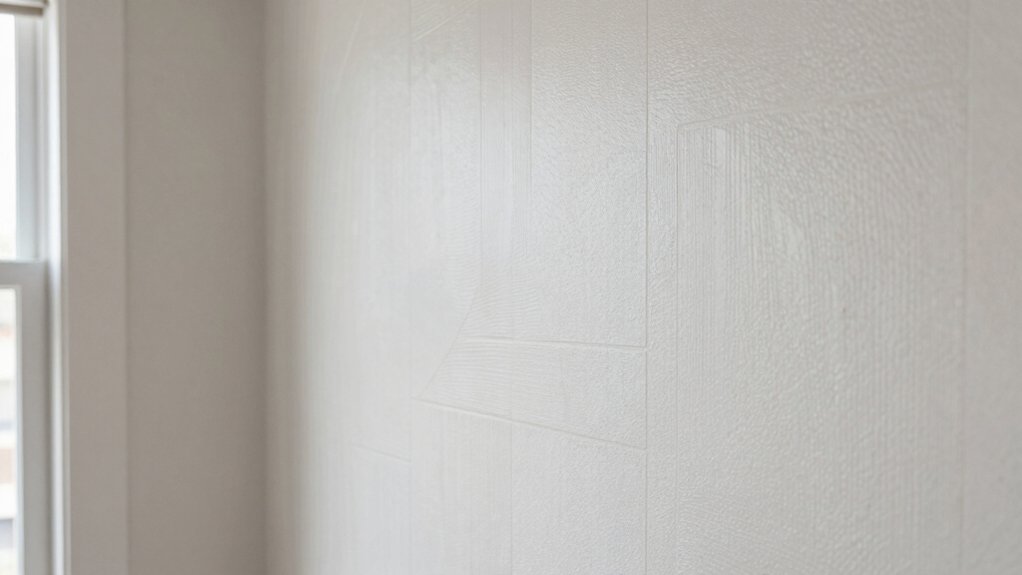
A bubble-free finish means the wallpaper sits flat against the wall with no air pockets or raised edges. You’re aiming for a seamless bond that respects wall texture and adhesive properties.
You’ll assess surface consistency, noting any irregularities that could trap air. Choose a peel-and-stick product rated for your wall texture, and verify adhesive properties align with the substrate.
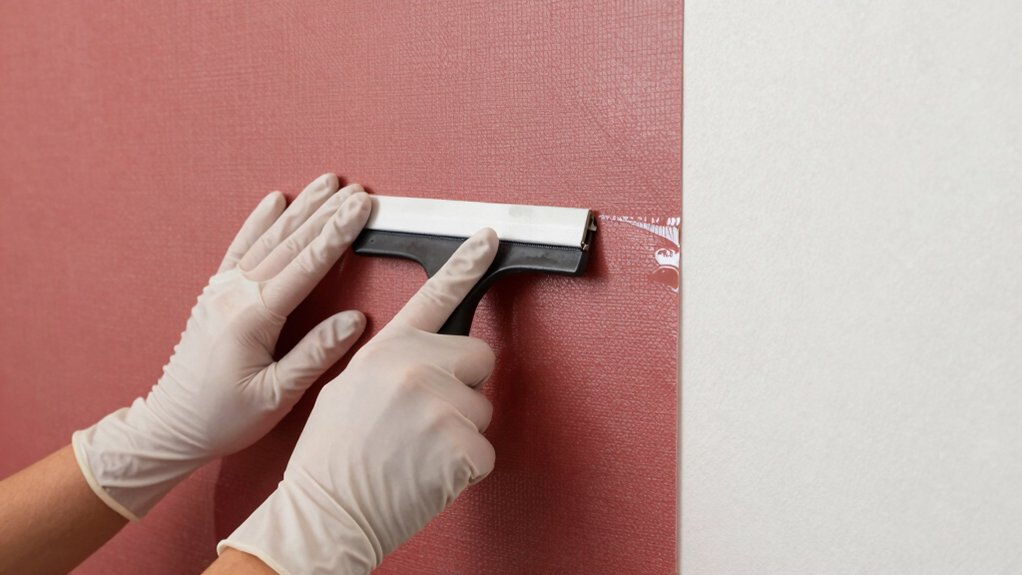
Apply pressure evenly, starting at the center and moving outward to push out any trapped air. Maintain steady, deliberate strokes with a clean, dry tool to avoid introducing moisture or dust.
If a bubble forms, lift the edge near it and re-seat, then reapply pressure outward. Achieving this finish relies on accurate product understanding and controlled, methodical application.
Prep Walls and Tools for Strong Adhesion
To guarantee strong adhesion, start with a clean, dry wall and the right peel-and-stick product for your surface. Begin with wall preparation that removes dust, grease, and old finishes, then repair holes and nicks so the substrate is uniform. Wipe down with a damp cloth, allow complete drying, and test with light pressure to confirm smoothness.
Prioritize a flat, even plane; any bumps can telegraph under the paper. Next, plan tool selection for precise alignment: a straightedge, a utility knife, a soft tape measure, a smoothing tool, and a level. Gather a microfiber cloth for burnishing edges and a clean bucket of water or mild solution for spot cleaning.
With the right preparation and tools, you set up for a bubble-free finish and durable adhesion.
Choose Peel-and-Stick Wallpaper for Your Wall Type
If you’re choosing peel-and-stick wallpaper, start by matching the product to your wall type for ideal grip and finish. Your first step is to assess wall texture: smooth, lightly textured, or heavy texture.
For smooth surfaces, select a high-tack or vinyl option to maximize adhesion.
For light texture, look for a wallpaper with stronger backing and stretch resistance.
For heavy texture, choose a pattern with reinforced adhesive or a preheated backing to improve contact.
Consider pattern matching capabilities to ensure seamless repeats across panels.
Also verify the substrate compatibility: painted drywall, plaster, or paneling require different adhesive strength.
Finally, confirm the wallpaper’s removal and reusability align with your project timeline and future updates.
Mark, Measure, and Align for Precise Positioning
You mark accurate measurements first, so your starting line is exact. Align edges precisely and check with a level before you press to set the wallpaper.
This careful setup prevents bubbles and ensures a straight, durable install.
Mark Accurate Measurements
Accurate measurements start with a clean, level surface and a clear plan: mark the exact height, width, and starting point before you apply any wallpaper. You’ll establish a reference line, then measure from that line to position patterns consistently across walls.
Use a straightedge and a carpenter’s level to verify perpendicular corners and true plumb. Note wall texture variations that could affect adhesion and fit; plan to compensate so seams stay tight.
Mark at intervals matching the wallpaper roll width, notches, and key features like outlets or fixtures, then record these dimensions. Consider adhesive types and their setting times to synchronize cutting and placement.
Double-check all marks before peeling back the backing and proceeding, ensuring alignment remains true as you work.
Align Edges Precisely
To align edges precisely, start by snapping a straight reference line along each wall and align the top and bottom edges of the wallpaper with it.
Then place the sheet, pattern matching the seams so adjacent panels align smoothly without gaps.
Check color coordination between strips; if a mismatch appears, adjust the roll before pressing.
Use your reference line to guide vertical alignment at corners, ensuring edges meet without overlap.
Peel back the backing minimally to verify fit, re-smoothing as needed to prevent micro-bubbles from forming along the edges.
Press firmly from center outward, maintaining consistent pressure along seams.
Maintain a steady pace, correct deviations immediately, and avoid reworking large sections.
Precision here minimizes complications downstream and yields a clean, professional finish.
Level Before Pressing
Before you press, establish a level baseline by marking and measuring accurately, then align the wallpaper so it sits perfectly flat. Start by checking wall texture with a spirit level and plumb line, noting any high spots. Mark vertical guides at intervals equal to the panel width, and set horizontal reference lines at convenient heights.
Peel back a small section to test peel strength on a concealed area, ensuring the adhesive will grab without lifting edges. When applying, place the top edge along the horizontal guide, smooth from center outward, and confirm the surface remains level as you progress.
Recheck alignment after each strip, adjusting with minimal pressure to avoid air pockets. Precision prevents bubbles and ensures consistent finish.
Apply Slowly and Smoothly: Techniques to Avoid Bubbles
To prevent bubbles, move slowly and maintain a steady, smooth motion as you apply the wallpaper.
Use consistent pressure to keep the sheet laid flat and avoid wrinkling.
Focus on controlled, gradual passes to seal seams without trapping air.
Slow, Smooth Motions
Slow, smooth motions prevent air pockets and wrinkles when you apply peel-and-stick wallpaper. You control the process with deliberate, even pressure, reducing tension that causes bubbles. Maintain consistent speed and pressure as you align edges and smooth from center out.
If you feel resistance, pause to re-align without forcing the sheet. Focus on adhesive consistency and uniform contact along the surface to reinforce air bubble prevention.
- Center the panel, then work outward in small, overlapping strokes.
- Use steady hand pressure to seal edges without creases.
- Pause briefly to recheck alignment before continuing.
- Re-smooth from the middle toward the sides to consolidate adhesion.
This approach minimizes air pockets, ensuring a clean finish and reliable adhesion.
Pressure for Lays Flat
Apply pressure gradually to lay the wallpaper flat, using slow, even strokes that keep the sheet moving without abrupt pushes. You want consistent contact as you progress, smoothing from center outward to minimize air pockets.
Control air pressure by applying firm, steady pressure rather than quick taps. If you feel resistance, pause, recheck alignment, and resume with the same deliberate cadence.
Pay attention to wall texture; rough patches create high spots and potential bubbles, so press evenly over irregularities to seal the surface.
Work section by section, overlapping slightly with the adjacent sheet to maintain uniform contact.
Maintain a flat stance, avoid twisting the roller, and never lift off mid-stroke.
Finish by re-securing edges along the seams to ensure a bubble-free, durable bond.
Quick Fixes: Pinching, Lifting, and Re-Adhesion on the Fly
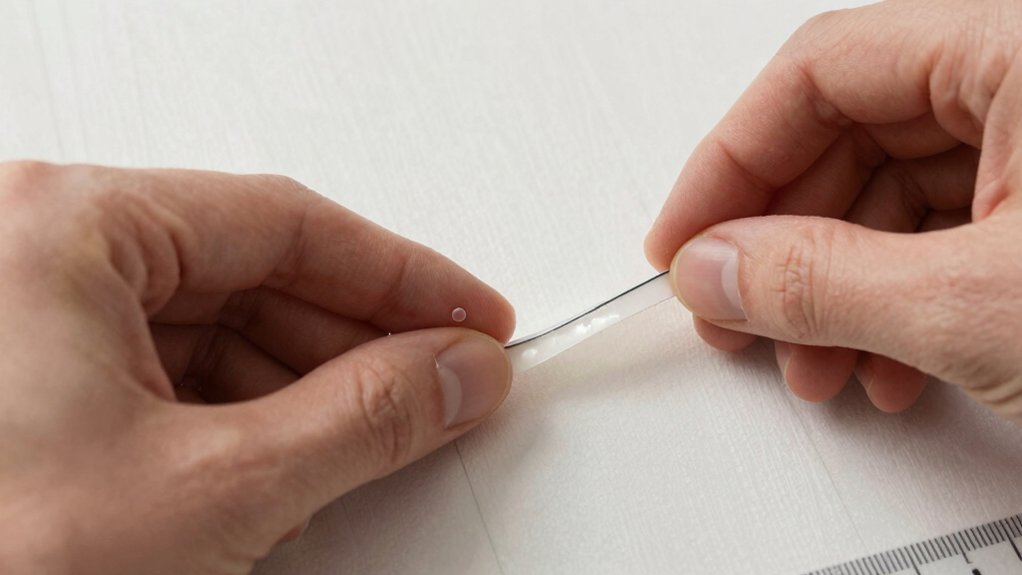
If you notice a stubborn bubble or a misaligned edge, quick fixes can save the entire peel-and-stick job. You can correct on the fly by pinching the bubble tight, lifting the edge slightly, then re-adhering with steady pressure. Watch for air bubble causes and adjust your approach to prevent recurrences.
If the adhesive shows signs of failure, re-adhere from the center outward to restore a smooth surface.
- Pinch the center of the bubble, work outward, then press firmly.
- Lift a small edge, re-seat, and smooth with a cloth.
- Re-apply a thin strip of pressure along the seam.
- Check neighboring sections for lift or air pockets and address promptly.
Finishing Touches and Long-Term Care for a Bubble-Free Look
To finish strong, inspect every seam once more for any lingering bubbles or slight edge lift, and address them with targeted pressure from the center outward.
For long-term care, avoid excessive moisture and direct sunlight, which can degrade adhesive and colors. Keep rooms ventilated during curing and maintain stable humidity to prevent wallpaper warping.
Regularly wipe with a soft, damp cloth—never abrasive cleaners—to remove dust and fingerprints without dulling the finish.
When replacing damaged sections, match color and pattern precisely to maintain a seamless look; use patching and trimming only where necessary.
For color matching, store extra rolls for future touch-ups and keep them in the original packaging.
Periodically inspect seams, corners, and borders, reseal any gaps, and maintain a bubble-free, professional appearance.
Frequently Asked Questions
Can Bubbles Form on Pre-Pasted or Vinyl Wallpaper?
Yes, bubbles can form on pre-pasted or vinyl wallpaper. You’ll prevent bubble formation by smoothing from center outward, working in sections. For different wallpaper types, follow manufacturer guidance, and keep air trapped-free as you adhere each strip.
How Long Should Adhesive Cure Before Hanging Next Panel?
Adhesive should cure enough before hanging the next panel to guarantee firm bonding; wait until it feels tacky yet set. Check adhesive drying times on the product, then verify panel alignment before proceeding with the next panel.
Will Heat From Sunlight Cause Bubbles Over Time?
Sunlight can cause bubble formation over time due to heat expansion, so yes, heat from sunlight may create bubbles. To minimize risk, check for smoothness regularly and avoid prolonged direct sun exposure on the wallpaper surface.
Is It Safe to Use Hairdryer to Remove Small Bubbles?
Yes, you can use a hairdryer, but carefully. Keep it on low to medium heat, hold distance, and move constantly. This protects hairdryer safety and supports bubble prevention by softening adhesive without overheating wallpaper.
Can Peel-And-Stick Wallpaper Be Repositioned After Application?
Yes, you can reposition removable wallpaper after application. Start by lifting from an edge, then smooth out slowly. Use repositioning tips: work in sections, align seams, and avoid stretching. This methodical approach helps prevent damage and bubbles.
Conclusion
You can achieve a flawless peel-and-stick install by prepping the wall, choosing the right wallpaper, and aligning every panel with care. Apply slowly, smooth as you go, and don’t rush the squeegee or seam work. If a bubble appears, pinch, lift, and readhere promptly. Finish with a light press over the entire surface and clean any residue. Like a craftsman’s signature, precision earns a lasting, bubble-free finish. Your walls will thank you.