Identify your filter size by reading the frame for three numbers like 20x25x1, then verify they all fit and note the correct thickness. Choose a filter type that balances air quality with your system’s needs—higher MERV for allergies, pleated for better trapping, or fiberglass for budget, ensuring compatibility with airflow. Replace safely: power off, remove the old filter with the arrow toward airflow, clean the housing, and insert the new filter. Expect every 1–3 months, and you’ll uncover more tips as you continue.
Identify Your Furnace Filter Size: Read the Frame Quickly
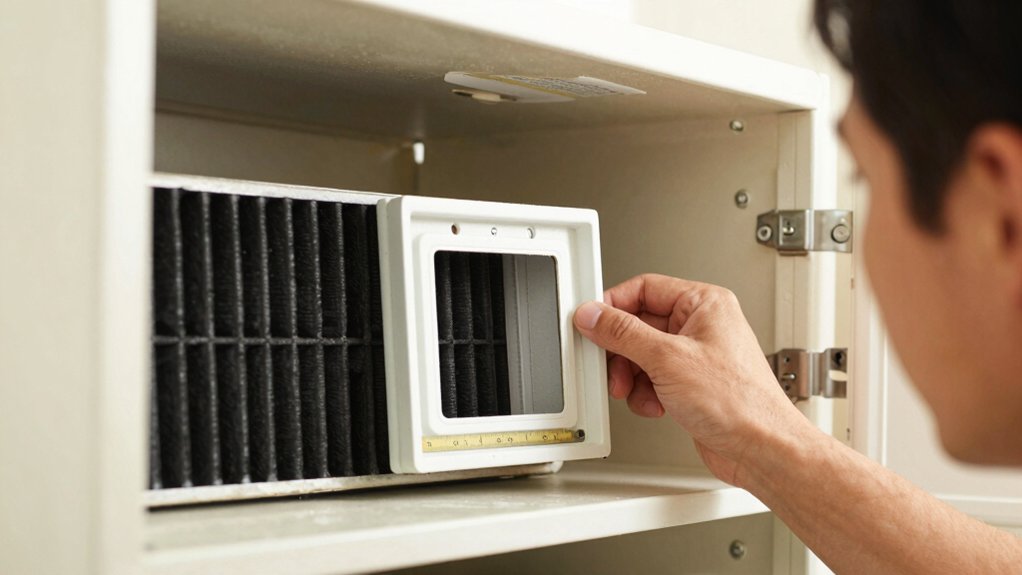
To identify your furnace filter size, start by checking the frame itself—it’s usually printed along the edges or on the lip of the filter. You’ll read the numbers as a single set (for example, 20x25x1) rather than guessing.
Note that the frame dimensions determine fit, so verify all three measurements before shopping. If you see multiple numbers, use the largest compatible size to avoid gaps.
Also look for the filter material listed on the frame; it helps confirm you’ve got the right type for your system. Don’t overlook labels that indicate thickness or depth.
With the frame dimensions confirmed, you can select a filter that matches your unit’s airflow needs and maintenance schedule. This step saves time and prevents unnecessary replacements.
Choose the Right Furnace Filter Type for Your Home
Now that you’ve identified your filter size, you’ll want to pick the right filter type for your home. Start with air filter efficiency needs, balancing comfort, indoor air quality, and system performance. If you have allergies or pets, prioritize higher MERV ratings, but guarantee your furnace can handle the restrictive draw.
Next, consider filter material options: pleated filters trap more particles, while fiberglass is budget-friendly and adequate for basic protection. Electrostatic options add charge to capture more dust, yet may require checking compatibility with your unit.
If you want easy maintenance, look for a standard 1-inch pleated design; for quieter operation, choose a deeper, higher-capacity model. Always verify compatibility with your system’s airflow and replace frequency to maintain efficiency.
Replace the Filter Safely: Step-by-Step Guide
Before you start, turn off the furnace and unplug it or switch the breaker to cut power. This protects you during the entire process.
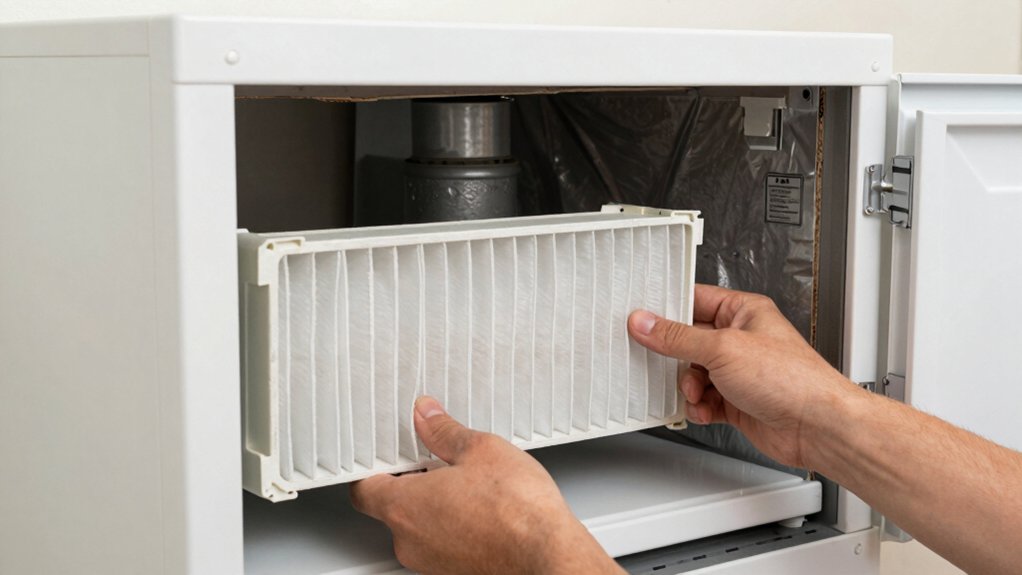
Remove the old filter carefully, noting the airflow direction printed on the frame. Inspect the housing for debris and wipe clean if needed. Check the gasket for wear; replace the filter if the seal looks damaged.
Choose the correct air filter materials and size from your prior selection, ensuring a snug fit. Insert the new filter with the arrow facing the same direction as the old one, aligning it firmly in the slot.
Reconnect power and run a brief system test to confirm airflow is steady. Maintain installation safety by keeping hands dry and avoiding forceful fits.
How Often to Replace Your Furnace Filter
How often you replace your furnace filter depends on use and conditions, but a general rule is every 1 to 3 months. Your decision hinges on the filter’s lifespan and your home environment, not guesswork. Follow a steady Replacement schedule to prevent performance loss and needless wear.
- Assess airflow and dust buildup monthly.
- Check for color changes or dings that signal reduced efficiency.
- Align replacement frequency with your system’s needs.
- Adjust timing if you have pets, allergies, or HEPA-compatible filters.
Keep a simple log and set reminders. If you notice reduced airflow or odd odors, shorten the interval. For seasonal use, lengthen if conditions stay clean. The goal is consistent filtration without over- or under-changing.
Tips to Maintain Airflow and IAQ Between Changes
Maintaining steady airflow and IAQ between filter changes starts with practical steps you can take daily. First, keep supply vents open and unobstructed; furniture and drapes should be a minimum of a few feet away from registers to prevent air blockage.
Next, replace or clean improperly sized or dirty air filters in upstream units, if applicable, to reduce resistance. Schedule regular duct and coil inspections to spot mold or debris early, since buildup hurts airflow optimization and indoor air quality.
Control humidity and temperature to reduce strain on the system and limit dust circulation. Finally, use venting strategies that support efficient air exchange, and seal leaks in doors or windows to maintain consistent IAQ throughout the home.
Frequently Asked Questions
Can I Use a Washable Filter in a Furnace With a Static Pressure Limit?
Yes, you can, but consider washable filters only if your system’s static pressure stays within limits; otherwise, they can restrict airflow. Washable filters reduce waste, yet they require regular cleaning to prevent elevated static pressure.
Do Bypass Humidifiers Affect Filter Replacement Frequency?
Yes, bypass humidifiers can shorten filter lifespan if you ignore maintenance. You’ll notice more dust and faster clogging; schedule humidifier maintenance now, and you’ll protect filter life while keeping the system efficient.
How Do I Identify Filter MERV Rating Without Tools?
You can’t reliably identify a MERV rating without tools, so don’t guess; rely on the filter packaging or manufacturer specs. For filter maintenance, use labeled MERV rating guidance and replace according to your system’s needs.
Should I Change Filters During Vacation or Holidays?
Yes, you should change filters before leaving; schedule vacation maintenance and holiday scheduling to keep airflow clean. Make certain you set a reminder, swap filters mid-trip if needed, and confirm your system runs efficiently while you’re away.
Can a Smart Thermostat Indicate When to Replace the Filter?
A smart thermostat can indicate when to replace the filter, and it helps you track filter lifespan. You’ll rely on alerts, not guessing, ensuring efficient airflow and cooling efficiency. Popcorn-era simplicity meets modern, precise maintenance guidance.
Conclusion
You’ve got the basics down: size, type, and a simple change routine. Replace filters when they look dirty or every 30–90 days, depending on home, pets, and usage. Keep a spare on hand and label the date you installed it. Think of your furnace as a patient: clean air equals better performance. In short, stay proactive, check monthly, and swap as needed to sustain airflow, IAQ, and comfort. Your system will thank you.