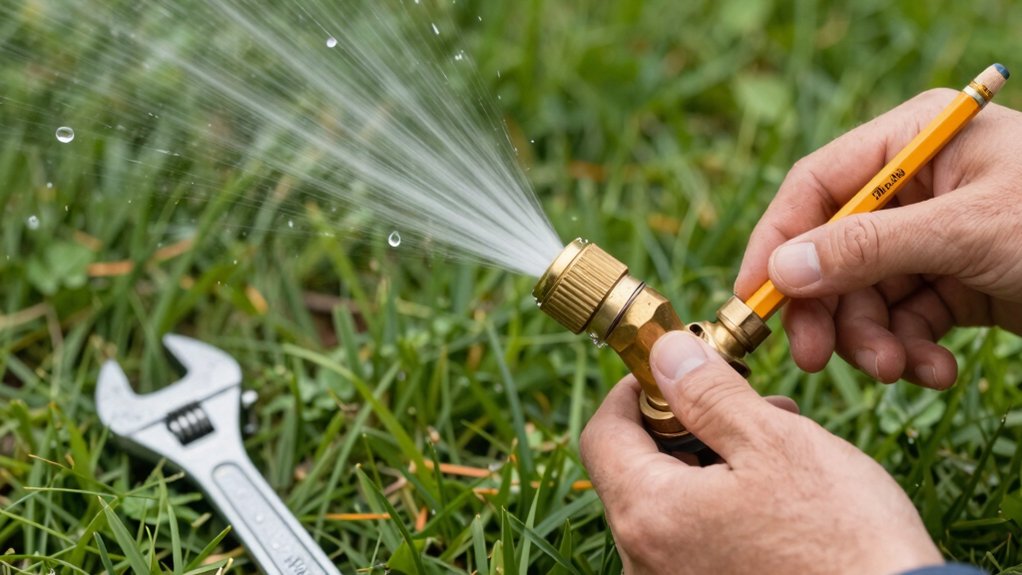
Start by diagnosing head problems: look for misalignment, leaks, cracks, and clogged emitters, then compare actual performance to expected coverage. To fix, shut off water, loosen and reseat misaligned heads, flush lines, and replace damaged nozzles or risers. Clear debris, tighten seals, and test at low pressure. Fine-tune spray by adjusting arc, radius, and nozzle type, ensuring even overlap. Document changes and verify across full cycles; you’ll uncover more tips if you keep exploring.
Diagnose Sprinkler Head Problems Quickly
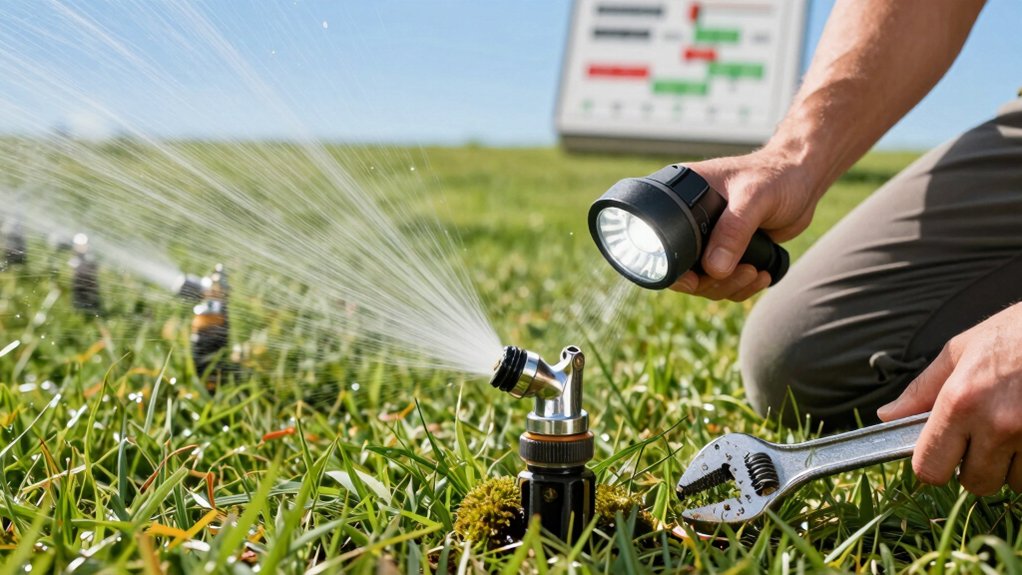
Start by surveying the sprinkler head and its surroundings for obvious issues. You’ll quickly spot misaligned heads, leaks, or cracked components that signal a problem, not just wear. Understand common sprinkler head types, because each behaves differently under pressure, spray pattern, and distance.
Compare current performance to expected output for your watering schedule, noting discrepancies in coverage, flow, and reps. Check for clogged emitters, debris in the sprinkler body, and bent risers that distort spray.
Listen for irregular buzzing or uneven pulses, which hint at pressure drops or valve faults. Record findings, then prioritize fixes by impact on coverage and water efficiency.
With a clear map of issues, you’ll tailor adjustments to match your watering schedules and prevent recurring problems.
Clear Clogs and Reseat Misaligned Heads
Clear clogs and misaligned heads disrupt coverage and waste water, so tackle them first.
To clear a clog, shut off water, remove the sprinkler head, and flush the line with a slow trickle of water to push debris out. Inspect the nozzle and riser for cracks or buildup; replace if damaged.
Reseat misaligned heads by turning the body until it sits squarely in the framing and reattach the spray guard securely. Check the seal for leaks, then test the system at low pressure before returning to full operation.
If drainage issues persist, inspect the surrounding soil for compaction; loosen compacted soil gently to restore proper depth and alignment.
Properly seated, debris-free heads deliver consistent coverage with minimized stress on the system.
Fine-Tune Spray Patterns for Even Coverage
Now that clogs are cleared and heads are seated, it’s time to fine-tune spray patterns for even coverage. You’ll adjust each head to match its designated coverage zones, ensuring no dry patches or overspray.
Begin by observing a full cycle, then identify gaps and overlaps. For rotating heads, set a consistent arc and radius, and fine-tune spring tension if needed to prevent drift.
For fixed-nozzle heads, swap to a nozzle that delivers a uniform spray within the zone, avoiding high-output jets. Recheck after adjustments, noting the spray pattern as it travels across turf and plant beds.
Aim for seamless overlap at boundaries, not excess pooling. Document changes, then verify full coverage across all zones during the next cycle.
Repair Leaks and Fix Pop-Up Timing
If you’ve spotted leaks or stuttering pop-up timing, address them now to protect pressure and efficiency. Start by locating the source—rail joints, fittings, or head seals—and tighten or replace as needed. Clean debris from emitters and risers to restore steady flow.
For persistent leaks, apply plumber’s tape on threads and use watertight sealant where appropriate, then re-test under normal pressure. Adjust pop-up timing by checking controller settings and zone sequencing; ensure quick-rib or multi-trajectory heads aren’t misaligned.
Inspect supply lines for kinks and pinches that hinder uniform coverage. Consider upgrading to drought resistant fixtures if you’re updating beyond repairs. Align watering schedules with your zone needs, avoiding overwatering while preserving root health and efficiency.
Regular checks prevent waste and extend system life.
Test, Maintain, and Confirm Consistent Watering
To guarantee reliable coverage, start by testing each zone under normal operating conditions and then verify that watering times match plant needs.
You’ll confirm uniform distribution by watching heads for spray symmetry, closets of mist, and absence of pooling. Record run times, durations, and any pressure drops, then adjust controllers to align with established watering schedules.
Maintain consistent soil moisture by checking after a full cycle and comparing with forecasted evapotranspiration.
Regularly inspect heads for clogs, misaligned spray patterns, or broken emitters, and replace as needed to sustain even coverage.
Integrate your findings with landscape design goals, ensuring plantings receive appropriate amounts without overwatering.
Schedule seasonal reviews, and refine zones to preserve efficiency, water quality, and long‑term landscape health.
Frequently Asked Questions
How Often Should Sprinkler Heads Be Replaced vs. Repaired?
You should replace sprinkler heads when they’re worn or damaged, typically every 5–15 years, rather than repairing each time. Consider sprinkler lifespan and replacement frequency to prevent leaks, uneven spray, and poor coverage. Regular inspection keeps your system efficient and reliable.
Can Weather Affect Sprinkler Head Performance and Timing?
Weather can mess with your sprinkler head timing; rain delays and wind effects shift spray patterns and coverage. You’ll notice odd spacing, misting, or drift, causing delayed watering. Stay vigilant, adjust timers, and test promptly after weather shifts.
Do Different Head Types Require Unique Maintenance Steps?
Different head types require unique maintenance steps, so you’ll need to tailor your approach. You should check types compatibility and follow specific maintenance tips to avoid misaligned sprays and leaks, ensuring reliable coverage and efficient water use.
How to Evaluate Soil Absorption After Adjusting Spray Patterns?
To evaluate soil absorption after adjusting spray patterns, perform soil testing near the sprinkler zone and monitor infiltration; note the absorption rate to confirm even water penetration and adjust coverage if runoff or pooling occurs.
What Tools Reduce Water Waste During Repairs?
You’ll cut waste with quick-reaction tools: a flow meter and pressure gauge. You spot leaks like drip irrigation hints, while rain sensors automate shutdowns, preventing overwatering as you repair and fine-tune coverage.
Conclusion
To keep your sprinkler system reliable, quickly diagnose issues, clear clogs, and reseat misaligned heads. Fine-tune spray patterns for even coverage, repair leaks, and fix pop-up timing, then test and maintain for consistent watering. Did you know that improper sprinkler distribution can waste up to 50% of water? By checking coverage at the end of each season and after major adjustments, you’ll save water, money, and keep your landscape thriving.