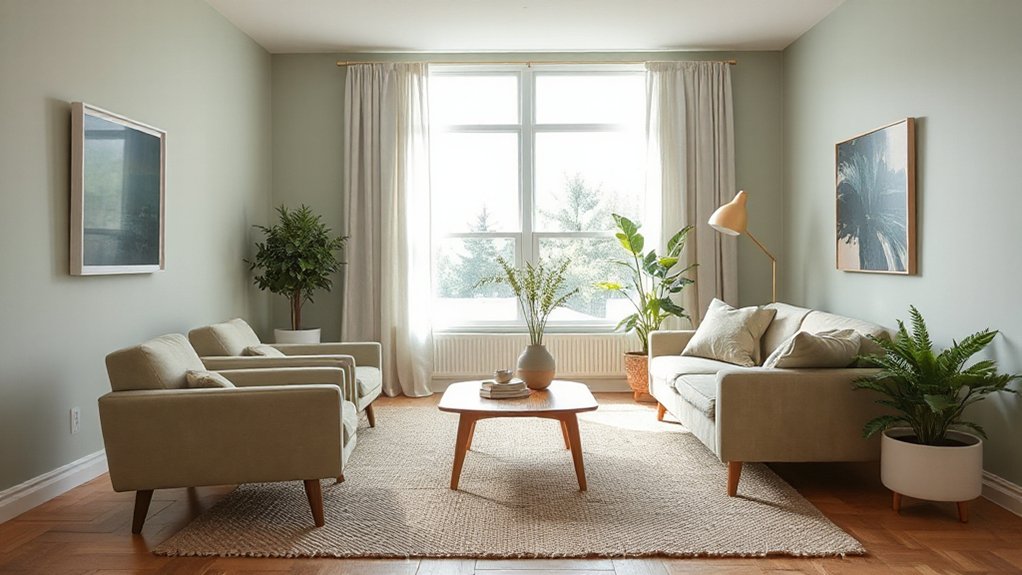
Sage green living rooms feel calm, sophisticated, and endlessly inviting. Start with a restrained palette that uses natural materials—linen, wood, and brass accents—to let the color breathe. Balance cooler and warmer sage tones to suit your light and space, then layer textures with boucle pillows, wool rugs, and soft throws for depth. Maximize daylight, pair with muted metals, and place seating to center the sage sofa. Want more tips to refine the look? You’ll discover even more inside.
How Sage Green Transforms a Living Room
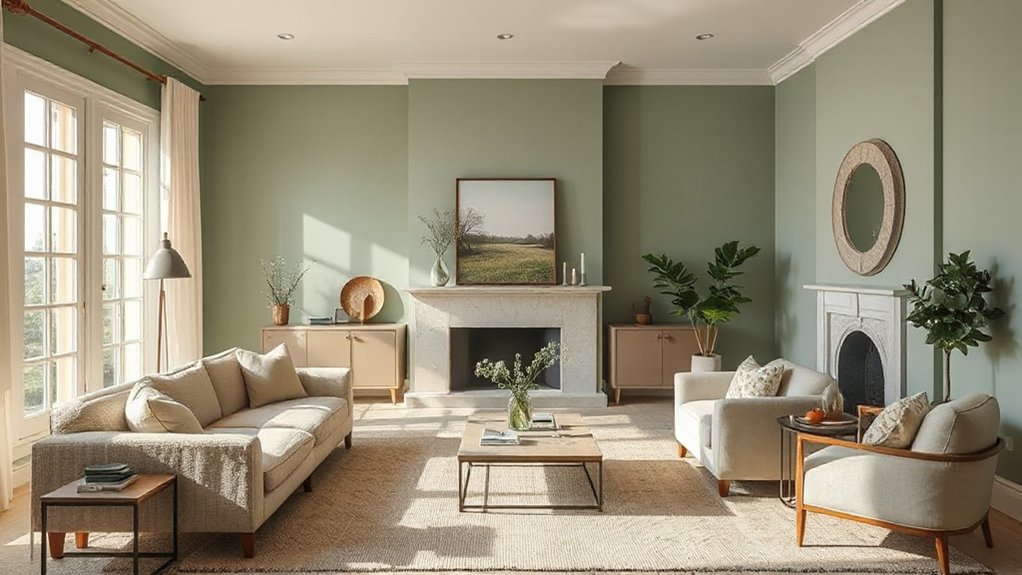
Sage green brings a calm, sophisticated energy to any living room, transforming the space into a serene retreat. You’ll notice how this hue harmonizes textures, from warm woods to cool metals, guiding light rather than competing with it.
In color psychology terms, sage calms the eye and lowers visual noise, making your seating and art feel intentional and balanced. Its versatility lets you layer neutrals and warm accents without overwhelming the room, creating a cohesive, breathable mood.
Historically, sage has signified renewal and steadiness, lending a classic, timeless appeal that resonates with both vintage and contemporary furnishings. As you curate, you’ll feel the space become more purposeful, inviting conversation, reflection, and everyday calm.
The transformation is quiet, confident, and persistently elevating.
Choose a Sage Palette That Fits Your Space
Choosing a sage palette that fits your space starts with understanding light, size, and furniture style. You’ll assess how natural and artificial light shifts tones throughout the day, then pick resists that keep rooms calm or energizing as desired.
Consider scale: large rooms deserve bolder swaths of sage or deeper accents, while compact spaces benefit from a lighter base to avoid overwhelm. Align the palette with your furniture silhouette and finishes—matte neutrals soften mid-century lines, while satin or egg-shell sheens mirror contemporary frames.
Use color psychology to guide mood—cooler sages promote serenity; warmer tones invite coziness. Plan your paint application with crisp edges and strategic shifts, so color feels intentional.
Test swatches in multiple lighting moments to confirm harmony before committing.
Layer Textures for Depth and Warmth in Sage
To build on a sage palette, layering texture adds depth and warmth that paints the room with tangible coziness. You enhance this effect by combining materials—linen throws, boucle pillows, and a wool rug—so every touch invites you to linger.
Textural layering creates visual interest without overpowering the calm base, guiding the eye through subtle shifts in light and shadow. Juxtapose smooth surfaces with rugged weaves to emphasize tactility, while a ceramic vase or brass tray introduces a refined gleam.
Use color contrast sparingly but intentionally: pair sage with charcoal, cream, or muted ochre to define zones and highlight architecture. Keep scale varied, and let imperfect edges soften the overall line.
The result is serene depth that feels thoughtfully curated and comfortably lived in.
Lighting and Accents to Elevate Sage Green

Strategically chosen lighting and well-placed accents transform a sage-green room from serene to sculpted. You pair soft ambient light with focused task beams to highlight architectural features and key textures, creating depth without glare.
Choose warm, dimmable fixtures that echo nature’s palette; brass or matte black finishes add refined contrast against the sage backdrop. Wall art acts as a focal, so hang pieces with subtle metallic hints or botanical motifs at eye level to draw the gaze inward.
Curtain styles matter too: light, linen drapes soften daylight, while tailored panels in a complementary hue frame windows with quiet elegance. Accent items—ceramic vases, candles, and a textured throw—punctuate the room, guiding the eye and reinforcing a cohesive, serene sophistication.
Arrange Furniture to Spotlight Sage
Consider arranging focal sage pieces where they command the room, so your eye lands on the color without competing with other bold elements.
Create balance with sage elements by pairing stronger furniture with lighter accents, keeping the hue cohesive and calm.
Highlight sage accents only, letting subtle repeats and intentional placement guide the flow rather than overwhelm the space.
Arrange Focal Sage Pieces
Begin by anchoring your seating with a sage-toned centerpiece—think a sofa or sectional in sage fabric—and let other furniture radiate around it to spotlight the hue. You arrange focal sage pieces to create a natural flow, guiding the eye toward the centerpiece without shouting.
Place a pair of accent chairs at slight angles to frame the sofa, then introduce a low-profile coffee table that mirrors the green tones. Choose complementary art that echoes the sage’s warmth, and position it where it can be viewed clearly from all seating angles.
Add decorative pillows in varying textures and greens to reinforce the palette without clutter. Keep lamps and lighting aligned to highlight the focal pieces, ensuring a cohesive, refined vibe throughout the room.
Create Balance With Sage
To spotlight sage, arrange your furniture so the hue takes center stage without overwhelming the room. Balance soft sage with neutral upholstery and purposeful negative space, letting one large piece anchor the scheme while smaller accents ripple around it.
Position seating to create intimate conversation nooks that draw the eye to the green’s calm undertone, then place lighting and textures to echo its hue without competing. Consider color psychology: sage promotes serenity when paired with warm woods and crisp whites, cultivating a refined, inviting atmosphere.
Acknowledge the historical significance of green in interiors by preserving classic silhouettes and timeless fabrics that respect tradition while feeling fresh. This deliberate arrangement ensures harmony, sophistication, and a cohesive, enduring living space.
Highlight Sage Accents Only
Sage should take center stage, with furniture arranged to spotlight its quiet presence rather than compete with it. When you highlight sage accents, aim for deliberate, restrained placements that let the color breathe. Choose a few signature pieces—a chair, a throw, a vase—so sage reads as a thoughtful statement, not a loud chorus.
Keep surrounding textiles in complementary neutrals to enhance the calm, cohesive effect. Consider sage color psychology: its cool, restorative tone can anchor focus and foster conversation without overpowering the room.
Let sage green in art anchor the wall, selecting works that weave subtle warmth into the palette. By elevating select accents, you create a refined, timeless space that feels effortlessly curated and serene.
Neutral Pairings for Sage: Mood Shifts Made Easy
Neutral pairings with sage create a calm, versatile backdrop that smooths mood shifts from airy mornings to cozy evenings. You’ll discover that sage anchors spaces without overpowering them, letting other colors breathe.
Pair it with warm neutrals like cream or oatmeal to lift light, or deepen with charcoal for dramatic contrast that still reads serene. Color psychology teaches that greens evoke balance and renewal, while soft taupes maintain quiet elegance.
A touch of blush or dusty pink adds gentle warmth, keeping nights intimate. Color history reminds you that sage has long softened interiors, balancing traditional and modern sensibilities.
Use natural textures—linen, rattan, wool—to reinforce longevity. With thoughtful pairings, your room stays adaptable, refined, and consistently inviting.
Practical Maintenance: Keep Sage Calm Without Overwhelm

Here are simple, effective habits to keep sage calm without turning your space into a maintenance marathon. You’ll keep the look pristine by routine, not rigidity: wipe surfaces weekly with a gentle microfiber cloth, and dust decorative accessories during the same pass to prevent buildup that dulls color.
Use a soft damp cloth on walls or trims sparingly to preserve the sage hue’s depth. Embrace color psychology by pairing sage with restrained accents—taupe, ivory, and muted brass—to maintain balance without overdoing contrast.
Schedule a quarterly refresh: swap a small set of decorative accessories instead of reworking the room. Let natural light guide care intervals, since bright daylight stabilizes tone and reduces perceived clutter.
This discipline preserves serenity while honoring the room’s refined, aspirational vibe.
Frequently Asked Questions
How to Choose the Right Sage Shade for My Walls?
Choosing the right sage starts with testing swatches on your wall, then comparing undertones under varying light. Consider paint finish and lighting options; you’ll witness how warmth shifts. Pick a shade that harmonizes with furniture, art, and textures.
Can Sage Green Work With Bold Accent Colors?
Yes, sage green works with bold accents. You’ll master color pairing by balancing rich hues with sage’s muted undertone, boosting design versatility while keeping spaces cohesive and refined. Embrace contrast, texture, and thoughtful scale for aspirational results.
What Flooring Complements Sage Without Clashing?
You’ll want earthy tones like warm wood or stone, plus cool grays, to keep sage harmonious. Choose flooring options that support color coordination, avoiding busy patterns, and you’ll create a polished, aspirational space you’ll love.
How to Incorporate Sage in Small Living Rooms?
Stunningly, you can. You’ll nest sage in small living rooms with lighter walls, reflective surfaces, and layered decorative accessories for depth. You’ll master color coordination, keeping furniture streamlined, and let plants punch up the palette without crowding.
Is Sage Green Suitable for High-Traffic Spaces?
Yes, sage works in high-traffic areas if you prioritize durable furniture and easy-clean finishes. You’ll appreciate sturdy fabrics and wall texture options that hide wear, while keeping your space polished and aspirational.
Conclusion
Sage green steadies your space, inviting calm without fading into the background. You’ll notice how a thoughtful palette, layered textures, and targeted lighting transform ordinary rooms into refined retreats. As you arrange furniture to spotlight sage, you’ll feel the room breathe—bright, balanced, welcoming. Stay intentional with neutral pairings and easy maintenance, so the color stays serene. Remember: slow and steady wins the design race. Soon your living room will be not just stylish, but truly your sanctuary.