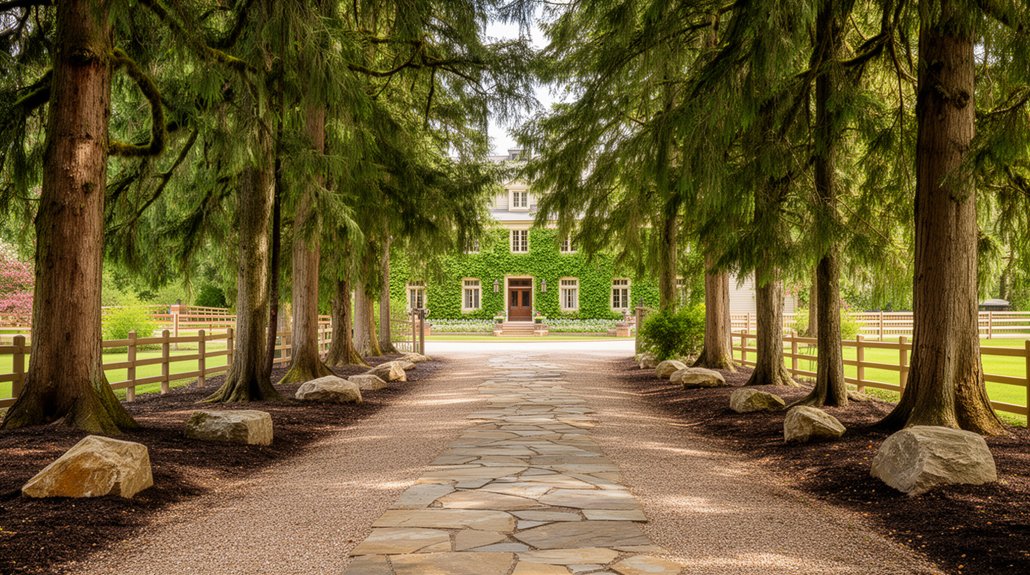
You’ll begin by considering how natural stone and tree-lined approaches shape both function and place on rural estates. Choose stones that weather gracefully and echo the landscape, then layer trees to guide traffic, soften edges, and improve microclimates. Focus on quiet grading and drainage to reduce upkeep, while planning for long-term durability. The next steps reveal how thoughtful details translate into lasting curb appeal and ecological balance, with real-world examples you can adapt.
Why Rural Driveways Benefit From Natural Stone and Trees
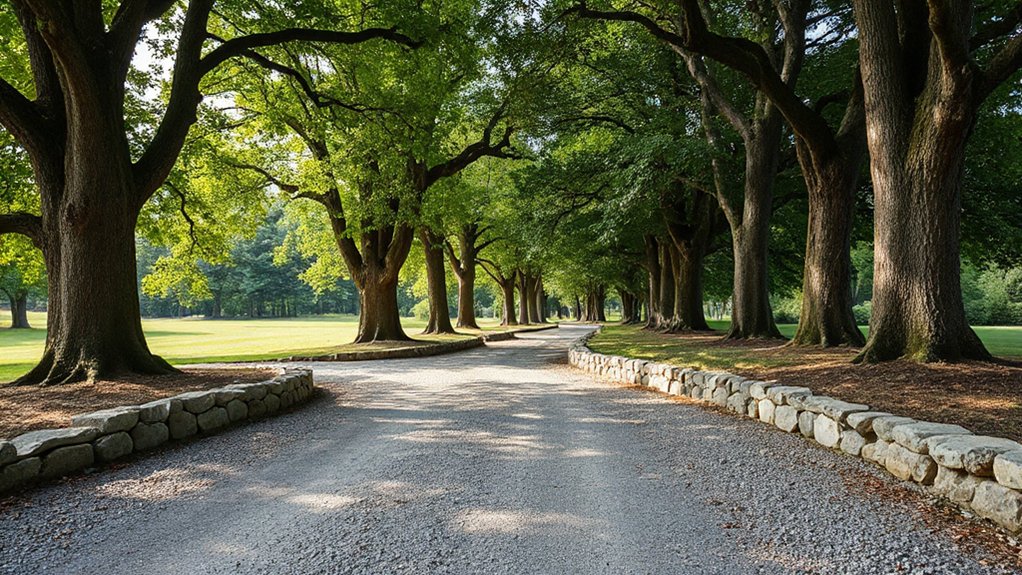
Natural stone and mature trees establish a driveway’s character from the start, blending durability with a sense of place. You’ll gain lasting performance, reduced maintenance, and seasonal texture when you choose natural materials that age gracefully alongside landscape features.
Stone provides solid edges, better load distribution, and resilience against weather, while trees offer shade, microclimate benefits, and a natural guide for traffic flow.
You’ll also promote ecological balance by selecting species that require minimal upkeep and support local biodiversity.
Integrate Wildflower planting along margins to soften hardscapes and to enhance pollinator habitat without compromising accessibility.
Rustic lighting accents illuminate pathways, improve safety, and reinforce a rural aesthetic without overwhelming the terrain.
This combination yields a cohesive, durable approach tailored to countryside conditions.
How to Choose Stones That Harmonize With the Countryside
Selecting stones that harmonize with the countryside starts with matching color, texture, and scale to your landscape. You’ll assess existing tones in your surroundings—soil, vegetation, sky—and choose stones that repeat or complement them. Prioritize color coordination so hues blend seamlessly rather than clash; opt for subdued, earthy palettes over high-contrast combos.
Consider stone textures that reflect local geology—smooth weathered surfaces for classic lanes, or slightly rustic grits for informal paths. Scale matters: large blocks for grand entrances, smaller rubble for intimate meanders. Test samples in daylight and shade to reveal true character.
Favor consistency across walling, edging, and paving to maintain cohesion. Document choices with notes on material provenance, sealants, and maintenance needs for long‑lasting harmony with the countryside.
Designing Tree-Lined Driveways for Privacy and Curb Appeal
Tree-lined driveways quietly elevate curb appeal while boosting privacy, because well-placed trees create a layered screen that softens sightlines and reduces wind, dust, and noise. You should select species that form continuous canopy without heavy root disruption to pavement, combining evergreen structure with deciduous seasonal color.
Align tree rows to frame entrances, guiding traffic and enhancing sightlines to focal stones or gates. Integrate understory shrubs for dense, year-round privacy while preserving natural light and airflow.
Design considerations include spacing that avoids shadowing of critical entrances and reduces allowed wind tunnel effects. Consider wildlife corridors by situating trees to connect hedgerows and nearby habitats, encouraging movement.
Maintain variety in leaf texture and color to deliver seasonal color while sustaining landscape health and road safety.
Grading, Drainage, and Maintenance for Low-Maintenance Longevity
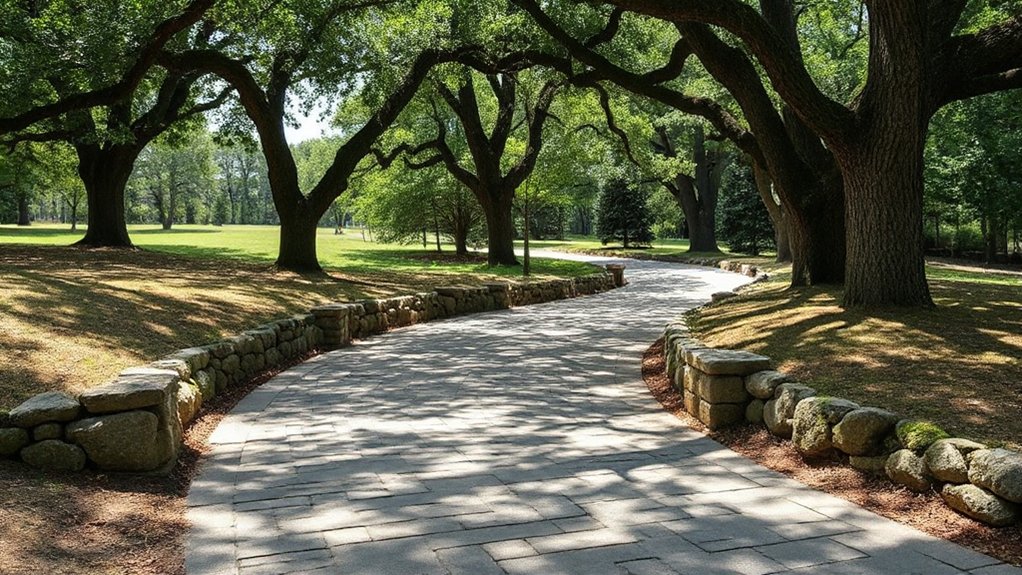
Grading and drainage set the foundation for low-maintenance longevity by directing water away from pavement and roots, preventing erosion, pooling, and frost heave. You optimize performance by aligning cross-slope, ensuring proper crown, and maintaining clean inlets.
Focus on soil stabilization and erosion control to sustain ground integrity over seasons and traffic. Regular inspection catches subtle shifts before damage appears, reducing long-term upkeep.
- Confirm proper grading during installation and after heavy rainfall
- Implement soil stabilization with appropriate compaction and amendments
- Maintain drainage capacity; keep channels clear of debris
- Monitor for erosion hotspots and address promptly with stabilization measures
Case Studies: Rural Driveway Transformations and Mockups
Rural driveway transformations illustrate how thoughtful design and mockups guide real-world results. In these case studies, you’ll see practical sequences—from concept sketches to scale models to full-site trials—that confirm material choices, border strategies, and vegetative buffers before committing to permanent construction.
You’ll evaluate how natural stone finishes pair with tree-lined edges to soften edge conditions while maintaining vehicle movement and sightlines. Each mockup highlights erosion control measures, from swales and rock gabions to permeable paving options, ensuring drainage aligns with grading plans.
Wildlife habitats are considered, with planting schemes that support pollinators and cover for small fauna without compromising access. These documented transformations provide reproducible templates, enabling informed decisions, risk mitigation, and predictable performance across varying rural contexts.
Frequently Asked Questions
What Are Common Costs for Installing Stone and Trees Together?
Common costs for installing stone and trees together range widely, but you’ll typically see stonework and planting billed together in the mid-to-upper range of landscaping aesthetics. Expect site prep, edging, trenching, base material, and permit costs plus tree stock, soil, irrigation, and mulch.
A precise Cost estimation will hinge on stone type, tree mature size, and labor complexity. You’ll optimize value by detailing drainage, access, and maintenance needs early in the project.
How Do Seasonal Changes Affect Stone Appearance and Tree Growth?
Seasonal changes affect stone appearance and tree growth in clear, practical ways: you’ll see Seasonal color variations in stone surfaces as moisture and temperature shift, and you may notice subtle color tones darken after rains.
Tree growth patterns respond to seasonal light and moisture, so expect faster spring shoots and slower late-season growth.
Plan for occasional resealing and pruning to preserve curb appeal and safety, aligning maintenance with weather windows.
Are There Any Local Regulations Impacting Rural Driveway Landscaping?
Like a compass needle settling true, you’ll want to know that yes—there are local rules you should check. You’ll encounter zoning restrictions that govern setbacks, curb cuts, and landscaping buffers.
You’ll also assess Environmental impact considerations for drainage, soil disturbance, and native plant preservation. Stay proactive: consult municipal codes, file for approvals early, and align your rural driveway landscaping with streamlined permitting to avoid delays and guarantee compliant, sustainable progress.
What Maintenance Schedule Best Preserves Natural Stone Integrity?
You should seal stone every 2–3 years to protect color and prevent porosity, and perform tree pruning annually to reduce root upheaval.
Clean surfaces with a soft brush and mild detergent, avoiding harsh chemicals that degrade stone.
Re-seal after power washing or significant weather events.
Inspect joints seasonally; fill gaps promptly.
Monitor for spalling, and address promptly.
Maintain proper drainage and avoid standing water.
Schedule inspections with a stone-care pro for best results.
How Long Does Installation Typically Take From Start to Finish?
How long does installation take from start to finish? Typically several days to a couple of weeks, depending on site preparation, stone selection, and weather.
You’ll schedule grading, base lay, and jointing consecutively, then your driveway lighting and final grading integrate as the last steps.
You’ll also consider wildlife considerations during trenching and routing.
Expect staged milestones, and communicate weather contingencies to minimize delays.
You’ll maintain steady coordination for precise, durable results.
Conclusion
You’ll notice the coincidence: your driveway and your landscape both appear to evolve together, almost by design. When you pick stones that echo the land and plant trees that echo the horizons, function meets beauty without effort. If you slope grades with intuition and tune drainage early, maintenance feels almost incidental. So trust the process you’ve begun — a rural approach that, by chance, becomes timelessly cohesive, durable, and quietly spectacular.