
Underfloor heating could be the single most game-changing upgrade you’ll regret not budgeting for. You’ll weigh upfront costs against long-term savings, and the math hinges on climate, insulation, and system type. If you’re chasing even heat, lower energy bills, and aesthetic freedom, a precise cost-benefit analysis matters more than hype. Ready to quantify payback and risks before you commit? Let’s consider how your home and habits tilt the balance.
How Underfloor Heating Works: Foundations and Upfront Costs
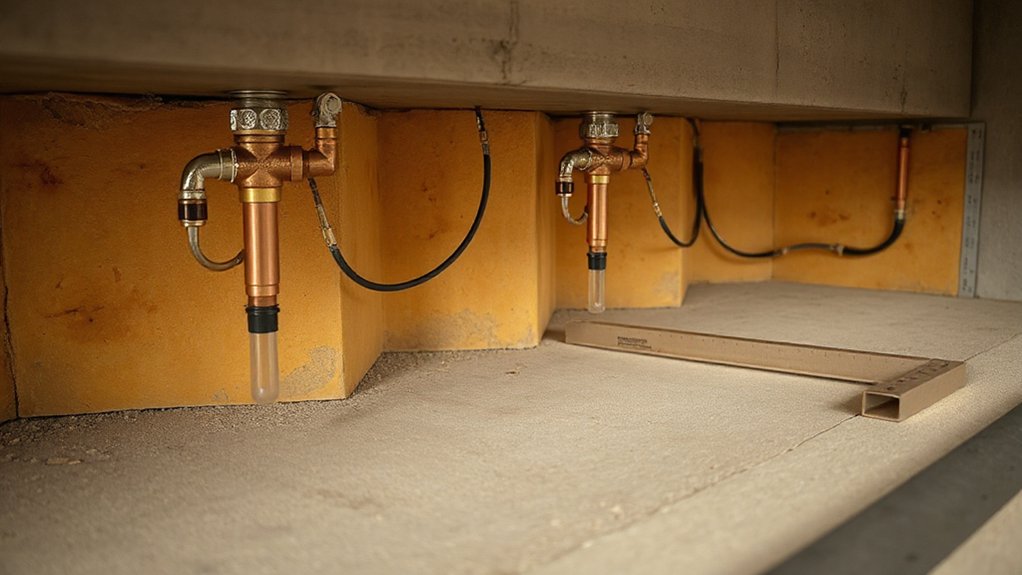
Underfloor heating installs either electric mats or embedded hydronic tubing, each with distinct foundations and upfront costs. You evaluate local fuel prices, installation complexity, and material tolerances to project initial outlays accurately.
Electric mats run on low-voltage circuits, offering simpler retrofits and faster heat response, but higher operating costs per square foot can reduce long-term value.
Hydronic systems, by contrast, require plumbing work and a heat source, elevating upfront investments yet delivering lower ongoing energy expenses in many climates.
Flooring compatibility matters: some coverings insulate or restrict heat transfer, influencing efficiency targets.
Maintenance considerations differ too; electric mats have fewer moving parts, while hydronic loops demand leak testing and pump maintenance.
In both cases, confirm warranty terms, thermal mass interaction, and control integration to guarantee reliable performance.
Electric vs Hydronic: Which System Fits Your Home?
Electric and hydronic systems differ in how they generate heat and where components sit, so your choice hinges on the basics of the electric system and hydronic system fundamentals.
You’ll want to weigh up installation simplicity and control options against ongoing costs, efficiency, and space impacts, using current data on upfront versus operating costs.
This discussion sets the framework by comparing how each approach aligns with your home’s layout, wiring capacity, and long-term energy targets.
Electric System Basics
Choosing between electric and hydronic underfloor systems hinges on reliability, efficiency, and installed cost.
In electric system basics, you’ll grasp simple installation, predictability, and easier zoning. Electric mats or wires emit heat directly into floor coverings, yielding fast response times and lower upfront material complexity than hydronic loops.
Efficiency is strong when the system runs with precise controls, yet heat loss is tied to insulation quality and floor assembly.
Operating costs correlate with electricity prices and usage patterns; homes with stable electricity rates often see favorable lifetime costs.
Smart controls enable precise scheduling and adaptive temperature setpoints, boosting comfort and energy savings.
Aesthetic appeal remains notable: beneath-floor warmth remains invisible, preserving floor design.
Use high-quality mats, proper spacing, and reputable thermostats to maximize reliability and comfort.
Hydronic System Fundamentals
Hydronic systems circulate heated water through a network of pipes embedded in or beneath the floor, offering substantial thermal mass and consistent warmth. You’ll compare setup complexity, pipe materials, and zoning options to determine fit for your home.
Hydronic circuits deliver stable temperatures, reducing peak loads during cold snaps, but require careful insulation and slab or joist integration to avoid heat loss. In retrofit scenarios, floor thickness and flooring type influence heat transfer rates, making flooring compatibility a critical constraint.
You’ll assess installation cost per square meter, maintenance intervals, and boiler efficiency or heat pump integration. For radiant comfort, cycle times and response delays matter, so you’ll quantify thermal lag and zone control precision.
Cost and Efficiency Factors
When deciding between electric and hydronic systems, start by weighing installation costs, operating expenses, and efficiency under your specific usage pattern.
Electric systems typically offer lower upfront costs and faster responsive heat, but higher operating wattage can raise long-term bills, especially in larger homes.
Hydronic setups incur higher installation costs due to piping, manifolds, and boiler sizing, yet deliver better efficiency at scale and more uniform temperatures with fewer daily energy bursts.
Efficiency varies with insulation quality, floor coverings, and zone controls; hydronic often excels in retrofits where long-term running costs drop, while electric shines in smaller spaces or rooms with limited budget.
Design aesthetics and maintenance requirements matter: hydronic systems usually demand periodic boiler service, while electric systems require simpler, routine element inspections.
Choose based on long-term energy usage, space, and desired finish.
Do Underfloor Heating Pay for Itself? Quick Cost-Benefit Snapshot
You’ll see how the payback timeline aligns with your upfront costs, factoring in typical installation ranges and payback days.
A concise energy-savings snapshot will show annual reductions relative to your current heating, helping you estimate ROI.
We’ll flag key installation cost drivers—wall-to-wall routing, insulation quality, and system type—to ground the discussion in the main determinants of value.
Payback Timeline Overview
A payback timeline for underfloor heating hinges on upfront costs, energy prices, and system efficiency, but the takeaway is straightforward: you can expect a return on investment within several years if your home’s heating load is well-suited to the system.
In practice, payback shortens when installation costs drop, or when tariffs elevate heat-as-auxiliary savings.
Historical trends show capital costs trending downward as modular components mature, while controls and zoning boost real-world efficiency.
Market demand influences project scope, driving contractor bundles and standardization that compress payback periods.
You should quantify annual energy savings, consider maintenance gaps, and factor in financing, insulation, and floor type.
A rigorous break-even model clarifies whether the timeline aligns with your financial plan and home performance.
Energy Savings Snapshot
Energy savings here quantify the bottom-line impact: underfoot heating typically lowers heating bills when the system matches your building’s heat load and insulation quality, delivering measurable gains in daily usage.
You’ll see how heat loss reductions translate into a lower boiler duty and more stable interior temperatures, with analytics showing percent reductions in annual energy consumption.
When correctly sized, the system reduces peak demand and minimizes heat stratification, improving efficiency by targeting comfort zones rather than whole-house output.
Humidity control can improve occupant comfort and perceived warmth, influencing thermostat behavior and energy use.
Aesthetic appeal matters, too, by enabling lower radiator footprints and preserving wall line mood; efficiency benefits compound over time, supporting a concise payback through demonstrable performance data.
Installation Cost Factors
Historical trends show unit costs declining modestly as economies of scale grow, yet labor and retrofit complexity remain material. Architectural integration matters: thin-slab or retrofit installations increase embedded costs but improve thermal response and comfort.
Subfloor preparation, insulation quality, and zoning complexity drive variability in per-square-meter pricing. While hydronic loops demand higher initial investment, favorable fuel economics or evolving boiler efficiency can narrow payback gaps.
Sensitivity analysis reveals payback windows tighten in retrofit contexts but widen with new-builds and high-load reduction strategies. Consolidate costs into a clear payback range to inform decision-making.
What to Expect During Installation: Time, Mess, and Disruption

During installation, expect a focused sequence: assessment, prep, and integration, with minimal downtime if you plan ahead.
You’ll quantify time by room area and system type, noting that concrete pours or slab cuts add days to schedule.
Expect dust, limited surface access, and temporary temperature drops in work zones, but enjoy clear milestones and daily progress updates.
Typical disruptions center on flooring removal, subfloor prep, and occasional rerouting of existing utilities.
You’ll want precise contractor timelines and contingency buffers to avoid overruns.
Key factors include installation challenges, which hinge on floor type and embedded controls, and contractor selection, where experience with mid to large-scale radiant loops reduces delays.
Plan for inspection windows and startup testing to verify performance before full occupancy.
Key Payback Drivers: Climate, Insulation, and Zoning
Climate, insulation, and zoning drive the payback path for underfloor heating by shaping load, efficiency, and controllability. You’ll see climate sets baseline heat demand and seasonal variance, which governs system size and cycling.
Insulation quality directly reduces heat loss, lowering supply requirements and runtime, improving COP, and shortening payback.
Zoning patterns determine how you allocate heat to occupied versus unoccupied spaces, maximizing efficiency and user control.
When you optimize these drivers, you’ll reduce energy intensity and shorten payback—especially in well-sealed, low-thermal-flux homes.
Thermal comfort becomes more consistent as load is aligned with actual needs, minimizing overshoot.
Aesthetic integration matters too: discreet tubing or mats preserve interior design while maintaining performance, avoiding retrofit penalties and preserving resale appeal.
Decide If It Fits Your Budget and Home
There’s no one-size-fits-all answer to whether underfloor heating fits your budget and home, so start by mapping total costs against your home’s energy profile and long-term savings. You’ll compare installation outlays, insulation improvements, and system longevity with expected annual energy use, then quantify payback in months or years.
Consider interior design implications: underfloor heating can enable lower thermostat settings but may constrain furniture placement and floor finishes. Budget prudently for controls, zoning, and potential retrofit costs in older homes.
Run scenario analyses: high-insulation / new-build versus retrofit in an existing, drafty space. Factor demand charges, off-peak rates, and potential subsidies.
Use objective metrics—ROI, Net Present Value, and internal rate of return—to decide if it aligns with your financial targets and living patterns.
Frequently Asked Questions
How Long Do Underfloor Heating Systems Typically Last Without Replacement?
Underfloor heating systems typically last 25–40 years, depending on build quality and usage. You’ll see energy efficiency benefits and slower wear when properly maintained, offsetting Installation costs over time as efficiency remains consistent and component life extends.
Can Underfloor Heating Operate With Existing Radiators in the Home?
Yes, you can, but radiator compatibility and system integration matter. You’ll need a hybrid approach or a full retrofit. Treat it like a data map: verify zones, controls, and heat balance to guarantee cohesive operation with existing radiators.
What Maintenance Is Required Monthly or Annually?
Yes, you should budget monthly checks for system pressure and thermostat accuracy, plus annual boiler and manifold inspection. Energy savings depend on usage; routine maintenance reduces costs, while solid Installation costs recoup via efficiency improvements over time.
Do Smart Thermostats Improve Underfloor Heating Efficiency?
Smart thermostats improve underfloor heating efficiency through precise temperature control and scheduling. Thermostat integration reduces energy waste, boosting energy savings with consistent, data-driven adjustments that optimize heat distribution and respond to occupancy patterns.
Are There Health or Allergen Concerns With Underfloor Systems?
Underfloor systems pose minimal allergen concerns; they don’t circulate dust like forced-air. You’ll see allergen reduction and better air quality implications when paired with proper filtration, regular maintenance, and sealed spaces—even small improvements add up dramatically.
Conclusion
Whether you upgrade now or wait, the math won’t lie: you gain comfort and even heat distribution, yet you face higher upfront costs and installation disruption. You’ll save on running bills only if you pair it with solid insulation and careful zoning, but you might ignore maintenance and embodied energy. In short, the payoff hinges on climate, insulation, and daily usage—you get steadier warmth, or you invest in more predictable energy patterns, not just a fancy upgrade.