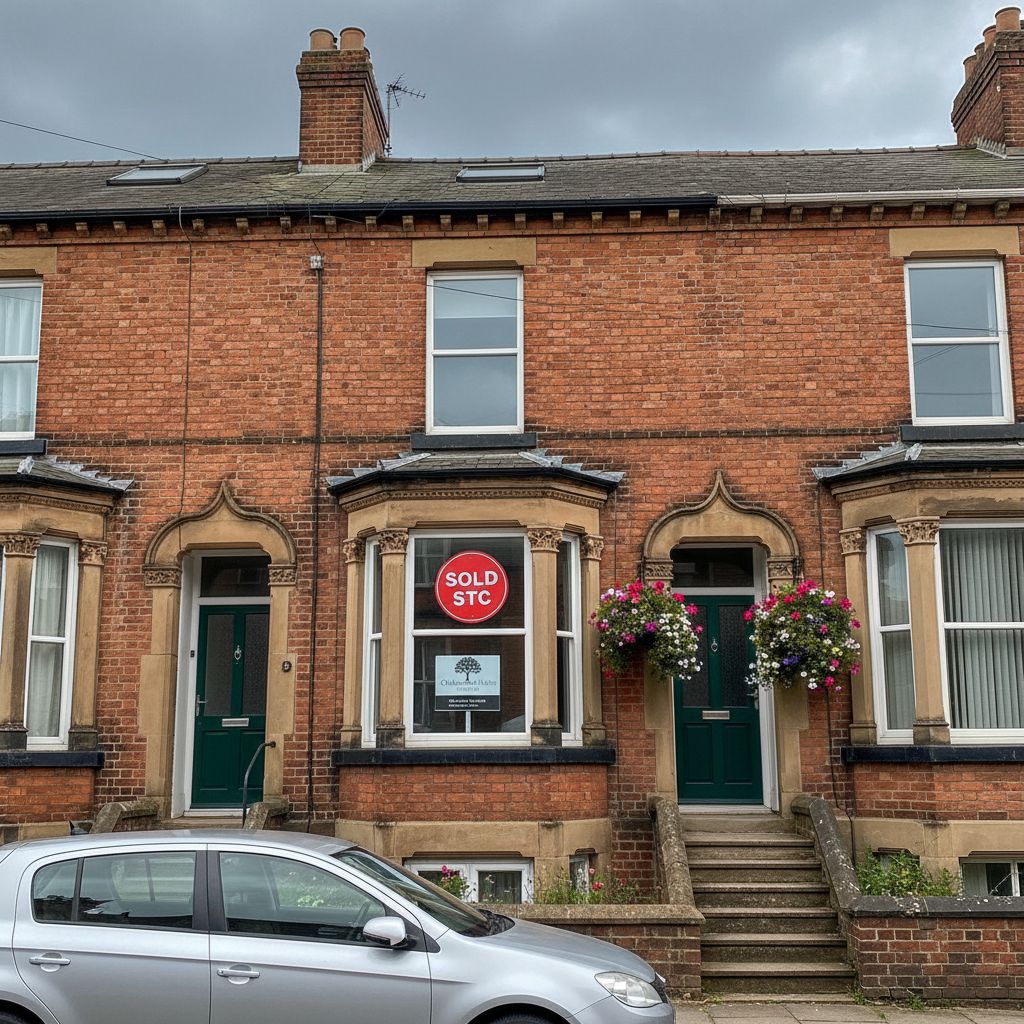
Buying property in London through a local estate agent is not a passive process. The agent sitting across from you at the viewing — however personable, however knowledgeable — is legally and financially working for the vendor. Their job is to achieve the best possible price and terms for the person selling the property, not the person buying it. That is not a criticism; it is simply the structure of the transaction, and understanding it is the starting point for approaching the process intelligently.
What it means in practice is that the burden of due diligence falls almost entirely on you as the buyer. The agent is not obliged to volunteer information you haven’t asked for. They are obliged not to lie to you — the Consumer Protection from Unfair Trading Regulations 2008 prohibits misleading omissions and misrepresentations — but the gap between not lying and proactively disclosing everything relevant is a wide one. The questions you ask determine what you find out. The questions you don’t ask determine what you don’t.
London’s market adds further complexity. It is one of the most competitive, fast-moving, and legally intricate residential markets in the world. Leasehold structures, complex chains, planning restrictions, local authority designations, building safety obligations, and service charge liabilities are all factors that can profoundly affect the value and liveability of a property — and none of them will be raised unless you raise them first.
This guide covers the questions every buyer should ask when purchasing through a local London estate agent, organised by the stage of the process at which each question is most relevant.
Questions to Ask at the First Viewing
The first viewing is not just a chance to assess the property — it is your first opportunity to gather intelligence from the agent about the sale, the vendor, and any factors that might affect your decision or your negotiating position. Most buyers spend the first viewing looking at walls and worktops. The buyers who get the best outcomes spend it asking questions.
How long has the property been on the market, and has it been relisted?
This is the single most revealing opening question you can ask. A property that has been available for more than four to six weeks in a healthy London market — where well-priced stock in decent condition typically moves within two to three weeks — has a story behind it. Ask specifically whether it has been relisted under this or a different agent, and check Rightmove’s listing history yourself before or after the viewing. A property that has been relisted, or that has been sitting without offers for an extended period, may have a pricing issue, a condition issue, or a more fundamental problem that previous viewers identified and you should too.
Have there been any previous offers, and did any sales fall through?
Estate agents must answer this honestly. If a sale has fallen through once, the reason may be entirely benign — a buyer who got cold feet, a chain that collapsed elsewhere. If it has happened twice or more, press for specifics. Was there a survey issue? A lease problem that came up in conveyancing? A structural defect that a previous buyer’s surveyor flagged? The answers won’t always be forthcoming in full, but the agent’s response — and any evasiveness — is itself informative.
Why is the vendor selling, and what is their timeline?
You won’t always get a candid answer, but a motivated vendor — one who has already purchased elsewhere, is relocating under deadline, or is managing an estate sale — is a different negotiating counterpart from one who is testing the market without urgency. Understanding vendor motivation shapes your offer strategy from the very beginning.

What is included in the sale?
Always clarify this explicitly and get the answer in writing before exchange. In London flats in particular, what’s included — fitted appliances, integrated storage, light fittings, carpets, garden furniture — is not always obvious from the listing. Verbal agreements made at viewings carry no legal weight. Confirm what stays and what goes in writing as early as possible, and ensure your solicitor captures it in the contract.
Has there been any structural, damp, or significant works history?
Ask the agent directly and watch for hesitation or vagueness. Estate agents cannot misrepresent material facts about a property’s condition. Ask specifically about damp — rising, penetrating, and condensation are three distinct issues with very different costs and implications. Ask about any significant works in the last ten years and whether those works were carried out with Building Regulations approval and have the relevant completion certificates. Extensions, loft conversions, garage conversions, and electrical works all require certification; the absence of it becomes your problem on purchase.
Questions Specific to Leasehold Properties
The majority of London flats are leasehold, and this is the area where buyers — particularly first-time buyers — are most frequently caught out. The physical property may be immaculate; the legal and financial structure governing your ownership of it can be anything but.
How many years remain on the lease?
Ask this at the first viewing and verify it independently through your solicitor before proceeding further. Most mortgage lenders require a minimum of 70–85 years remaining on the lease at the point of application, with the exact threshold varying by lender. Once a lease falls below 80 years, the cost of extending it escalates sharply because marriage value — the increase in the property’s value resulting from the extension — becomes payable to the freeholder. A lease with fewer than 70 years remaining may be unmortgageable for many buyers and very difficult to resell. If the lease is below 90 years, ask the agent whether the vendor intends to extend it prior to sale or whether an extension is being offered as part of the transaction.
What are the current service charges, and what do the last three years’ accounts show?
Never accept the current year’s estimated service charge in isolation. Request the last three years’ service charge accounts from the agent or vendor and review them carefully. What you are looking for is not just the current level — it is the trend. Service charges that have escalated significantly over three years, or that include large one-off contributions to major works, suggest a building that has been poorly maintained and is now catching up with deferred expenditure. A well-managed building with stable, transparent service charges is a fundamentally different asset from one with escalating costs and limited transparency about where the money goes.

What is the ground rent, and does it escalate?
Following the Leasehold Reform (Ground Rent) Act 2022, ground rents on new residential leases in England are capped at a peppercorn — effectively zero. However, leases granted before the Act came into force can still contain doubling ground rent clauses, where the rent doubles at fixed intervals, sometimes every ten years. A ground rent that doubles every ten years starting at £250 per year becomes £2,000 per year within forty years — a figure that makes the property difficult to mortgage and difficult to sell. Ask the agent for the current ground rent and whether it escalates. Have your solicitor review the specific escalation provisions before you commit.
Are any major works planned or anticipated for the building?
Under Section 20 of the Landlord and Tenant Act 1985, freeholders and managing agents are required to consult leaseholders before carrying out major works exceeding £250 per unit — but consultation is not the same as giving you advance warning at the point of purchase. Ask the agent whether any major works have been discussed at recent residents’ meetings, and request copies of recent AGM minutes if available. A planned external redecoration, roof replacement, or lift refurbishment can add thousands of pounds to your annual outgoings with very little notice.
Has the building been assessed for building safety, and is there an EWS1 form where required?
Post-Grenfell building safety legislation has created significant complications for the sale and mortgaging of flats in buildings over 11 metres, particularly those with cladding systems that may require remediation. Ask the agent directly whether the building has been assessed under the Building Safety Act 2022 framework, whether there is an EWS1 (External Wall System) form in place if the building is at the relevant height, and whether any remediation works are planned, underway, or pending funding. This is non-negotiable due diligence for any flat in a building over 11 metres and should be resolved before you instruct a solicitor.
Who is the freeholder and how is the building managed?
The identity and quality of the freeholder and managing agent are material to your experience as a leaseholder. A responsive, well-organised managing agent with transparent accounts and proactive maintenance is a very different proposition from an absentee freeholder and a managing company that is difficult to contact and slow to respond. Ask who manages the building, whether there is a residents’ management company, and whether the leaseholders have exercised or are considering the Right to Manage. A Right to Manage company gives leaseholders collective control over the appointment of the managing agent — a significant benefit worth knowing about.
Questions About Offers and the Negotiation Process
Are there other interested parties, and have any offers been made?
Estate agents are legally prohibited from fabricating competing offers — doing so constitutes a criminal offence under the Property Misdescriptions Act and the Consumer Protection Regulations. They are, however, permitted to confirm that other interest exists without providing details. Ask directly. If the agent confirms other interested parties, ask whether the vendor intends to proceed on a best-and-final-offer basis or in the order offers are received — the answer shapes your strategy meaningfully.
What is the vendor’s preferred completion timeline?
Understanding the vendor’s timeline gives you a negotiating lever that many buyers ignore. A vendor who needs to complete within eight weeks will place significant value on a buyer who can match that speed. If you are chain-free, have a mortgage in principle from a fast-processing lender, and have already instructed a proactive solicitor, say so explicitly when making your offer. In London, where chains are complex and delays are common, demonstrably fast and reliable buyers attract vendor preference — sometimes at the expense of a marginally higher competing offer.
Is the vendor in a chain, and if so, what stage is it at?
Chain complexity is one of the primary reasons London sales collapse. A vendor who is chain-free — already in rented accommodation, or purchasing a new-build — represents a simpler and more reliable transaction than one who is mid-search with no property identified. Ask how many parties are in the chain, whether all parties have agreed sales in place, and whether there are any known vulnerabilities. The more you understand about the chain before you make an offer, the better positioned you are to assess the risk of the transaction collapsing before exchange.
What is the agent’s relationship with preferred conveyancers or mortgage advisers?
Many London estate agents operate referral arrangements with conveyancers and mortgage brokers — receiving a fee for introductions. These are not necessarily poor services, but the referral relationship creates a conflict of interest that you should be aware of. You have no obligation to use the agent’s recommended solicitor or broker. In most cases, independently sourced professionals who specialise in your property type and price bracket will be better equipped to represent your interests and may be faster to act. Ask the agent directly whether they have referral arrangements, and exercise independent judgement about whether to use their recommendations.
Questions About the Local Area
What are the Tube, rail, and bus connections, and what are realistic peak-time journey times?
London’s property values are acutely sensitive to transport access, and journey time claims made at viewings are not always reliable. Ask specifically which stations are within walking distance and how long the walk realistically takes. Then test it yourself — walk to the nearest Tube or rail station at the time of day you would actually commute. Google Maps estimates and agent descriptions of “a short walk” are not substitutes for direct experience, and a ten-minute walk on a dry day in summer can feel very different at 8am in February.
Are there any significant developments planned in the local area?
Planning applications for large residential or commercial schemes adjacent to your prospective property can materially affect noise levels, daylight, views, and neighbourhood character. Check the local authority’s planning portal for any major applications or consented developments in the vicinity. A sympathetically designed low-rise scheme nearby may be neutral or positive. A thirty-storey tower directly behind the garden is a different matter entirely. The agent may be unaware of pending applications — this is research you should do yourself, and it costs only time.
What is the parking situation, and is the property in a Controlled Parking Zone?
In inner London boroughs, parking is rarely straightforward. If the property does not come with a designated parking space, ask whether the area is a Controlled Parking Zone, whether new residents are entitled to a parking permit, and what the practical reality of street parking is at different times of day and week. Some London boroughs restrict parking permits for residents of new-build properties in certain zones — a restriction that would not be obvious from the listing and that the agent may not proactively mention.
The Question to Ask Last, at Every Viewing
What should I know about this property that I haven’t asked?
Ask this question at the end of every substantive conversation with the agent. It places the agent in the position of considering whether there is anything material they haven’t disclosed. Most reputable agents take it seriously and will often surface useful information — a neighbour dispute that has been disclosed by the vendor, a planning application that is currently being considered, a maintenance issue that the vendor intends to fix before exchange. Occasionally, the answer tells you something important. Always, the response tells you something about the agent.
One Final Principle
London’s property market rewards preparation and punishes passivity. The buyers who consistently achieve the best outcomes — the right property at the right price with the fewest post-exchange surprises — are those who treat the purchasing process as the significant financial and legal undertaking it is, and who ask questions with the same discipline and rigour they would bring to any other major financial decision.
The agent is a professional doing their job. Do yours.