In Leeds, you should start with a clear plan: review the tenancy terms for duration, renewal rules, and notice periods; spot hidden costs like admin fees or nonrefundable deposits; and confirm what’s included in rent, from utilities to council tax. Do a thorough move-in check—boiler performance, meters, heating controls, and safety features—plus assess storage, natural light, and noise. During viewings, negotiate rent stability and maintenance timelines. If you keep exploring, you’ll uncover practical steps that sharpen your decision.
Understand Leeds Tenancy Terms: What You’re Signing
Understanding Leeds tenancy terms starts before you sign. You read the contract actively, noting how it defines duration, rent, and your rights. You’ll spot the core date structure: tenancy start, endpoint, and any renewal options.
Pay attention to lease renewal terms—how you request an extension, the notice period, and any rent adjustments tied to renewal. Look for who bears responsibility for repairs, utilities, and shared spaces, clarifying landlord responsibilities in practice.
Check permitted use clauses, pets, and subletting rules, so you won’t encounter unexpected limits. Review maintenance commitments, access rights, and remedies for breaches.
The wording should feel precise, not vague. If anything seems ambiguous, seek an amendment in writing. A clear, well-structured lease safeguards your comfort and your investment.
Spot Hidden Costs Before You Sign a Leeds Lease
Watch for Hidden Fees Uncovered before you sign, like admin charges, renewal marks, and processing fees that can quietly inflate your rent. I’ll flag Lease Cost Pitfalls such as non-refundable deposits, mandatory insurance, and early-termination clauses that creep in with tight deadlines.
Stay sharp about Upfront Payment Risks, including large security deposits and non-optional upfront costs, so you know exactly what you’re committing to.
Hidden Fees Uncovered
Hidden fees lurk where you least expect them, so don’t assume the quoted rent is the full story. You’ll want to map every potential cost, not just the obvious ones, so you can compare flats on equal footing.
Fee transparency matters: ask for a breakdown of every charge, from administration to renewals, and demand written confirmation. Look for hidden charges tucked into reference checks, inventory fees, and early-termination penalties, and verify whether these are refundable or negotiable.
Check what’s included in the tenancy, like council tax, utility bills, and communal-service fees, to avoid surprises after move-in.
Document all figures, request exact amounts, and keep a single, clear ledger. Clear expectations prevent drift and support smarter, fairer leasing decisions.
Lease Cost Pitfalls
Look for vague “handling” or “administration” surcharges that inflate the total. The moment you discuss Lease renewal terms, ask how prices adjust with market shifts and whether there’s a cap on increases.
Watch for Rent escalation clauses tied to inflation, local index, or owner discretion, and confirm how often they refresh.
Compare each proposal side by side, calculating annualized costs over the tenancy. A crisp summary helps you decide whether the value aligns with your budget and long‑term plans.
Upfront Payment Risks
You’ll want to parse every line on the tenancy agreement for nonrefundable or recurring charges masquerading as “administrative” fees. Ask who’s responsible for utility setup, council tax, and repairs, and confirm remedies if services fail.
Beware inflated deposits, partial refunds, or capped returns that hinge on vague conditions—these are deposit risks you should insist be clearly defined in writing.
Demand itemized, legally compliant receipts and an explicit timeline for your money’s return.
Decide if the upfront payment truly aligns with the unit’s value, market norms, and your long-term budget.
Move-In Boiler and Utilities Test You Can Do in Leeds
You’ll want to test boiler performance quickly, so you can gauge warmth and efficiency right away. Check the utility meters readings on arrival and note any discrepancies, timing, and overall usage patterns.
Walk through the heating controls now to confirm you can adjust temperatures, schedule, and guarantee responsive performance.
Test Boiler Performance Quickly
When you move in, test the boiler right away to confirm it’s heating properly and meeting your basic comfort needs. You’ll want a quick, decisive check that shines a light on ongoing reliability.
Start by turning up a couple of radiators to a comfortable level and watching for even heat distribution across rooms. Listen for cycling sounds and note any temperature fluctuations between the boiler’s water flow and room steadiness.
Check the pressure gauge and make certain it sits within the recommended range, then run hot water to verify consistent output.
Look for clear indicators of boiler maintenance history, such as recent service stamps.
Spotting slow response or weak performance now saves headaches later, highlighting quick performance and guaranteeing dependable comfort throughout your tenancy.
Check Utility Meters Readings
To verify your move-in costs and spot potential billing issues, start by recording the current utility meter readings for gas, electricity, and water. You’ll want the exact numbers as a baseline for future bills and any disputes.
Photograph the meters at eye level and note the date and time. For gas and electricity, capture both the main and any sub-meters if present.
Check water meters for any external leaks or unusual chatter in the dial. Record the meter serials and confirm the readings align with the displayed digits.
This is practical for Utility billing scrutiny and helps with Meter calibration if discrepancies arise. Keep the notes organized, and review them with your landlord before keys exchange.
Clear documentation prevents surprises and supports fair charges.
Inspect Heating Controls Today
Now that you’ve logged move-in utility readings, it’s time to test the boiler and heating controls to confirm you get heat when you should and readings line up with bills. You’ll want precise temperature regulation and responsive controls.
Turn up the thermostat, note how quickly rooms reach target temps, and verify the boiler fires without delay. Check that radiator valves adjust evenly, and that hot water runs with steady pressure.
If you’ve got a timer, confirm it follows the schedule and doesn’t burn extra energy. Look for clear labeling and intuitive dials you can trust long-term.
- Crisp, tactile controls you can operate by feel
- Consistent heat distribution across rooms
- Transparent labels linking settings to energy use
Check Storage Space and Natural Light for Everyday Living
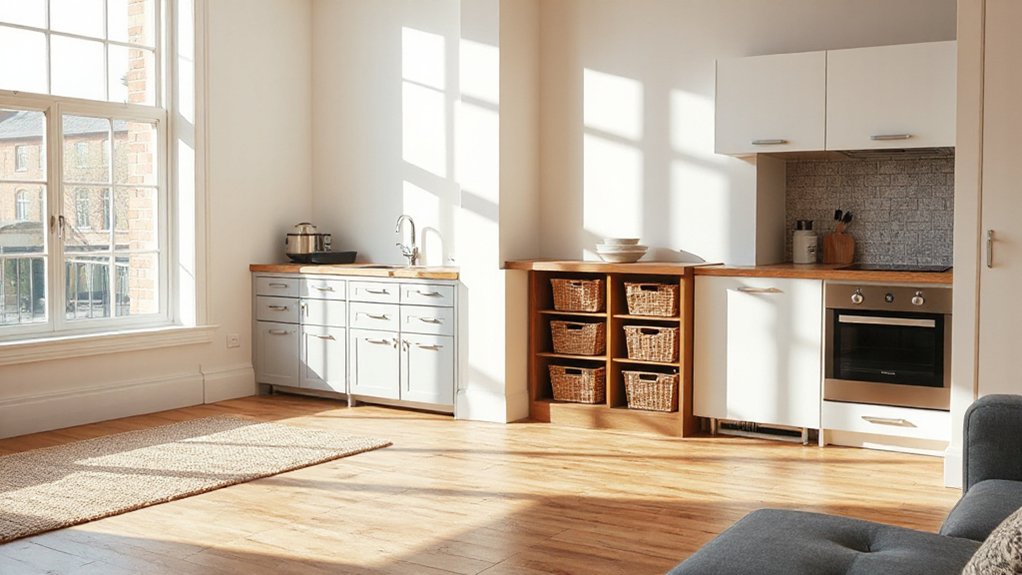
A flat that feels like home starts with enough storage and plenty of natural light, so you don’t clutter your days chasing space. You’ll notice usable cupboards, wardrobes, and under-bed nooks that free countertops for living.
Check each room for built-ins, depth, and door clearance, ensuring you can actually store coats, shoes, and gear without stacking clutter.
Natural light matters, so observe window size, orientation, and the consistency of daylight throughout the day; note any glare or deep shadows that hinder tasks.
Look for mirror placements that amplify brightness without creating fussy reflections.
Evaluate practical layouts: can you relocate a sofa to open a path to the window or create a cozy reading corner?
A well-sized storage space and thoughtful light transform everyday living.
Essential Safety Checks for Leeds Flats
Essential safety starts with a quick, thorough walk-through of each flat door and corridor. You’ll verify exits, lighting, and clear paths, noting any obstacles or loose fixtures. Check smoke alarms and test their chirps, ensuring they’re interconnected if possible.
Locate the fire escape route and confirm it’s accessible, unobstructed, and clearly marked. Listen for unusual smells or sounds, and assess carbon monoxide risks where provided.
Look at upstairs landings, rails, and stair integrity, ensuring no gaps or wobble. Finally, review electrical panels for labeling and recent overheating signs.
- Fire escape routes clearly marked and unobstructed
- Smoke alarms tested and functioning on multiple levels
- Electrical panels free of wear, with clear labeling
Gauge Neighborhood Vibe: Location, Commute, and Daily Life
Neighborhood vibe matters as much as the walls and windows: you’ll want a sense of daily life, pace, and accessibility before you commit.
In evaluating location, map your commute to work, study spots, and essential errands. Note street noise, traffic patterns, and nearby parks or quiet corners that invite you to linger.
Local amenities matter: groceries, cafés, and dry cleaners should be close enough to feel convenient, not toil-worthy. Check daytime and evening activity, transit reliability, and walkability to avoid endless detours.
Consider Neighborhood safety: lighting, visibility, and reported incidents. Observe routes for late trips home, and whether you’d feel comfortable moving freely at night.
Balance charm with practicality, ensuring the area suits your rhythm, not just your budget.
Reading Lease Clauses: Red Flags in a Leeds Landlord Agreement

Reading lease clauses can feel like decoding a map, but spotting red flags early saves you trouble later.
In a Leeds landlord agreement, a sharp eye catches term creep, vague maintenance duties, and punitive fees. A single ambiguous clause can become a leverage point against you, so demand specificity and fairness from the start.
- Lease clause that vague-prints responsibilities and penalties
- Red flag language for automatic renewals or rent hikes without notice
- Unclear repair duties or access rights that trap you in poor conditions
Focus on clarity: who maintains what, how emergencies are handled, and notice periods.
If something feels slippery, push for concrete language or omit troublesome terms. Your assessment now prevents disputes later.
Schedule Your Viewings: A Leeds-Focused Practical Checklist
When you schedule viewings, you should build a precise plan that surfaces condition, noise, and daily life fit, not just glossy photos. You’ll map each flat to a checklist: test light at different hours, note room dimensions, and picture furniture flow.
Observe furniture arrangement potential—watch doorway clearance, corner accessibility, and how a sofa or bed would sit without blocking paths. Listen for sounds from nearby streets or units, and assess insulation by touching cold walls and windows.
Check window treatments for privacy and light control, and imagine waking to morning sun. Bring a small tape measure, a lamp, and a notepad to record reactions.
Leave with a clear sense of how the space supports your routines, not just its aesthetic.
Leeds Lease Negotiation: What to Ask and What to Trade Off
You’ll set your negotiation priorities upfront, weighing which lease terms matter most and what you’re willing to trade off for them. Ask before signing about rent stability, renewal options, maintenance responsibilities, and any fees that could bite later.
Consider lease term implications now—shorter terms offer flexibility but tighter rents; longer terms lock rates but limit moves if plans change.
Negotiation Priorities And Tradeoffs
Negotiation in Leeds leases is about prioritizing what truly matters and knowing what you can trade off to keep the deal fair and affordable. You assess which terms affect daily life most—rent stability, maintenance cadence, and move-in readiness—and where flexibility can save you costs or risk. Your objective: secure essential protections while remaining realistic about landlord constraints.
- Budget flexibility: anticipate a range you’ll tolerate for rent and upfront costs, and push where it matters most.
- Maintenance response: insist on clear timelines and accountability to avoid compounding issues.
- Move-in readiness: confirm repairs, fixtures, and condition reporting before keys.
Balance tradeoffs with landlord responsiveness, so you preserve reliability without overcommitting.
Ask Before Signing
Before you sign, arm yourself with precise questions and practical trade-offs that shape day-to-day living. In this Leeds-focused negotiation, ask about maintenance response times, access for trades, and who covers minor repairs.
Confirm utility responsibilities, subletting rules, and parking or bike storage, so clutter doesn’t creep in later. Seek clarity on tenancy duration and notice periods, and whether rent is fixed or subject to reviews when Lease renewal approaches.
Nail down the process for dispute resolution and the exact responsibilities of each party if a fixture breaks. Ask for a detailed inventory checklist and request photos to prevent later deductions.
Don’t overlook tenant rights protections, and verify how lease renewal terms appear in writing to avoid surprises.
Lease Term Implications
Length and terms lock in cost, flexibility, and future options, so you should map trade-offs between tenancy length and rent predictability before you commit. When negotiating, understand Lease duration and how it ties to your monthly outlay, especially if market rents shift.
A shorter term offers agility but may hike rates at renewal; a longer term can stabilize payments but limits mobility.
Consider Rental extension options and the notice needed to extend, plus any penalties for early exit. Align your lease with life plans—job changes, study, or family—and don’t overlook break clauses that protect you if circumstances change.
- Predictable payments vs. mobility
- Renewal leverage and rent reviews
- Exit and extension flexibility
After You Sign: Deposits, Setup, and Documenting Your Move
Once you’ve signed the lease, take control of the process by organizing your deposits, utility setup, and move-in documentation with precision.
After signing, your priorities are securing deposit protection, mapping a clear payment timeline, and confirming landlord contact details.
Gather essential documents: tenancy agreement, inventory, and any amendments.
Create a practical move-in checklist to track tasks like meter readings, key handover, and room-by-room condition notes.
Set up utility accounts in your name, noting service start dates and account numbers.
Photograph existing damages and compile dated, labeled copies.
Store confirmations, receipts, and contact numbers in a single, accessible file.
Review the inventory against the actual flat promptly, addressing discrepancies.
Maintain ongoing communication with your landlord and document every resolution.
Frequently Asked Questions
Do Utilities Include Heating and Water in Rent?
Utilities may or may not include heating and water; confirm with your landlord. You’ll want clear utility coverage details, and ask about billing procedures, how readings occur, thresholds for inclusion, and any separate charges you’ll pay monthly.
Are There Any Upfront Renewal or Admin Fees?
There aren’t upfront renewal or admin fees in many cases, but you should check. You’ll avoid hidden charges by asking about Lease renewal terms, Admin fees, and any costs before you sign, ensuring transparent, detail-driven decision-making.
How Is Council Tax Handled and Who Pays?
Council tax is typically your responsibility, though exemptions may apply; check your status and deadlines. You’ll follow Rent payment procedures closely, ensuring timely payments to avoid penalties, while landlords confirm any prospective exemptions and sharing nuances of billing periods.
What Happens if Repairs Are Delayed or Ignored?
Repairs delays damage your dwelling; you’re protected. If repairs lag, document dates, contact your landlord, and escalate to council or solicitor. You retain tenant rights, pursue remedies, with clear notice, possible repairs on credit, and formal complaints.
Is There a Pet Policy or Breed Restrictions?
Pet policies vary by landlord; some prohibit pets or certain breeds. Check your lease for explicit Breed restrictions, allowed pet types, size limits, and any deposits or fees before you sign. Clarify policy changes with the landlord in writing.
Conclusion
As you tour flats in Leeds, you’ll feel like you’re curating a living piece of the city—every detail matters. Trust your checklist, ask the right questions, and don’t overlook small costs or safety gaps. You deserve a home that’s practical, bright, and thoughtfully laid out. With eyes open and a plan in hand, you’ll sign with confidence and move in smoothly, like a well-tuned piano settling into a quiet room. Your Leeds flat should fit you—precisely.