To modernise a 1930s semi, start by defining precise goals—daylight, energy efficiency, and period-faithful detail—while mapping constraints on party walls and service routes. Plan an open yet respectful layout, preserve sightlines, and introduce discreet screens for flexible use. Improve insulation and moisture control without compromising character, install smart, modular systems, and prioritize durable finishes. Create clever storage and garden-integrated microclimates to support passive cooling. If you keep exploring, you’ll uncover pathway-rich steps and practical benchmarks.
Define Your Modernising Goals for a 1930s Semi

Setting clear modernization goals starts with a precise contrast between the 1930s envelope and your current needs. You map functional priorities against historical constraints, translating aesthetic intent into measurable targets.
Define scope: core living spaces, service efficiency, and future adaptability, then test feasibility against structural realities.
Your garden landscaping considerations inform passive cooling, daylighting, and microclimates, guiding site-level decisions without compromising period character.
Translate this into interior decor benchmarks—ceiling heights, trim, and material honesty—that align with both preservation and contemporary use.
You’ll quantify outcomes: energy targets, acoustic performance, and circulation efficiency, then allocate time and budget buffers.
Maintain a feedback loop: monitor progress, adjust assumptions, and reframe goals as you learn.
The result is a clear modernization plan that respects craft while enabling comfort.
Clarify Constraints and Opportunities on Party Walls
You’ve mapped goals for the 1930s envelope, now you’ll pinpoint what party walls can and can’t do. You assess load paths, sound insulation, and fire separation with surgical clarity, balancing structural reality against permeable design tweaks.
Consider party wall regulations as fixed rails and boundary disputes as potential pivots, not obstacles. Your assessment catalogues shared responsibilities, rights of access, and notification timelines, translating legal language into actionable construction steps.
Identify allowable penetrations, masking, or changes in damp-proofing that won’t compromise the wall’s integrity or planting adjacent planters. Map boundaries against the garden’s microclimate, ensuring roots and moisture don’t induce movement.
Prioritise non-intrusive methods first—staggered baffles, resilient channels, or façade-led detailing—before engaging in any boundary dispute mitigation.
Feasibility, Vision, and Priorities Before Making Changes
Feasibility, vision, and priorities must be defined before any change. You assess structural feasibility, services capacity, and thermal performance to form a reliable constraint matrix.
Establish a clear design brief that aligns historical accuracy with modern utility, avoiding overreach or nostalgia-driven misfits.
Prioritise interventions by impact, cost, and disruption, mapping quick wins against long-term gains.
In parallel, develop a vision that respects the original proportions while enabling contemporary use, ensuring daylight, sightlines, and circulation align with daily routines.
Attach measurable criteria to each priority, so decisions stay objective under pressure.
Consider material sourcing early—local, compatible, and durable options reduce risk and preserve character.
Document rationale for every choice, weaving horticultural sensitivity into landscape adjacencies to sustain microclimates around the home.
Plan a Period-Faithful Yet Open-Plan Layout

To plan a period-faithful yet open-plan layout, start by preserving the house’s original proportions and sightlines while inviting flexible use. You’ll fuse defined zones with generous, flowing sightlines, ensuring period style cues remain legible in plan, not ornamental filler.
Map structural constraints first, then deploy a restrained open plan where circulation remains legible and daylight travels deeply. Use load-bearing cues, cornice lines, and doorway rhythms to guide partition logic, avoiding gratuitous bulk.
Install discreet, operable screens or sliding panels that can reconfigure rooms without eroding historic integrity. Prioritize anchored furniture palettes, natural finishes, and greenery textures that harmonize with horticultural sensibilities, so the layout breathes like a garden-influenced interior.
Maintain proportionate door heights, sill lines, and scale cues to sustain authenticity while enabling adaptable living.
Improve Insulation Without Compromising Character
Careful insulation can protect comfort and energy without erasing character; you can upgrade performance while preserving period cues. You approach this with technical precision and design intuition, balancing efficiency with Historical accuracy and Material authenticity.
Prioritise airtight detailing at junctions, breathable yet dense barrier layers, and discreet junction boxes that respect proportions. Choose heritage-compatible materials and finishings that read as original while delivering modern performance.
Focus on fabric-first strategies for roof and walls, and selectively treated windows to reduce thermal bridging without visually invasive changes.
- Seal gaps with profiles that mimic original muntin spacing and frame lines, reducing drafts while retaining historical cues.
- Use mineral wool or cellulose within timber bays, maintaining breathability and fire safety without compromising surface texture.
- Replace glazing with high-performance units that match sightlines and external profiles, preserving character while improving thermal efficiency.
Choose Energy-Saving Heating Upgrades
Consider how tightening insulation and eliminating drafts influence the efficiency of your heating upgrades. You’ll want to compare efficient systems—like heat pumps or condensing boilers—with your existing layout to minimize losses and maintain comfort zones.
Prioritize a design-led, horticulturally sensitive approach that supports steady air temperatures without over-conditioning living spaces.
Insulation and Drafts
Drafting for insulation and drafts begins with identifying heat pathways and selecting targeted upgrades to reduce losses without compromising occupancy comfort. You balance technical precision with design intuition, ensuring Historic preservation and Aesthetic consistency stay intact while you improve envelope performance.
- Identify leaks at junctions (windows, doors, attic hatches) and seal with discreet, compatible solutions.
- Prioritize insulation upgrades in key cavities (walls, roof, floors) using low-thermal-bridging materials that respect the home’s character.
- Select ventilated, controllable air paths to maintain indoor climate without drafty pockets or moisture risk.
You’ll assess material compatibility with existing finishes and plan installation during appropriate seasonal windows, minimizing disruption to occupants and landscape, while preserving the house’s heritage feel.
Efficient Heating Systems
Efficient heating starts where insulation leaves off: you select energy-saving upgrades that cut heat loss while preserving comfort and character. You’ll prioritize systems that harmonize with the house’s fabric and atmosphere, not merely punch up heat.
Begin with radiator placement to optimise convective flow, avoiding obstructive furniture and external walls prone to cold spots. Consider corner or mid-wall positions linked to return runs that minimize cycling.
Pair this with thermostat control that respects occupancy and sun exposure: zoned heating, programmable schedules, and adaptive setbacks reduce waste while maintaining steady warmth.
Select low-mass, responsive emitters where quick adjustments matter, and guarantee pipework has minimal bends to reduce heat leakage.
Finally, integrate intelligent controls with weather data for graceful, plant-friendly thermal balance.
Maximise Natural Light With Respectful Glazing
You optimise daylight by prioritising north-facing glazing that remains visually light yet thermally gentle, balancing brightness with plant-friendly conditions.
Use respectful glazing strategies—high-performance panes, white framing, and careful shading—to manage infiltration while preserving privacy and exterior rhythm.
Align glazing decisions with horticultural sensitivity, ensuring light levels support interior microclimates and your gardens or pots respond with healthy growth.
Maximising North Light
- Optimize glazing ratios and operable vents to regulate humidity and temperature while letting in diffuse light.
- Use low-iron glass and slim profiles to minimize visual load on historic façades, preserving architectural honesty.
- Integrate light shelves, cool-white finishes, and strategic plant positions to extend daylight deeper into living zones while supporting horticultural sensitivity.
Respectful Glazing Strategies
Could you illuminate how respectful glazing can balance daylight delivery with architectural integrity? You assess glazing choices through the lens of proportion, proportioning frames to historic geometry while embracing modern performance. Prioritize low-emissivity glass, solar control where needed, and minimal sashes to preserve sightlines.
Opt for glazing patterns that echo original rhythm, enhancing rhythm without duplicating past mistakes. When introducing stained glass, implement it as a feature rather than a dominant plane, ensuring it reads as a considered accent rather than a climate liability.
Plan window restoration with reversible interventions, maintaining materials and profiles to support longevity. This approach supports plant-friendly interior microclimates, reduces glare, and preserves heritage expression while delivering reliable daylight.
Maintain meticulous detailing for longevity and ease of future maintenance.
Infiltration and Privacy Balance
Infiltration and privacy must be consciously balanced to harvest daylight without compromising comfort or external perception. You’ll optimise glazing by aligning passive solar gain with sightlines, using high-performance units and obscured or angled views that reveal garden landscaping while maintaining privacy.
Spatially, you prioritise operable vents and smart shading to modulate glare without dimming interior decor.
- Choose glazing with low U-values and appropriate solar gain, paired with strategic plantings to filter light and create graduated privacy.
- Employ interior screens and frosted accents to temper visibility from outside while preserving daylight depth.
- Integrate garden landscaping cues into interior decor, echoing outdoor textures and colors to unify ambience and efficiency.
Select Finishes That Nod to the Era While Feeling Contemporary

When selecting finishes, balance the era’s characteristic details with contemporary performance and comfort. You align material honesty with modern durability, choosing finishes that age gracefully without compromising efficiency.
Begin with wall and floor selections that echo traditional scale—timber offsets, plaster-like textures, or muted lime washes—paired with low-VOC paints for better indoor air quality. Opt for ceramic or encaustic-inspired tiles that read vintage yet wear well under daily use.
Fixtures should blend period silhouettes with updated performance: brass or matte-black hardware, tempered glass, and LED-compatible lighting.
Consider plant-friendly, acoustically mindful interiors: soft, breathable textiles, natural fibers, and recessed lighting to reduce glare.
Vintage charm meets contemporary comfort through careful proportioning, finish tension, and horticultural-inspired texture layering.
Update Electricals and Smart Tech Discreetly
You’ll plan concealed wiring upgrades with precision, prioritising clean routes that don’t interrupt sightlines or your existing architectural rhythms.
Integrate smart tech in a way that feels invisible yet responsive, balancing power needs with lightweight, plant-friendly cable management.
Aim for discreet junctions, minimal conduit, and scalable interfaces that age gracefully with the home.
Concealed Wiring Upgrades
- Hidden conduits should be planned around service routes, avoiding visible spillages of cable and reducing heat buildup.
- Cable concealment relies on tight routing, labeled junctions, and accessible panels to simplify maintenance without disturbing aesthetics.
- Future-ready layouts incorporate modular outlets, low-profile trunking, and concealed distribution boards that harmonise with the room’s scale and materials.
This approach respects both horticultural precision and architectural form, delivering robust electricals without compromising light, balance, or texture.
Smart Tech Integration
Update electricals with hidden pull boxes, trunking, and low-profile housings that respect period lines. Choose smart security sensors and cameras that blend with soffits and cornices, positioning them for coverage without conspicuous wiring.
Implement automated lighting that responds to occupancy and daylight, using dimmable LEDs and silent drivers tucked behind furniture or within ceiling voids. Favor scalable ecosystems, wired backbones, and robust surge protection to maintain reliability.
Document commissioning notes like pruning schedules, ensuring future tweaks won’t disturb the overall harmony of the home.
Improve Acoustics While Preserving Charm
To improve acoustics without compromising the home’s character, address sound transmission and reverberation at the source, path, and receiver. You’ll balance structural honesty with modern performance by selecting discreet, period-appropriate materials that mirror the garden’s rhythm and the interior’s scale. Employ precise detailing to minimize flutter echo while preserving decorative charm, using calibrated acoustic treatments that blend with cornices and joinery.
- Soundproofing techniques that target shared walls and floors, installed behind existing finishes to maintain visual integrity.
- Acoustic treatments placed to control reflections in key living and dining zones without visually dominating historic plasterwork.
- Quiet routing of services and strategic massing tweaks that reduce transmission while preserving room proportions and daylight.
Maintain a horticultural sensitivity toward textures, tones, and light.
Create Clever Storage and Access to Reclaim Space
A clever storage scheme begins by mapping every underutilized footprint—nooks behind stairs, eaves, and the base of tall cupboards—then designing access that doesn’t interrupt sightlines or daylight.
You’ll locate cavities aligned with structural bays, favoring pull-out or hinged panels that disappear flush with finishes. Creative storage emerges from modular housings, adjustable shelves, and shallow reservoirs for seasonal items, reducing clutter without compromising flow.
Hidden access should be tactile yet invisible, using push-to-open mechanisms or pivoting doors that read as wall planes. Measure ingress paths carefully to maintain privacy and circulation, ensuring ventilated air spaces between stored goods and living areas.
Implement tactile cues and garden-inspired textures to aid orientation, while preserving material harmony. Hidden access and creative storage reclaim space without sacrificing light, function, or aesthetics.
Manage Damp, Ventilation, and Humidity Effectively
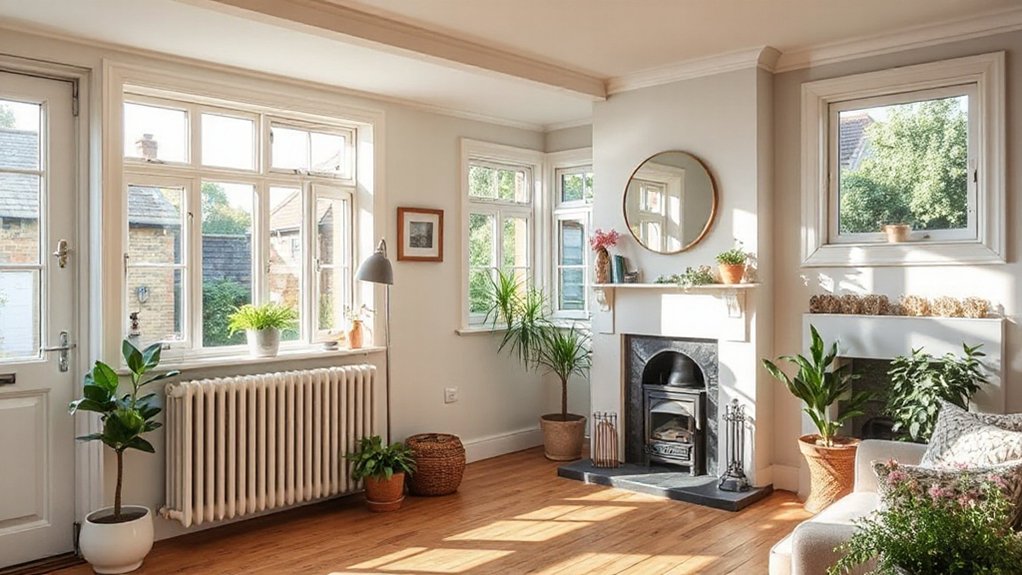
Sensibile moisture management starts with a targeted assessment of your home’s microclimates and ventilation gaps. Then pairs airtight detailing with deliberate airflow. You’ll implement Damp treatment through measured surface sealing and controlled vapor barriers, while preserving breathable layers where needed.
Humidity control hinges on balanced intake and exhaust, dehumidification when required, and roots-friendly greenery placements to modulate moisture locally.
- Map moisture hotspots, install pressure-tested airtight seals, and establish a sensible ventilation protocol.
- Use humidity-sensing controls, selectively venting kitchens and bathrooms, and deploy passive airflow where possible.
- Monitor indoor microclimates, calibrate extracts, and enforce maintenance schedules to sustain long-term stability.
Plan for Long-Term Resilience and Value
You’ll establish a plan that protects structural integrity over decades, focusing on load paths, moisture barriers, and predictable maintenance cycles.
Align every decision with value today and in the future, using a clear schedule for monitoring, repair prioritization, and cost budgeting that respects the house’s fabric and site ecology.
Consider modular upgrades and scalable systems that harmonize with the garden and microclimate, so resilience and long-term worth grow together.
Long-Term Structural Integrity
- Inspect and reinforce load paths, anchorage, and diaphragms to resist wind and settlement.
- Monitor joints, fire stops, damp surfaces, and timber treatments for sustained durability.
- Plan preventive measures that minimize moisture intrusion and thermal stress across seasons.
Value-Driven Maintenance Plan
How can a value-driven maintenance plan sustain long-term resilience and value in a 1930s semi-detached house? You map a lifecycle approach, prioritizing critical envelope, services, and historic fabric.
Begin with an asset registry that labels historical preservation targets alongside practical replacements, guiding budget and timing.
Schedule seasonal checks for damp, timber, and wiring, using data-driven thresholds rather than routine repurchase.
Integrate interior decor decisions with structural compatibility, ensuring retrofits respect proportion, grain, and period detailing.
Align interventions to moisture gradients, ventilation, and energy performance, then document outcomes to refine future actions.
Use modular upgrades that preserve essential aesthetics while enabling adaptive reuse.
This disciplined cadence protects value, supports plantings and landscape framing, and maintains the house’s distinctive character.
Budget, Timeline, and Risk Management for the Project
- Cost estimation and contingency planning, with transparent assumptions and regular rebaselining.
- Contractor selection and onboarding, emphasizing proven capability, site-specific constraints, and collaboration.
- Schedule realism, phased execution, and risk reviews tied to planting, drainage, and microclimate considerations.
Frequently Asked Questions
How Can I Fund a 1930S Semi Renovation Effectively?
You should secure staged funding by budgeting contingencies and timelines, then pursue targeted financial planning, exploring loans and grants. Prioritize contractor selection, compare bids, verify licenses, and monitor progress with precise milestones to avoid overruns.
What Are the Hidden Costs of Period-Accurate Materials?
Architectural authenticity costs you more, more, more: shipping, handling, and sourcing premiums, plus bespoke finishes, sourcing delays, and fragility risks. You weigh Material sourcing against durability, precision, and maintenance, balancing authenticity with practical resilience and horticultural-sensible integration.
Which Party-Wall Constraints Most Affect Layout Changes?
You, as the designer, must prioritize Party wall constraints and maintain Structural integrity first; limit partition shifts to shared-load areas, anticipate underpinning needs, and coordinate with neighbours to protect foundations, while preserving garden-scale plantings and light penetration.
How Do I Balance Energy Efficiency With Historic Charm?
Balancing energy efficiency with historic charm means you harmonize historic preservation and modern integration, optimizing insulation and windows without compromising character. You’ll pair precise detailing, design intuition, and horticultural sensitivity to achieve sustainable comfort and timeless appeal.
What Maintenance Milestones Ensure Long-Term Resilience?
You should schedule regular inspections every 6–12 months, focusing on roof insulation and plumbing upgrades to guarantee long-term resilience, addressing leaks, corrosion, and insulation gaps; maintain drainage, venting, and outdoor plant-aware landscaping for system longevity and efficiency.
Conclusion
You’ll finish with a home that respects its 1930s bones while embracing today’s comforts. Prioritize airtightness and insulation, but keep period details intact; plan open sightlines without erasing character. Use clever storage to reclaim space, and schedule damp and ventilation with clinical precision. Think long-term resilience as a design ethos, not an afterthought. Like pruning a seasoned hedge, you’ll shape the flow with care, ensuring beauty, function, and value grow together—season after season.