To build a simple raised bed in under two hours, choose a sunny, level spot and measure a comfortable footprint. Use untreated lumber, steel, stone, or composite boards, and pre-drill holes to keep screws from splitting. Build a square frame, reinforce corners, and line the interior with weed barrier only if weed issues exist. Fill with a balanced mix of topsoil, compost, and coarse sand or perlite. Lightly water, check level, mulch, and you’ll be ready to plant—and you’ll gain more tips as you continue.
Selecting and Preparing a Raised Bed
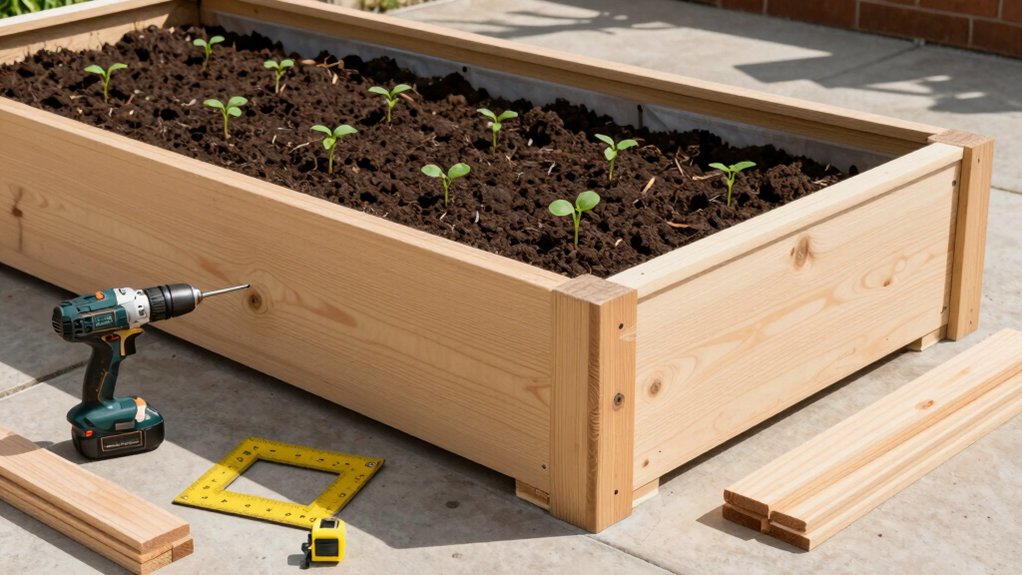
Building a simple raised garden bed is one of the fastest ways to improve soil quality, drainage, and accessibility for planting. You’ll start by choosing a location with sun for most of the day and easy access to water. Measure a footprint that fits your space and comfort level, keeping foot traffic and paths clear. A sturdy, untreated timber frame works well for beginners, but you can also use steel, stone, or composite materials if you prefer. Regardless of material, verify the sides are square and the corners solid to resist shifting over time.
Next, plan the depth of your bed. For vegetables, aim for 12 to 18 inches, which accommodates most root systems and reduces soil compaction. If you’re growing deep-rooted crops, go toward the higher end of that range. You’ll want to account for a bottom barrier if you’re placing the bed on grass or weed-clogged ground; a lightweight landscape fabric or cardboard layer will suppress weeds without hindering drainage.
Before assembly, check local building codes or neighborhood guidelines if you’re using durable materials like sleepers or metal to avoid any restrictions.
As you assemble, align boards or panels with the ground surface, using a level to keep the top edge flat. Pre-drill holes to prevent splitting and drive appropriate fasteners for your material. If you’re using rails, reinforce corners with brackets or corner posts for sturdiness. Once framed, line the interior with a weed barrier only if you’ve got a weed problem beneath; otherwise, you can top-dress with a thin layer of organic compost to jump-start soil life.
Don’t overfill the bed with soil; you want a mix that loosens easily and retains moisture.
Soil preparation is the critical next step. Fill the bed with a balanced planting mix: topsoil, compost, and a little coarse sand or perlite for drainage, mixed in equal parts. Test the soil with your finger or a simple kit; you’re aiming for a loamy feel, not dense clay.
If your space lacks existing soil fertility, supplement with compost tea or worm castings to boost microbial activity. Water the bed lightly after filling to settle the mix, then recheck the top level and adjust.
With the bed prepared, you’ll design the plant layout through garden design principles. Group plants by sun and water needs, and place taller specimens toward the back or north side to prevent shading shorter varieties. Leave paths for maintenance, and reserve space for succession planting.
Mulch lightly to conserve moisture, then monitor moisture regularly, adjusting irrigation to avoid waterlogging. You’ve created a productive raised bed in under two hours, with a durable structure, thoughtful soil preparation, and a practical garden design that supports healthy, easy cultivation.
Frequently Asked Questions
How Deep Should the Soil Bed Be for Root Crops?
Root depth for root crops should be about 12–18 inches, ensuring you have room for growth. Maintain good soil aeration by loosening weekly and avoiding compaction, so roots can explore deeply and access oxygen and nutrients efficiently.
Can I Reuse Old Lumber for the Frame?
Yes, you can reuse old lumber for the frame. It’s fast, frugal, and sturdy. Reusing lumber delivers environmental benefits, reduces waste, and can still perform like-new when you choose clean, dry pieces and treat for safety.
What Soil Mix Is Best for Raised Beds?
For raised beds, use a mix of equal parts topsoil, compost, and compost-quality organic matter, plus some sand if drainage is poor. Make certain soil testing first; adjust nutrients accordingly for ideal results.
Do I Need a Bottom Liner or Barrier?
No, you don’t need a bottom liner for weed prevention or pest barriers. Use solid framing, add a weed barrier under the bed, and install pest barriers at edges to minimize soil contact and enhance weed prevention.
How Long Before Planting After Assembly?
Immediately after assembly, you can plant once the soil drains well and feels workable. Wait a day or two if rain drenches it; otherwise, proceed. This boosts soil drainage, pest prevention, and guarantees roots adapt quickly.
Conclusion
You’ve laid the groundwork for your plot, and the bed now stands ready, a small harbor for tomorrow’s greens. With edges sturdy and soil seasoned, your effort becomes tomorrow’s harvest. As rain taps its metronome and sun blesses the ridge, imagine roots unfurling like tiny flags of success. Tidy, purposeful, and built to endure, this simple raised bed is your doorway to quicker, richer growth—a confident start that grows with you, season after season.