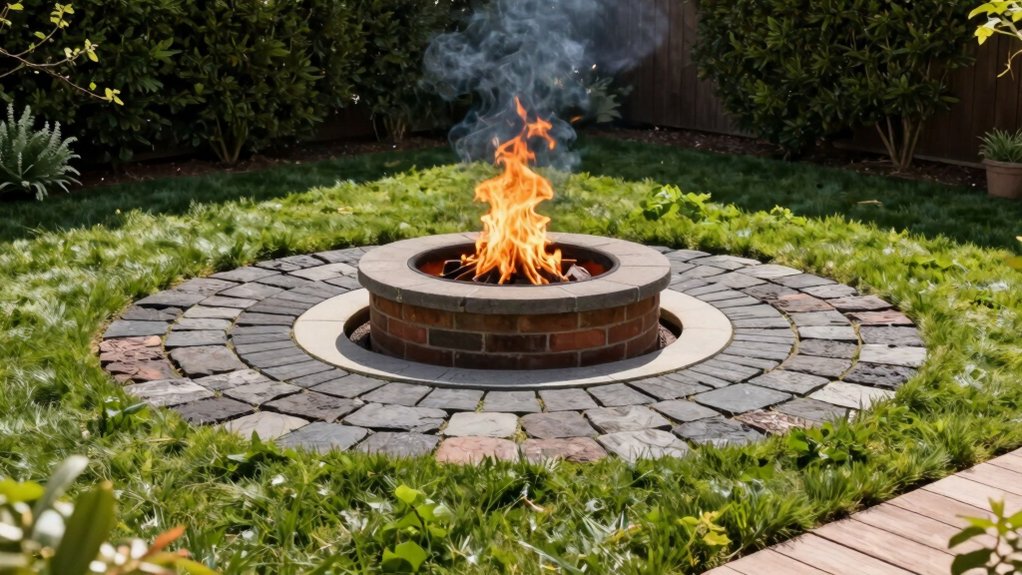
A basic backyard fire pit with pavers starts by choosing a layout that fits your space and sightlines, then checking local permits and budgeting for pavers, base, and a fire ring. Prepare a level, well-drained site, compact a stable base with gravel, and select heat‑resistant pavers. Lay out, glue or set pavers, and seal the edges for safety. Finish with edging and lighting, then maintain joints and clean ashes regularly. For practical steps and tips, you’ll find more details ahead.
Is a DIY Paver Fire Pit Right for Your Space and Budget?
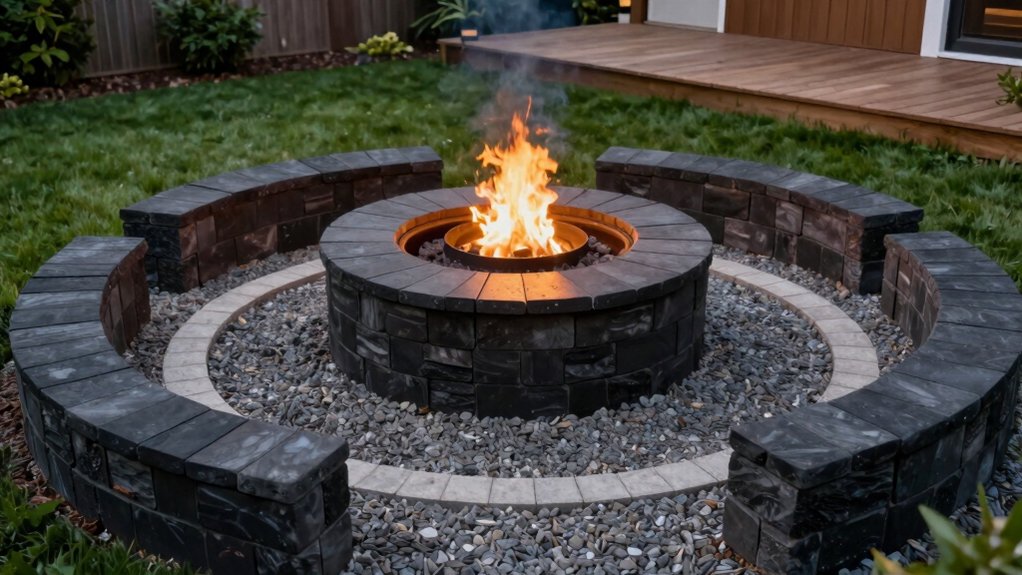
A DIY paver fire pit can be a smart option if you’re looking to balance cost, customization, and durability. You’ll assess space, function, and wind patterns before you commit, ensuring you’ll actually use the feature.
If you want flexible layouts, pavers let you shape a circle, square, or peninsula, preserving enough space for outdoor seating. Consider fuel type, maintenance, and your climate, because these choices affect long‑term satisfaction.
Fire pit lighting should be subtle yet effective, guiding guests without glare. Durable materials like concrete or brick withstand heat and weather, reducing upkeep.
If you value control over appearance, texture, and color, a paver pit delivers it. If you need portable warmth for social evenings, this approach remains approachable and scalable for various budgets.
Safety, Permits, and Budget: What You Need to Know Before You Start
Before you start shaping a backyard fire pit, you need to account for safety, permits, and budget basics. This stage sets foundations for a durable setup and legal compliance. Check local codes for fire pits, setback distances, and permits; failing to do so can trigger fines or required alterations.
Budget thoughtfully, including pavers, base material, fire ring, and noncombustible surround. Include tools, labor, and possible professional inspection costs in your estimate. Consider landscape design impact: choose a low-emission unit, ensure proper ventilation, and minimize heat exposure to nearby structures or vegetation.
Assess environmental impact by using sustainable materials and proper drainage. Obtain any permissions in writing, and document safety features like spark arrestors and a sturdy, level base. Plan for maintenance and eventual replacement costs.
Plan Layout and Size: How to Position and Dimension for Your Space
Start by choosing a layout that aligns with your space and sightlines, ensuring clear access and unobstructed movement.
Keep size proportion guidelines in mind so the pit fits comfortably with nearby furniture and pathways, avoiding crowding or wasted space.
Apply space alignment techniques to establish consistent distances from structures, borders, and seating for a balanced, functional zone.
Space Alignment Techniques
To design an effective fire pit space, start by outlining a layout that keeps the pit at a safe distance from structures, plants, and overhead hazards, while leaving clear walkways and seating areas. You’ll map access routes, noting entrances and exit points to guarantee smooth circulation.
Align the pit with primary sightlines to optimize space visualization without creating glare or crowding. Choose a stable, level base and center the pit within the intended exterior room to maintain balance and symmetry. Establish edging or borders that define zones and prevent encroachment.
Prioritize unobstructed airflow for comfort and safety, and position seating to face the fire for intimate interaction. Achieve aesthetic harmony through consistent materials, colors, and proportional margins that respect scale and function.
Size Proportion Guidelines
Size matters: plan dimensions so the fire pit fits comfortably within the space, leaves clear walkways, and aligns with seating. You’ll use a deliberate size ratio to balance the pit with surrounding pavement and furniture.
Begin with the pit diameter: 24 to 36 inches for a simple, social setup, expanding only if you’re hosting larger groups.
For seating, allow 30 to 42 inches of clearance from the fire edge to any seating surface.
Proportion guidelines recommend a compact, proportional footprint: the pit’s outer diameter should be roughly one third to one half the available patio width, depending on yard scale.
Ensure the hearth and ring, plus paver border, maintain consistent linework.
Verify sightlines and accessibility before final placement to preserve flow and safety.
Choose the Right Pavers and Base Materials for Durability
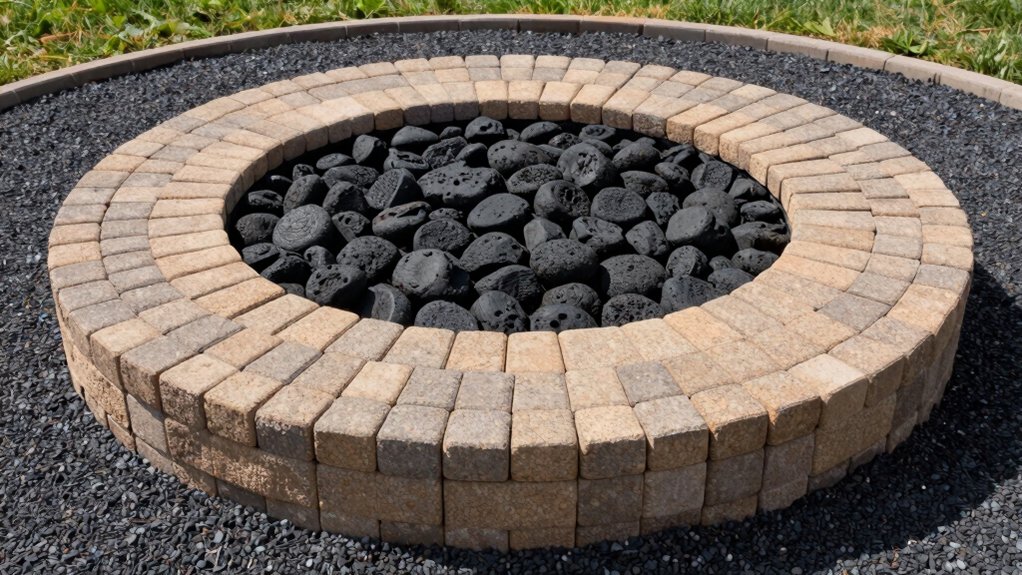
Choosing durable pavers and a solid base starts with selecting high-strength materials that resist heat and weight.
Guarantee your base layer is stable and well-compacted, with a gravel or crushed stone bed that promotes drainage.
Consider how the paver’s strength and the base’s stability work together to prevent shifting and cracking over time.
Paver Material Strength
Paver material strength matters most for longevity when you’re building a backyard fire pit, so pick pavers and base materials that resist heat, weight, and shifting soil. You’ll prioritize dense, load‑bearing concrete or natural stone rated for outdoor use, plus a solid bedding layer.
Look for paver material strength ratings that specify compressive strength and thermal resistance, and confirm that products are rated for high heat exposure. Avoid soft or porous options that crack easily under temperature fluctuation or direct flame contact.
Ensure edges are integral and joints are filled with high‑quality, heat‑stable polymeric sand or mortar. This approach supports a longer paver lifespan, reduces maintenance, and provides dependable fire pit performance in varied weather.
Base Layer Stability
To guarantee long-lasting stability, you must start with a solid base and properly compacted subgrade, then select pavers and base materials that resist settlement and movement.
For base stability, use a compacted granular subbase such as crushed rock or gravel, topped with a 1-inch layer of coarse sand or polymeric jointing sand. Ensure you maintain a consistent depth around the entire ring to prevent dips.
Choose pavers rated for exterior use and intended traffic; thicker options improve load resistance. Consider paver patterns that distribute stress evenly, and avoid overly trying to match fragile soils.
Evaluate aesthetic options, but don’t compromise core stability. Proper edging, dense jointing, and timely maintenance prevent erosion and shifting, preserving fire pit geometry and safety over time.
Prepare a Safe, Well-Drained Site and Drainage Considerations
A safe, well-drained site is essential to a reliable fire pit; start by locating it on solid, level ground away from overhanging branches, structures, and flammable materials.
You’ll evaluate drainage to prevent water pooling after rain; aim for a slight slope away from the pit and surrounding paths. Ensure the base surface remains stable under the pavers and during use. Clear debris, roots, and soft soil that could shift the structure.
Consider a perimeter trench to direct runoff, and install a shallow sub-base to maintain flatness.
Fire safety governs placement: keep the pit away from walls, sheds, and combustible items. Maintain site accessibility with clear routes and unobstructed work zones for maintenance and future re-paving.
Document drainage considerations for reliable performance and long-term durability.
Step-by-Step Fire Pit Assembly Using Pavers
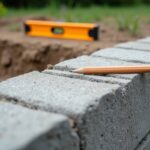
With a solid base in place, begin assembling your fire pit by laying the first course of pavers in a tight, level layout that mirrors the pit’s inner diameter. Maintain consistent gaps for even alignment, and check level frequently as you progress.
Work sequentially outward, using full-pace cuts where necessary to preserve symmetry. For fire pit design, select pavers that resist heat and weathering, and ensure edges are chamfered or rounded to reduce chipping.
Dry-fit each course before committing with mortar or adhesive, confirming radius accuracy and wall height aligns with your desired burn chamber. Alternate joints in each course to strengthen integrity, and stagger seams like bricks in a wall.
Document your paver selection choices now to guide any future modifications or maintenance.
Finishing Touches, Maintenance, and Safety Practices
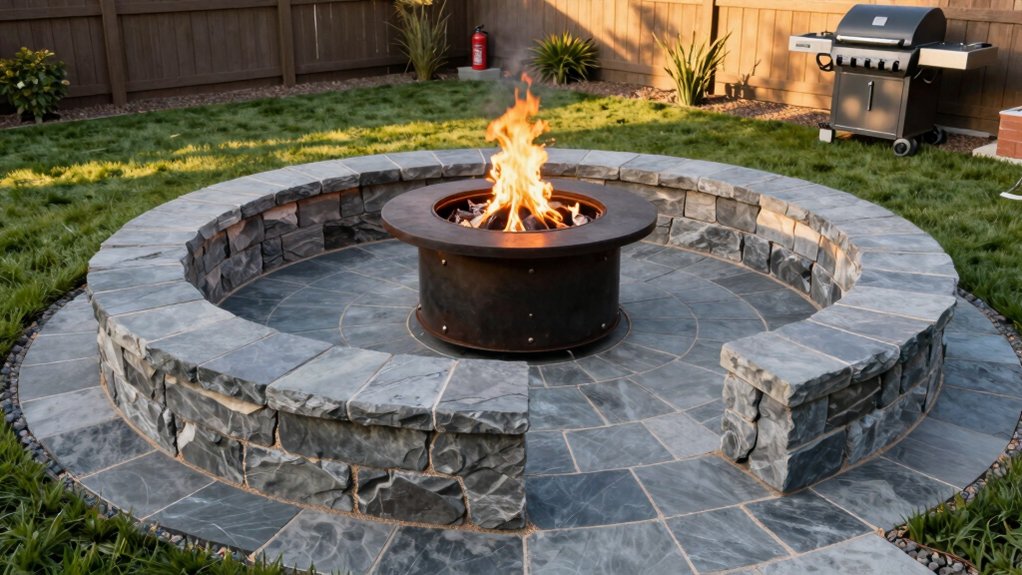
Finishing touches matter: once your fire pit is built, seal the edges, secure the cap or coping, and guarantee a clean, even surface that directs smoke away from seating areas.
You’ll maintain the structure by edging with compacted gravel or sand, checking for levelness after each rain, and correcting any settled spots promptly.
Regularly inspect joints for cracks, resealing as needed to prevent water intrusion.
For safety, keep a dedicated fire tool set, a metal screen, and a fire extinguisher nearby.
Document maintenance with a simple schedule: clean ashes weekly, sweep debris monthly, and reseed any exposed soil.
Landscaping inspiration should emphasize clear sight lines and accessible paths, while outdoor lighting highlights the pit’s perimeter without glare, reducing tripping hazards at night.
Following these practices preserves durability and enjoyment.
Frequently Asked Questions
How Deep Should the Fire Pit Pit Be for Stability?
A fire pit depth should be about 12 to 18 inches for stability. You’ll want enough depth to cradle embers while reducing debris exposure, balancing heat retention with safety. Consider stability considerations like trenching and edging for consistent support.
What Ignition Method Is Easiest for Beginners?
Starting with lighter fluid isn’t ideal; you’ll tire quickly. Use a propane or electric ignition; they’re safest and simplest. With ignition options, you’ll gain confidence fast. For beginner safety, stay vigilant and follow enclosed instructions, never improvise.
Can You Convert an Old Pit Into a Paver Pit?
Yes, you can convert an old pit into a paver pit; start by evaluating structural integrity, then plan fire pit maintenance and guarantee proper drainage. Choose durable pavers and consider heat-resistant joint material for paver selection.
How Many Pavers Are Needed for a 36-Inch Pit?
You’ll need about 50 pavers for a 36-inch pit, depending on pattern. Choose sturdy edging and allow for joint gaps. Paver patterns influence layout, while material selection dictates durability and heat resistance for safe, long-lasting use.
Are Water Features or Seating Integrated Into Design Safe?
Yes, water features and seating can be safe if you follow water safety and guarantee seating comfort; use proper barriers, non-slip surfaces, and sturdy installations, and you’ll enjoy a secure, cozy layout—digitally speaking, it’s totally feasible.
Conclusion
A backyard fire pit sounds rustic and inviting, yet it’s precise work. You’ll savor firsthand warmth while balancing the risks of smoke and sparks. It’s simple to imagine cozy gatherings, then consider the looming headache of permits, drainage, and heat. The contrast sharpens your focus: DIY charm versus safety discipline. With the right plan, materials, and respect for rules, you gain enduring ambiance and peace of mind—fire responsibly, and your space quietly becomes unforgettable.