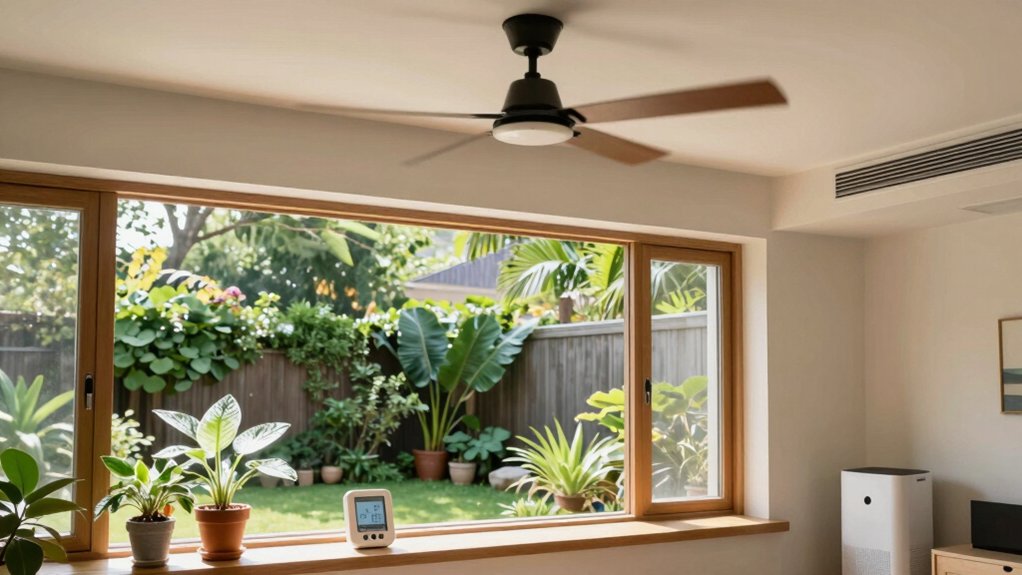
Improve ventilation and cut humidity by combining natural and smart habits. Run exhaust fans during cooking, showering, and laundry, and vent moisture outdoors after activities. Open interior doors and cross-ventilate by using windows on opposite sides when possible. Seal gaps to prevent leaks, use ceiling or portable fans to move air downward and outward, and place moisture absorbers like silica gel. Monitor humidity with a hygrometer and keep it in the 40–50% range; more tips await.
Why Humidity Builds Up at Home: and What You’ll Change
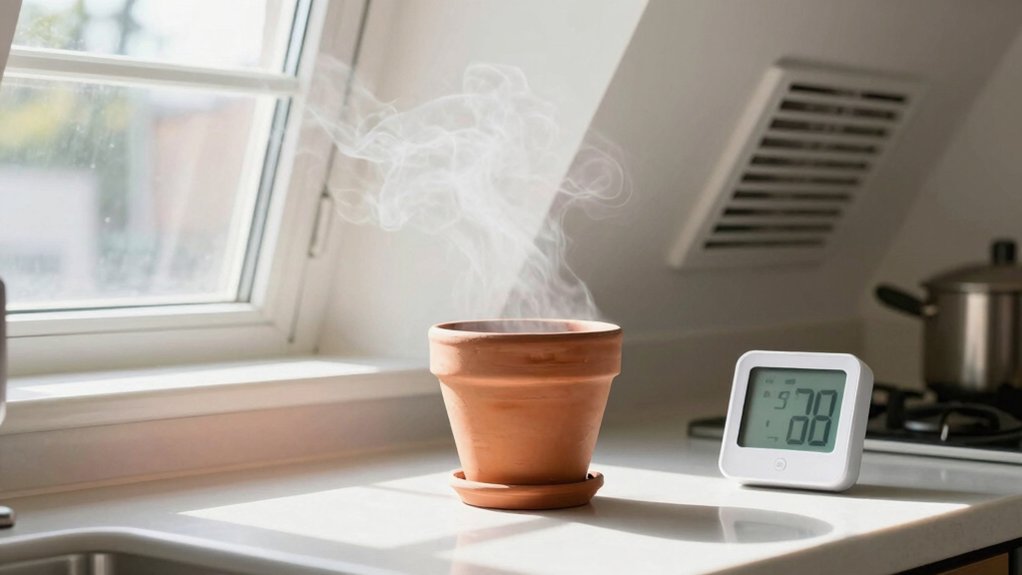
Humidity builds up indoors when moisture from cooking, showering, laundry, and even plants accumulates faster than it can escape. You’ll see this as damp patches, fogged windows, and musty smells. The core issue is your ventilation isn’t removing moisture quickly enough, so humidity concentrates and lingers.
To change this, start with practical controls: run exhaust fans during moisture-generating activities, and pair them with post-activity venting to outdoors. Improve air exchange by opening doors or adjusting vents when possible, especially in kitchens and bathrooms.
Consistent dehumidifier maintenance keeps devices effective, so check filters, coils, and seals monthly and after heavy use. Addressing the source matter matters, but you also create a healthier environment by prioritizing mold prevention through steady moisture control and timely remediation.
Quick Audit: 10 Signs Your Ventilation Isn’t Working Well
If your home feels stuffy or smells stale after cooking or showering, you’re likely seeing warning signs of poor ventilation. A quick audit helps you spot problems fast. Look for persistent humidity on windows, condensation on walls, or lingering odors after cleanup.
Listen for grinding or rattling from the HVAC system, which can indicate dirty filters or duct issues. Notice stuffiness in rooms that don’t seem to exchange air. Check for hot, uncomfortable spots near vents, or stagnant air in basements and laundry areas.
An underperforming air purifier or clogged filters reduces effectiveness, and a malfunctioning exhaust fan can push moisture back indoors. If you spot these signs, prioritize service, filter replacement, and system evaluation to restore balanced airflow.
Boost Passive Airflow Without Major Renovations
To boost passive airflow without major renovations, start by optimizing how you use existing openings. Open interior doors to encourage cross-ventilation, and keep exterior doors slightly ajar when safe to improve air exchange. Use window positioning to favor prevailing winds; open a pair of opposite windows or vents to create an effective breeze path.
Install simple fans to direct air from high to low, avoiding stagnant pockets. Maintain screens to prevent insects, and weather-strip to control drafts when needed. Prioritize strategies that support indoor air quality and mold prevention by reducing humidity hotspots near bathrooms, kitchens, and laundry areas with exhausts that vent outdoors.
Regularly clean filters, grilles, and damp zones to sustain efficient passive airflow and a healthier home.
Layout Tweaks That Improve Room-To-Room Air Movement
You can start by optimizing how doors swing to create a clear air path between rooms. Align vent paths with natural flow and place furnishings so they guide air rather than block it.
Small tweaks—like staggered, intentional furniture placement—keep air moving smoothly from room to room.
Optimize Door Swings
Good door swings can drive air movement between rooms, so start by choosing doors that open toward the primary flow of traffic and ventilation paths. You want openings that don’t trap stale air or force it to backtrack. Position doors so they participate in natural pressure differences created by living activities, not against them.
Confirm each door can swing fully without obstruction, maximizing cross-ventilation when doors are open. Prioritize door alignment to reduce drafts and gaps that kill airflow.
Regular hinge maintenance keeps swings smooth and predictable, preventing hesitations that interrupt air movement. Tighten screws, lubricate pivots, and replace worn hinges to maintain consistent operation.
Pair these steps with unobstructed doorways, and you’ll improve room-to-room exchange without expensive retrofits.
Align Vent Paths
Align vent paths by aligning the routes of air flow with doorways, vents, and openings so air travels smoothly between spaces. You’ll notice stronger cross-flow when pathways are unobstructed and aligned with return vents, improving overall ventilation without extra effort.
Prioritize clear lines of motion, minimize dead zones, and place vents to support continuous air movement. Regular air filter maintenance sustains exchange efficiency, while better airflow supports consistently fresh air and healthier indoor air quality.
- You’ll feel the difference in comfort as currents balance rooms
- Fewer hot or stuffy spots, thanks to deliberate vent alignment
- Clean, simple maintenance that protects air quality and system life
Keep monitoring air filter maintenance and indoor air quality to maintain this alignment.
Stagger Furnishings Flow
Staggering furniture can direct air where you want it, making room-to-room flow steadier without moving doors or adding vents. Place large pieces to create clear air channels between spaces, not blocks. Position sofas, bookcases, and cabinets so they don’t form tight corners that trap airflow; keep open space along key paths.
Use perpendicular alignments to encourage cross-ventilation rather than parallel dead zones. Aim for a balanced furnishing arrangement that guides circulation from living areas toward quieter rooms, supporting natural drafts. Consider traffic patterns: avoid placing seating directly in line with returns or vents.
Aesthetic considerations matter, but function comes first. Choose low, permeable furnishings where possible to minimize impedance. Regularly reassess layouts as rooms evolve to maintain steady, efficient air movement.
Targeting Moisture Sources: Baths, Cooking, Laundry Practices
To reduce indoor moisture effectively, start by identifying the biggest sources: baths, cooking, and laundry. You’ll tighten control by trimming moisture at the point of origin and using practical practices that support dehumidifier maintenance and mold prevention. Consistent habits mean less humidity stress on your system and walls.
- Bathe efficiently with short showers, vent fan on, door closed
- Cook with lids, vent hood, and a quick simmer-to-steam duration
- Run clothes dryer only with full loads and proper venting
Pair these habits with targeted airflow upgrades and regular monitor checks. Maintain the dehumidifier as recommended and empty reservoirs promptly to optimize performance, preventing mold buildup.
Small, deliberate changes now prevent bigger, costly problems later.
Natural Absorbers and Greenery That Actually Help
Natural absorbers and greenery can actively reduce indoor humidity without costly equipment. You can leverage certain indoor plants and natural moisture absorbers to steady humidity levels without big investments.
Choose species known for air-preshaping and modest water needs, such as peace lilies, Boston ferns, and spider plants, which help moderate moisture through their transpiration. Place them in bathrooms, kitchens, and laundry areas where humidity spikes.
Use terracotta or unglazed pots that wick moisture away, helping dry soil between waterings. Regularly check soil moisture and avoid overwatering, which defeats the purpose.
Combine plant choices with natural moisture absorbers like charcoal bricks or silica gel packs in small, contained spots to capture excess damp. This approach supports indoor plant benefits while contributing to a balanced microclimate.
Using Windows and Doors to Control Humidity Effectively
Windows and doors are your first line of defense against damp, so start by optimizing airflow and seal. You can curb humidity by coordinating opening schedules, cross-ventilating across rooms, and using vents when needed.
Prioritize window sealing and door insulation to prevent unwanted leaks and drafts, which waste energy and trap moisture.
- Feel the difference when you seal gaps and improve airflow
- See faster drying after showers and cooking
- Trust in fewer temperature swings and steadier humidity levels
Season-By-Season Strategies to Save Air and Water Vapor

Seasonal air exchange matters, so you’ll adjust ventilation strategies as the weather shifts to save both air and water vapor.
In winter, you’ll prioritize controlled intake and exhaust to reduce indoor moisture buildup.
In summer you’ll optimize cross-ventilation and dehumidification.
Throughout the year, you’ll apply humidity control techniques that pair with weather patterns to keep indoor air quality steady and energy use efficient.
Seasonal Air Exchange
Season-by-season, you can optimize air exchange and manage moisture by timing ventilation to the weather and indoor conditions. Throughout the year, you’ll lean on cooler mornings for fresh air and sealier days for humidity control, reducing indoor stagnation and improving comfort.
By syncing airing with outdoor quality, you protect indoor air quality and minimize odor buildup, especially during peak usage. Be mindful of seasonal allergies and pollen timing, coordinating window openings when outdoor levels are manageable.
- Open briefly on clear, mild days to vent stale air without inviting excess moisture
- Use exhaust fans during cooking and showering, then refresh with a quick outside-in exchange
- Pair ventilation with door and window gaps checked for leaks to maintain steady flow
This approach keeps environments healthy, efficient, and comfortable.
Humidity Control Techniques
Humidity control isn’t just about comfort—it’s about saving energy and reducing moisture-related problems. You’ll apply season-by-season tactics that balance airflow with vapor management.
In spring and fall, optimize exhaust fans and range hoods to carry moisture out without pulling your heating or cooling loads up. Use kitchen and bathroom fans combined with timer controls for consistent operation.
In winter, seal air leaks, improve insulation tips, and run a gentle, continuous exhaust to prevent condensation on windows. Keep relative humidity around 30–50%.
In summer, boost cross-ventilation during cooler parts of the day and deploy fans to move air rather than just cool it. Air Purification helps reduce humidity-related odors, while Insulation Tips support steady comfort.
Track Progress: Simple Humidity Targets and Simple Tools
To track progress, set simple humidity targets you can actually hit and use straightforward tools to verify them. You’ll keep outcomes tangible and momentum steady, focusing on practical steps that improve indoor air quality.
Use a basic hygrometer to monitor fluctuations, and check dehumidifier maintenance you perform regularly to guarantee consistent performance. Compare readings before and after changes, not just daily highs.
When targets feel achievable, you’ll stay motivated for lasting results.
- Visualize steady humidity around 40–50% as a practical win
- Verify tool accuracy and dehumidifier maintenance with quick checks
- Document small shifts in moisture after each ventilation tweak
This approach keeps you in control, avoiding guesswork while you protect indoor air quality and achieve reliable progress.
Conclusion
You’ll apply natural ventilation tactics alongside humidity reduction techniques to keep indoor air fresh and comfortable.
Start by pairing openings and fans with moisture control to prevent dampness and mold growth.
Together, these approaches create healthier spaces with less energy and fuss.
Natural Ventilation Tactics
Natural ventilation isn’t a luxury—it’s a first-line strategy you can implement today. You’ll boost indoor air quality by using outdoor air to dilute pollutants, odors, and excess humidity, without waiting for mechanical systems.
Start with simple moves: open windows when outdoor conditions are favorable, cross-ventilate to create a steady breeze, and shift living spaces to align with natural air flow.
Be aware of ventilation myths that push you toward expensive fixes; effective airflow often comes from knowing your home’s geometry and climate.
Use the following tactics to stay steady and informed:
- Open doors and windows on opposing sides for cross-ventilation, timing it with outdoor comfort
- Create continual air paths by keeping interior doors unblocked
- Use fans strategically to guide airflow without increasing humidity
Humidity Reduction Techniques
Humidity reduction is about actionable steps you can take now to keep indoor moisture in check and protect comfort and health. Start with a baseline: measure humidity and target 30–50% for most homes.
Use fans to improve air movement and reduce damp pockets in bathrooms, kitchens, and basements.
Consider portable dehumidifier options for high-humidity rooms, and choose models with built-in humidistat controls and auto-shutoff. Clean filters regularly to maintain efficiency.
Pair dehumidification with air purification when possible; an air purifier helps reduce mold spores and irritants that coexist with moisture.
Seal obvious moisture sources—leaks, water intrusion, and excessive condensation on windows.
Ensure proper exhaust in baths and kitchens, and ventilate after activities that release moisture.
Monitor levels and adjust as needed for consistent comfort and health.
Frequently Asked Questions
How Often Should Humidity Levels Be Checked Indoors?
You should check humidity levels weekly. Use reliable humidity monitoring tools and keep an eye on indoor climate trends, especially after activities that add moisture. Regular checks help you prevent mold, condensation, and uncomfortable damp conditions.
Do Ceiling Fans Reduce Humidity or Just Move Air?
A ceiling fan doesn’t reduce humidity; it improves air circulation. It boosts ceiling fan efficiency by moving air, which helps evaporate moisture. You’ll feel cooler, and better air circulation benefits overall humidity control in your space.
Can Houseplants Significantly Impact Indoor Moisture Levels?
Yes, houseplants can affect indoor moisture mainly through plant transpiration; they release water vapor. Monitor soil moisture closely; overwatering increases humidity, while dry soil decreases it. Guarantee proper ventilation to balance transpiration with air exchange.
Are Hygrometers Accurate Enough for Home Use?
Yes, hygrometers are accurate enough for home use, but you should calibrate them. You’ll want hygrometer calibration to guarantee reliability, and compare digital versus analog options to match your need for quick readings and steady, reproducible data.
What’s the Fastest Way to Dry a Damp Room After a Spill?
A dehumidifier is your fastest option, improving effectiveness quickly; use it alongside towels to boost moisture absorption. Run it on high until humidity drops, then switch to a lower setting. Monitor levels to guarantee ongoing dehumidifier effectiveness.
Conclusion
Would you rather live in a home that feels fresh or damp? By boosting passive airflow, tweaking layouts, and targeting moisture sources, you cut humidity naturally without big renos. Use windows, doors, and smart practices for baths, cooking, and laundry, seasonally adjusting as needed. Track tiny wins with simple humidity targets and tools, and you’ll feel the difference in comfort and health. Start tonight: implement one improvement, then another, until your home breathes freely.