
Efficiency and renewables aren’t rivals—they’re a paired strategy. You should cut waste first to lower bills and emissions, then scale clean power to reduce costs, boost reliability, and unleash deeper decarbonization. Prioritize proven efficiency measures to shrink demand, smooth peaks, and lower need for new capacity. Use renewables to fill remaining gaps, supported by storage and smart grids. Policy, markets, and equity shape how fast you move. If you keep exploring, you’ll see how synergistic this approach truly becomes.
H2 #1: What Efficiency and Renewables Aim to Achieve Together

Efficiency and renewables share a common goal: reducing energy waste while expanding clean power. You drive this outcome by aligning efficiency gains with renewable deployment, so every watt counts. In practice, that means designing systems that minimize losses, maximize uptime, and leverage storage solutions to balance intermittency.
When you improve insulation, optimize devices, and zero in on peak-demand reduction, you directly shrink fossil-fuel reliance without sacrificing comfort or productivity. Equally important is understanding consumer behavior: how people use energy, when they use it, and what incentives motivate smarter choices.
H2 #2: How Energy Demand Drives Efficiency Choices
When energy demand spikes, efficiency choices become strategic investments rather than optional upgrades. You’ll see demand shaping what gets prioritized, since tighter margins push you toward high-value efficiency rather than shiny features.
Focus hinges on three practical levers:
1) storage innovation: optimize charge/discharge cycles to smooth peaks and reduce costly peaking capacity.
2) consumer behavior: align usage patterns with favorable rates and incentives, lowering average load without sacrificing comfort.
3) system integration: enhance controls and analytics so devices collaborate, reducing waste and catching marginal gains.
Applied discipline here yields faster paybacks, lower bills, and resilience. You’ll win by modeling demand scenarios, prioritizing durable efficiency improvements, and tracking real-world performance.
The result: steadier operations, smarter investments, and a clearer path to affordable, reliable energy.
H2 #3: How Renewables Affect Grid Reliability and Bills
You’ll see how grid reliability shifts as renewables grow, with outages and balancing needs shaping operational decisions.
Bills and pricing dynamics respond to capacity, markets, and transmission constraints as supply mixes change.
Integration challenges—like variability and storage gaps—frame practical steps for keeping the lights stable and costs predictable.
Grid Reliability Impacts
Grid reliability hinges on how well we integrate variable renewables with the rest of the system, and the impact on bills follows from that balance. You’ll guarantee stability by pairing renewables with storage, grid modernization, and flexible demand. Focused actions keep costs predictable while resilience grows.
- Invest in energy storage to smooth voltage and frequency swings, reducing outages during intermittency.
- Accelerate grid modernization to upgrade sensors, controls, and transmission capacity for rapid response.
- Implement adaptive tariffs and flexible resources that align generation with demand, lowering peak stress.
Bills And Pricing Dynamics
How do renewables shape bills and pricing? You’ll notice volatility and opportunity in pricing strategies as generation mixes shift. Renewable sources often reduce fuel costs, but their intermittency can raise balancing charges or restart premiums during peak demand.
You’ll see clearer signals from wholesale markets when solar and wind output peaks, influencing volatility in customer billing across the season. Utilities may deploy time‑of‑use rates, dynamic tariffs, and demand charges to align consumption with available renewable supply.
Transparent communication helps customers understand spikes and averages, while regulators monitor fairness and reliability. For you, the key goal is predictable bills without compromising grid resilience.
Emphasize simple options, early notice, and practical tools so households can respond economically.
Renewable Integration Challenges
As renewables become a larger share of generation, grid reliability faces new pressures from variability and uneven geographic outputs. You’ll manage uncertainty by embracing grid-scale flexibility, forecasting improvements, and targeted investments.
The key challenges include balancing supply with demand, mitigating frequency deviations, and maintaining voltage stability across regions.
- storage optimization becomes essential to smooth diurnal and weather-driven swings.
- transmission investments reduce bottlenecks and enable geographic diversity to lower curtailment.
- policy incentives align markets, storage, and demand response to support reliable operation.
To succeed, deploy fast-riring controls, robust ancillary services, and transparent pricing signals. You’ll also design incentives that reward reliability alongside renewables, ensuring affordability while expanding clean energy.
H2 #4: A Practical Decision Framework: When to Favor Efficiency or Renewables
You’ll weigh efficiency first, then consider renewables as a follow-up where it makes sense. When efficiency matters more, you save cost and emissions sooner; renewables come in after you’ve tightened demand and reduced waste.
Contextual factors—costs, reliability, and local resources—shape the order and pace of your decisions.
When Efficiency Matters More
When efficiency and renewables compete for scarce budget and space, a practical decision framework helps you choose where to invest first. You weigh immediate gains, long-term payback, and risk tolerance to decide between efficiency and renewables.
In this framework, you focus on tangible, replicable changes that move the needle quickly.
- Prioritize efficiency measures with proven savings first, then layer in renewables as complementarities emerge.
- Assess storage solutions and system resilience, ensuring that efficiency doesn’t create dependence on intermittent solar or wind.
- Consider consumer behavior and usage patterns to maximize impact of either path before expanding capacity or upgrading hardware.
This approach keeps projects compact, measurable, and scalable, avoiding overinvesting before outcomes are clear.
Renewables After Efficiency
If efficiency measures have already captured the low-hanging gains, the question becomes when to shift focus to renewables. You’ll evaluate marginal gains, cost trajectories, and risk exposure to supply interruptions.
A practical framework starts with clear targets: decarbonize while preserving reliability, and minimize total system costs. Prioritize storage solutions to smooth variable output and extend and optimize your existing capacity.
Assess when a renewable build-out reduces risk more efficiently than further efficiency investments. Consider consumer behavior: how will end users respond to time-of-use pricing, incentives, and rooftop generation?
Align procurement with long-term price protections, grid compatibility, and permitting timelines. Move decisively when renewables offer predictable, scalable savings that surpass incremental efficiency benefits.
Contextual Decision Factors
Contextual decision factors drive practical choices about efficiency versus renewables. You assess where to invest first by weighing marginal gains, cost trajectories, and system goals.
In this framework, consider how storage solutions, demand flexibility, and grid reliability shape payoff. You’ll favor efficiency when rapid decarbonization or budget constraints limit upfront investment, and when consumer behavior supports reduced demand peaks.
Conversely, renewables shine where resource availability is stable, long-term pricing favors low operating costs, and storage or backup capacity mitigates intermittency.
- Evaluate marginal gains from efficiency improvements before expanding capacity
- Align technology choices with projected demand patterns and consumer behavior
- Prioritize investments with durable low operating costs and scalable storage solutions
H2 #5: Practical Synergies: How Efficiency Unlocks Renewables at Scale
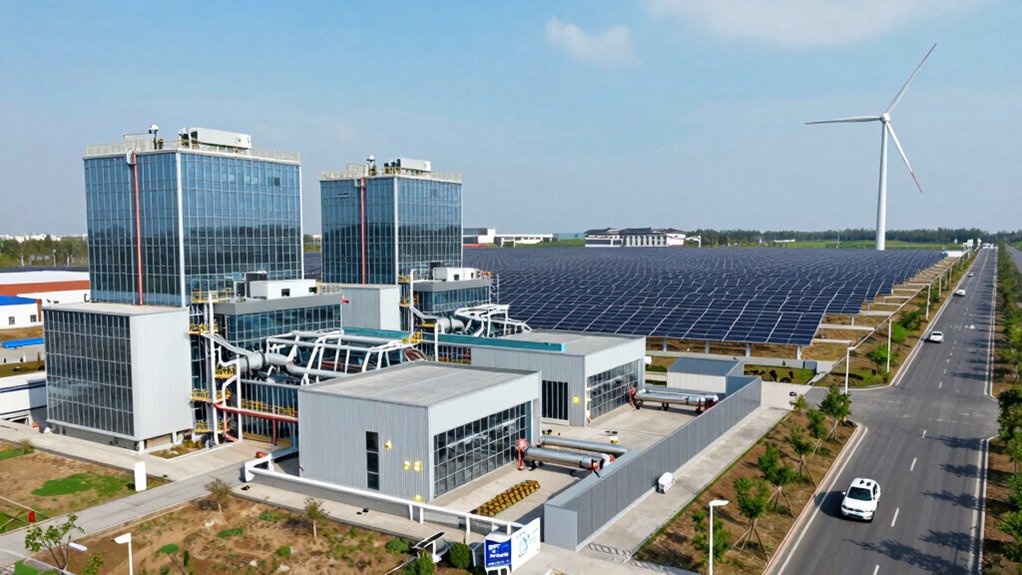
Efficiency isn’t a luxury; it’s the catalyst that lets renewables scale. When you tighten energy use, you flatten demand peaks and smooth variable supply, turning intermittent sources into dependable power.
Practical synergies unfold in three acts: first, optimize end-use efficiency to lower overall capacity needs, reducing capital and operating costs. Second, pair efficiency with energy storage so solar and wind can ride supply dips without curtailment. Third, deploy smart grids that coordinate generation, storage, and loads in real time, boosting reliability and reducing losses.
You’ll liberate faster grid modernization and cheaper dispatch, since every kilowatt saved lowers the margin you must meet with new generation. The result: higher renewable penetration with fewer infrastructure gaps and smarter, resilient networks.
H2 #6: How Policy and Markets Tilt the Balance
Policy and markets shape how the efficiency-renewables dynamic plays out in the real world. You’ll see policy and market design determine which option wins, and how quickly. To understand the tilt, consider these:
1) Market incentives guide investment—subsidies, carbon pricing, and procurement rules shift where capital flows.
2) Policy barriers slow adoption—approval timelines, permitting friction, and outdated codes raise costs and risk.
3) Regulatory alignment matters—standards for efficiency, grid access, and reform momentum create predictable, repeatable outcomes.
In practice, you tune the balance by strengthening incentives for efficiency where it complements renewables, while removing barriers that suppress synergistic investments. The result is a smoother transition, lower total cost of ownership, and faster emissions reductions.
H2 #7: Real-World Constraints: Technology, Infrastructure, and Equity
Real-world constraints shape how quickly efficiency and renewables deliver results: technology gaps, infrastructure limits, and equity considerations can slow adoption and raise costs if not addressed.
You’ll confront evolving hardware, scalable storage, and grid interoperability as real frictions between ideal models and daily use.
In urban planning, decisions about zoning, transit corridors, and building codes determine where clean options fit best, influencing costs and timelines.
Consumer behavior drives demand for reliable service, upfront costs, and simple interfaces; misreads here inflate risk and slow deployment.
Infrastructure gaps—from service connections to maintenance capacity—can bottleneck progress even where tech works.
Addressing equity means inclusive access, pricing, and workforce training so benefits aren’t concentrated.
You’ll win faster by aligning tech readiness with practical, on-the-ground delivery.
H2 #8: A Practical Road Map to a Resilient, Decarbonized Grid
To move from understanding real-world constraints to building a robust, decarbonized grid, you start with a practical, phased plan that tightens coordination among technology, markets, and communities.
You’ll align policy signals, incentives, and standards to accelerate meaningful progress.
- Prioritize energy storage and grid modernization across regions, pairing fast-responding assets with long-duration solutions to balance variability.
- Modernize transmission and distribution, enabling deeper renewables penetration, enhanced resilience, and more flexible demand response.
- Build transparent governance and metrics, aligning stakeholders, timelines, and funding to guarantee accountability and measurable decarbonization.
Conclusion
You should view efficiency and renewables as teammates, not rivals. When demand outpaces supply, efficiency trims the need; when you need fixes now, renewables diversify the grid. Together, they lower costs, boost reliability, and cut emissions. Think of them like two pedals on a bike: you move fastest when you push both. Prioritize practical measures, align policies, and invest in grid-ready tech to stay resilient and decarbonized.