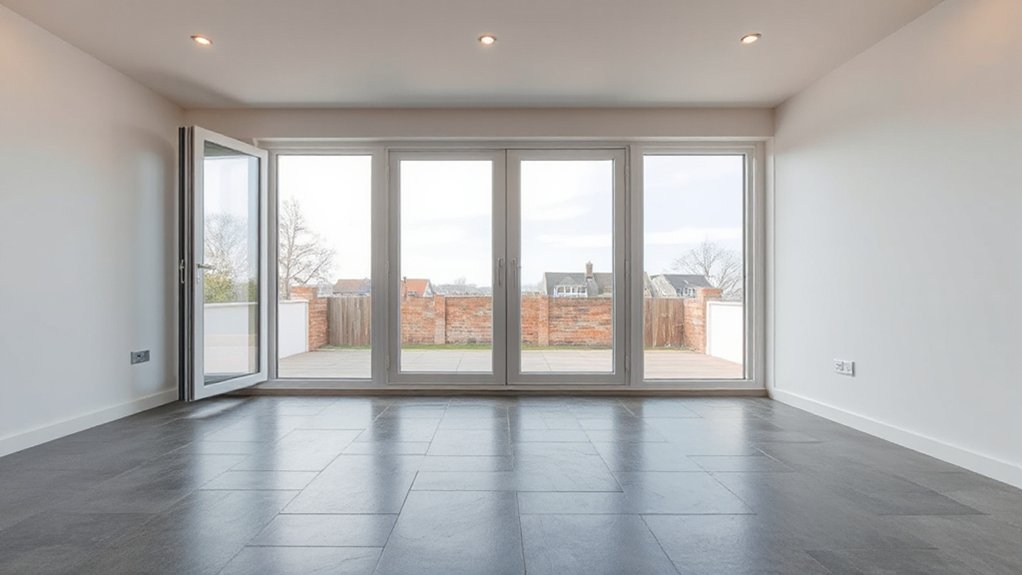
You want to open up that dining area, to let in natural light, but need to consider the cost of installing Bi-Fold doors or even sliding patio doors. Like a doorway that could swing a room open or shut, your budget will decide how far you can go. You’ll face kit prices from about £700 to £1,800, with installation adding roughly 40–60% and extras that creep in including site prep and seals. If you want timber, aluminium, or uPVC, costs shift accordingly, and hidden fees can push totals higher. Stay with us as we map the exact drivers and guardrails to keep surprises minimal.
How Much Do Bi-Fold Doors Cost in the UK?
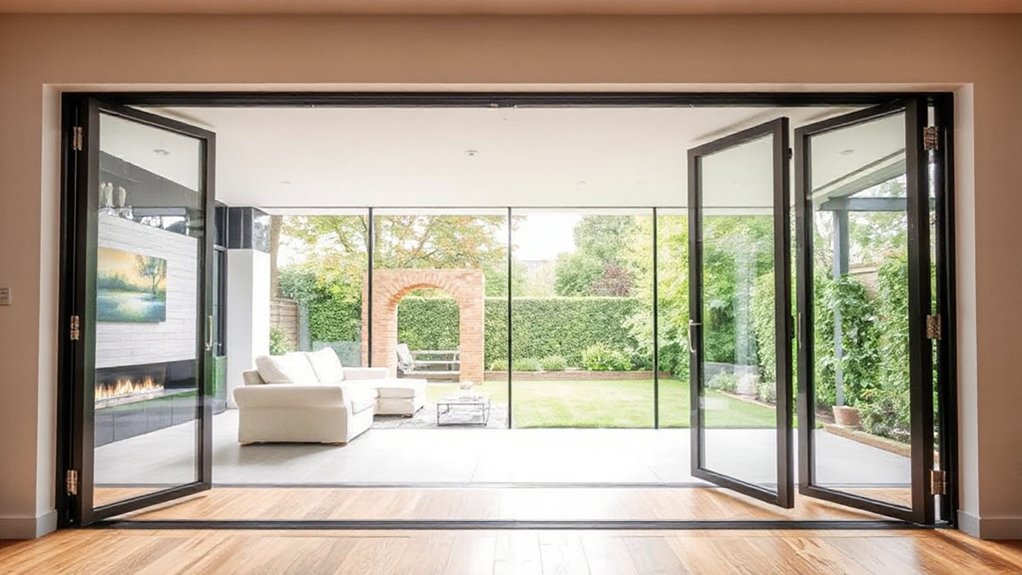
Bi-fold doors in the UK typically cost between £700 and £1,800 for the door kit alone, depending on material, size, and configuration. You’ll see price bands tighten as you select components, with aluminium kits usually at the top end, uPVC midrange, and timber variants at mixed pricing.
Security features influence upfront costs; multi-point locking, anti-lift devices, and reinforced frames add measurable value but raise upfront spend.
Energy efficiency matters, too: double or triple glazing, low-emissivity coatings, and weatherproof seals reduce long-term heating loads and may justify higher purchase prices.
Expect installation to add 40–60% of kit cost when including hinges, tracks, and flush mounting.
Warranties and compliant glazing can shift totals by 5–15%, depending on installer and regional requirements.
Baseline Price Drivers: What Affects a Bi-Fold Door Quote
Baseline price drivers for a bi-fold door quote hinge on three core factors: material and build quality, size and opening configuration, and hardware and installation specifics.
You’ll see price variances reflected in frame strength, glazing options, and thermal performance ratings, with higher-rated builds adding measurable cost per linear metre.
Size and configuration drive complexity: greater widths, more folds, and tighter thresholds increase fabrication time and on-site labour, typically elevating overall quotes by a fixed percentage range.
Hardware choices—multi-point locks, hinge systems, and track assemblies—also shift costs, especially when you require hardware with enhanced durability or corrosion resistance.
Installation specifics, including existing openings and structural modifications, add contingency margins for potential carpentry and finishing work.
Design trends and maintenance costs should factor into long-term ownership and service planning.
Bi-Fold Door Materials for UK Homes: Costs, Pros, Cons
Choosing the right material for UK bi-fold doors hinges on cost, performance, and longevity. You weigh aluminum, uPVC, and timber by thermal efficiency, price per unit, and maintenance intervals.
Aluminum delivers high strength-to-weight ratio, slim profiles, and weather resistance, but upfront costs are higher. Repainting is rare rather than required; expect approximately 15–25% premium versus uPVC.
uPVC offers lower initial outlay, good insulation, and low upkeep, with life cycles around 25–40 years and occasional seal checks.
Timber provides natural aesthetics and potential resale value, yet costs rise with hardwood grades and finishes. Rot risk incurs maintenance every 3–7 years.
Glass options affect light transmission and security ratings, while colour choices influence resale value and maintenance colorfastness.
Balance durability, aesthetics, and total ownership cost in your decision.
Frame Styles and Their Price Impact
Frame styles directly drive price by shaping fabrication complexity, material usage, and installation fit. You’ll see varied costs from slimline, raised, or flush frames due to extra machining, gaskets, and reinforcement.
Slimline options reduce aluminum thickness, lowering unit price but increasing precision labor for joints, while raised frames add header framing and sash stops that raise both material and labor fees. Conventional sightlines demand more fabrication time, increasing unit costs per door pair.
Interior-focused profiles push heavier seals and finishes, nudging prices upward compared with standard exterior frames.
Material choice matters: aluminum retains resale value but costs more upfront than uPVC; hybrid wood-alu adds premium yet improves thermal performance.
Maintenance tips include cleaning tracks and lubricating hardware to preserve value, while design inspiration guides profile selection toward durability and resale appeal.
Installation Scenarios: What Changes the Bill
Installation scenarios can swing the bill by altering labor time, material needs, and site prep. You’ll see cost shifts from door size, opening complexity, and frame integration with existing walls.
Expect labor to constitute 40–60% of total if joists or lintels require reinforcement; simpler installations hover near 40%. Material costs follow glass and hardware choices, with compliant seals adding 5–15% more for energy performance.
Site prep drives variances: uneven floors, wall finish repairs, or moisture control can add hours and materials. Maintenance costs vary with finish, hardware quality, and frequency of use; higher-end treatments reduce upkeep but raise upfront.
Aesthetic appeal influences buyer perception and resale value, subtly altering perceived value without changing core installation time. Quantify deviations to benchmark your project.
Hidden Costs to Budget For (Trims, Wiring, Underfloor Heating)
Hidden costs can quietly shift your budget above the base installation price. You’ll need to account for trims, wiring, and underfloor heating as separate line items, not as afterthoughts.
Trims add both material and labour, typically 5–15% of door price depending on finish and profile; plan £100–£350 per opening for common profiles.
Wiring costs vary with scope: simple control leads start around £150, while smart, zoned systems can hit £500–£1,200 per doorway.
Underfloor heating, if chosen, is substantial: installers often charge £50–£120 per square metre for mats, plus £300–£600 for controllers and wiring routes.
Factor maintenance expenses for seals, actuators, and sensors—roughly 0.5–2% of initial install annually.
In total, budget a 15–25% cushion beyond the quoted price to cover these hidden costs.
Regional Variations in Labour and VAT
Regional wage and VAT differences can swing total costs markedly from one region to another. You’ll see labour rates vary by up to 25–40% regionally, with tradespeople charging premium in metropolitan zones versus rural areas.
VAT on installation work sits at standard rates, but certain regions report administrative delays that inflate on-site time by 5–15%, shifting overall labour spend.
Material costs generally track regional demand, often widening gaps between northern and southern counties by 8–12%. To quantify, a £5,000 base installation could range from £5,650 to £6,900 when regional labour and VAT pressures combine.
Consider interior lighting needs and security features, which add roughly 6–12% of the project budget in higher-cost areas. Regional budgeting must account for these asymmetries.
Financing, Deals, and Timing to Save on Bi-Fold Doors
You can reduce the upfront cost by timing purchases with financing options that offer interest-free periods or low APRs, and by anchoring decisions to a fixed budget across installation, glazing, and hardware.
Consider the payoff horizon: if you save 15–20% on materials via bundled deals and spread payments over 12–24 months, your monthly cost drops by 0.6–1.6% of the project total.
We’ll compare current offers and timelines to identify the most cost-effective window for ordering and installation.
Financing Timelines Explained
How long you wait and how you pay can lower the total cost of bi-fold doors in the UK. Financing timelines matter: prefunding projects with a loan or savings plan changes interest exposure and repayment cadence.
If you opt for zero-interest credit over a fixed term, you reduce immediate outlays but may incur higher total payments if fees apply. Short-term finance accelerates cash flow but increases monthly obligations, while longer terms lower monthly costs at the expense of interest.
Align payment milestones with project phases—material purchase, fabrication, and installation—to minimize idle funds.
Consider Eco friendly options and maintenance considerations when evaluating financing; energy-efficient frames can release subsidies or rebates, affecting the overall timeline and net cost without extending the loan period.
Precisely map timelines to cash flow.
Deals To Cut Costs
To cut costs on bi-fold doors, leverage financing options, deals, and timing to optimize total expenditure; identify the breakpoints where discounts, interest, and rebates intersect with project milestones.
You should quantify every parameter: base price, installation complexity, and delivery lead times. Seek manufacturer rebates tied to energy efficiency upgrades and garden integration rewards for seamless outdoor-indoor shifts.
Compare fixed-rate loans versus promotional APR windows, calculating total repayment across the project’s phases. Schedule purchases to exploit seasonal price drops without delaying fit-out milestones; align door delivery with carpentry, glazing, and sealing tasks for minimal downtime.
Consider bundle deals with related builds (damp-proofing, flooring) to maximize value. Track energy efficiency metrics post-installation to validate incentives and long-term savings.
Cost-Saving Tips Without Compromising Quality
Smart budgeting for bi-fold doors hinges on distinguishing essential features from optional upgrades and sourcing components with measurable value. You’ll optimize cost by prioritizing core performance—insulation, durability, and mechanical reliability—before extras.
Compare profiles, glazing, and hardware using quantified metrics: U-values, wind load ratings, operating force, and warranty depth. Seek components with documented life-cycle costs rather than upfront price alone; a higher initial outlay may reduce long-term maintenance.
Plan installation in off-peak slots to lower labor charges, and request fixed-price quotes with clearly defined scope.
For garden privacy, select glazing and privacy options that meet but don’t exceed needs, avoiding over‑specification.
For security enhancements, mandate certified multipoint locks and anti-lift devices, but verify that upgrade costs align with risk reduction and available grants.
Reading a Quote: What Really Affects the Total Price
When you read a quote, the material and frame costs set the base, while labour time drives the bulk of the installation price.
Expect clear line items for frame type, glazing, density, and any customization, with exact hours and hourly rates spelled out.
Don’t ignore ancillary fees and permits, which can add a meaningful percentage to the total depending on your location and project scope.
Material And Frame Costs
Aluminum frames offer rigidity and low maintenance, typically adding 15–30% above basic UPVC, while timber frames can add 20–40% but deliver natural warmth and higher resale appeal.
For glazing, double- or triple-glazing raises frame-related costs by 5–15%, depending on glass thickness and coatings.
Core frames contribute most of the expense; composite frames blend durability and appearance, often costing 10–25% more than UPVC.
Budget to accommodate hardware, seals, and finishings, which collectively add 5–12%.
Your quote should itemize these components to reflect material durability versus frame aesthetics, enabling precise comparison and informed choices.
Labour And Installation Time
Time estimates hinge on door configuration, frame complexities, and site access. Expect higher quotes for multiple openings, unusual wall types, or retrofits that demand extra shimming or trimming.
Labour variance often mirrors supply delays and weather, with potential overtime to complete within a planned window. To manage this, request precise day-by-day scheduling and milestones in the quote.
Maintenance tips and design inspiration can influence ease of installation, reducing labour burden. Seek clarity on contingencies, then compare quotes on similar scopes to avoid inflated totals.
Ancillary Fees And Permits
- Security features: quantify installation of locks, hinges, multi-point systems, and alarms.
- Structural permits: include council approvals, plan checks, and inspection fees.
- Site access fees: account for congestion, delivery windows, and scaffold or crane use.
- Maintenance requirements: estimate long‑term servicing, replacements, and warranty handling.
Cross‑check totals against your needs for security features and ongoing maintenance requirements.
Long-Term Value: Are Bi-Fold Doors Worth the Investment?
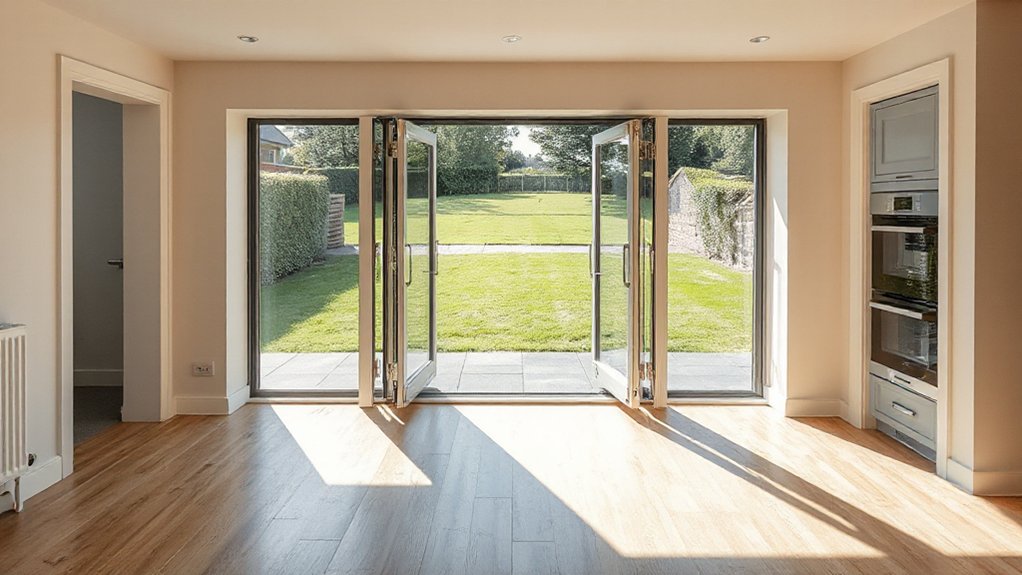
Bi-fold doors typically add long-term value by extending usable floor area and boosting natural light, factors that can raise a home’s market appeal and resale price.
You should quantify impact: average UK property price uplift is modest but measurable, roughly 1–3% depending on location, size, and integration with living spaces.
In evaluating return, consider maintenance costs, energy efficiency, and door quality over 15–25 years.
Security features influence perceived value; multipoint locking, grade 2 or above hardware, and reinforced frames correlate with higher buyer confidence.
Colour options, while stylistic, affect resale by aligning with prevailing trends and exterior design; neutral tones generally appeal to a broader market.
Assess total cost of ownership, including potential insurance discounts for enhanced security, to form a precise investment hypothesis.
Frequently Asked Questions
Do Installation Times Affect Total Door Cost?
Yes, longer installation times can raise total costs. Your installation timeline directly impacts labour costs, as extended days mean more hourly charges, potential site adjustments, and equipment use, inflating the final price. Budget for contingencies based on schedule length.
How Does Post-Install Maintenance Influence Pricing?
Post-install maintenance influences pricing modestly: higher maintenance frequency raises service costs, while cleaning requirements affect hourly labor and schedules. You’ll incur roughly 5–15% difference if you adopt frequent maintenance and stricter Cleaning requirements, compared to minimal upkeep.
Are There Hidden Fees After Project Completion?
Yes, there can be hidden charges and unforeseen expenses post-completion. You’ll need to review contracts thoroughly, request itemized final invoices, and confirm warranty coverage; expect potential fees for alterations, site cleanup, or follow-up service beyond the initial scope.
Do Discounts Apply to Custom Frame Colors?
Yes, you’ll get discounts on custom color options and frame color discounts, provided you meet the bulk or timing criteria. You save, you justify, you compare, you decide, you document, you finalize, you install.
How Does Regional Insulation Affect Overall Price?
Regional climate affects energy needs, so insulation standards can raise upfront costs by roughly 5–15% to maintain comfort and efficiency; you should expect higher glazing and frame insulation to influence long-term savings.
Conclusion
You’ll come away with a clear picture of the cost landscape, seeing how kit prices, install fees, and extras stack up like stacked bricks. Think of it as a blueprint: materials set the base, installation adds the fittings, and permits or site prep tilt the totals. When you budget 15–25% for surprises, you’re basically accounting for the unseen gravity of the project. In short, plan meticulously, compare quotes, and you’ll lock in a durable, cost-effective bi-fold future. Allusion: foundations steady, doors open.