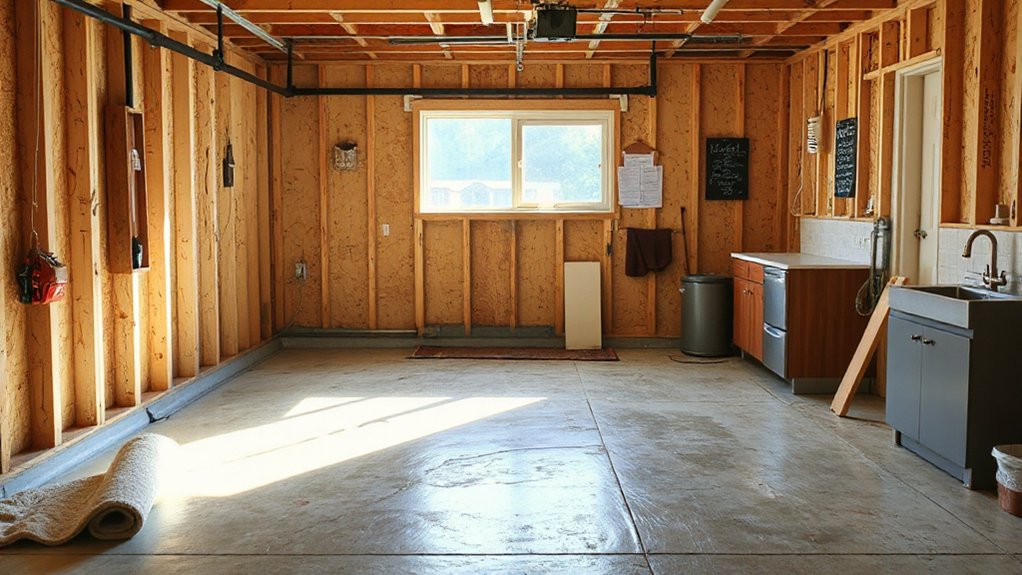
Converting a garage into a living space involves distinct costs across foundation, insulation, drywall, electrical, and HVAC, plus permits and potential site work. You’ll balance upfront estimates with contingencies, assess DIY versus professional labor, and anticipate hidden repairs. The total hinges on scope, quality, and local rates, meaning a precise budget gaps can appear as you drill into structural and moisture control needs. Start by framing your plan—then prepare for tradeoffs that will shape the final price.
Is a Garage Conversion Right for You? Scope, Limits, and Use

Transforming a garage into living space can be practical if you define the project scope and constraints up front. You assess fit by aligning needs with structure, zoning, and utility capacity.
Scope determines room count, ceiling height, windows, and insulation targets, while constraints include load-bearing elements, drainage, and ventilation requirements. You should quantify allowable modifications, access routes, and seasonal usage patterns to avoid scope creep.
Consider primary uses (sleeping area, office, or multipurpose) and required finishes to evaluate Garage aesthetics and durability under daily loads.
Conversion challenges arise from hidden plumbing, electrical rework, and moisture control, so you map risk areas and plan mitigation.
If your goals align with code, budget, and maintenance expectations, a garage conversion remains a feasible, well-defined project.
How Much Should You Budget Up Front for a Garage Conversion?
A garage conversion requires a clear, up-front budget that reflects design intent, code compliance, and the cost of owner-supplied decisions. You should provision an explicit line item set before work begins, separating hard costs from soft costs.
Estimate structure, insulation, electrical, HVAC, and finishes with unit costs and contingency. Include site-ready prep, damp-proofing, flooring, and wall systems, then allocate for finishes that affect garage aesthetics and room usability.
Plan for mechanical access, interior lighting, networking, and storage solutions that align with intended use. Consider temporary occupancy, utility upgrades, and contractor overhead.
Build in a 10–20% contingency and a documentation buffer for design changes. Prioritize decisions to minimize rework, and document selections to avoid scope creep during construction.
Permits, Codes, and Insurance: What to Expect
You’ll start by outlining the permit requirements, including which authorities issue approvals and the typical timelines.
We’ll then summarize codes compliance notes, highlighting structural, electrical, and fire safety standards you must meet.
Finally, we’ll cover insurance implications essentials, focusing on coverage changes during construction and after completion.
Permit Requirements Overview
Permits, codes, and insurance are the core requirements you’ll encounter when converting a garage into living space. You’ll navigate permit scope, plan review, and fee schedules before breaking ground. Expect documentation for structural, electrical, plumbing, and HVAC work, plus accessibility and energy-efficiency considerations. Insurance requirements protect you during construction and post‑completion.
- Clear timelines and approval milestones reduce surprises and streamline decisions
- Documentation clarity minimizes back-and-forth with inspectors
- Budget visibility helps you anticipate permit and impact fees
- Schedule-aligned inspections keep work moving efficiently
- Garage aesthetics and storage solutions influence layout choices and code adherence
Codes Compliance Notes
Codes compliance forms the backbone of your garage-to-living-space project, and you’ll encounter specific permit scopes, plan reviews, and insurance requirements that keep work within code and on schedule. You’ll identify local permit authorities, submit drawings for review, and address any code deficiencies before issuance.
Expect mechanical, electrical, and plumbing allowances to align with habitable-space standards, including headroom, egress, and ventilation criteria. Documentation should clearly reflect subspace separation, fire-rated assemblies, and energy-performance targets to satisfy inspectors.
Throughout, focus on practical implications for garage aesthetics, ensuring progression appear deliberate and compliant. Also plan for storage optimization within code-compliant layouts, avoiding obstructed egress or hidden hazards.
Final approvals enable orderly progression, minimize rework, and protect the project timeline and budget.
Insurance Implications Essentials
Insurance implications are a critical, integrated element of a garage-to-living-space project, shaping coverage scope, premium impact, and risk mitigation from planning through completion. You’ll navigate permits, code adherence, and insurer requirements to secure appropriate protection.
Expect precise disclosures on renovations, occupancy changes, and added electrical/plumbing loads that influence policy terms, deductibles, and endorsements. Liability coverage must reflect increased exposure from residents, visitors, and potential construction activities, with limits aligned to unit value and local risk factors.
Coordinate with your insurer to confirm validation of structural modifications, fire/smoke protection, and appraisal methods. Guarantee documentation accompanies every phase to avoid gaps at renewal or claim time.
- Clear expectations reduce surprises
- Timely permits prevent coverage gaps
- Accurate disclosures preserve liability limits
- Documentation defends claim integrity
- Endorsements tailor protection to risk
Foundation, Framing, and Insulation: Structural Costs Explained

Foundation, framing, and insulation establish the structural backbone of a garage-to-living-space conversion, and a clear cost picture hinges on the size of the footprint, soil conditions, and chosen materials. You evaluate foundational options—slab, raised concrete, or frost-protected shallow foundations—based on load requirements and local code.
Framing decisions address spans, wall assemblies, and fire resistance, with attention to performance under occupancy loads and future access to utilities.
Insulation strategy balances thermal performance, air sealing, and moisture control, affecting long-term energy costs and comfort.
Structural engineering considerations include load paths, seismic and wind provisions, and potential retrofit needs for existing walls.
Align garage aesthetics with code-compliant finishes, while ensuring durable, predictable, and monitorable performance throughout the project lifecycle.
Plumbing and HVAC: Making the Space Fully Functional
Plumbing and HVAC integration is essential to make a garage conversion comfortable and compliant, requiring carefully planned layout, sizing, and equipment selections. You’ll design a compact mechanical room, route supply and return lines efficiently, and select units with appropriate capacities to meet local codes and occupant needs.
Choose low-profile fixtures, minimize heat loss, and vent correctly to prevent moisture buildup. System zoning improves comfort and energy use, while safeguarding garage aesthetics and storage solutions by keeping mechanicals tucked away.
Proper drainage, condensate management, and rapid air exchange prevent odors and humidity issues, preserving finishes and durability.
- Seamless integration that respects aesthetics and function
- Quiet, reliable operation without intrusive equipment
- Smart zoning for comfort and efficiency
- Compact, accessible storage solutions integrated with systems
- Durable materials that support long-term garage aesthetics
Electrical and Lighting: Safe, Bright, and Up-to-Code
Electrical and lighting systems must be designed and installed to meet code, deliver safe operation, and provide ample, controllable illumination.
You assess existing panels, circuits, and feeders, planning upgrades to support new loads without nuisance tripping.
Electrical safety guides your placement of outlets, GFCIs in wet locations, AFCIs for living spaces, and proper grounding.
Lighting design prioritizes task, ambient, and accent layers, selecting fixtures with appropriate color rendering and efficiency.
You locate switches and dimmers for intuitive control, ensuring NEC-compliant clearances, conduit routing, and minimal heat buildup.
All wiring follows terminations per manufacturer specs, and you verify insulation, weatherproofing, and moisture barriers where applicable.
Finally, you document permits, inspections, and as-built drawings to demonstrate compliance and safe, reliable operation.
Windows, Doors, and the Building Envelope: Energy and Access

Windows, doors, and the building envelope define energy performance and access to the living space. You assess insulation continuity, air sealing, and thermal bridging to minimize heat loss, while ensuring natural light and ventilation meet building codes.
Window placement and door security directly influence energy bills, comfort, and safety, so you select products with appropriate U-values, SHGC, and weatherstripping.
Align flashing, flashing, and sill details with code requirements to prevent water intrusion.
Prioritize operable egress per occupancy and fire safety standards, and verify compatibility with mechanical ventilation strategies.
Document installation tolerances, warranty terms, and labor costs to refine the budget.
- Energy-conscious design motivates responsible choices
- Window placement influences daylight and glare
- Door security protects occupants and valuables
- Air sealing reduces drafts and cost
- Proper flashing prevents leaks and damage
Interior Finishes: Drywall, Flooring, and Ceilings
When converting a garage into living space, drywall, flooring, and ceilings define finish quality, thermal comfort, and moisture management. You select drywall types based on fire rating, sound transmission class, and finish texture, then install with proper vapor control and fastener spacing to minimize cracks.
Flooring choices balance durability, subfloor preparation, and comfort underfoot; you price underlayment, moisture barriers, and surface finishes that pair with climate conditions.
Ceilings determine room height perception and air circulation, requiring proper insulation and vapor retarders to prevent condensation.
Consider garage aesthetics when choosing profiles, trims, and joint treatments to maintain a cohesive interior.
Guarantee insulation materials align with R-values and local codes, and verify that assemblies meet moisture management requirements for long-term performance.
Budgeting for Wet Spaces: Bathrooms and Kitchens
As you shift from interior finishes to wet spaces, budgeting for bathrooms and kitchens demands precision in material costs, water-resistant assemblies, and code-compliant installations. You’ll balance fixture quality, waterproof membranes, and substrate preparation to guarantee long-term reliability and minimal maintenance, while aligning with structural limits and utility capacities.
Focus on watertight details, ventilation, and drainage design to avert moisture issues that undermine Garage aesthetics and concrete durability.
- Prioritize moisture resistance without overpaying for luxury finishes
- Specify tested substrates and sealed joints for longevity
- Align plumbing routes with structural beams and access
- Choose efficient fixtures to reduce operating costs
- Plan for future repairs without rework
This approach preserves function, safety, and value across your transformed space.
Hidden Costs and Contingencies You’re Likely to Miss

Hidden costs and contingencies are the real drivers of budget creep in a garage-to-living-space conversion. You must anticipate items that escape initial estimates and add them to your buffer.
Start with permitting delays, inspection reschedules, and scope changes that ripple across trades. Mechanical and electrical work often reveals latent requirements, such as upgraded panels or code-compliant ventilation, increasing both materials and labor.
Unforeseen structural tweaks, insulation deficiencies, and moisture problems can also emerge, driving costs upward. Document these risks and set a contingency target—typically 10–20% based on complexity.
Focus on disciplined change management: track requests, verify impact on timelines, and adjust allocations promptly. Consider artistic design and material selection early to reduce rework, then freeze decisions to preserve budget integrity.
Design Choices That Drive Price: Cabinets, Fixtures, and Finishes
Balancing aesthetics and budget in a garage-to-living-space conversion hinges on your design choices for cabinets, fixtures, and finishes. You’ll influence overall cost through material grade, hardware, and installation methods.
Cabinet styles set the tone and durability, while fixture upgrades affect efficiency and long-term maintenance. Precision in specification reduces overruns; standard dimensions ease fabrication, and consistent finishes minimize waste.
You’ll compare factory finishes versus site-applied coatings to forecast labor. Pay attention to moisture resistance, load capacity, and warranty terms to avoid hidden expenses.
Finishes must align with climate and usage, as mismatches drive early replacement. Strategic choices create functional space without compromising safety, code compliance, or resale value.
- Material grade selection drives upfront and life-cycle costs
- Cabinet styles impact installation time and modularity
- Fixture upgrades influence energy efficiency and maintenance
- Finish consistency affects durability and repaint cycles
- Warranty and serviceability protect long-term budget integrity
DIY vs. Contractor: Where You Can Save (and Where You Can’t)
You’ll weigh DIY budget breakpoints against contractor expenses to map where self-work saves money without sacrificing safety or code compliance.
Recognize where expertise gaps—plumbing, electrical, and structural work—create overruns or hazards that erode savings.
This discussion sets the framework for when you can DIY confidently and when you should hire a pro to protect value and compliance.
DIY Budget Breakpoints
Determining cost savings starts with identifying which tasks you can safely handle without compromising code compliance, safety, or long-term durability. You’ll map budget breakpoints by task risk, duration, and required trades, isolating high-leverage DIY opportunities from components needing licensed pros.
Focus on non-structural finishes, insulation depth, and simple design tweaks that influence perceived value, while preserving Garage aesthetics and functional Storage solutions.
- Prioritize framing and drywall projects that stay within code when you follow guides and permits.
- Tackle painting and cosmetic updates to boost mood and perceived space.
- Leverage ready-made cabinetry to minimize custom carpentry.
- Use energy-efficient lighting to transform atmosphere without heavy costs.
- Plan for scalable storage with modular systems to avoid future rewrites.
Keep expectations grounded; safety and code compliance drive cost control.
Contractor Expertise Gaps
Turning to contractor expertise, you’ll find that some tasks save money when handled DIY, while others demand licensed trades to protect code compliance, safety, and long-term durability. Recognize contractor expertise gaps early to calibrate expectations and budgeting.
Structural framing, electrical, and plumbing typically require licensed professionals to guarantee permits, inspections, and performance standards are met.
Insulation, vapor barriers, and HVAC zoning often benefit from trained oversight to optimize energy efficiency and indoor comfort.
Finish carpentry, drywall, and painting may be DIY-friendly if you maintain quality controls, but finish quality impacts garage aesthetics and resale value.
Plan storage organization and access during design reviews to avoid retrofits.
Align scope with trades’ capabilities, then reserve complex tasks for pros to minimize risk and maximize durability.
Timeline Realities: How Long a Garage-to-Living-Space Takes
When planning a garage-to-living-space conversion, timeline accuracy hinges on scope, permits, and trade coordination. You’ll measure delays by inspection cycles, material lead times, and workforce availability, then translate those into a defensible schedule.
Conversion timelines hinge on upfront design decisions, utility relocations, and code reviews, with buffers for weather and permit backlogs. You’ll track milestones, flag bottlenecks, and adjust sequencing to prevent idle crews.
Garage aesthetics influence finish schedules, while structural work governs critical path tasks. A disciplined timetable helps you forecast occupancy readiness, avoid cost escalations, and communicate expectations clearly.
- You notice schedule ambiguity persists and feel the pressure to commit to dates you can’t guarantee
- You recognize lead times stretch, and delays ripple through trades
- You sense the value of proactive permitting to avoid stalling
- You envision a precise, workspace-ready timeline you can trust
- You prioritize a calm, controlled, compliance-driven process
Return on Investment: Value Impact and Appraisal Factors

Return on Investment (ROI) for a garage-to-living-space conversion hinges on how value is captured and quantified across cost, utility, and market response. You assess cost components (construction, permits, finishes) against perceived utility, including usable space, comfort, and energy efficiency.
Appraisal factors hinge on market demand, comparable sales, and timing, with lenders favoring credible, itemized budgets and documented scope.
Garage aesthetics influence appeal by aligning with neighborhood expectations, while Conversion aesthetics dictate flow, light, and materials that signal quality.
You must quantify incremental value through appraisals, noting any premium for compliant additions, egress, and insulation. Track depreciation, operating costs, and potential tax implications.
Ultimately, you determine ROI by balancing total project value against total investment, informed by objective market signals and rigorous cost accounting.
Practical Checklists to Prevent Budget Blowouts
You’ll start by establishing Budget Tracking Essentials to monitor costs as they arise, comparing actuals to estimates on a weekly cadence.
Stay vigilant on Hidden Cost Awareness to identify non-obvious additions before they derail the plan, and document every deviation with a clear rationale.
Implement Scope Creep Prevention by defining deliverables, approval processes, and change-control thresholds to keep the project on track.
Budget Tracking Essentials
Budget tracking is essential to keep a garage conversion project on schedule and within cost. You’ll establish baselines, monitor variances, and trigger corrective actions before overruns compound. Use a structured ledger and weekly reviews to maintain visibility over material, labor, and permit fees.
Track contingencies separately to avoid misallocation and guarantee garage aesthetics and storage solutions stay aligned with design intents. Maintain versioned estimates to reflect scope changes, and require sign-off on deviations to preserve accountability.
Integrate a simple forecasting model to project cash flow and completion dates, updating it with real data after every milestone. Consistency in categorization and timing minimizes risk and accelerates decision making, keeping stakeholders informed and the project moving smoothly.
- Early-scoping discipline reduces later surprises
- Real-time variance alerts prevent silent overruns
- Clear categorization clarifies responsibility
- Contingency integrity protects design intent
- Weekly reviews reinforce accountability
Hidden Cost Awareness
Hidden costs often defy initial estimates, so a disciplined checklist helps you spot and mitigate them before they derail the budget. You approach this topic with a methodical mindset, cataloging potential deviations from plan and assigning responsible owners.
Begin with materials variance: document unit prices, delivery windows, and waste allowances; track changes against the approved bill of quantities.
Next, account for hidden permits, inspection fees, and utility reconnections, documenting required timelines and contingencies.
Schedule-related contingencies reduce disruption risk; quantify overtime and sub-contractor availability.
Consider interior design implications: decorative accents may trigger additional finish work and storage needs, while furniture arrangements affect required square footage and vibration isolation.
Maintain a change-log, enforce approvals, and adjust the contingency reserve promptly to preserve cost integrity.
Regular audits reinforce discipline and prevent budget blowouts.
Scope Creep Prevention
How can you prevent scope creep from eroding the project’s cost and timeline? You implement disciplined controls that focus on scope clarity and contractor selection, reducing ambiguity before work begins. Define deliverables, acceptance criteria, and change processes in writing, with traceable approvals. Maintain a detailed baseline schedule and budget, updated only through formal change orders. Establish a single point of contact for decisions and document all requests.
Use phased milestones to catch drift early and adjust promptly. Regularly compare progress against the baseline, flagging variances and root causes. Enforce subcontractor vetting to avoid unauthorized substitutions. Communicate updates to all stakeholders promptly, ensuring alignment and accountability.
- Clear scope and acceptance criteria set expectations from day one
- Formal change orders minimize ambiguity
- Central decision-maker speeds approvals
- Milestones enable early drift detection
- Rigorous contractor selection reduces risk
Frequently Asked Questions
How Long Does a Garage Conversion Typically Take Start to Finish?
Typically, a garage conversion takes 4–8 weeks start to finish. You’ll verify permits, insulate walls and ceiling, install Garage insulation, then select flooring options, finish electrical and HVAC, and complete drywall, painting, and trim efficiently.
What Taxes or Insurance Considerations Affect Conversions?
A financial storm brews; you ride it with precision. Property tax implications adjust as space becomes habitable, and insurance premium adjustments may follow. You verify local rules, document renovations, and notify your insurer to avoid gaps or penalties.
Can Existing Garage Elements Be Repurposed to Save Cost?
Yes, you can repurpose existing elements to save costs. Assess insulation, walls, and flooring compatibility first. Focus on garage insulation, flooring options, ventilation, and moisture barriers to guarantee code compliance and long-term durability.
What Is the Best Way to Compare Contractor Bids Fairly?
Compare bids side by side, then weigh quality against cost. You’ll budget planning carefully, ask for detailed scopes, and guarantee contracts specify milestones, warranties, and change orders. Contractor selection hinges on transparent pricing and proven performance, not lowest price.
Do Garage Conversions Require Special Zoning Approvals?
Yes, garages often need zoning approvals or variances, depending on locality. You’ll verify setbacks and occupancy limits, then confirm Garage insulation meets code and Plumbing requirements, including venting, water supply, and drainage, before submitting permit applications.
Conclusion
Considering a garage conversion? You’ll balance scope, costs, and codes to maximize livable space and value. Budget realistically for foundation work, insulation, electrical, HVAC, and moisture control, plus permits and contingencies. DIY portions can cut costs, but structural, plumbing, and HVAC typically require pros. Timeline hinges on design complexity and inspections. Return on investment depends on market and finish level. Ready to quantify risks, compare bids, and set milestones—will you commit to a disciplined budget and clear scope?