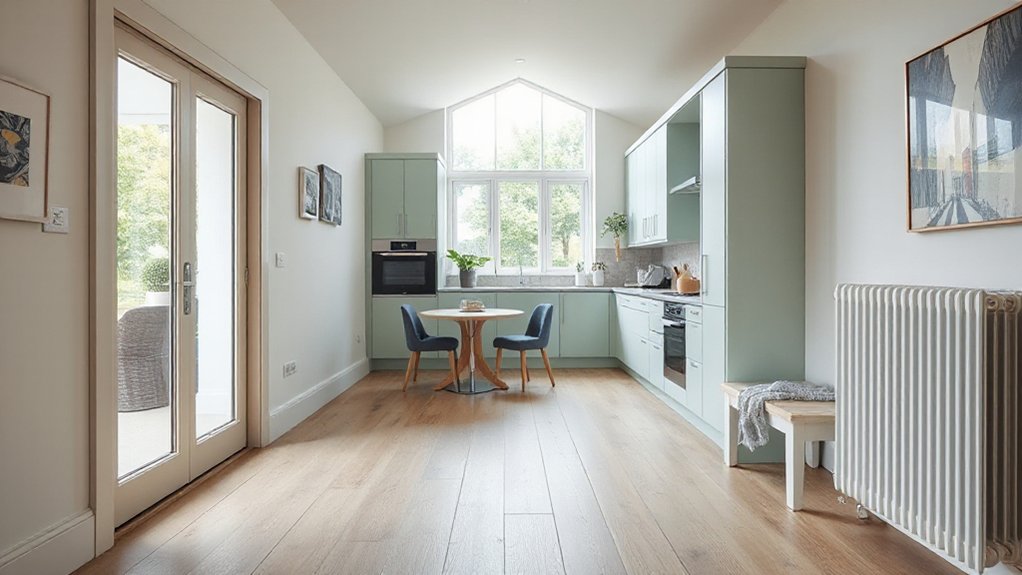
To improve flow in compact UK homes, you should map everyday movements, then align the kitchen, dining, and living zones with shared surfaces and sightlines. Prioritize open, flexible corridors and use continuous, level flooring with low-profile lighting to guide routes. Replace rigid partitions with slim screens or pocket doors, and maximize vertical storage to reclaim floor space. Bring daylight deeper by window-focused layouts and reflect light with pale finishes. Want more practical strategies as you proceed.
Identify Your Goals for a Compact UK Home

To design a compact UK home that truly works, start by identifying your goals: what you need daily, what you want to free up, and how you’ll use each space. You’ll map priorities for routines, storage, and flexibility, then translate those into a practical layout.
Define non-negotiables (quiet zones, daylight, accessibility) and nice-to-haves (entertainment nooks, guest sleeping spots). Consider how you’ll manage daily chores, workflows, and energy use, so spaces stay efficient rather than cluttered.
Plan for future needs, like aging in place or evolving tech. Integrate Home automation to streamline lighting, climate, and security, while exterior landscaping enhances curb appeal and outdoor usability.
Your goals become guardrails, guiding layout changes that boost flow without sacrificing comfort or character.
Map the Flow: How People Move Through Tight Spaces
Start by tracing the Pathways Through Tight Spaces to see how movement flows from room to room.
Consider Circulation Friendly Layouts that minimize wasted steps and reduce bottlenecks in high-traffic zones.
Use this map to inform practical changes that improve daily use without sacrificing storage or light.
Pathways Through Tight Spaces
How do you move efficiently in tight spaces? You map the flow by prioritizing clear sightlines and flexible routes. Start with door swing checks, avoiding double doors where possible to reduce pinch points. Use continuous, level flooring to prevent trips and guide footsteps naturally from room to room.
In kitchens and living zones, position frequently used items within arm’s reach, and keep main paths free of furniture legs and clutter. Consider garden pathways and entryway access when exiting rooms; align these _links_ with exterior access to shorten travel.
Narrow hallways benefit from integrated storage that tucks paraphernalia out of sight, plus wall-mounted controls and lighting to reduce searches. Test your layout with a quick walk-through, adjust any bottlenecks, and document improvements.
Circulation Friendly Layouts
Keep primary walkways at least 900mm wide where possible, and avoid placing furniture in direct line with traffic to prevent pinch points.
Use furniture arrangement that creates clear, logical routes between living, kitchen, and entry areas, so you don’t zigzag or backtrack.
Define zones with subtle cues rather than walls, preserving openness. Use decorative accents to reinforce routes—color, texture, and lighting along main corridors guide the eye and pace.
Prioritize storage access along routes, so you don’t disrupt movement searching for clutter.
The result is efficient, comfortable daily circulation.
Rethink Corridors for Open Sightlines
Rethinking corridors for open sightlines starts with prioritizing unobstructed views and fluid movement through compact UK homes. You assess width, obstruction, and lighting, then trim nonessential features that interrupt flow.
Keep corridors clear of bulky storage, avoid step-outs, and choose doorways with slim frames or pocket options to maximize perceived width. Use continuous flooring and aligned sightlines to create a sense of openness from room to room.
Integrate reflective or light-toned finishes to bounce light and subtly extend depth. Position high-contrast cues at far ends to guide navigation without crowding the space.
Emphasize sightline optimization by planning routes that naturally lead toward key zones, reducing blind corners. Consider corridor illusions through gentle curves and consistent proportions to strengthen coherence and perceived spaciousness.
Swap Rigid Partitions for Flexible Screens
Flexible screens offer a practical bridge from open sightlines to adaptable separation. When you swap rigid partitions for flexible screens, you gain instant control without committing to a fixed wall.
Use movable partitions to redefine spaces for work, play, or rest, then fold them away when you need expansive views again. Choose lightweight frames, tall panels, and soft, quiet textiles to keep noise and air movement balanced.
Position screens to funnel circulation, create partial enclosures, or separate a dining corner from a compact living area. Consider color and material contrast to preserve a sense of continuity.
Confirm mounting options are secure yet reversible. With flexible screens, you preserve flexibility, maintain flow, and shorten the route between zones.
Link the Kitchen, Dining, and Living Zones

Linking the kitchen, dining, and living zones creates a seamless flow that makes a compact space feel larger and more usable. You should plan sightlines and continuous surfaces so activities don’t interrupt each other, using a shared material palette to unify areas.
Position open shelving within reach of prep and serving zones to keep essentials visible yet tidy, reducing clutter and fostering quick meal progressions.
Choose a compact dining setup linked to the kitchen with a clear route for movement, and guarantee seating doesn’t block traffic to the living area.
Use statement lighting to define zones without walls—pendants over the dining table and a soft, ambient glow in the living zone.
Prioritize practical storage, smart appliance placement, and easy-clean finishes.
Design Multi-Functional Living Nooks
You design multi-functional living nooks by creating flexible zones that can shift from work to relax to dining without reconfiguring the space.
Integrate hidden storage to keep surfaces clear and feet uncluttered, so every inch serves purpose.
Use daylight to define distinct micro-areas—brighten a reading corner, dim a task zone, and maintain a cohesive, breathable layout.
Create Flexible Zones
Creating flexible zones is about turning small spaces into adaptable work, dining, and relaxation areas. You’ll stage multi-use corners with flexible furniture that slides, folds, or stacks, so one footprint serves several needs without clutter.
Define zones with subtle cues: a rug under a compact desk, a seating cluster that doubles as a coffee-and-dining setup, and a folding screen to carve privacy when you need it.
Choose pieces that shift seamlessly—from sofa to guest sleep surface, from coffee lounge to workstation—so you preserve flow. Emphasise adaptable zones by prioritising clear sightlines and light, minimizing visual noise, and selecting neutral tones that mix with accent colours.
This approach keeps rooms livable, breathable, and ready for whatever you plan next.
Integrate Hidden Storage
Hidden storage should feel invisible yet essential, weaving compartments into living nooks without compromising flow. You’ll design furniture that hides gear behind slim panels, so seating and surfaces stay calm and uncluttered.
Aim for multi-use pieces: a coffee table with a lid, ottomans that lift, and benches with lift-up seats. Integrate hidden compartments where you already plan traffic paths, not as afterthoughts.
Concealed shelving should appear as part of the architecture, not as add-ons, keeping surfaces clear for daily tasks. Choose finishes that match surrounding materials to maintain cohesion.
Label access points discreetly, so daily use remains intuitive. Prioritize sturdiness and moisture resistance in hidden elements, ensuring longevity in compact UK homes.
Hidden compartments and concealed shelving together optimize storage without impeding flow.
Define Daylight Nooks
Daylight Nooks should feel like bright, inviting corners that expand a small footprint rather than add clutter. You define these spaces as functional zones woven into daily activity, not separate rooms.
Start with sunlit alcoves that pull daylight deep into the floor plan, avoiding heavy furniture bulk. Prioritize vertical storage and slim profiles to keep the area airy. Include a small work surface, a reading chair, or a compact seating ledge to boost utility without overbuilding.
Use warm, neutral finishes to reflect light and create cohesion with adjacent rooms. Position access for natural flow, so you can pass through without detours.
Consider cozy recesses that invite downtime, but stay adaptable for tasks like reading, working, or relaxing. This approach preserves space while elevating daily usability.
Prioritize Vertical Storage to Declutter
Maximize vertical storage to declutter efficiently in compact UK homes: use tall shelves, wall-mounted cabinets, and unseen benefit-height racks to free floor space without sacrificing accessibility. You’ll reclaim room by stacking function above floor level, so items stay reachable yet out of sight.
Prioritize cabinetry that runs from ceiling to practical eye line, and opt for modular units you can reconfigure as needs shift. Vertical storage = fewer bulky boxes and toys scattered around; you’ll notice a calmer, more breathable living area.
Integrate hooks, pegboards, and magnetic strips along walls for daily essentials. Label bins and designate zones to streamline routines. This approach supports ongoing decluttering, preserving usable space while maintaining quick access to frequently used items.
Vertical storage keeps clutter out of sight and out of the way.
Align Doorways for Smoother Movement

Aligning doorways is about creating fluid movement between rooms without bottlenecks. You assess opening widths, swing directions, and traffic patterns to minimize collisions and wasted steps. Prioritize consistent door sizes and mirrored sightlines to reduce confusion when moving through tight spaces.
Use decorative door trims to visually frame passages, drawing attention to aligned thresholds without adding bulk. Consider pocket or sliding doors in narrow corridors to preserve usable space and maintain an open feel when needed.
If you’re installing new hardware, choose automatic door openers for heavy doors or frequently accessed rooms, ensuring smooth, quiet operation that won’t disrupt adjacent areas. Keep clearance goals in mind, testing layouts with models or temporary markers before committing to structural changes.
Use Lighting to Guide Natural Travel Paths
Strategically placed lighting guides people through small UK homes by shaping routes rather than just illuminating spaces. You draw attention to key changes, using brightness to cue the next area.
Opt for ambient lighting along corridors and thresholds so movement feels natural, not staged. Warm, consistent color temperature helps eyes adjust as you travel, reducing hesitancy and backtracking.
Position wall sconces or low-profile LEDs at knee height to subtly choreograph your steps, creating intuitive natural pathways without harsh contrasts. Avoid harsh, direct glare; diffuse fixtures soften edges and invite seamless progression.
Use brightness variations to distinguish zones: brighter near entry points, dimmer in lounging nooks. This approach preserves space, improves safety, and reinforces a fluid rhythm that supports compact layouts.
Optimize Furniture Layouts for Small Rooms
In small rooms, furniture layout should make every inch count while preserving flow from the lighting cues you’ve established. You’ll maximize space by prioritizing furniture placement that supports clear sightlines, easy movement, and flexible use of zones. Keep heavy pieces against walls, choose compact, multi-functional items, and measure clearance before committing.
Consistency in scale prevents clutter, while anchored focal points guide how you navigate the space. Plan routes that minimize door swing and awkward detours, ensuring the room remains breathable and usable.
1) Choose slim profiles and dual-purpose furniture to maintain room organization without crowding.
2) Align seating and storage to walls to preserve open pathways and visual clarity.
3) Reassess periodically, rotating pieces to reflect changing needs and preserve flow.
Zone Transitions With Flooring and Color Accents

Flooring acts as a delineator, guiding footpaths and defining zones without walls. Use color cues to mark shifts—think lighter to darker shades or a bold accent at entry points—to signal where one function ends and the next begins.
This approach strengthens zone boundaries with practical, visual clarity.
Flooring as Delineator
To mark shifts between zones, use flooring and color accents as deliberate signals. You can delineate spaces with practical flooring choices that guide movement without walls. Choose durable flooring patterns in high-traffic areas, and let progressions signal function, not clutter.
Decorative borders and subtle color changes reinforce your zones while keeping sightlines open. Pair contrasting materials to create a quiet rhythm that feels organized and calm.
- Use durable, distinct Flooring patterns at each major area to cue function instantly.
- Apply Decorative borders where you pass from one room to another to reinforce flow.
- Plan progressions with color accents along thresholds, preserving cohesion while clarifying use.
Color Cues Transitions
Color cues create smooth shifts between zones by using flooring changes and targeted color accents at thresholds. You guide progressions by selecting a durable flooring that visually links rooms, while a contrasting or complementary color accent marks the doorway. Use subtle variations rather than bold clashes to maintain calm, orderly flow.
Color psychology informs your choices: cooler tones can recede, warmer hues advance, and a mid-tone anchor keeps the space cohesive. For mood enhancement, apply small, deliberate color touches—trim, a feature wall, or a cabinet—at logical thresholds to signal purpose without cutting off sightlines.
Keep palettes unified across adjoining areas, and pair matte finishes with soft lighting to reduce glare. The result is clear, purposeful movement through the compact home.
Zone Boundaries Enhanced
Zone shifts in compact UK homes benefit from deliberate boundaries that feel seamless yet distinct. You’ll create clear Zone boundaries through flooring and color accents, guiding traffic without clutter. Spatial demarcation becomes practical, not decorative, helping rooms read as connected yet separate.
- Use continuous flooring with subtle transitions—thin trims or slim thresholds to avoid jolts.
- Apply a cohesive color cadence at edge zones, like a muted border or accent wall that doesn’t overwhelm.
- Choose furniture placement and lighting cues that reinforce flow while marking each zone’s purpose.
Keep margins tight: avoid heavy borders, prioritize visuals that breathe. Zone boundaries should be intuitive, supporting movement and function rather than drawing attention. Spatial demarcation works when you balance tone, texture, and tactility, yielding a cohesive, efficient plan.
Introduce Portable, Space-Conscious Storage Ideas
Maximize every square inch with portable, space-conscious storage ideas that are easy to implement. You’ll pull this off with flexible, modular units that tuck into corners and under beds, keeping floors clear.
Choose collapsible or stackable pieces so you can reconfigure as needs shift, rather than committing to bulky furniture. Look for solutions that serve multiple roles: ottomans that conceal heaps, beds with built-in drawers, and wall-mounted shelves that free floor space while adding display room.
Add vertical organizers, hanging storage, and magnetic strips for tools, spices, or batteries. Prioritize lightweight materials for frequent repositioning and easy cleaning.
Portable storage and space saving solutions should feel invisible yet effective, enabling you to reclaim rooms without sacrificing function or style.
Design for Natural Light: Window-Centered Layouts
Natural light should drive the layout. You’ll design around window placement to maximize daylight optimization, not just aesthetics. Prioritize alignments that pull light deeper into living zones, reducing reliance on artificial lighting during the day.
Consider how openings frame outdoor views and invite morning or late-afternoon sun without glare. Use reflective surfaces and light-colored finishes to diffuse brightness evenly. Position seating and work areas where daylight lands most consistently.
Control zones by height and access, so curtains and blinds don’t block key rays. Plan for seasonal variation, ensuring shaded summer privacy without sacrificing winter sunlight. Balanced daylight supports mood, function, and perceived space.
- Prioritize window placement for daylight optimization across rooms.
- Align furniture to guide light deeper into the home.
- Use finishes that reflect, not absorb, daylight.
Small Hallway Solutions That Feel Bigger

Could a narrow corridor feel more spacious with simple tweaks? You can make it read as bigger by prioritizing light, texture, and streamlined storage.
Start with entryway organization: install a slim console, a wall hook system, and a basket for shoes to keep surfaces clear.
Choose matte finishes and light colors to reduce heaviness.
Opt for transparent or glass-fronted storage to avoid visual bulk.
For lighting, embrace compact hallway lighting that scatters across walls—recessed fixtures or wall sconces place light at eye level, minimizing shadows and making the space feel airier.
Apply reflective surfaces strategically, like a mirror opposite the light source, and keep floorboards uncluttered.
Finally, align proportions with slim profiles for furniture to preserve flow.
Real-Life Reworked Layouts in Typical UK Homes
You’ll see real-life layouts shifted to fit everyday UK living, with rooms reimagined for flow and practicality. These examples show how smaller footprints can still support distinct zones—kitchens, living areas, and workspaces—without overcrowding.
Reworked UK Rooms
- Move dining and living zones closer to natural light for a brighter, more social feel.
- Use wall niches and built-ins to minimize clutter while preserving flow.
- Integrate multi-functional pieces that adapt as needs shift.
Real-Life Layouts
In living areas, place sofas to frame conversation zones while leaving a generous path to the kitchen and doorways. Color coordination helps define zones; keep a cohesive palette, then introduce accent tones to distinguish dining or study corners.
In small kitchens, exploit vertical storage and built-ins to free bench space, while a slim island can separate cooking from dining.
Bedrooms benefit from under-bed storage and wall-mounted lighting to preserve floor area.
Always test flows, adjust furniture positions, and renew fabrics to maintain proportion and ease of use.
Frequently Asked Questions
How Can I Measure My Space Accurately for Layout Changes?
To measure precisely, you’ll need a steel tape, reach a corner-to-corner grid, and note wall lengths, door widths, and window placements. Use a floor plan app, then test color schemes and lighting solutions for flow.
What Trade-Offs Come With Removing Doors in Tight Spaces?
Removing doors saves space and awkward hallways, but you’ll face privacy trade offs and noise spill. You’ll need zones for quiet work or rest, consider partial enclosures, soft furnishings, and clear sightlines to maintain flow and safety.
Which Materials Best Reduce Noise Between Zones?
Yes—soundproofing solutions like mineral wool, mass-loaded vinyl, and acoustic panels best reduce noise between zones. For barriers, choose dense, multi-layer noise barrier materials; seal edges well to improve performance and maintain practical, quiet, livable spaces.
Can Flexible Screens Enhance Privacy Without Shrinking Rooms?
Yes, movable partitions and privacy screens can boost privacy without shrinking rooms. You’ll gain flexible, visual separation, enhanced acoustics, and adaptable layouts, letting you reconfigure spaces as needed while maintaining perceived openness and efficient flow.
Where Should I Start When Prioritizing Vertical Storage?
Start by picturing a tall lighthouse: you, the keeper, master vertical shelving for storage optimization. Prioritize wall alcoves, then adjustable bays, then slim odds-and-ends. You’ll balance weight, accessibility, and future-proof your compact space with Vertical shelving.
Conclusion
You’ve taken the first step by rethinking your layout. Remember: small changes, big gains. Think of your home like a train station—clear signals, smooth progressions, no bottlenecks. In a typical UK terrace, swapping rigid doors for flexible screens often gains you a living area that feels larger, not just by square footage but by sightlines. A well-placed kitchen island can anchor zones and invite flow, turning tight spaces into confident, everyday livability. Your best layout starts now.