When comparing heat guns for home improvement, prioritize power, temperature control, airflow, durability, and safety features to match your tasks. Look for models with multiple heat ranges, steady temperature, and stable airflow for consistent results. Heavier units handle thick plastics and paint removal, while lighter ones suit vinyl, decals, and delicate work. Check nozzle kits and ergonomic design, plus built-in overheat protection. Ready to optimize performance and safety? If you keep exploring, you’ll uncover how to choose with confidence.
What a Heat Gun Does for DIY Projects (And When You Should Skip It)
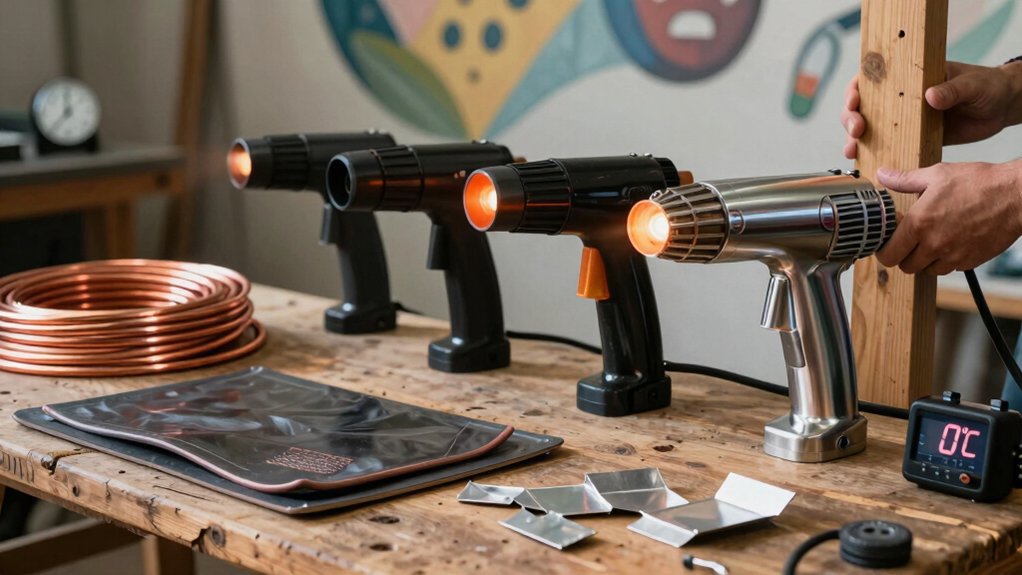
A heat gun is a versatile tool that blasts hot air to soften, reshape, or remove materials, making it useful for tasks like paint stripping, vinyl wrap, and heat-sealing plastics. You’ll deploy it when speed, control, and surface preservation matter, but you must respect its limits.
For DIY projects, you gain rapid material relaxation, edge curling, and seam work without harsh implements. Yet, you also face heat-induced damage risks if you linger or misuse adapters. Use steady motions, test patches first, and maintain a safe perimeter to avoid burns or alligator skin on delicate substrates.
Know that Heat gun safety and DIY project risks spike with improper voltage, poor venting, or unattended operation. Choose tasks accordingly, skip risky jobs when unsure.
How to Choose a Heat Gun: the 5 Criteria You Must Compare
When you compare heat guns, focus on power levels, so you know how quickly you’ll heat and how it handles tough tasks.
Next, examine temperature control methods to guarantee precise, repeatable results without overshooting.
Finally, check duty cycle reliability so the tool won’t overheat or stall during longer jobs.
Heat Gun Power Levels
Choosing the right heat gun power level starts with understanding how heat output affects your project. You’ll balance watts, airflow, and duty cycle to match tasks like softening adhesives, paint removal, or heat-shaping plastics.
Higher power delivers faster heat, but risks scorching or material damage if you overexpose. Lower power offers control for delicate work, yet may require longer cycles and more patience.
Look for models with adjustable wattage or stage settings to fine‑tune performance. Consider the duty cycle for continuous use on large jobs; longer sessions demand cooler handlers and thermal protection.
Pair power with ergonomic controls, and plan for heat gun accessories that expand capability. Regular heat gun maintenance keeps internal components efficient, preventing power drops and extending tool life.
Temperature Control Methods
Temperature control is how you dial in the heat without guessing, so you can stay in control of to-the-job details rather than just chasing numbers. You’ll measure how quickly a gun reaches target temps and how smoothly it holds them.
Look for temperature stability across material changes and airflow demands, not just peak figures. Digital controls offer precise setpoints, repeatable outputs, and fast adjustments, so you can lock in a working temperature without drift.
A clear readout, fine-tuning increments, and a responsive ramp-up/ramp-down profile matter when you switch tasks mid-project. Avoid models with coarse scales or sluggish responses.
Hands-on users want repeatability and predictability; that’s where digital controls shine, delivering dependable performance under load and during long sessions.
Duty Cycle Reliability
Duty cycle reliability matters because heat guns can overheat or throttle under sustained use, which can ruin jobs or shorten tool life. You’ll want models that sustain high performance without bogging down. Look for manufacturers’ duty cycle ratings at typical loads and temperatures; higher-rated cycles mean better consistency on long tasks.
Pay attention to the fan speed and internal cooling design, since these determine how long you can run continuously without heat buildup. Verify that the switch and trigger mechanics resist sticking under heat.
Consider heat gun maintenance as part of reliability: accessible cooling fins, clean vents, and dust-free electronics extend life. Don’t overlook heat gun accessories like durable nozzles and heat shields, which help manage duty cycle under demanding workflows.
Lightweight vs. Heavy-Duty: Which Job Fits Which Tool
When you pick a heat gun, the job determines the tool, not the other way around.
For light tasks like vinyl wrap or small decal removal, a lightweight model with sturdy ergonomic grips keeps fatigue low and control high. It excels where duration isn’t extreme and precision matters more than brute force.
For heavier jobs—paint stripping, heavy plastics, or thick caulk—reach for a heavy-duty unit. It delivers higher sustained heat, robustness, and quicker material removal, though you’ll trade some maneuverability and higher noise levels.
Prioritize balanced ergonomics if you’ll hold it for long sessions. Consider accessory compatibility, nozzle options, and vibration.
In this split, choose the tool that matches your workload rather than forcing the job into a single device.
Temperature Range and Airflow: Picking the Right Specs
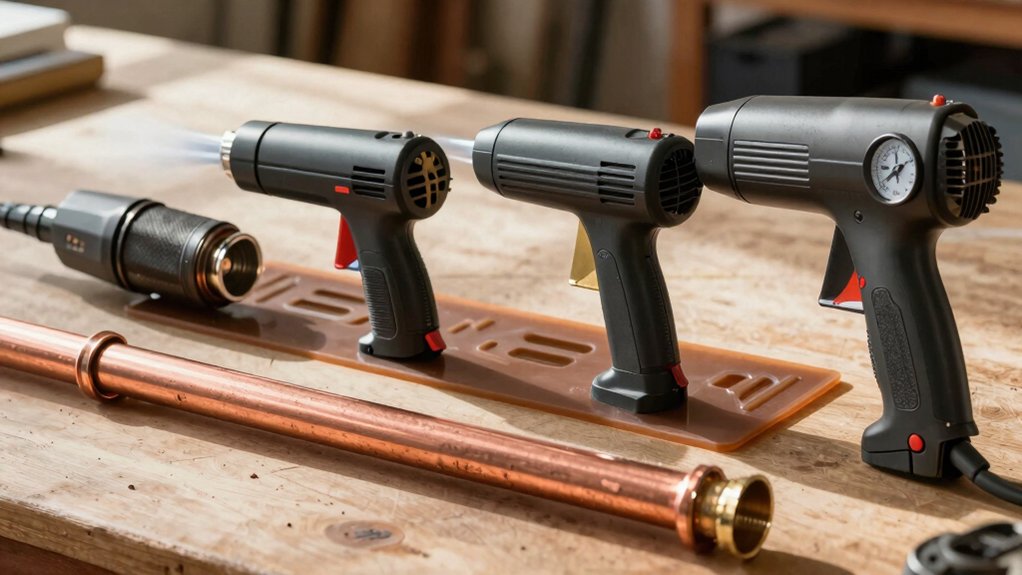
When you pick a heat gun, pay attention to its temperature range to match the job’s needs and prevent overheating materials.
Consider airflow as well, since higher CFM helps with quicker heating and resist dulling or scorching, while lower airflow minimizes blow-off when precision is key.
Balancing temperature essentials and airflow factors ensures you choose a tool that’s versatile, efficient, and safe for home projects.
Temperature Essentials
Choosing the right heat gun specs starts with temperature range and airflow. You’ll prioritize a model that delivers steady heat, not peaks and valleys, so you can trust temperature accuracy across your work. A broad range lets you start gentle for thin plastics and sharpen heat for heavy tasks, while precise control helps prevent scorching or blowouts.
Airflow matters too: higher CFM speeds move heat quickly for rapid stripping, lower settings enable fine-tuned finishes. Look for consistent heat distribution across nozzles to avoid hot spots that warp edges. Dual-mode or programmable presets save time on repetitive jobs and improve repeatability.
Airflow Factors
Airflow controls heat delivery as much as temperature does, and small changes matter. You pick the right specs by balancing CFM, nozzle type, and duty cycle to match the job.
Higher airflow speeds warm broader areas but can overshoot delicate substrates, so choose a model with adjustable airflow or interchangeable nozzles for precision.
Temperature range matters, but throttling airflow lets you maintain steady heat without scorching edges or lifting coatings.
For heat gun maintenance, clean vents and check fans regularly to preserve airflow performance.
When in doubt, test on scrap material first, watch for discoloration, and tweak settings before committing.
For airflow optimization, aim for smooth, laminar delivery and consistent heat. This approach minimizes downtime and maximizes results.
Safety Features That Matter for DIY Use
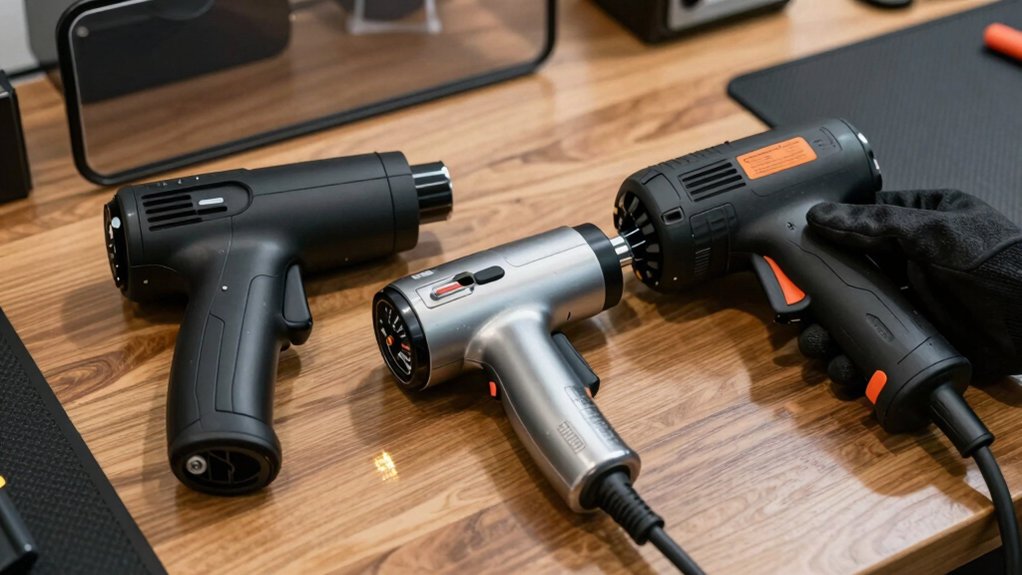
Even for home projects, safety features on heat guns aren’t optional extras—they’re essential. You want reliable protection without slowing your workflow. Look for an automatic shutoff or thermal fuse that engages if the nozzle overheats, plus internal shutoffs during belt or cord snag events.
A sturdy, insulated grip reduces heat transfer to your hands, supporting sustained use without fatigue. A grounded, double-insulated body minimizes shock risk, and a well-sealed housing guards against dust intrusion. Built-in overload protection helps you avoid sudden tool failure mid-task.
Ergonomic design supports steady handling, while noise reduction features keep you able to hear your surroundings and your work indicators. Prioritize models with clear indicators for temperature and mode, so you stay in control.
Best Heat Guns for Common Tasks: Stripping, Bending, Thawing
Heat guns excel at a few common tasks around the house, and picking the right model speeds up your work. For stripping paint, choose a mid-range unit with steady heat and a narrow nozzle to focus energy, reducing time and residue.
When bending plastics or tabs, a tool with adjustable temperature and a smooth ramp helps prevent scorching and warping.
For thawing pipes or frozen joints, prioritize a high-heat setting with controlled airflow to avoid damage to surrounding materials.
Look for durable build quality, reliable heat settings, and quick-access cool-down.
Remember heat gun safety and the value of heat gun accessories like nozzles and scrapers to maximize versatility, reduce cleanup, and maintain performance across tasks.
Budget Picks That Deliver Value Without Breaking the Bank
For budget-minded buyers, there are heat guns that deliver solid performance without a premium price. You’ll focus on value: solid airflow, stable temperature control, and reliable startup from budget brands.
Look for models with at least two heat ranges, a practical nozzle kit, and a durable housing that won’t scorch under heavy use. In practice, prioritize smooth trigger response and predictable temp steps, so you can tune for tasks like stripping paint or bending plastics without overshoot.
Check warranty length and customer support from budget brands to avoid hidden costs. Remember heat gun safety and protection features, like overheat protection and ergonomic grips, matter as much as raw power.
Choose a model that balances performance, endurance, and price without compromising core capability.
Using a Heat Gun Safely: Setup, Tips, and Best Practices
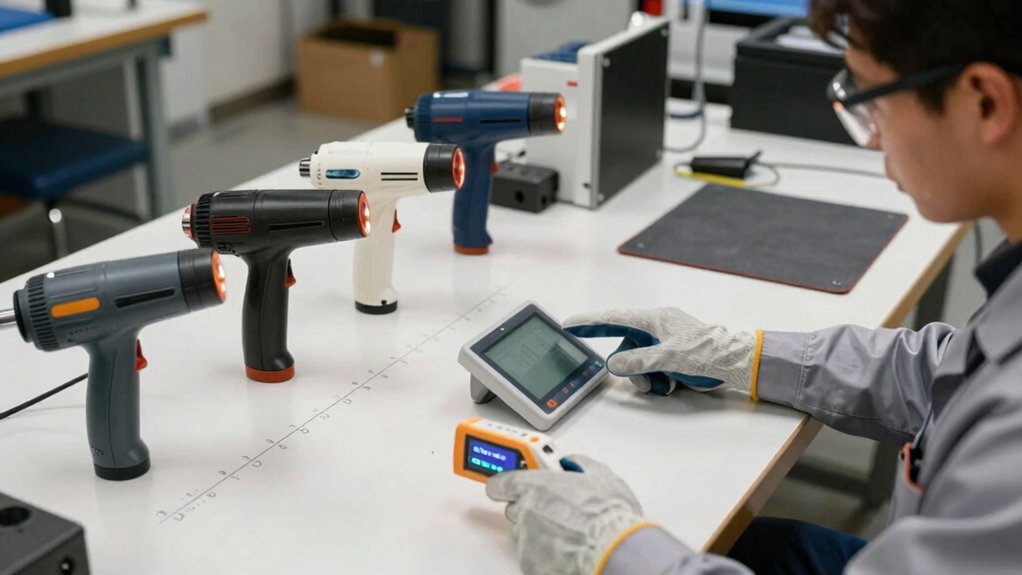
If you’re using a heat gun, start with proper setup to prevent accidents and damage. Inspect cords, vents, and nozzles for wear, and choose the correct tip for your task. Wear eye protection, heat-resistant gloves, and a set of pliers to handle hot parts.
Position your work on a stable surface with a noncombustible backing, and keep a fire extinguisher within reach. Set the temperature and airflow to the minimum effective level; advance slowly to avoid scorching. Maintain a steady sweep motion, never linger on one spot.
Keep bystanders clear and children away. Heat gun safety hinges on deliberate pauses to cool, and regular inspections of the tool. Watch for DIY project hazards like warped materials or fragile finishes.
Finally, unplug after use and store safely.
Alternatives to Heat Guns: When to Reach for Other Tools
Sometimes a heat gun isn’t the best tool for the job, so it’s smart to think about alternatives that can save time and reduce risk. When you face stubborn adhesives, paint stripping, or delicate plastics, you’ll reach for alternative tools that match the task and limit heat exposure.
Studs, solvents, and mechanical scrapers cut cooling time and control surface damage, turning slow jobs into precision work. Infrared thermometers help you monitor heat gun limitations so you don’t scorch edges or warp profiles.
Orbital sanders and heat-assisted clamps can assist reshaping or stripping without excessive heat. For wiring or vinyl, a controlled heat source with proper guards minimizes risk.
In short, select alternative tools that optimize efficiency and maintain integrity while respecting material constraints.
Frequently Asked Questions
Which Heat Gun Brand Lasts the Longest Under Frequent Use?
Professionals say the longer-lasting brands win: durability comparison favors DeWalt and Bosch, with Craftsman close behind. You’ll want high build quality and solid warranty—brand reliability matters, and frequent use demands sturdy motors and heat control from trusted makers.
Can I Repair a Failed Heat Gun at Home?
Yes, you can attempt DIY repairs, but assess warranty and safety first. If you proceed, unplug, discharge capacitors, and use proper tools. DIY repairs demand thorough safety precautions, diagnostic steps, and precise parts to avoid overheating or fire risks.
Do Dual-Temperature Models Save Money Over Time?
Yes, dual-temperature models save money over time by optimizing energy use; you’ll hit target heat faster and avoid waste. With energy savings and cost efficiency, you power through projects, stay precise, and slash operating costs.
How Loud Are Typical Heat Guns in Operation?
You’ll notice heat guns run loudly, typically 80–100 dB, so protect hearing. Noise levels influence comfort and safety concerns; choose models with built-in silencers or lower-output settings to reduce fatigue during extended use.
Are Cordless Heat Guns Practical for Big Projects?
Yes, cordless heat guns are practical for big projects if you prioritize portability and battery life; plan for frequent recharges, keep spare batteries, and monitor runtime. They boost mobility but require power budgeting and efficient workflow.
Conclusion
If you’re tackling DIY tasks, a heat gun can save time and soften or reshape materials—when you pick the right model, stay within its temp and airflow spec, and follow safety basics. Remember that a lighter option isn’t always lighter on results; the tool’s power should match the job. Think of your project as a roadmap, and let a heat gun be your trustworthy compass, guiding you with precision while you avoid shortcuts, risks, and regrets. Ephemeral flames reveal enduring outcomes.