You’ll see how small decor decisions quietly lift your home’s appraisal: neutral paint, durable finishes, and layered lighting that subtly refines space. Streamlined storage reduces clutter, while kitchen and bath tweaks read as upgrades without major renos. Exterior touches—smart lighting, low-maintenance landscaping, and efficient windows—boost curb appeal. Each choice matters, guiding you toward a more attractive valuation, but the real impact comes from how these details work together to transform everyday living. Curious how to align them with your plan?
Neutral Paint and Fresh Finishes

Neutral paint sets the foundation for a cohesive space, while fresh finishes add tactile and visual interest without overpowering the room. You approach walls with a measured palette, prioritizing low-saturation tones that reflect light evenly and minimize color shifts in different lighting.
Choose qualité paints with durable, washable finishes to sustain high-traffic areas and easy maintenance. You assess undertones and ensure consistency across adjacent surfaces, trim, and cabinets to avoid jarring contrasts.
Apply primer selectively, then two coat cycles for uniform coverage, noting sheen choices—matte for quiet walls, eggshell for subtle texture, satin where durability matters. Document color selections and finish specifications to support resale clarity.
Precision in preparation, application, and documentation underpins visual cohesion and long‑term value.
Lighting Upgrades for Brightness and Mood
To optimize brightness and mood, you’ll compare ambient lighting options for coverage, color temperature, and energy use.
Consider how mood-setting fixtures can be layered with task lights to support both clarity and atmosphere in daily spaces.
This discussion will map how each option serves function and feel, guiding precise, intentional choices.
Ambient Lighting Options
Ambient lighting options offer a strategic balance between brightness and mood, enabling you to tailor illumination to tasks and atmosphere. You assess fixture types, color temperatures, and dimming capabilities to optimize spatial function and perceived size.
Begin with adjustable ceiling lights for general coverage, then layer with task lamps to reduce glare and support precise work. Consider color temperatures around 2700–3000K for warm, inviting spaces, and up to 4000K for focused tasks, ensuring consistent output across zones.
Control systems matter: write scenes with dimmers, smart bulbs, and occupancy sensors that recalibrate luminance automatically. Evaluate energy efficiency, fixture placement, and glare reduction during daylight hours.
Document how these choices influence room appeal, rather than personal preference, to support objective appraisal considerations.
Mood-Setting Fixtures
Mood-setting fixtures translate lighting upgrades into tangible atmosphere shifts by pairing glow levels with intended tasks and moods. You implement layered lighting to support function and feeling without clutter. Begin with a dimmable main light set to mid brightness for daily tasks, then add task lighting at desks or counters to reduce shadow and fatigue.
Incorporate color temperature options: cooler temps for focus, warmer temps for relaxation, and mid-range for casual areas. Use zoning to adapt scenes: bright, cool presets for work; warm, gentle profiles for evenings.
Avoid overfilling a room with fixtures; maintain balance and glare control. Calibrate with a lux meter to ensure consistent brightness across zones. Document changes and align them with energy use, accessibility, and resale appeal.
Decluttering and Smart Storage Solutions
Clutter-free living starts with a clear plan: identify what you truly use, what you can repurpose, and what must go.
Hidden storage tricks reveal how to reclaim surface space without sacrificing accessibility, from under-bed drawers to modular shelves that tuck into corners.
Space-saving layouts align with your daily routines, prioritizing flow and function over excess.
Clutter-Free Living
Decluttering isn’t just about tidying up; it’s about designing spaces that function efficiently. You assess every surface for necessity, evaluating how each item contributes to daily tasks and flow.
Prioritize intentional placement: keep high-use items within reach, stow infrequently used belongings, and create zones that minimize cross-traffic.
Implement Smart Storage Solutions that blend with architecture—modular shelving, under-bed bins, and multi-purpose furniture—so you preserve square footage without sacrificing accessibility.
Develop a rhythm of maintenance: daily pickup, weekly reset, quarterly purge.
Document function over form when selecting pieces, ensuring materials, colors, and textures reinforce calm, not visual overload.
Measure impact by task completion time and perceived openness, adjusting layouts until routes remain uninterrupted and clutter remains visibly absent.
Hidden Storage Tricks
Hidden storage tricks can transform small spaces by combining function with design. You evaluate built-ins, multi-use furniture, and concealed compartments, seeking solutions that don’t encroach on flow.
Prioritize modularity: drawers beneath stairs, ottomans with lift lids, beds with storage platforms. Avoid oversized open shelving that fragments perception of space; instead, select slim profiles and uniform hardware for cohesion.
Assess visibility: hidden cubbies or pull-out racks reduce clutter while preserving accessibility. Labeling and zoning streamline daily routines, enabling quicker returns and fewer items lingering in sight.
Material continuity matters: match finishes to walls or cabinetry to minimize interruptions. Implement magnetic strips for tools and shallow pull-outs for cords, keeping essentials near work zones without visual noise.
Continuous auditing prevents stagnation, sustaining value over time.
Space-Saving Layouts
Space-saving layouts optimize everyday flow by integrating storage directly into the room’s structure. You evaluate multifunction furniture, like beds with drawers or desks with hidden cubbies, for genuine utility rather than novelty.
Prioritize verticality: tall cabinets, open shelving anchored to studs, and wall-mounted desks reduce floor clutter without sacrificing accessibility. Corridor and room boundaries should be defined by built-ins that double as dividers, preserving open sightlines while increasing capacity.
When planning, you quantify every square inch: measure clearance for doors, chairs, and movement paths, then compare storage yield per square foot. Avoid overfitting decorative items; curate a lean, functional palette.
Implement modular components that reconfigure easily for different uses, ensuring the layout adapts to lifestyle shifts without reclaiming space.
Kitchen Touch-Ups That Read as Upgrades
Upgrade your kitchen without a full remodel by focusing on targeted touch-ups that read as upgrades. You should assess finish consistency across cabinetry, hardware, and surfaces to avoid visual discord, then prioritize changes with measurable impact.
Start with hardware: swap dated pulls for modern finishes (matte black, brushed nickel, or brass) in uniform styles, ensuring screw placements align.
Next, tighten seams and caulk gaps at countertops and backsplashes to reduce grout line prominence and water intrusion risks.
Consider cabinet doors: tighten hinges, align panels, and address misclosures to restore perceived solidity.
Lighting matters; install under-cabinet LEDs to improve task clarity and perceived value without major work.
Finally, refresh with a durable, neutral backsplash and a clean seam where countertop meets wall for cohesive upgrade perception.
Bath Tweaks With Timeless Appeal
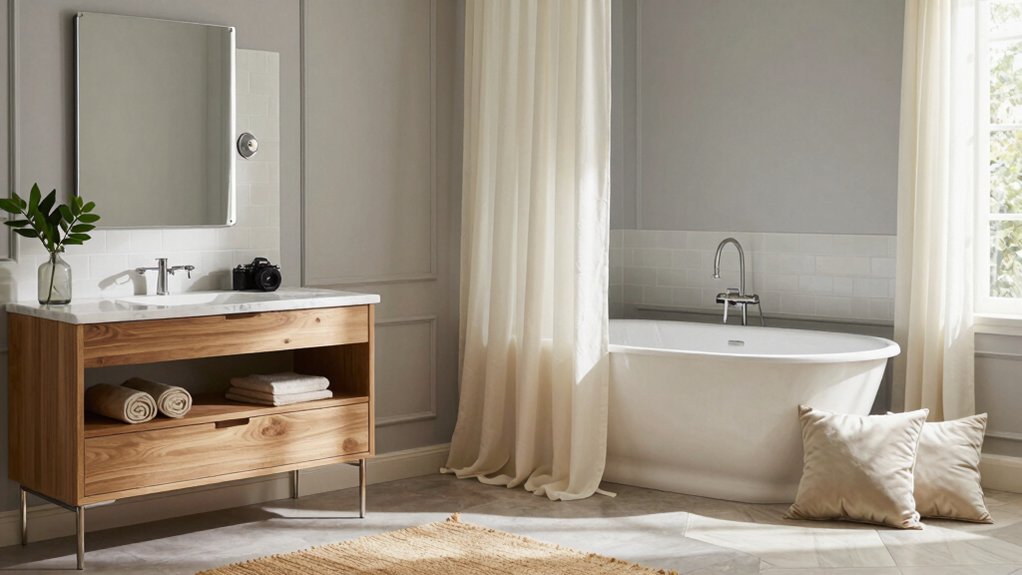
Bath tweaks with timeless appeal center on evidence-based upgrades that balance aesthetics and durability. You assess fixtures, finishes, and storage by longevity data, avoiding trend-driven choices that fade.
Begin with core materials: vitreous china, solid brass, and leak-resistant seals, then confirm compatibility with existing plumbing. You favor classic silhouettes—rectangle sinks, clean lines, subdued profiles—paired with durable finishes like brushed nickel or matte chrome, noting maintenance ease.
Space planning matters: optimize grip-access and under-sink clearance to reduce clutter and enhance perceived value. You prioritize water efficiency without compromising look, selecting dual-flush or low-flow aerators where appropriate.
Lighting remains functional and flattering: layered, neutral color temperatures, shadow control, and dimming for ambiance. You document costs, expected lifespan, and resale impact to justify each choice.
Curb Appeal and Energy-Efficient Enhancements
Curb appeal sets the stage for the home’s long-term value, so we apply the same evidence-based mindset from bath tweaks to exterior and energy efficiency. You assess the exterior’s first impression, then quantify upgrades that deliver measurable returns.
Start with low-maintenance landscaping, native plantings, and a clean, defined entrance; these changes reduce ongoing costs while boosting perceived quality. Install energy-efficient lighting and smart controls for security and ambiance, ensuring alignment with seasonal usage patterns.
Upgrade windows or insulation where cost-effective payback exists, prioritizing airtight seals and visible comfort. Repaint or refresh siding in neutral tones to elevate curb presence without frequent repaint cycles.
Finally, replace dated fixtures with durable, weather-rated options that lower maintenance and utility bills. The result is a disciplined, value-driven exterior strategy.
Frequently Asked Questions
How Do Decor Choices Affect Appraisal Values Versus Market Appeal?
You underestimate decor’s impact: your choices influence appraisal by signaling maintenance, quality, and space usability, while market appeal hinges on trend alignment and personal warmth. You’ll affect value more through condition and layout clarity than flashy fads.
Which Updates Yield the Highest ROI for Small-Budget Projects?
You’ll get the highest ROI by prioritizing fresh paint, updated lighting, and modern fixtures, then upgrade kitchens and baths with cost-conscious choices. Focus on universal appeal, durable materials, and precise measurements to maximize perceived value without overspending.
Do Cosmetic Fixes Influence Appraisals More Than Structural Changes?
Yes, cosmetic fixes generally influence appraisals more than structural changes, because they signal upkeep and quality upfront, like a polished facade reflecting underlying value, whereas structural work often requires deeper, costlier justification to impact perceived worth.
How Long Do Home Improvements Take to Impact Appraisals?
Improvements typically affect appraisals within weeks to a few months after completion. You’ll see the strongest impact if you document costs, contractor receipts, and before/after photos, and guarantee the work aligns with local norms and market expectations.
Are Professional Inspections Recommended Before Making Updates?
Yes, you should consider professional inspections before updates. You’ll gain objective findings, catch code or safety issues early, and avoid costly rework. This disciplined approach helps you prioritize corrections and preserves appraisal credibility throughout the project.