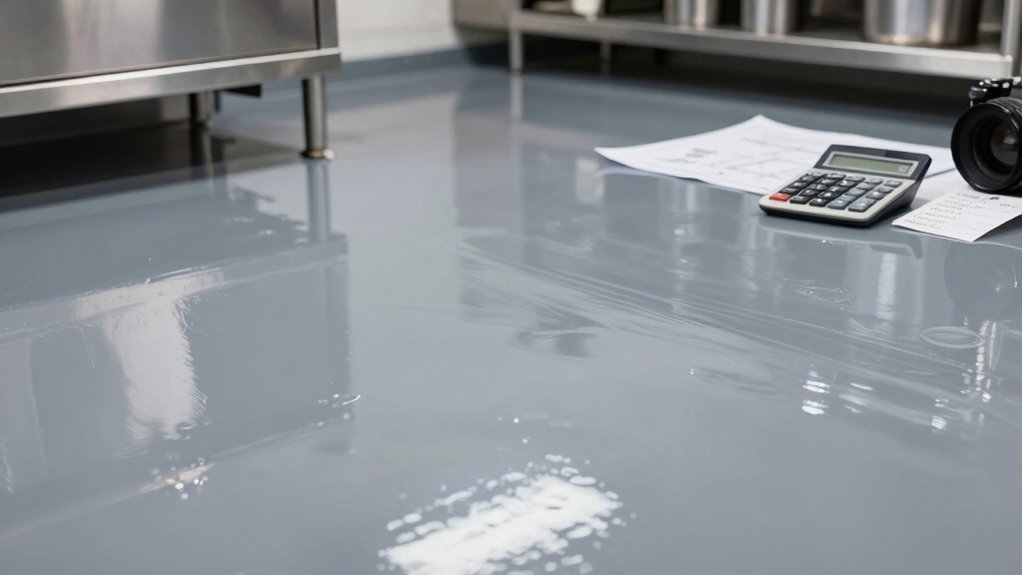
Commercial kitchen epoxy flooring costs vary with space size, condition, and system type. You’ll pay more for extensive prep, multi-coat applications, and specialty finishes that boost durability and safety. Expect labor to be a significant portion of the price, plus potential downtime. Materials range from solid colors to decorative and wear-resistant options, with extra charges for slip resistance or chemical protection. To get value, plan for contingencies and compare warranties—keep going and you’ll uncover key budgeting tips and tradeoffs.
Factors That Shape Epoxy Flooring Costs in Commercial Kitchens

Epoxy flooring costs in commercial kitchens are shaped by several key factors. You’ll evaluate substrate condition, surface preparation, and coating system complexity, since each step adds labor time and material needs.
Foot traffic, chemical exposure, and heat tolerance drive resin selection, so you’ll balance durability with lifecycle costs. Application here isn’t one-size-fits-all; you’ll consider cure times, downtime impact, and equipment access to minimize disruption.
Environmental impact matters, guiding choices toward low-VOC formulations and sustainable waste handling. Industrial design considerations influence color, texture, and slip resistance, aligning safety with workflow efficiency.
Labor rates, regional material prices, and warranty terms further shape totals, so you’ll document all assumptions. Finally, note maintenance requirements as a long-term cost determinant.
Typical Price Ranges for Commercial Kitchen Epoxy Systems
You’ll see price ranges vary by the cost range factors, from material options to surface prep needs. Material durability directly affects long-term value, but so do installation timelines and labor intensity.
Expect labor and timing factors to tilt overall costs, with quick projects often costing more per square foot but finishing faster.
Cost Range Factors
Cost ranges for commercial kitchen epoxy systems vary based on space size, surface condition, and system type. You’ll see lower prices in smaller sites with intact concrete and basic two-coat epoxy, while larger areas or damaged substrates push you toward prep, primer, and multiple coats.
Expect mid-range costs for standard, high-build, or countertop-grade systems, with premium pricing for metallic, quartz, or integral color finishes. Labor availability and lead times affect totals, too.
Historical trends show material costs gradually rising, yet competition can temper final numbers in steady markets. Regional price variations reflect local labor rates, permitting, and supplier pricing—coastal metro areas often cost more than inland sites.
Plan for contingency to cover repair or moisture mitigation if inspections uncover hidden issues.
Material Durability Impact
Durability drives daily performance and long-term cost in commercial kitchen epoxy systems, so the price you pay should reflect substrate condition, expected traffic, and the chosen wear layer.
You’ll see price ranges vary with resin type, thickness, and surface preparation. Higher solids content and multi-coat systems boost longevity, but add upfront cost.
Expect premium options like chemically resistant or anti-microbial formulas to sit higher than standard, quartz-filled or broadcast systems.
Eco friendly coatings can improve lifecycle value, often costing a bit more but reducing maintenance.
Aesthetic customization—color, texture, and gloss level—adds customization charges, yet can lower replacement cycles by disguising wear.
Budget for surface profiling, moisture testing, and substrate repairs, since preparation dominates early costs but protects long-term performance and sanitary compliance.
Complex layouts or seamless decorative systems may elevate both price and durability benefits.
Labor and Timing Factors
Labor and timing strongly influence total epoxy costs because installation speed, crew size, and surface prep duration drive labor hours. You’ll see price ranges reflect crew efficiency, project scope, and room layout.
Typical epoxy systems span 2–4 days for prep, coating, and curing, with longer timelines for complex kitchens or multiple zones. Expect labor to account for 40–60% of total costs, depending on surface condition and temperature control needs.
Premium options like seamless granules or decorative chips add to labor due to extra application steps. Eco friendly options may moderate costs if they require specialized materials but reduce downtime.
Vintage finishes can broaden budgets when multiple color pours or textures are requested. Plan for containment, ventilation, and staggered shutdowns to minimize operational impact and keep timing predictable.
Impact of Surface Preparation on Total Project Cost
Surface preparation sets the stage for how much you’ll pay in the end, because every extra step—contaminant removal, patching, grinding, or priming—adds to labor and material costs. Your total cost hinges on surface contamination and the rigor of preparation techniques you choose.
If the concrete is clean and sound, you’ll save time and materials by skipping unnecessary repairs. Conversely, hidden divots, oil stains, or laitance force additional patching and grinding, amplifying both labor hours and material needs.
Choose appropriate primers and sealers early to improve bonding and reduce future maintenance. Document every step and verify compatibility with the epoxy system you plan.
Detailed surface assessment upfront minimizes surprises, helping you forecast budget more accurately and avoid mid-project cost creep.
Material Types: Solid Color, Decorative, and Wear-Resistant Options

Material types for commercial kitchen epoxy floors come in three main families: solid color, decorative, and wear-resistant options. You’ll choose based on visibility, maintenance, and performance needs. Solid color epoxy provides a uniform, easy-to-clean surface that highlights cleanliness and consistency in your workflow.
Decorative variants let you add branding or zone cues without sacrificing durability. Wear-resistant options use enhanced aggregates or specialized hardeners, improving abrasion resistance in high-traffic areas.
When considering epoxy color options, think about lighting, glare, and how color can guide staff movement. For installation, you’ll rely on epoxy installation tools like squeegees, rollers, and mixing buckets to achieve an even coat and proper cure times.
Pick a combination that balances aesthetics with slip resistance and maintenance needs for your kitchen.
Additional Features That Drive Up Expenses (Slip Resistance, Chemical Resistance)
Slip-resistant add-ons and chemical-resistant options can noticeably raise upfront costs, but they also cut long-term slip risks and product damage.
You’ll balance these features against maintenance impacts, since tougher surfaces may require special cleaners or coatings.
Consider how each choice affects ongoing upkeep and total cost of ownership.
Slip-Resistant Add-Ons
Choosing slip-resistant and chemical-resistant add-ons can considerably raise epoxy flooring costs, but they’re often worth it in a commercial kitchen. You’ll balance grip with cleanability by selecting aggregate textures, broadcast patterns, or non-slip coatings that suit your traffic.
Start by evaluating broadcast media: larger aggregates provide higher traction but may require more maintenance; microtextures offer safer dry surfaces, yet can trap debris if not cleaned regularly.
Adhesion promoters and topcoats add durability, reducing replacement cycles but raising upfront price.
Consider Eco friendly options, such as low-VOC formulations and recycled-content aggregates, which can align with sustainability goals without sacrificing performance.
For aesthetic enhancements, choose color blends and gloss levels that hide wear while maintaining glare control.
Plan a phased installation to manage downtime and cost.
Chemical-Resistant Options
Chemical-resistant options add durability and long-term cost savings, but they also push up upfront prices. You’ll see this in coatings formulated for chemical exposure, aggressive cleaners, and food-safe solvents.
Choose epoxy systems with higher chemical resistance grades to protect floors under frequent spills and basements of high-acid or alkaline cleaners. Expect thicker coatings, additional topcoats, or specialty hardeners that improve resilience but raise material and installation costs.
The tradeoffs include longer cure times and sometimes more surface prep to ensure adhesion, which affects labor. Consider how design aesthetics align with performance; a robust look can coexist with protection.
Also weigh environmental impact, preferring products with low VOCs and accountable end-of-life options to minimize footprint.
Maintenance Impacts Costs
Even though add-ons like slip resistance and chemical resistance boost safety and longevity, they also push up maintenance costs. In practice, you’ll weigh the ongoing cleaning, recoating, and inspection needs that come with higher-performance systems.
Slip-resistant finishes often require more frequent cleaning and grittier textures, which can trap grime and raise labor time. Chemical-resistant formulations resist spills longer, but sometimes demand specialty cleaners and careful disposal, adding cost and downtime.
Plan for periodic resealing to preserve gloss and protective bars against wear, as neglect accelerates environmental impact by increasing waste and emissions from recoating cycles.
Consider aesthetic appeal alongside durability, since a well-kept surface maintains a cleaner look that supports brand reputation and occupant comfort.
Balancing performance with maintenance cadence helps optimize total cost of ownership.
Labor Considerations and Scheduling Impacts on Pricing
Labor considerations and scheduling can substantially impact epoxy flooring costs for commercial kitchens. You’ll see rate changes from crew availability, overtime needs, and access windows during off-peak hours. If you require night or weekend shifts, expect higher labor charges but faster completion, reducing overall downtime.
The job length hinges on surface prep, substrate condition, and the number of corners or fixtures that demand careful masking. Scheduling conflicts can create delays that push material coordination into extended timelines, increasing non-productive labor.
Installation challenges, such as irregular patches or moisture in concrete, can require additional prep or coatings, driving up costs more than you anticipate. Clear scope, realistic milestones, and color customization decisions up front help prevent mid-project adjustments and budget surprises.
Maintenance and Longevity: Ongoing Costs to Budget

Maintenance and longevity are ongoing costs you should budget for from day one, not after the job is done. In a commercial kitchen, epoxy floors resist spills and heavy traffic, but they require proactive upkeep to extend life.
Plan for routine cleaning routines that use non-abrasive cleaners and mops, avoiding solvents that could dull shine or degrade coating. Schedule periodic resealing or top-coat apps as the manufacturer recommends, typically every few years, to preserve chemical resistance and slip resistance.
Consider if the chosen color options show wear or staining sooner, and factor in replacement costs or color refreshes. Budget for minor repairs, such as chip touch-ups, to prevent larger repairs.
A disciplined maintenance plan minimizes downtime and maximizes floor performance.
How to Get the Best Value: Budgeting Tips and Tradeoffs
To get the best value on a commercial kitchen epoxy floor, start with a clear scope and realistic budget that accounts for both upfront costs and long-term upkeep. You should balance material quality, system complexity, and labor when estimating tradeoffs, aiming for durability without overbuilding.
Prioritize a practical design that matches your workflow, daily cleaning needs, and slip-resistance requirements. Include contingencies for surface prep, moisture testing, and potential substrate repairs, since these can dramatically affect total cost.
Consider design aesthetics early to avoid expensive retrofits later, choosing colors and finish options that reduce cleaning time and product buildup. Weigh environmental considerations, like low-VOC formulations and sustainable disposal.
Document decisions in a simple budget ledger to track changes and justify value over time.
Quick Budgeting Checklist for a Commercial Kitchen Epoxy System
A quick budgeting checklist for a commercial kitchen epoxy system helps you lock in costs without surprises, starting with a simple scope and a realistic budget.
Begin by outlining space, desired thickness, and the exact zones needing coating. List materials, labor, downtime, and contingency at 10–15%.
Compare epoxy types, slip resistance, and cure times to forecast productivity loss.
Gather quotes from reputable installers and verify warranties, licensing, and insurance.
Build in a green cleaning plan and confirm compatibility with your current maintenance schedule.
Include safety protocols, PPE, and site safety signage to prevent accidents during prep and application.
Track revisions in real time, and review with stakeholders before signing.
Finalize a staged payment plan tied to milestones to maintain cash flow.
Conclusion
You’re watching the epoxy price rollercoaster and thinking, “Sure, I’ll just budget around $X.” Right—until the surface prep dramatically doubles the tab, plus slip- or chemical-resistant add-ons pretending they’re optional. You’ll realize the “quick” install isn’t quick at all, and maintenance costs sneak up like mystery fees on the bill. But hey, you’ll sleep easy knowing your kitchen won’t melt your boots or kill your schedule—because nothing screams value like a flawless, sticky-free, long-lasting floor. Irony, served.