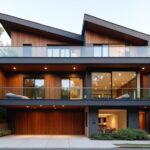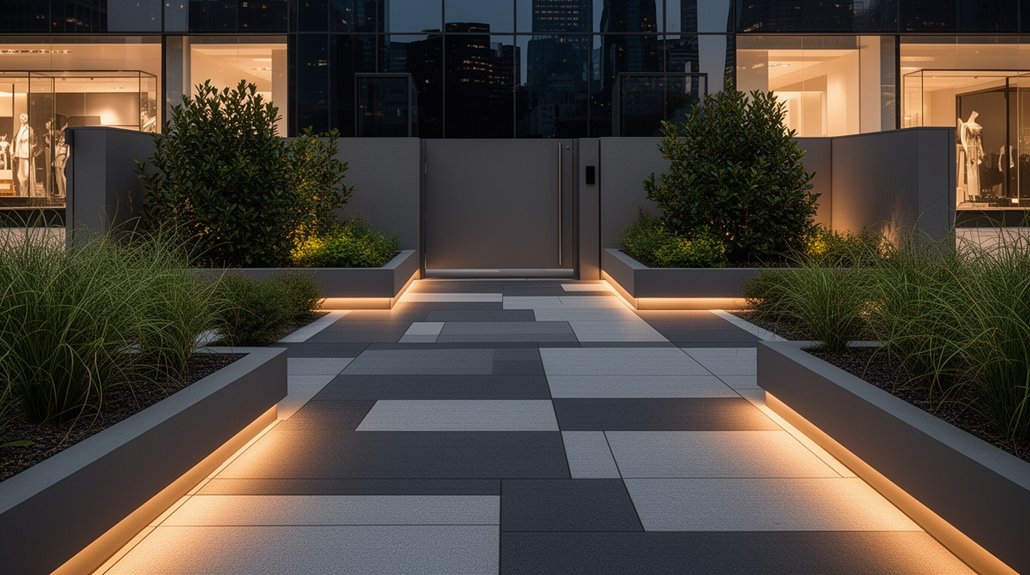
Urban front-garden landscaping with contemporary paving and lighting blends durability with refined curb appeal. You’ll combine permeable, sculptural paving with thoughtful lighting to boost safety and highlight architectural cues after dark, while keeping maintenance manageable. Plan for drainage, accessibility, and eco-friendly materials, then layer texture and plantings to create contrast and depth. The result isn’t just a path and a lamp—it’s a cohesive entry that invites a closer look, and the next step reveals the practical path forward.
Why Contemporary Paving Elevates Urban Front Gardens
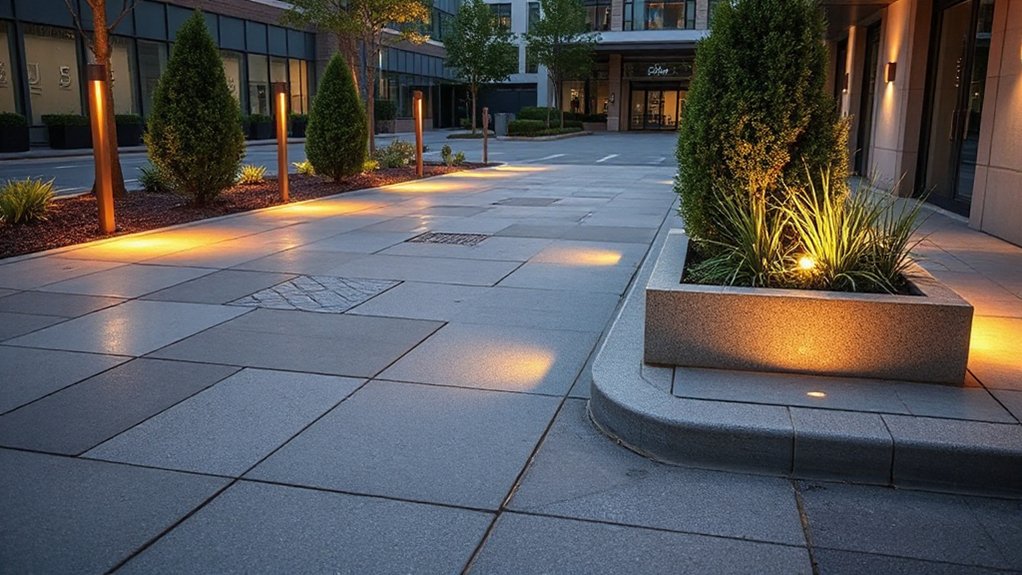
Contemporary paving transforms urban front gardens by shaping function as clearly as form. You gain defined circulation, durable surfaces, and reduced maintenance, all while preserving curb-appeal.
Choose large, smooth slabs to minimize joints and create an expansive feel, or opt for varied textures to cue entry points without clutter. A cohesive palette—grays, charcoals, or warm browns—binds hardscape to plantings and architecture.
Consider permeable options to manage rainfall and support sustainable drainage. Integrate garden furniture thoughtfully to encourage use without obstructing paths; seating should align with sightlines and access.
Water features add a tranquil focal point, but must be scaled to the area and kept low-maintenance. Prioritize edging for crisp borders, and plan for lighting compatibility to extend usability beyond daylight.
Eight Lighting Tricks to Keep Curb Appeal After Dark
After dark, thoughtful lighting reshapes curb appeal by guiding movement, highlighting key features, and shaping mood without overwhelming the scene. You’ll implement eight practical tricks to sustain visual impact and safety.
First, outline a baseline with low, even wash lighting along paths to prevent harsh shadows.
Second, use selective uplighting on architectural details to reveal form without glare.
Third, place garden art thoughtfully, letting fixtures draw attention without overpowering sculpture.
Fourth, mix lighting fixtures at different heights to create depth and dimension.
Fifth, automate with timers or smart controls to maintain consistency.
Sixth, choose color temperatures around 2700–3000K for warmth.
Seventh, integrate step and wall lights to illuminate transitions.
Eighth, conceal sources to maintain clean silhouettes while maximizing performance.
Durable, Stylish Paving Options for Small Urban Frontages
Small urban frontages demand paving that lasts, resists weather, and fits tight footprints. You’ll prioritize durability without sacrificing style by choosing permeable options that manage runoff and reduce maintenance.
Concrete pavers offer uniform joints and resilience for high foot traffic, while textured surfaces provide slip resistance in wet climates. Consider natural stone for timeless appeal, but verify finish and sealing needs to limit staining.
Eco-friendly materials are a plus, including recycled aggregates and responsibly sourced stone, which minimize embodied energy without compromising strength.
For visual interest, you’ll use artistic patterns—herringbone, basketweave, or ran decourse layouts—that mask minor shifts over time.
Plan for expansion gaps and underlayment with proper drainage, ensuring longevity, even in compact urban sites.
Designing a Small Urban Front Garden: Space-First Principles
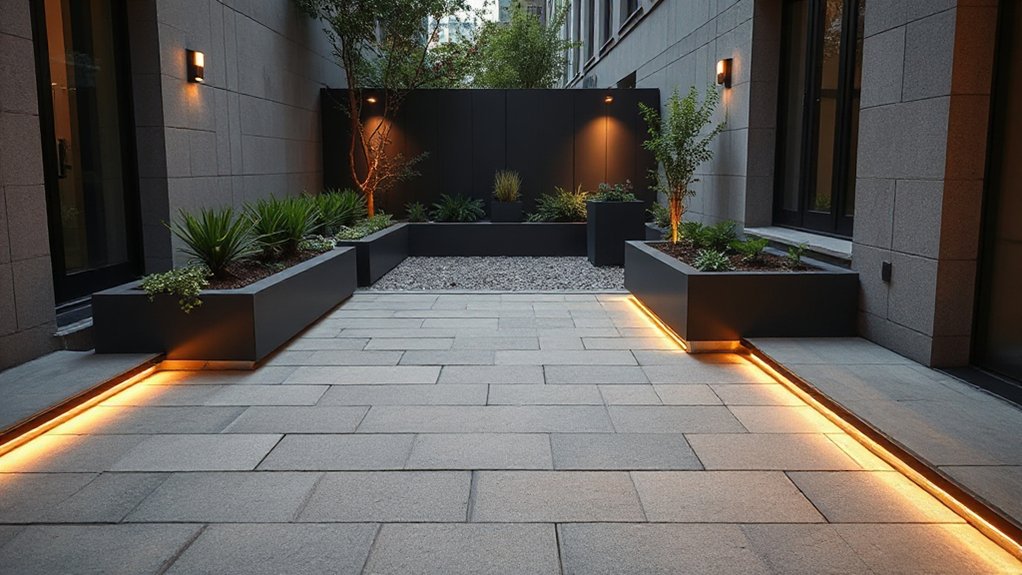
Start with a space-first mindset: map your frontage to identify primary functions—access, seating, and minimal maintenance.
Prioritize scale, sightlines, and daylight by choosing vertical layers and compact, multi-use elements that maximize usable area.
Space-First Planning
- Define paths and viewing angles before plant choices
- Pair storage with seating and verticals for efficiency
- Plan layered privacy and wildlife‑friendly planting
Urban Front Garden Principles
Urban front gardens demand a space-first approach: define sightlines, entry points, and functional zones before selecting plants. You map flows first, then specify planting zones that reinforce use without crowding.
Prioritize scale-appropriate choices: compact trees, low-height shrub borders, and groundcovers that keep paths visible and accessible. Plan for daylighting and sightlines from key approaches, ensuring privacy without blocking street presence.
Choose materials that support durable edges, low maintenance, and accessibility—pavers, domestic-craft finishes, and permeable surfaces that manage runoff.
Integrate Urban biodiversity through native or well‑adapted species to boost ecological value while limiting maintenance. Use eco-friendly materials for hardscapes, avoiding excessive synthetic finishes.
Document maintenance routines, seasonal color shifts, and irrigation checks to sustain long-term clarity and function.
Harmonizing Planting With Hardscape: Texture, Color, and Contrast
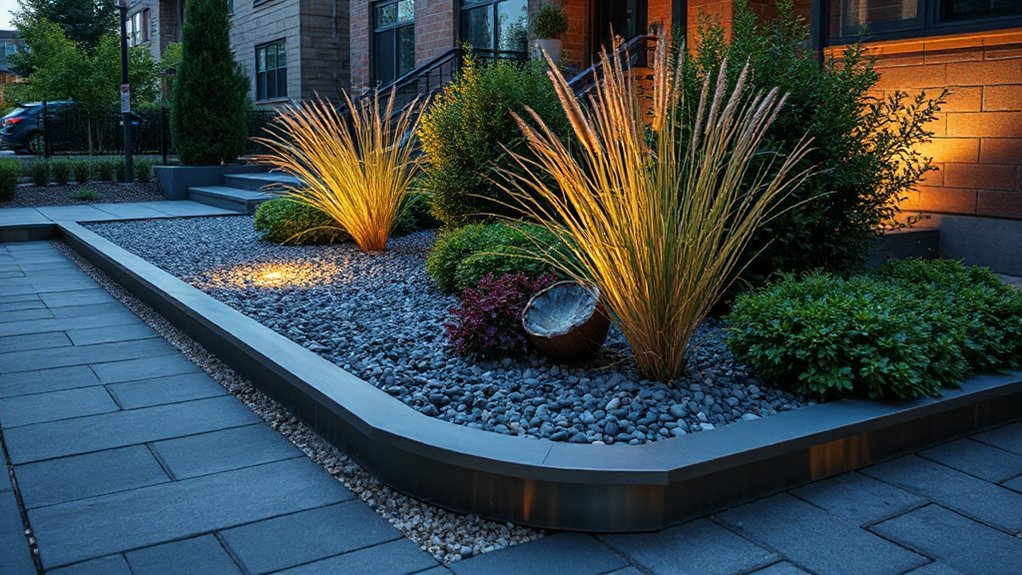
Texture and tone should harmonize with hardscape by pairing leaf surfaces with surface materials to guide the eye.
Use color contrast to define planting planes and emphasize texture differences, not to clash with the pavement or wall finishes.
Start with a plan that maps texture variety first, then align color and contrast to reinforce structure.
Texture and Tone Balance
Texture and tone must work in concert: by pairing foliage shapes, surface textures, and color value with hardscape materials, you create a cohesive flow from plant bed to sidewalk. You balance fine textures with bold forms, ensuring light-reflective surfaces pair with mid-tones to avoid visual noise.
Consider how edging, paving depth, and shade cast by planting influence perceived tone, then adjust plant scale to maintain rhythm across beds and curbside. Include practical anchors like garden furniture placement and seasonal planting as recurring cues for texture pauses.
Keep palette restrained to three tones per zone, and rely on surface qualities to articulate progressions rather than color alone.
- Use varied leaf surfaces to create subtle contrast
- Align plant height with paving edges for unity
- Schedule seasonal planting to reinforce tone shifts
Color Contrast Guiding Texture
Color contrast should guide texture decisions by prioritizing how shade, light, and depth interact with surface and foliage. You’ll align planting textures with paving patterns through deliberate color relationships, ensuring that darker foliage recedes while lighter blooms advance.
Use color harmony to unify hardscape and plant materials, selecting species whose leaf tones complement or echo the paving’s hues. Vary tone variation across the bed to emphasize rhythm: introduce lighter-grained textures beside bold, dense masses, then soften gradations with mid-toned fillers.
Consider seasonal shifts so contrast remains legible year-round, not just in peak bloom. Test contrast at different times of day to confirm readability of form and texture, adjusting plant height and fineness accordingly.
The result is a cohesive, legible front garden that reads with confidence.
Practical Layouts: Drainage, Accessibility, and Maintenance
Designing practical layouts starts with drainage, accessibility, and maintenance as the three nonnegotiables. You’ll align paving with grades to direct rainwater efficiently, ensuring Rainwater management supports plant health and prevents pooling near entries.
Prioritize accessible paths: widen curb cuts, keep surface even, and provide non-slip textures that endure weather without crowding plant beds.
Maintenance should be built in: modular components, easy weed control, and simple debris removal preserve aesthetics over seasons.
- Optimize gradients to channel water away from foundations and into permeable zones
- Choose durable, textured surfaces that reduce slip risk and simplify cleaning
- Plan accessible routes with clear sightlines and practical pruning zones for ongoing upkeep
Integrated Lighting Layouts: Path, Focal, and Ambience
Integrated lighting is the backbone of a safe, appealing front yard after dark, guiding movement, highlighting key features, and shaping mood. You design three focal layers: path, focal points, and ambient wash, each with purpose and controlled intensity.
Use low-profile, even spacing along walkways to guarantee continuous visibility, reducing trip hazards. For focal highlights, select one or two architectural elements or plants, employing adjustable fixtures to dial brightness without glare.
Ambient lighting should softly bathe walls, planters, and seating, creating inviting zones after sunset. Embrace smart technology for automated schedules, dusk-to-dawn sensing, and scene presets.
Choose eco-friendly materials—recessed housings, low-energy LEDs, and recycled metal accents—assembled for durability and easy maintenance, aligning safety with sustainability.
Budget and Step-By-Step Plan for a Stylish, Sustainable Upgrade
To upgrade your front garden stylishly and sustainably, start with a clear budget and a practical plan that aligns with your goals and site realities. Establish a hard cap for structure, paving, and essential elements, then allocate contingency funds for unexpected tasks.
Prioritize durable, low-maintenance materials and scalable accents that can evolve with your needs. Map a phased timeline, beginning with foundational changes and ending with subtle, high-impact details like lighting and texture.
Garden furniture and water features should be contemplated for unobtrusive placement, ease of cleaning, and weather resilience.
Monitor progress against milestones, documenting costs and decisions to refine future upgrades.
- Define costs, milestones, and contingencies
- Phase implementation; adapt as you go
- Select durable elements: Garden furniture, Water features
Frequently Asked Questions
How Long Does Urban Front-Garden Paving Typically Last?
Paving typically lasts 15 to 40 years, depending on material and maintenance. You’ll maximize longevity by choosing durable paving material selection and setting on solid, properly graded foundations.
Use correct installation techniques: compact subbase, edge restraints, and harmonious jointing.
Regular cleaning, sealing for permeable surfaces, and timely weed control slow wear. Weather, foot traffic, and load impacts matter most, so plan for periodic repointing or resealing to preserve appearance and prevent cracks over decades.
What Maintenance Schedule Keeps Lighting Components Reliable?
Lighting components stay reliable with a proactive schedule: inspect monthly, clean lenses, and tighten connections; replace worn seals yearly. Check drivers and transformers every 6–12 months, testing for flicker or heat.
In spring and fall, reseal any weatherproof enclosures and verify burial-grade cables.
Document failures and service history to improve lighting durability, and follow manufacturer maintenance routines.
Plan annual lumen checks and efficiency audits to sustain performance and reduce energy use.
Can Small Lots Support Drought-Tolerant Planting With Paving?
Yes, small lots can support drought-tolerant planting alongside paving. You’ll select drought resistant plants and group them to reduce irrigation needs, while using permeable overlays to manage runoff.
Prioritize native species for resilience, and choose compact varieties to fit tight spaces.
For durability, guarantee Paving durability by using properly installed foundations and moisture barriers.
You’ll design with efficient irrigation, mulching, and long-lived materials to balance curb appeal with reliability in a limited footprint.
Which Safety Considerations Matter for Raised Thresholds and Steps?
Threshold safety and step visibility matter: guarantee ramps or steps have sturdy handrails, non-slip treads, and consistent rise/run. Use high-contrast edge markings and lighting aimed to illuminate each step clearly.
Surface changes should be level where possible, with beveled edges to prevent trips. Keep thresholds below 1/2 inch where feasible, or with a smooth, beveled profile.
Secure all fastenings, verify code compliance, and regularly inspect for wear, loose boards, or weather-related hazards.
Are Smart Lighting Options Energy-Efficient for Front Gardens?
You’ll find smart lighting options can be energy-efficient for front gardens. They cut energy use with LEDs, dimming, and timers, and you can tailor schedules for twilight and late-night security.
Energy savings come from motion sensors and daylight sensing, while automation potential lets you integrate with weather or smart home scenes.
As an expert, I recommend scalable zoning, robust IP-rated fixtures, and defaults that keep paths lit safely without overlighting.
Conclusion
As you reshape your curb with modern paving and careful lighting, you’ll find your front garden quietly echoes a well-tuned stage set—functional, inviting, and confident. Like a well-placed compass in a familiar city map, the right materials guide your eye and feet. You’ll feel the balance of texture, light, and shade, a nod to timeless craft. Stay deliberate, test layouts, and let sustainable choices complete the scene—your upgraded entrance quietly tells a compelling story.