For interior doors, pick a finish that balances durability with your style. If you want modern, opt for water-based finishes—they dry fast, keep wood color true, and minimize odor. For richer color and deeper protection in high-traffic spaces, oil-based polyurethane or chemistry-cured options like catalyzed urethane excel. Consider sheen to match your decor—satin for a soft look, semi-gloss for durability, or high gloss as a focal point. Want more guidance tailored to your space?
Understanding Finish Options for Interior Doors
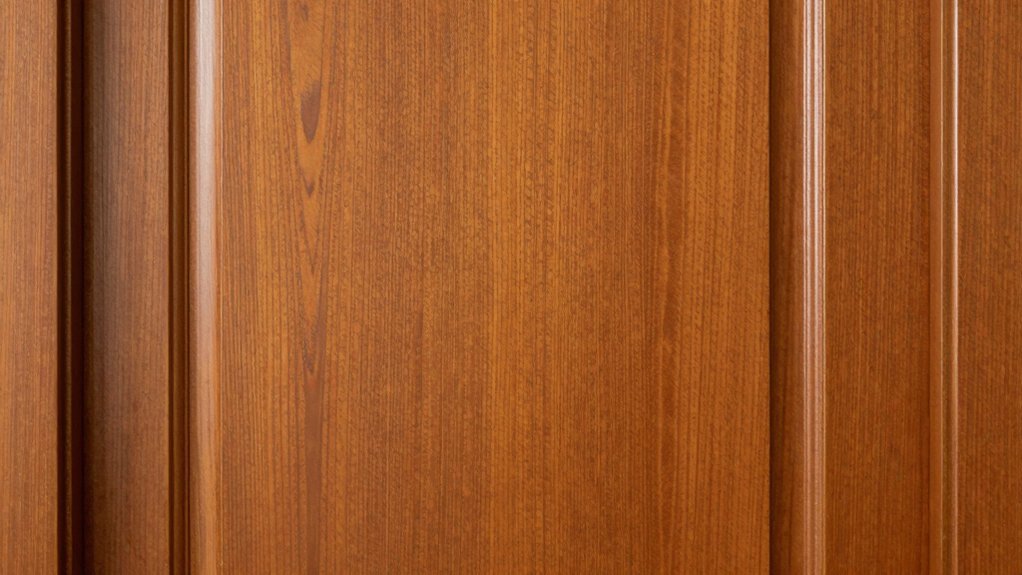
When choosing an interior door finish, you balance protection, look, and maintenance. You’ll encounter options like oil, water-based, shellac, varnish, lacquer, paint, and veneers, each offering distinct protection and aesthetics.
Your choice hinges on durability, ease of application, appearance, and environmental impact. Oil finishes enhance natural wood tones but demand longer drying times and ongoing upkeep.
Water-based finishes dry quickly and favor eco-friendliness, with minimal odor. Varnishes and lacquers deliver strong protective layers suited for high-traffic interior doors, available in gloss, satin, or semi-gloss sheens.
Veneers and specialized coatings—melamine or laminate—add decorative effects and durability. Consider how a given wood finish preserves grain, resists wear, and harmonizes with your space while maintaining a coherent interior doors palette.
Oil-Based vs. Water-Based Finishes
Oil-based and water-based finishes each bring a distinct set of trade-offs for interior doors. You’ll weigh drying time, color, odor, and maintenance as you choose a protective coating for wood doors.
Oil-based finishes penetrate deeply and offer durable protection, but they dry slowly and can yellow over time. They emit stronger odors and higher VOCs, and cleaning requires solvents.
In contrast, water-based finishes dry quickly—often within an hour—and stay clear, preserving the wood’s original hue. They’re near odorless and easier to clean with soap and water, though they may require more coats for ultimate protection.
If you value speed and low odor, go water-based; if you want depth and long-term resilience, oil-based finishes are compelling options for your wood doors.
Consider your environment and maintenance routine when deciding drying time and longevity.
Durable Finishes for High-Triction Environments
You’ll want to weigh catalyzed urethane and conversion varnishes against each other for the toughest door surfaces, especially where scratches and moisture show up first. Consider water- and chemical-resistance data and how long-term durability tests translate to real-world performance in high-traffic halls and entryways.
We’ll explore which finish gifts you the best blend of durability, maintenance intervals, and true longevity for busy interiors.
Catalyzed Vs Conversion Varish
Catalyzed varnishes and conversion varnish both cure chemically, not just by solvent loss, delivering a hard, long-lasting finish ideal for high-traffic interior wood doors. You’ll get superior durability from chemical curing that creates cross-linked surfaces, resisting scratches and wear.
Conversion varnish, a type of catalyzed finish, forms a cross-linked, solvent-resistant coating, offering enhanced protection against chemicals and moisture. This translates to better durability over time, especially in busy corridors or manicured commercial spaces.
The finish comparison shows conversion varnish generally provides greater longevity and resilience, but it often requires professional application for ideal results. If you need maximum protection, choose conversion varnish; for solid performance with professional help, catalyzed varnish remains a strong, more budget-friendly option.
Water/chemical Resistance
Water and chemical resistance are the cornerstone of durable interior doors in high-traffic environments. In practice, chemically cured finishes like catalyzed urethane and conversion varnish offer the strongest water resistance and chemical resistance, making them ideal for exposure to moisture and solvents.
Oil-based polyurethane also delivers excellent durability and resilience against chemicals, suitable for busy doors where splashes or abrasions occur. Water-based finishes generally lag in chemical resistance, but you can boost protection with additives designed to improve water and chemical resistance.
Avoid relying on varnishes or shellacs in high-moisture or chemically active spaces, as they underperform in these conditions. For interiors with frequent exposure, choose catalyzed urethane, conversion varnish, or oil-based polyurethane to ensure longevity.
Long-term Durability Testing
Long-term durability testing shows that choosing finishes with cross-linked polymer structures—such as catalyzed urethane and conversion varnish—yields the strongest performance in high-traffic environments. You’ll notice superior durability testing results, with catalyzed urethane delivering unmatched corrosion resistance and impact resistance under repeated use.
In high-traffic areas, these finishes resist scratches, chemicals, and heat far better than traditional oil-based options. Studies show polyurethane finishes, especially catalyzed varieties, withstand long salt spray exposure, indicating robust corrosion resistance over time.
Laboratory data confirm that high-quality lacquer and water-based polyurethanes retain protective properties for years with minimal wear in commercial settings. Field assessments reinforce this, as UV inhibitors and abrasion-resistant additives further guard against surface degradation amid constant physical and environmental stress.
Gloss, Sheen, and Aesthetic Considerations
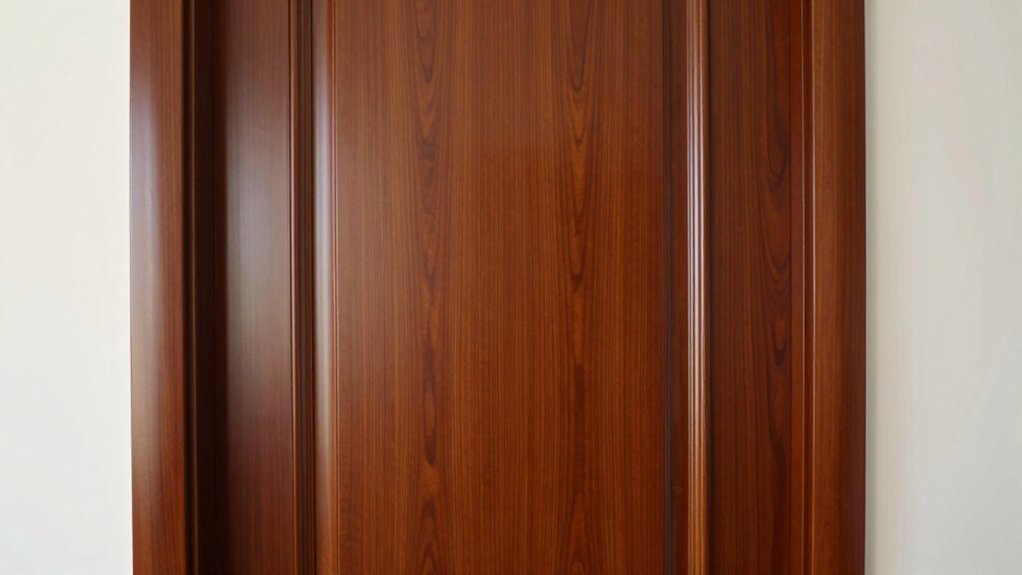
Gloss, sheen, and aesthetic choices dramatically shape interior wood doors. You’ll weigh gloss level options from matte to high gloss, noting semi-gloss typically reflects 40–70% of light for a polished appearance.
Higher sheen finishes like semi-gloss boost color vibrancy and highlight architectural details, delivering a stronger surface reflectivity and visual impact. If you prefer a softer, velvety look, satin—reflectivity around 25–35%—subtly conceals imperfections.
The choice of sheen alters perceived depth and richness of the wood grain; glossier finishes tend to emphasize texture, while satin softens it. Your aesthetic appeal hinges on mood and lighting: brighter rooms often suit higher gloss, while intimate spaces benefit from satin’s subtler glow.
Choose based on how you want the space to feel and read.
Classic Wood Veneer, Varnish, and Veneering Benefits
Classic wood veneer adds depth and authenticity to interior doors by reproducing natural grain and texture on a more affordable substrate, delivering a high-end look without the cost. You’ll appreciate how wood veneer enhances natural beauty while staying budget-friendly, because premium or exotic tones can be applied to durable, less expensive cores.
Varnish provides a protective coating that’s durable and water-resistant, elevating veneer’s appearance and guarding against wear. It also highlights grain, depth, and color, creating a lasting impression.
Veneering offers design flexibility, enabling varied patterns, species, and sheen to suit your space. Together, varnish and veneering extend the lifespan of interior doors while preserving aesthetics, allowing you to tailor finishes, ensure consistency, and enjoy a refined, cohesive look throughout your interior.
Modern Finishes: Laminates, Melamine, and Paint
Modern finishes offer practical, stylish options for interior wood doors, building on the warmth of veneer with surfaces that resist wear and moisture. You’ll find laminate and melamine deliver high scratch, heat, and moisture resistance, plus easy maintenance.
Laminate provides durable, resin-impregnated layers that mimic textures while standing up to daily use. Melamine, a tough variant, coats MDF or particleboard for a sleek, modern look with lasting surface protection.
Paint finishes come in satin or semi-gloss, with semi-gloss offering enhanced durability and moisture resistance for wetter spaces. These modern finishes reduce reapplication frequency, ideal for high-traffic doors.
Consider your environment and maintenance needs when weighing durability, surface protection, and the ability to mimic natural or textured effects.
How to Choose Based on Environment and Style
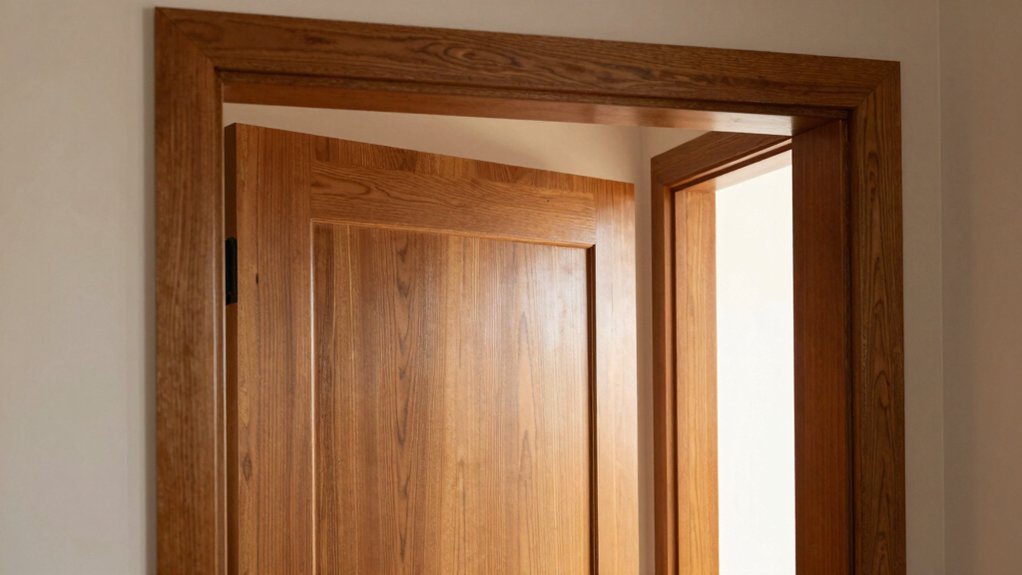
Your choice should balance environment and style from the start. In humid spaces, pick durable finishes that resist moisture.
While traditional or rustic looks shine with natural oil or matte varnish. For modern interiors, go with water-based options and a low-sheen, or play with gloss to highlight architectural detail.
Environment Durability Factors
Environment durability matters because the right finish protects interior wood doors against moisture, wear, and stains while reinforcing the door’s style.
In bathrooms or kitchens, choose semi-gloss or gloss finishes like polyurethane or varnish for superior water resistance and durability that withstands heavy use.
In dry, low-traffic spaces, satin or oil-based finishes balance protection with a natural look and easier touch-ups.
For commercial or busy interiors, chemically cured options such as catalyzed lacquer or urethane deliver enhanced resistance to scratches, chemicals, and heat.
Light-colored or natural doors benefit from water-based or oil finishes to preserve color and minimize yellowing.
For modern, minimalist settings, matte or low-sheen choices like waterborne polyurethane or eco-veneer offer a sleek, unobtrusive environment.
Finish options influence environment compatibility and long-term durability. water resistance moisture durability finish options environment
Style and Aesthetic Fit
Choosing a finish that fits your space means balancing style with surroundings; the right option can elevate the room while protecting the door. To nail style, match the interior aesthetic with your decor: traditional spaces pair with natural wood finishes, while modern setups lean toward sleek laminates.
Matte or satin finishes soften the mood for cozy, rustic, or casual environments; semi-gloss or gloss suit contemporary or high-end interiors. Consider the level of sheen that complements surrounding architecture, since high-gloss doors can act as visual anchors in minimalist designs.
Humidity and wear influence whether you opt for a clear, natural, or colored finish to preserve appearance and function. Let your goal—showcasing wood grain or bold painted looks—guide transparent versus opaque finish options for true visual harmony.
Conclusion
Choosing the right finish for interior doors balances durability, appearance, and care. If you want warm, classic glow, oil-based or varnish completes wood veneers beautifully; for low maintenance, water-based clears or paints shine. In high-traffic rooms, opt durable finishes and proper prep. Remember: a door’s finish is its personality—protects, persuades, and ages with your space. Treat it like a handshake: the first impression lasts. Your environment and style will guide you to a finish that endures and delights.