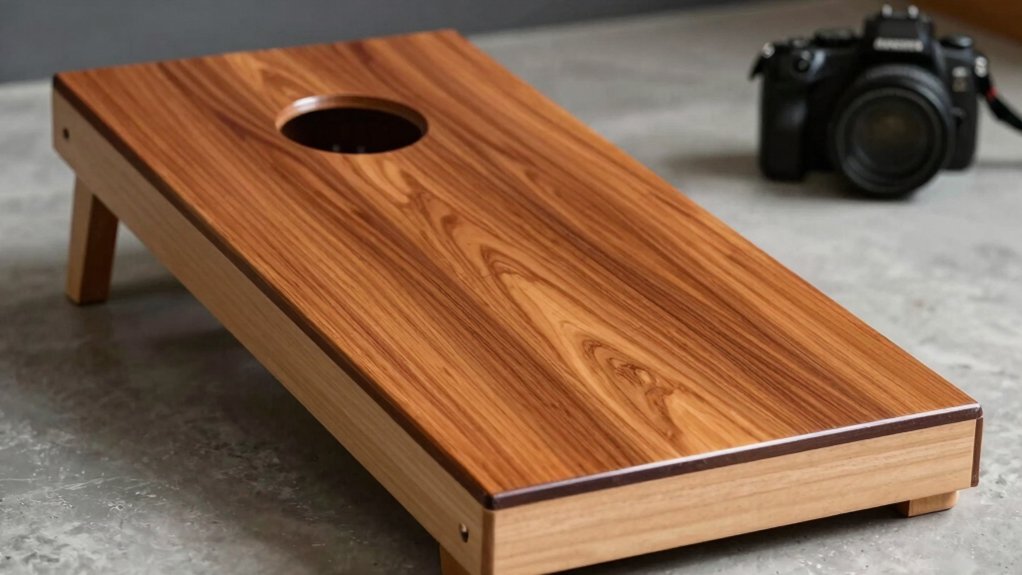
For outdoor cornhole boards, you want a finish that’s durable, UV-resistant, and easy to clean. Go with multiple thin coats of exterior polyurethane or spar urethane for the best weather protection; polyurethane resists moisture and wear, while spar urethane adds flexibility and UV guard. Seal with a compatible primer first, then color with outdoor paints or stains, and topcoat to lock in color. Regular maintenance keeps them looking sharp—and you’ll uncover more tips as you keep exploring.
What Are Cornhole Boards and Why Finishes Matter

Cornhole boards are two rectangular wooden platforms, 2 by 4 feet, with a 6-inch hole that players toss bean bags toward. You’ll use them outdoors, so the finish you choose matters as much as the boards themselves.
The surface can be painted, stained, or decorated to reflect your style or team branding, making every game feel personal. Finishes protect the wood from weather, moisture, and wear, extending durability and usability across seasons.
Proper finishing isn’t just cosmetic; it preserves a smooth playing surface and keeps vibrant colors sharp. When you select a finish, consider weather resistance and longevity to maintain appearance and performance.
In short, cornhole boards with a thoughtful finish stay attractive, playable, and durable through countless matchups.
Key Finishes for Outdoor Play: Polyurethane, Spar Urethane, and Polycrylic
When choosing a finish for outdoor play, three options stand out: oil-based polyurethane, spar urethane, and water-based polycrylic.
You’ll get durability with polyurethane, especially oil-based, and solid water resistance, though it tends to yellow with time.
Spar urethane delivers excellent UV protection and flexibility, ideal for boards exposed to sun and weather.
Polycrylic provides a clear, protective coat that cleans easily but generally lacks long-term UV resistance for prolonged outdoor use.
For longevity, apply multiple thin coats with proper curing between layers, regardless of option.
If you want lasting weatherproofing, oil-based polyurethane offers the strongest protection, while spar urethane balances protection and flexibility.
Polycrylic is best for easy upkeep on lightly used outdoor finishes.
Choose based on climate, exposure, and maintenance tolerance. finish
Preparing the Surface: Sanding, Priming, and Cleaning
To get a professional finish, start with thorough surface preparation: sand smooth, clean off dust, and prime for adhesion.
You’ll sand the cornhole surface with fine-grit sandpaper or a sanding sponge to erase rough spots and improve adhesion. After sanding, use a tack cloth or damp cloth for dust removal, ensuring the surface is pristine before priming or painting.
Apply an exterior primer, such as Extreme Bond Primer from Sherwin-Williams, to boost paint adhesion and durability. Verify the surface is completely dry and free of grease or oils prior to priming.
Proper surface preparation, including thorough sanding and cleaning, yields a professional-looking, long-lasting finish for your boards. This step focuses on sanding, priming, cleaning, and dust removal as foundations of surface preparation.
Applying Color: Paint, Stain, and Personalization Techniques
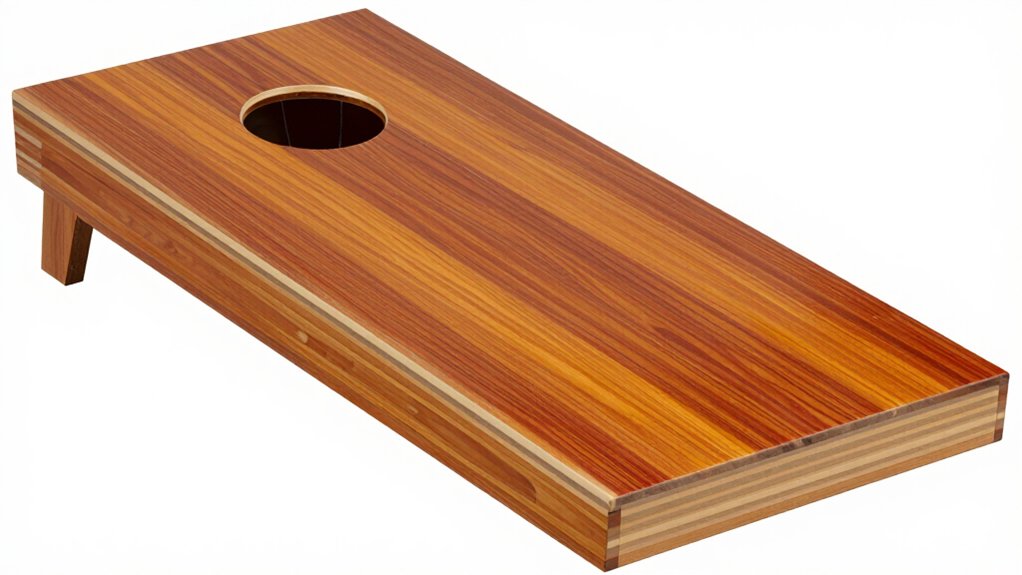
Color your boards with purpose: choose durable, outdoor-friendly finishes and apply them in well-spaced coats for a clean, professional look. You’ll start with surface preparation to guarantee sharp lines and long-lasting color, then pick your route: latex paint for a weather-resistant, durable finish, or stains to highlight grain with a rustic vibe.
When using latex paint, apply multiple coats for even coverage and full color saturation, letting each layer cure properly. If you prefer stains, choose a wood tintable option to deepen tone while preserving texture, again using multiple coats as needed.
Personalization comes next: add stencils, decals, or freehand acrylics for vibrant, detailed designs. Finish with a final, light topcoat if desired, and let colors set before play.
Sealing and Maintenance: Layers, Curing, and Recoating
Sealing and maintenance keep your cornhole boards looking sharp and lasting long after the game ends. Apply 2–3 thin coats of polyurethane, letting each layer cure for at least 24 hours for maximum durability against outdoor elements.
You’ll want to build a protective coat with consistent thin coats, avoiding heavy layers that trap air. After full curing—note that this can take several days to two weeks depending on humidity, temperature, and sealant type—inspect for wear and plan a recoating if chips appear.
For worn areas, perform light sanding, clean, and apply additional coats to restore smoothness and protection. Regular maintenance includes cleaning and reapplying a protective coat as needed to extend lifespan, maintaining vibrant color, and guarding against moisture and outdoor abuse.
Weather Considerations and Care Tips for Outdoor Use
Weather can take a toll on outdoor cornhole boards, so guard against sun, rain, and temperature swings with proactive care. You should use UV-resistant spar urethane or exterior-grade polyurethane to shield the surface from sun damage and yellowing, preserving color and glide.
When not in use, store boards indoors or in shaded areas to extend the finish’s life and reduce weathering. Reapply a weatherproof sealant every 1-2 years, or after significant exposure to rain, sun, or snow, to maintain a smooth, durable surface.
Avoid leaving boards outside in extreme temperatures above 120°F, which can cause cracking or peeling. Regularly inspect for chips and wear, then touch up or reseal to sustain weather resistance and dependable gameplay.
Conclusion
Finish is the handshake with the wind. Your boards, like a ship’s hull, endure storms when layered right and cured with patience. Choose a durable finish—polyurethane, spar urethane, or polycrylic—and coat them as you’d polish a compass: steady, deliberate, protective. Sand, clean, and seal, then let color tell your route. In sun and rain, maintenance becomes memory—recoat when the gloss fades, and your game stays true, your surface a beacon guiding every throw.