
You’ll weigh short-term costs against lifelong climates when you shift to carbon intensity caps. Whole-life carbon, from material extraction to end-of-life, reveals trade-offs that single metrics miss. By standardizing a boundary, you align design decisions with verifiable outcomes and cross-functional metrics—costs, schedule, and resilience all in one. The question is not if you can measure it, but how you’ll integrate credible data to drive governance and financing toward tangible, durable results.
What Carbon Intensity Caps Mean for Project Lifecycles
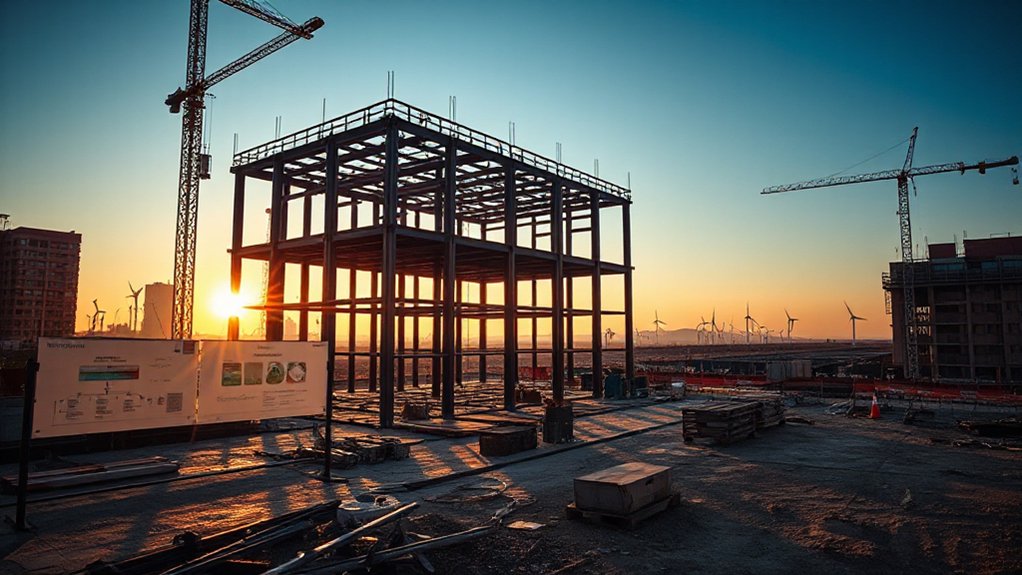
Carbon intensity caps set a clear ceiling on the emissions each project can generate over its lifecycle, driving design choices, siting, and technology selection from day one. You track targets in real time, aligning budgets, schedules, and risk with measurable outcomes.
Across functions, engineering, procurement, and planning sync to evaluate options that reduce lifecycle emissions, not just annual peaks. You compare scenarios using data-driven dashboards, prioritizing innovative materials that lower embodied energy and minimize waste streams, while maintaining performance.
Urban planning considerations surface early, shaping density, transit access, and land use to optimize energy performance and material transport. Decisions optimize cost, reliability, and speed to permit, ensuring compliance with caps without compromising delivery quality or stakeholder value.
What “Whole-Life Carbon” Covers From Cradle to Grave
Whole-life carbon encompasses every emission across a project’s lifespan, from cradle to grave, so you can measure total climate impact rather than isolated peaks. You’ll map emissions from material production, construction, operation, and end-of-life, then quantify scope-wide effects to align design choices with outcomes.
This approach captures embodied carbon in suppliers, logistics, and retrofit potential, ensuring decisions aren’t biased toward a single phase. It also accounts for operational carbon, including energy use, maintenance, and performance degradation, to forecast net climate results over time.
In practice, you’ll integrate urban greenery benefits and renewable integration strategies to improve resilience and reduce reliance on fossil inputs. The result is a cross-functional, data-driven view that informs trade-offs, targets, and invest-or-retire decisions.
Why Whole-Life Carbon Is the Planning Standard
Because it captures emissions across every phase, whole-life carbon has become the planning standard: it aligns design choices with verifiable outcomes rather than isolated peaks, enabling cross-functional teams to trade off embodied, operational, and end-of-life impacts in a single framework.
You’ll see decisions grounded in measurable data, linking material selection, construction practices, and maintenance to total carbon performance. This approach clarifies tradeoffs between upfront costs, long-term efficiency, and end-of-life recovery, guiding portfolios toward lower risk and higher resilience.
Urban landscaping and construction aesthetics are evaluated within the same metric, ensuring spaces deliver climate and user outcomes together. By adopting this standard, your program reduces uncertainty, accelerates approvals, and demonstrates demonstrable, auditable carbon performance across all project phases.
Defining System Boundaries for Whole-Life Carbon Assessments

You’ll establish clear System Boundary Principles to frame what’s counted, measured, and tracked across the project lifecycle.
By delineating Life-Cycle Stages and aligning Boundaries Across Scopes, you’ll enable cross-functional teams to compare scenarios consistently and drive measurable reductions.
This boundary discipline sets the data foundation for accurate, action-ready whole-life carbon insights.
System Boundary Principles
System boundaries align with organizational goals, regulatory requirements, and stakeholder expectations, balancing completeness with practicality.
You define emission thresholds that prioritize material impact, focusing on sources with measurable, reportable, or risk-adjusted significance. Thresholds guide inclusion criteria, determine data granularity, and shape uncertainty handling.
You document justifications for inclusions and exclusions to support reproducibility and cross-functional collaboration.
Life-Cycle Stages Delineation
Defining life-cycle stages clarifies where emissions originate and how they accumulate across a product’s or asset’s value chain. You segment boundaries to reflect material durability, manufacturing, use, and end-of-life, then quantify emissions at each stage to reveal hot spots and leverage points.
You’ll align data sources, establish consistent accounting rules, and document assumptions so cross-functional teams can interpret results without ambiguity. In practice, you trace supply-chain inputs, track interim processes, and model end-of-life pathways to compare scenarios with transparency.
You integrate stakeholder engagement to validate boundaries against operations, governance, and user behavior, ensuring the model reflects real-world dynamics. The outcome is a defensible, auditable framework that supports targeted interventions, drives performance improvements, and informs investment decisions across functions.
Boundaries Across Scopes
- Define asset, process, and value-chain limits with traceable justification
- Link urban greenery and transportation planning decisions to boundary assumptions
- Establish data collection, allocation rules, and sensitivity tests across scopes
Data Needs for Credible Whole-Life Carbon Modeling
Data needed for credible whole-life carbon modeling spans materials, manufacturing, use phases, and end-of-life scenarios, with emphasis on traceability, quality, and interoperability. You’ll gather granular inputs: material composition, production energy profiles, and transport distances, plus product use patterns and maintenance needs.
Align data standards across teams to guarantee interoperability and reproducibility. Prioritize transparent documentation of assumptions, boundaries, and data provenance.
Emphasize real-world operating conditions, performance degradation, and repairability. Integrate renewable energy data to reflect decarbonization pathways and grid mix variability.
Factor in urban greening effects, such as heat mitigation and carbon sequestration, where relevant to life-cycle boundaries. Establish governance for data quality, version control, and scenario testing to support auditable, outcomes-focused decisions across stakeholders.
Materials Sourcing and Embodied Carbon Across Supply Chains
Materials sourcing sets the baseline for embodied carbon by tracing supplier footprints, extraction methods, and transport logistics across the supply chain. Identifying high-impact materials early enables targeted reductions and smarter procurement.
You’ll quantify supplier performance, benchmark innovative materials, and push for supply chain transparency to reveal hidden hotspots and optimization opportunities. Data-driven scoring informs sourcing decisions, risk mitigation, and long-term resilience, aligning procurement with CAP targets and lifecycle analytics.
Cross-functional collaboration accelerates material substitution, supplier development, and contract incentives that reward lower embodied carbon. Outcomes focus ensures action translates to measurable reductions, verified through audits and progress dashboards.
You’ll communicate clear expectations to partners, enabling continuous improvement across our value chain.
- Map material streams and hotspots across tiers
- Compare innovative materials against traditional options with life-cycle data
- Establish a transparent, auditable supplier-score system
Design Choices That Cut Carbon Across the Lifecycle

Lifecycle emissions hinge on smarter material picks and design tweaks that shave carbon from every phase.
You’ll compare options with life-cycle data to optimize material selection and reduce embodied and operational emissions.
This cross-functional view drives measurable outcomes by pinpointing high-impact choices early in the design process.
Lifecycle Emission Reduction
How can we cut carbon across a product’s life cycle without compromising performance? You’ll align design choices with measurable lifecycle metrics, prioritizing actions that yield verifiable emissions reductions while preserving function, reliability, and cost targets.
Data-driven tradeoffs guide decisions, revealing where improvements maximize impact across sourcing, manufacturing, use, and end-of-life phases. By benchmarking progress, you’ll demonstrate outcomes to stakeholders and adapt quickly to shifting policies and market needs.
Innovative strategies emerge from cross-functional collaboration, linking R&D, operations, and sustainability to deliver durable carbon savings. Policy challenges are addressed upfront with transparent reporting, ensuring compliance and enabling investment in higher-impact options.
Embrace a lifecycle mindset that scales across products and portfolios.
- Target high-leverage interventions across stages
- Validate reductions with standardized metrics
- Coordinate governance for ongoing improvement
Material Selection Impact
Material choices drive a large share of total lifecycle emissions, so selecting the right materials early sets the baseline for verifiable carbon reductions across sourcing, manufacturing, use, and end-of-life.
You’ll quantify material durability and performance data to forecast long-term reliability, reducing replacements and waste.
Prioritize low-embodied-carbon options with proven supply chain transparency, enabling accurate lifecycle assessments.
Compare scenarios: recycled content, regional sourcing, and modular designs that enable disassembly and reuse.
Collaborate with procurement, engineering, and sustainability teams to align material specs with performance targets and waste-stream constraints.
Track cradle-to-grave metrics, including end-of-life recovery rates and transport emissions, to validate outcomes.
Construction Methods That Minimize Upfront and Ongoing Emissions
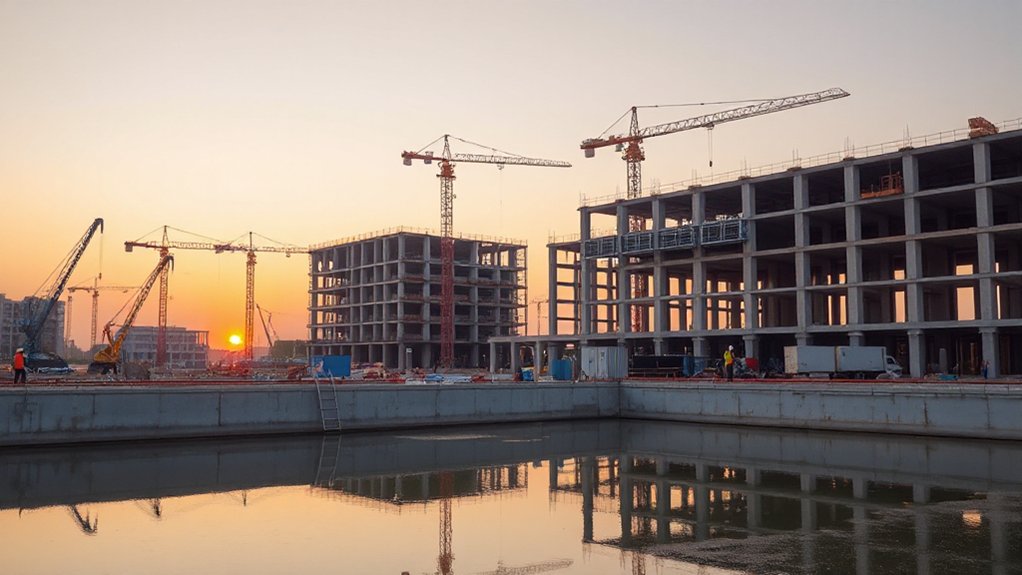
Reducing upfront and ongoing emissions starts with selecting construction methods that deliver measurable, near-term carbon benefits. You’ll favor approaches that minimize embodied carbon, prioritize modularity, and enable faster site throughput, delivering predictable outcomes across teams. Data-driven decision-making, cross-functional collaboration, and rigorous tracking of performance metrics guide every choice.
You’ll apply innovative techniques and material innovation to reduce waste, accelerate prefabrication, and improve quality, while preserving safety and performance. Early-stage design decisions should quantify carbon impacts, enabling informed trade-offs between cost, schedule, and emissions.
The result is a clear path to lower peak demand, reduced logistics, and fewer rework loops, with measurable carbon reductions realized at construction and handover.
- Modular systems and off-site fabrication
- Reusable formwork and low‑carbon materials
- Integrated design for circularity and reuse
The Operational Phase: Energy Use, Occupancy, and Behavior
Although energy use, occupancy, and behavior drive long-term carbon impact during the operational phase, you can quantify and optimize these factors to achieve measurable reductions. You enter a data-driven loop: monitor real-time consumption, correlate with occupancy patterns, and test interventions at scale.
Prioritize operational efficiency by targeting heating, cooling, and lighting holistically rather than in silos. Track occupant behavior through metering-enabled dashboards that reveal when and where waste occurs, then design nudges and controls to shift usage toward off-peak and low-carbon options.
Cross-functional teams—engineering, facilities, and analytics—must own metrics, thresholds, and targets. The payoff is clear: reduced energy intensity, improved comfort, and verifiable emissions drops that translate into durable, cost-effective performance across the asset lifecycle.
End-of-Life Strategies: Reuse, Recycling, and Circularity
End-of-life reuse and circularity strategies directly impact total cost of ownership and material waste, with measurable gains from refurbishments, remanufacturing, and product-to-product reuse.
You’ll compare return-on-reuse scenarios, track recovery rates, and align cross-functional teams to guarantee compliant recycling and material integrity.
End-of-Life Reuse Strategies
What practical actions release value after a product’s useful life ends, and how do reuse, recycling, and circularity stack up against each other? You’ll compare net value retention, retrofit feasibility, and cost-to-serve in a data-driven lens, prioritizing end of life reuse and circular strategies. Outcomes hinge on asset condition, repairability, and market demand, not just disposal.
- Reuse: extending unit life through refurbishments and resale channels
- Circular strategies: design-for-reuse, modularization, and component harvesting
- Recycling: material recovery yield, energy use, and downstream supply implications
You’ll quantify value retention, risk exposure, and implementation timelines to guide cross-functional decisions, aligning procurement, operations, and product teams toward higher recovered value and lower embodied carbon. Clear metrics enable scalable adoption and reproducible results.
Circularity Through Recycling
Typically, recycling releases value by recovering materials that would otherwise be discarded, but its effectiveness depends on the yield, energy use, and downstream market demand. You’ll measure success by material recovery rates, process energy intensity, and the alignment of outputs with end-market needs.
Data shows incremental gains from advanced sorting, cleaner feedstocks, and modular reuse pathways. You’ll track throughput, contamination reductions, and lifecycle savings to drive decisions across design, procurement, and operations.
Recycling innovation reduces virgin material demand and shortens supply chains, but only when facilities scale, standards converge, and policies incentivize modular reuse.
In a circular economy, collaboration across R&D, manufacturing, and sustainability ensures circularity is embedded in product design, procurement, and end-of-life streams.
Target outcomes: higher material yield, lower emissions, and resilient, transparent recycling value chains.
Life-Cycle Assessment (LCA) Methods: Options and Best Practices
Life-cycle assessment (LCA) methods offer a practical framework to quantify environmental impacts across a product’s or process’s entire life span, from raw material extraction to end-of-life. You’ll choose metrics (GWP, acidification, eutrophication) aligned with goals, then tailor boundaries and data sources to support decision-making.
Prioritize transparent assumptions, sensitivity checks, and uncertainty analyses to guarantee robust comparisons. Use fast, probabilistic approaches when iteration speed matters, and switch to attributional or consequential LCAs for policy impacts and supply-chain shifts.
Emphasize data quality, stakeholder collaboration, and cross-functional alignment to drive measurable outcomes.
- Focus areas for impact reduction include renewable integration and policy reform considerations
- Data governance, scenario planning, and life-cycle costing drive investment clarity
- Documentation, reproducibility, and stakeholder engagement ensure credible results
Certifications and Standards Aligned With Whole-Life Carbon

You’ll see how certifications for whole-life carbon translate your assessments into verifiable outcomes across teams, suppliers, and projects.
Standards aligned with assessments can drive consistent data collection, comparability, and accountability, enabling faster decision-making and risk reduction.
Certifications for Whole-Life Carbon
- Shared metrics and auditability
- Lifecycle-focused decision gates
- Continuous improvement pathways
Standards Aligned With Assessments
Data-driven dashboards translate embodied and operational carbon into actionable targets, enabling cross-functional teams to converge on shared metrics. Certifications emphasize lifecycle performance over singular snapshots, promoting accountable supply chains and ongoing verification.
Innovative materials and Urban greenery are leveraged as levers for carbon performance, enabling scenario comparisons and risk-aware decision-making. This alignment drives continuous improvement, reduces compliance friction, and supports transparent communication with stakeholders, residents, and investors about verifiable, outcomes-based carbon reductions.
Transparent Data and Disclosure to Build Stakeholder Trust
Transparent data and disclosure are essential to earning trust across stakeholders, from investors to customers. You’ll drive clarity by prioritizing transparent reporting, clear boundaries, and verifiable metrics that align with whole-life carbon goals.
When you emphasize Stakeholder Engagement and Data Transparency, you enable informed decisions and rapid course corrections. You’ll measure outcomes in reduced risk, improved credibility, and stronger collaboration across functions.
- Establish consistent disclosure protocols and audit trails to verify data integrity
- Link disclosures to measurable performance milestones and external benchmarks
- Communicate uncertainties and assumptions openly to prevent misinterpretation
This approach creates cross-functional alignment, accelerates evidence-based decisions, and strengthens stakeholder trust through transparent, outcome-focused reporting.
Modeling Tools for Whole-Life Carbon: Selecting the Right Approach
Choosing the right modeling tools for whole-life carbon hinges on aligning data inputs, assumptions, and outputs with clear decision-rights across functions. You’ll select approaches that balance granularity with scalability, ensuring consistent comparisons across projects and time.
Use dynamic lifecycle models to capture material choice, construction, operation, and end-of-life phases, while embedding uncertainty and scenario analysis.
Favor modular tools that accommodate fast updates as inputs evolve, enabling you to test policy and design changes without replaying entire datasets.
Consider Renewable integration and Urban densification implications, ensuring models reflect grid dynamics, transport emissions, and built-form density shifts.
Prioritize transparency in method bridges, stakeholder-readable outputs, and traceable data provenance to accelerate governance and adoption across engineering, finance, and planning teams.
Decision Frameworks: Lifecycle Costs and Carbon in Practice
You’ll compare lifecycle cost impacts with carbon tradeoffs in practice, using data to reveal which options deliver net value over time.
By aligning finance, engineering, and sustainability, you’ll surface tradeoffs and quantify outcomes that matter to stakeholders.
This framework helps you act on clear, measurable signals rather than assumptions.
Lifecycle Cost Impacts
You’ll quantify tradeoffs across disciplines to drive durable decisions, balancing capital outlays with long‑term savings and carbon outcomes. This lens highlights how design choices affect maintenance load, retrofit potential, and end‑of‑life value, ensuring alignment with performance targets and risk profiles.
- Assess lifecycle payback periods under scenarios that include urban greenery benefits and water efficiency savings.
- Compare retrofit and modular options to minimize disruption, waste, and embodied carbon while preserving total cost of ownership.
- Track post‑occupancy performance data to refine cost‑carbon models for future projects.
This approach yields tangible ROI, clearer accountability, and cross‑functional alignment on value.
Carbon Tradeoffs In Practice
Carbon tradeoffs play out where lifecycle costs meet carbon outcomes, guiding decision-makers toward options that minimize long‑term emissions without inflating total cost of ownership. In practice, you’ll quantify upfront investments, operating costs, and end‑of‑life risks alongside emissions footprints to reveal tradeoffs across performance, resilience, and reliability.
Use a structured decision framework: compare scenarios for Renewable integration and system efficiency, then assess net present value versus carbon abatement. Cross-functional teams—finance, engineering, sustainability, and operations—must align on acceptable risk, discount rates, and measurement boundaries.
Prioritize options that reduce peak demand, enable scalable deployment, and support urban greening benefits where feasible. Document sensitivity analyses to show how small changes in energy prices or maintenance cycles shift outcomes, ensuring governance that consistently rewards lower lifecycle emissions without sacrificing value.
Financing and Policy Incentives That Reward Whole-Life Performance
To accelerate decarbonization, financing and policy incentives should reward whole-life performance rather than just upfront metrics. You’ll align capital with long-term carbon outcomes, driving durable design, construction, and operation improvements that data show reduce embedded emissions over decades.
Policy levers can compartmentalize risk, reward performance milestones, and fund innovation hubs that scale best practices. When incentives embed lifecycle data, projects prioritize material choices, maintenance, and end-of-life recovery, improving overall carbon intensity.
You’ll also foster community engagement, ensuring local needs and transparency shape decision-making. Outcomes rise as cross-functional teams collaborate across finance, engineering, and policy to optimize lifecycle performance.
- Targeted subsidies and performance-based grants tied to lifecycle metrics
- Public–private funding partnerships, accelerating scale of innovations hubs
- Mandatory disclosure with verifiable data to drive continuous improvement
Risk and Resilience: Integrating Climate Adaptation With Carbon Goals
Risk and resilience must be integrated from the outset, so climate adaptation becomes a core driver of carbon outcomes rather than a separate add-on. You’ll align project objectives with measurable risk metrics, linking urban resilience to greenhouse gas reductions and asset longevity.
Use scenario analysis to quantify climate impacts on energy, material use, and transportation, then translate findings into design choices that lower embodied and operational carbon.
Cross-functional teams—engineering, sustainability, finance, and operations—must agree on shared dashboards, thresholds, and incentives.
Prioritize climate adaptation measures that yield co-benefits, such as heat mitigation, flood protection, and energy efficiency.
Track performance against risk-adjusted targets, recalibrating strategies as climate data evolves.
The result is resilient infrastructure that consistently advances whole-life carbon goals. Urban resilience, climate adaptation drive accountable carbon outcomes.
From Pilot to Scale: An Implementation Roadmap for Adoption
Putting the pilot findings into action starts with a clear, cross-functional rollout plan that translates tested approaches into scalable practices, governance, and budgets. You’ll translate pilot metrics into repeatable workflows, establish accountability, and align incentives across teams.
The roadmap emphasizes Renewable integration and Urban densification as core levers, with measurable milestones and risk-adjusted timelines. Data dashboards track performance against whole-life carbon targets, enabling course corrections before scale.
You’ll codify governance for procurement, design standards, and supplier engagement to guarantee consistency across projects. By sequencing pilots into phased rollouts, you reduce cost, accelerate adoption, and drive durable outcomes.
- Establish cross-functional steering with explicit decision rights and quarterly reviews
- Define scalable design patterns, procurement templates, and measurement protocols
- Align incentives, lifecycle cost accounting, and performance dashboards for ongoing learning
Frequently Asked Questions
How Do Caps Adapt to Regional Construction Materials?
Regional supply shifts drive caps to factor in material adaptation, letting you adjust thresholds based on local availability, cost, and performance. You’ll track regional data, collaborate across teams, and quantify outcomes to optimize whole-life carbon reductions.
What’s the Role of Behavioral Change in Reductions?
Behavioral change drives reductions, because you align incentives, measure outcomes, and scale adoption. You’ll trigger behavioral incentives and deepen societal engagement, linking data to decisions, cross-functionally accelerating decarbonization and delivering measurable, durable emissions improvements.
Can Retrofits Meet Long-Term Carbon Caps Cost-Effectively?
Take the hypothetical City A retrofit: you cut embodied emissions by 40% through optimized materials, MEP upgrades, and modular components, proving retrofit strategies can meet long-term caps cost-effectively while delivering measurable, data-driven, cross-functional outcomes.
How Are Uncertainties & Data Gaps Handled Publicly?
You publicly handle uncertainties through robust data transparency and structured risk management, documenting assumptions, gaps, and validation steps; you continuously update datasets, publish methodologies, and engage cross-functional teams to improve decision-making credibility and outcomes.
Do Caps Apply Equally to Infrastructure and Buildings?
Yes, caps apply to both infrastructure and buildings, with design flexibility and material innovation driving performance. You’ll see data-driven, outcomes-focused outcomes, requiring cross-functional collaboration to optimize whole-life carbon, balancing trade-offs and ensuring comparable, auditable results across sectors.
Conclusion
You’ll see the payoff when whole-life carbon is baked into every decision, not tacked on at the end. By defining boundaries, tightening data, and aligning lifecycle costs with climate outcomes, stakeholders—from designers to financiers—win: clearer risk profiles, better return on low-carbon investments, and resilient projects. This isn’t a niche effort; it’s a standard. Get ready to move from pilots to scale—turn insights into action, and lock in lasting value for future generations. It’s a game changer.