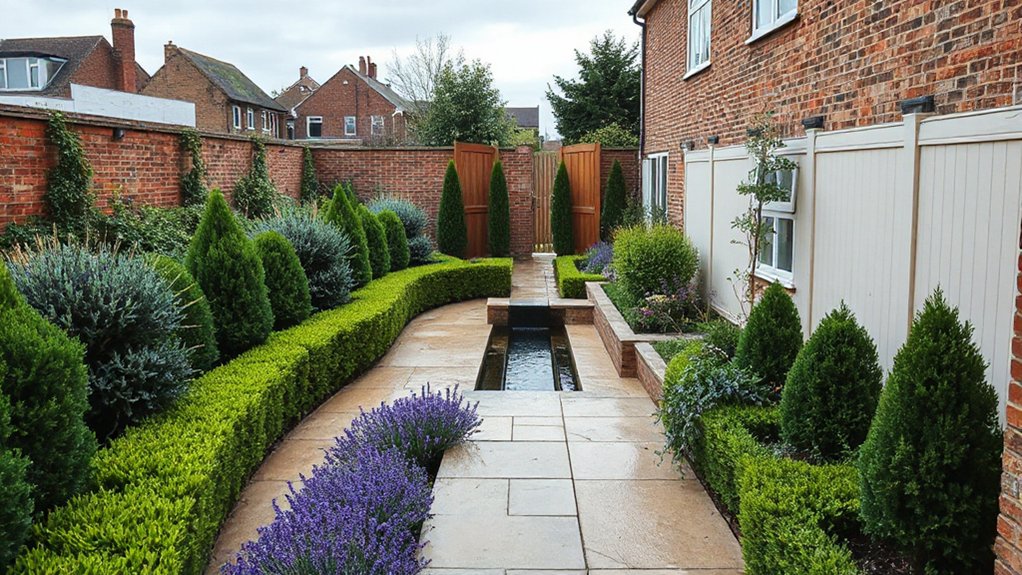
To maximize a long, narrow UK garden, align a clear sightline from house to horizon with low foreground planting and taller focal pieces toward the far end, keeping paths uncluttered. Layer heights for depth, and zone quiet corners from active areas using textures and lighting to cue shifts. Choose wind- and salt-tolerant evergreens, drought-friendly grasses, and compact varieties. Use low-pitch paving, slim screens, and modular storage to extend space. Controlled pruning and tidy borders keep it welcoming—there’s more to uncover below.
Identify Your Priorities for a Narrow UK Garden
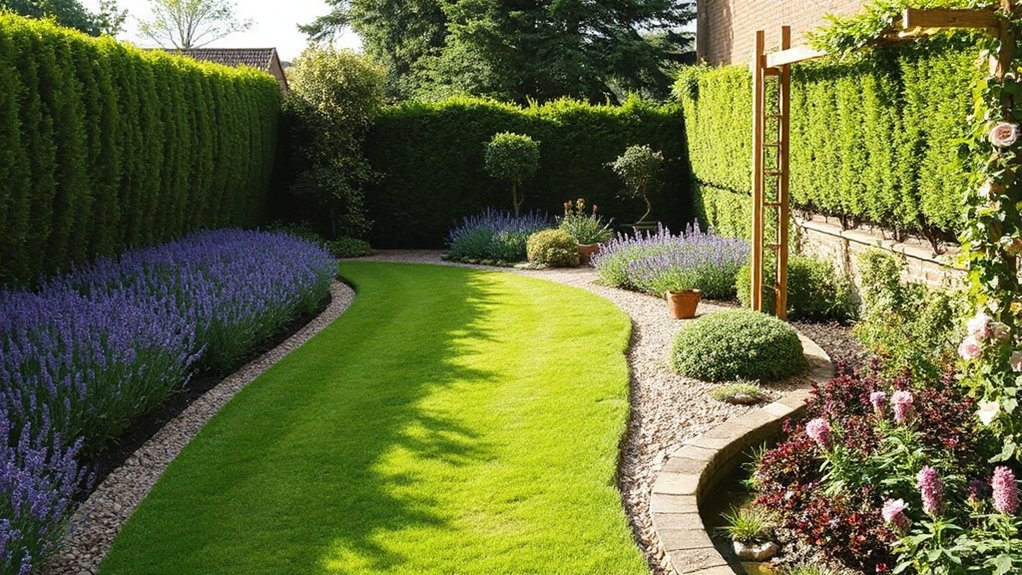
To identify priorities for a narrow UK garden, start by clarifying how you’ll use the space and what you want to achieve in a compact footprint. You’ll map zones that maximize function without crowding.
Prioritize clear circulation paths so you can move from house to seating or dining areas without tripping hazards.
Decide on a single focal point—perhaps a slim water feature or vertical greenery—that guides the eye along the length.
Consider which moments you must enjoy daily: a morning coffee, evening sun, or shaded retreat.
Build in flexibility with modular outdoor furniture that can be rearranged.
Integrate garden lighting to extend usability after dark, and select outdoor furniture that resists damp UK conditions while maintaining a streamlined profile.
Plan Sightlines Across the Garden’s Length
Plan sightlines along the garden’s length by choosing a clear, uninterrupted axis from house to horizon. You want the eye to travel smoothly, not be interrupted by clutter or vague boundaries. Start with a dominant line—a path, fence line, or lawn edge—that runs straight or gently curves away.
Place focal points at intervals—windows, seating, a specimen tree—to pull attention forward rather than sideways. Maintain symmetry where possible, but allow occasional offsets to keep it natural.
Keep planting low in the foreground to preserve the view; taller specimens should backfill or frame the distance. Consider garden lighting to emphasize the axis at night, and create wildlife habitats along the length to invite exploration without obstructing sightlines.
Regularly prune sightline edges to prevent overgrowth from narrowing the vista.
Layer Heights to Add Depth Without Overwhelm
Layering height is about guiding the eye without crowding the space. To add depth without overwhelm, mix a few distinct plant heights along the length of your garden.
Begin with low groundcover or stepping plants at the front, then place mid-height shrubs to frame pathways and views. Finish with a taller, architectural piece near the far end to draw focus.
Use deliberate height variation to create zones and rhythm, not clutter. Choose compact trees or tall perennials that stay within scale for narrow plots, and prune to retain structure.
Emphasize Layer contrast between textures and forms—soft, airy foliage against rigid, upright silhouettes.
Keep progression smooth; avoid abrupt jumps, and guarantee safe sightlines remain intact as you walk the length.
Zone the Space: Quiet Corner, Active Area, and Transitions
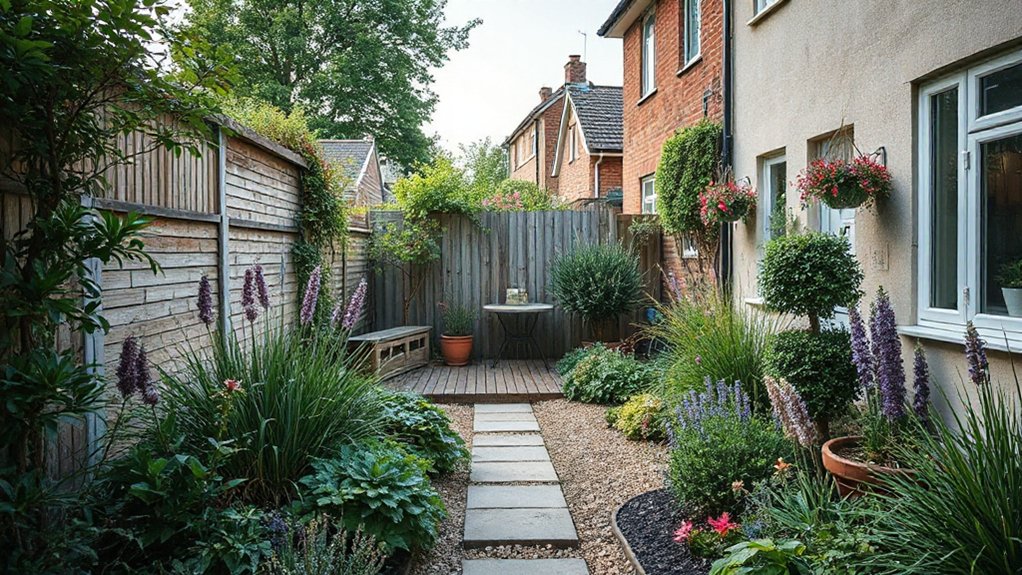
Zone the space by clearly separating a quiet, contemplative corner from an active, usable area, then smoothing handoffs so the eye moves naturally between them. You’ll create distinct zones with subtle changes in scale, materials, and plantings, preserving flow without friction. Use planting textures to cue transitions: soft, tall grasses beside compact seating for a calm retreat, then denser evergreen screens to frame the active strip.
Incorporate garden lighting to extend usability at dusk and to guide movement without glare. Include wildlife habitats along edges to invite birds and pollinators while maintaining quiet zones for reflection.
- Define edges with low hedges and stepping-stone paths
- Align seating sightlines to the transitions and entry points
- Position lighting and habitats to minimize disruption for wildlife
Choose Wind- and Salt-Tolerant Plants for UK Conditions
Wind and salt can challenge UK gardens, so start with sturdy, wind-tolerant choices that thrive in exposed sites and coastal air. You’re aiming for resilience, not novelty, so pick robust forms that withstand gusts and salt spray.
Wind resistant shrubs provide structure without leaning, resisting damage and reducing windflow across your narrow space. Pair them with salt tolerant grasses for ground cover that stays stable after storms, stays upright, and requires minimal care.
Favor compact varieties that won’t overpower paths or seating zones, and select evergreen or semi-evergreen foliage for year-round interest.
Use mulch and mineral-rich soil amendments carefully to support root systems without encouraging salt buildup.
Finally, integrate wind-broken, low-maintenance specimens into the layout to preserve sightlines and extend usability.
Pick Materials That Extend the View
Choosing materials that extend the view matters for narrow UK gardens. Opt for horizon-enhancing choices, such as low-profile paving and long, continuous lines, to create unbroken sightlines.
Use perimeter-transparent surfaces to blur boundaries and pull the exterior further into the space.
Extended View Materials
When selecting materials that extend the view in narrow UK gardens, choose options with low visual weight and long sightlines—think continuous gravel, paving, or decking that runs the length of the space.
Extended view materials can visually widen a corridor, guiding the eye along the length while maintaining a cohesive, uncluttered feel. Prioritize textures and colors that blend with the surroundings to achieve effective visual enhancement without breaking the line of sight.
Keep joints minimal and patterns simple to preserve uninterrupted flow. Select durable, low-maintenance options suited to wet UK conditions, ensuring slip resistance where required.
Use lighter tones to reflect light and enlarge perceived space, and avoid heavy, busy finishes that interrupt the view.
- Continuous gravel paths or resin-bound surfaces
- Long, straight decking running the full length
- Subtle, uniform paving with restrained joints
Horizon-Enhancing Choices
To extend the view, choose materials that read as a continuous line and keep the surface visually lightweight. You’ll favor smooth textures and low-profile tones that blend with the sky and the horizon, not competing with it.
Select paving and decking that run lengthwise, avoiding chunky borders or abrupt color breaks. Keep water features modest in scale and placement so they’re heard rather than shouted, creating a calm rhythm that guides the eye outward.
Garden lighting should be subtle, linear, and recessed, tracing edges without creating hotspots or glare. Use iridescent or pale materials near seating to bounce light further down the garden.
Choose plants with open canopies and vertical emphasis to elongate the sightline, reinforcing the long, narrow feel while preserving functional, practical use.
Water features and lighting complete the horizon, not overwhelm it.
Perimeter-Transparent Surfaces
- Materials and heights that enhance the garden boundary while keeping sightlines open
- Light, neutral finishes that reflect rather than absorb
- Regular inspection of joints, drainage, and corrosion resistance
Create Longitudinal Focal Points to Guide the Eye
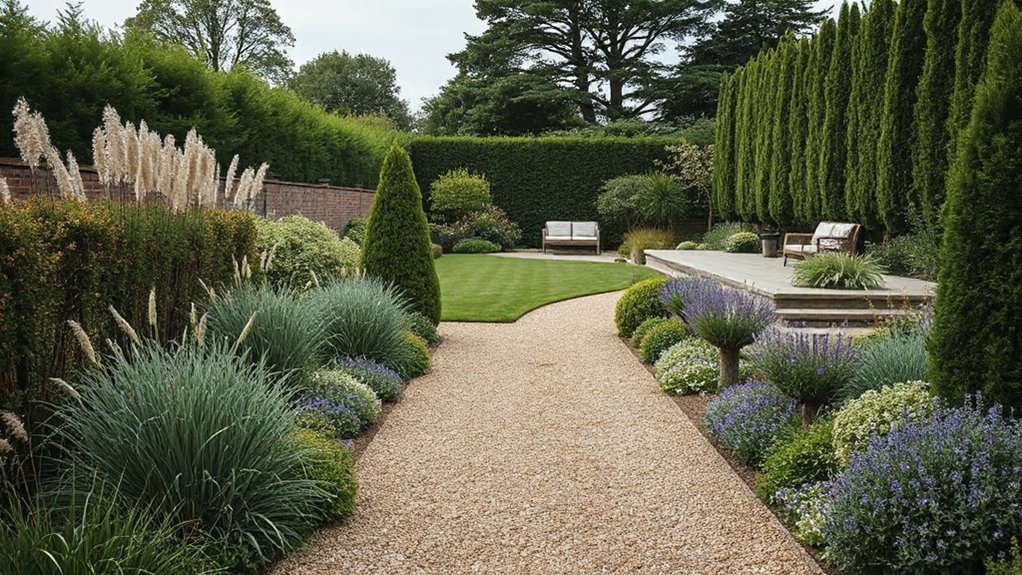
Longitudinal focal points act like arrows guiding the eye along a path through a narrow UK garden, creating a sense of distance and structure. You deliberately place elements that draw attention along the length, not just at the end.
Start with a tall specimen or a slender water feature near the far boundary to set perspective, then repeat smaller cues as you move forward.
Use garden art or a sculptural plant silhouette as a recurring visual motif to maintain continuity without clutter.
Space hardscape and planting so sightlines stay uninterrupted, guiding the gaze toward a defined destination, like a seating nook or an ornamental feature.
Include a discreet water feature for a reflective pause, and steady attention with harmonious color and texture progression.
Use Paving Patterns to Maximize Small-Scale Structure
Paving patterns can transform a tight UK garden by creating the illusion of space and shaping the way you move through it. You’ll harness scale, direction, and rhythm to make narrow plots feel wider and longer, while keeping the path clear for daily use. Use linear bands that run along the length of your space to elongate lines, or diagonal layouts to open focal points without crowding edges.
Incorporate varied textures at small scales to add interest without bulk. Pair paving with discreet Garden lighting and integrated Water features to extend the usability into evenings, guiding movement and highlighting structure.
- Align pavers with garden lines to stretch space
- Use subtle contrast textures for visual depth
- Integrate lighting and water features for atmosphere
Practical Fences and Screens for Narrow Lots
You’ll explore narrow yard fencing ideas that maximize space without sacrificing security or style. Screens can define zones and add light, while low-profile privacy screens keep sights open from the street.
Use compact, sturdy materials that suit UK weather and blend with your planting to keep the space feeling larger.
Narrow Yard Fencing Ideas
Fences for narrow yards should prioritize width efficiency and privacy without overwhelming the space, so start with slim, sturdy panels or slatted screens that maximize light and air flow. You’ll choose materials and heights that suit your boundary lines, keeping sightlines open while you retain boundary feel.
Aim for fencing styles that create order, not clutter, and consider color and texture to complement garden art without overpowering the yard. Keep installation straightforward, level, and robust, with posts set firmly and gates aligned.
A restrained palette and narrow slats can visually extend the yard, while perforated panels invite light. This approach delivers practical, enduring borders that ease maintenance and enhance flow.
- Slim panels with staggered spacing for air movement
- Slatted screens that blend privacy and light
- Coordinated fencing styles and garden art accents
Screens For Space Definition
Screens act as lightweight dividers that define zones without shrinking the overall footprint. You use practical screens to separate seating, dining, and planting areas without thick walls. Choose decorative garden screens that fit your scale, preferring slim profiles with open lattice or vertical slats to keep sightlines open.
Mount screens on discreet posts or freestanding frames so you can relocate them as the garden evolves. Pair screens with privacy plantings to soften edges and add year-round structure; evergreens provide backbone, while seasonal blooms add color.
Consider layering at different heights to create subtle rooms within a narrow width. Maintain a coherent material language—matching color, texture, and hardware across fences and screens.
Finally, guarantee any screening complies with local guidelines and neighbourly sightlines.
Low-Profile Privacy Screens
- Vertical planting accents within screen areas
- Outdoor screens that balance privacy and light
- Planted, slim-line screen integration ideas
Smart Storage and Multi-Functional Garden Elements
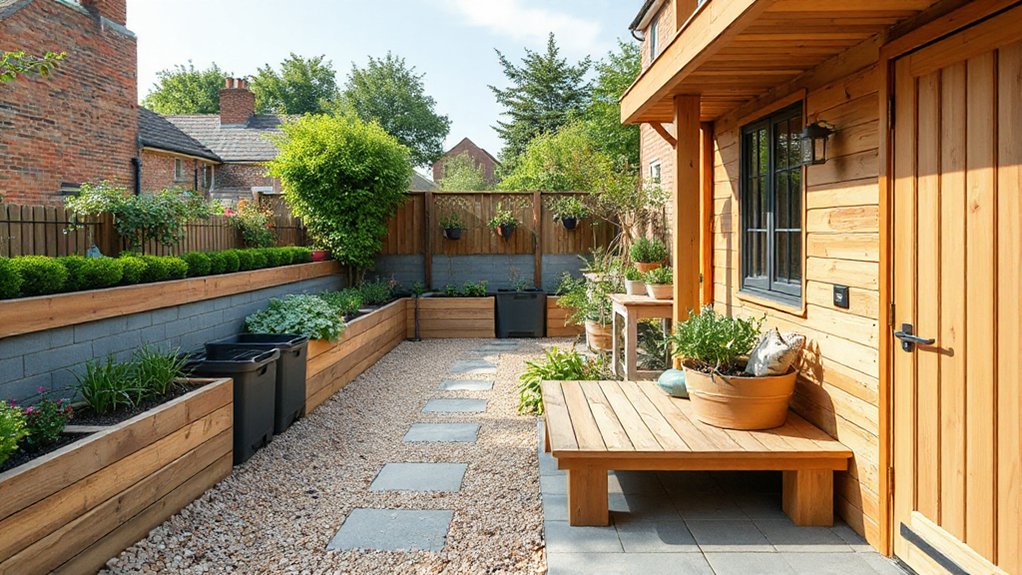
Smart storage is where small gardens win. In a long, narrow space, you’ll benefit from built-in benches with hollow storage, and planters that double as treads or dividers. Choose modular units you can stack or wheel, so you adapt to changing needs without clutter.
Vertical gardening maximizes wall real estate; hang clever trellises, pocket planters, or wire grids to keep soil and pots off the ground.
Multi-functional elements, like an outdoor seating area that doubles as a shed roof, reduce trips and visual noise.
Integrate unobtrusive outdoor lighting along pathways and beneath shelves to extend usability after dusk.
Prioritize weatherproof finishes and tight seals; low-maintenance materials save time and sustain neat lines year round.
Maintenance Tips to Keep a Long, Narrow Garden Welcoming
A long, narrow garden rewards regular upkeep that preserves flow and sightlines; start with a simple, consistent routine to keep it welcoming. You’ll prune monthly to prevent overhang, keep paths clear, and tidy borders before growth spurts.
Water deeply but infrequently, concentrating on roots, not foliage, to conserve moisture for longest, tightest bed lines. Regular debris removal prevents pests and decay, while seasonal mulching protects soil structure.
Position Garden furniture so seating guides movement and creates micro-vistas, then inspect for stability after wind. Implement simple pest control with early detection, targeted remedies, and good sanitation to minimize issues.
Never neglect lighting; low, even illumination extends usability and safety into evenings.
- Schedule monthly checks for pests and structural integrity
- Rotate seating and refresh mulch layers seasonally
- Maintain clear sightlines with disciplined pruning
Frequently Asked Questions
How Can I Prevent a Narrow Garden From Feeling Claustrophobic?
To prevent a narrow garden from feeling claustrophobic, use garden fencing and privacy screens to define space without blocking light; choose light colors, vertical planters, and mirrors for depth, while keeping sightlines open and air flowing.
What Are Budget-Friendly Plants for Long UK Plots?
Vertical gardening and drought tolerant plants fit budget-friendly long UK plots, you’ll maximize space and resilience. You’ll choose hanging baskets, trellises, and narrow planters, plant drought-tolerant varieties, water smartly, and keep maintenance low while preserving visual impact.
How Do I Optimize Drainage in a Narrow Space?
Install a efficient drainage system, then add soil improvement with organic matter and gravel layers. In a narrow space, slope gently, maintain access, and monitor water flow after rainfall to prevent pooling and soil erosion.
Which Color Schemes Visually Stretch a Garden Length?
Color contrast fools the eye and visually stretches length; use light boundary plants and darker focal accents. You’ll master depth with monochrome palettes, but pair them with pop color highlights for definition and subtle tempo along the path.
How Can I Maximize Seating Without Crowding the Path?
Maximize seating without crowding the path by placing compact garden furniture along the edges, keeping a clear central corridor. Use slender pathway materials, and stagger benches to create reception zones without obstructing circulation.
Conclusion
You’ve mapped the narrow battleground, picked resilient plants, and calculated sightlines like a general. Yet the real win isn’t a perfect plan, it’s daily tweaks: a便 fastidious graft of clutter back into storage, a fence that doesn’t pretend to be a sculpture, a path that guides rather than shouts. If your garden survives the drizzle, drought, and your in-laws’ opinions, congratulations—you’ve built a long, narrow sanctuary where distraction surrenders to purpose. Satire: space learned restraint; you finally did too.