Boost curb appeal quickly with practical, UK-focused upgrades that buyers notice fast. Start at the entrance: refresh doors and trims with durable finishes and high-contrast house numbers, and pick lighting that’s low-profile yet bright. Create a inviting approach with a clear driveway, cohesive paths, and tidy boundary lines. Tidy the garden—defined beds, crisp edges, fresh mulch—and keep seasonal planting simple yet strategic. Track changes with a simple before/after score; more improvements ahead will reveal how much value you can gain.
Kerb Appeal in UK Homes: What It Is and Why It Matters

Kerb appeal is the first impression your home makes from the street, and it matters more than you might think. You’re evaluating a holistic front; it’s not just paint, it’s how the facade communicates value.
In UK homes, curb presence blends practical alignment with historical architecture, giving you a sense of place and permanence. You’ll notice how massing, materials, and proportion reflect regional traditions, yet remain legible from the pavement.
The choices you make should respect local context while solving real-world needs—durability, weather resistance, and low maintenance.
Cultural symbolism matters too: gateways, railings, and front doors can signal welcome, safety, and status without shouting. When you optimize these cues, you create a coherent narrative that invites buyers to continue inside.
Quick Wins for Budget-Friendly Exterior Upgrades
Need a fast, cost-conscious upgrade plan that delivers noticeable curb-appeal gains? You start with simple, high-impact exterior tweaks. Focus on clean sightlines: trim overgrown shrubs, edge paths, and sweep pavements for immediate polish.
Use landscaping trends to guide plant choices—compact evergreens for year-round structure and drought-tolerant perennials for low maintenance. Choose eco-friendly materials for planters, mulch, and screening to reduce ongoing costs and appeal to eco-conscious buyers.
Paint fences or gates in a fresh, neutral hue to sharpen the facade without major disruption. Update lighting with affordable LED fixtures along entry paths to extend curb visibility after dark.
Keep hardware cohesive—matching house numbers, mailbox, and fixtures create a cohesive look at a minimal spend. Prioritize guest-friendly entry, then evaluate scalable updates as budget allows.
Refresh Doors and Trims for Instant Impact
Revitalizing doors and trims delivers instant impact by sharpening the focal points at entry. You can refresh your home’s first impression without major upheaval by choosing simple, repeatable changes that read as cohesive design.
Focus on Door color to tie interior and exterior palettes, and use trim accents to frame architectural features. Small updates can yield bigger perceived value, so plan for contrast, proportion, and durability.
- Select a door color that complements the facade and front garden, then carry that hue with trim accents for a unified look.
- Use lighter trim to brighten shadowed entryways, or darker trim to emphasize architectural lines and door details.
- Opt for durable, low-maintenance finishes to sustain polish between seasons.
Create Welcoming Driveways and Paths
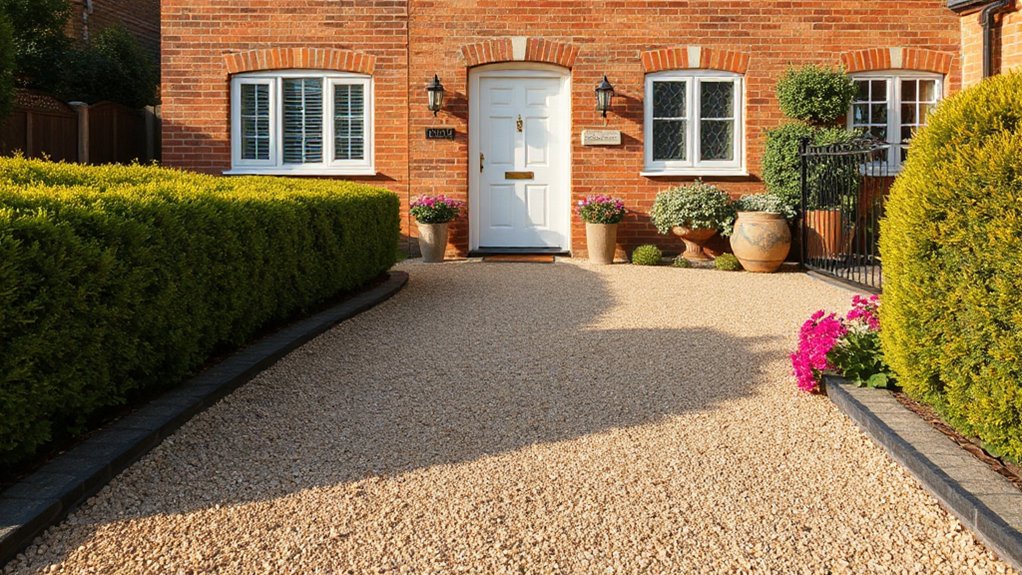
You’ll frame your approach around a welcoming driveway with clean lines, durable materials, and warm lighting that invites entry.
Consider pathway flow that guides guests naturally while prioritizing safety with clear sightlines and non-slip textures.
Balance aesthetics and function by selecting cohesive materials and subtle contrasts that enhance curb appeal without clutter.
Welcoming Driveway Aesthetics
A welcoming driveway sets the tone before anyone steps inside, so start with a clear, inviting path that guides visitors smoothly to the door. You’ll craft curb appeal by pairing texture, color, and scale, making the approach feel intentional and warm. Consider the rhythm of materials, passages between lawn and paved surfaces, and the balance of shade and sun along the route. Practical choices create lasting impact without clutter.
- Choose driveway materials that complement the home’s style and landscape, using consistent edging for clean lines.
- Integrate garden lighting to highlight key features, improve safety, and extend usability after dark.
- Select a paving pattern that suits traffic flow, reducing maintenance while preserving visual harmony with surrounding planting.
Focus on durability, ease of maintenance, and a welcoming silhouette that invites entry.
Pathway Flow And Safety
Flow guides people naturally from the curb to the door, so design with a clear, legible path that respects traffic patterns and sightlines. You prioritize smooth progressions that minimize trip hazards and awkward angles.
Use compact, non-slip materials with a gentle grade, and keep surfaces free of loose gravel or debris to reduce slips in wet weather.
Position curves and turns to align with gateways and siting, guiding visitors toward the entrance without confusion.
Choose garden furniture thoughtfully—benches or compact seating shouldn’t encroach on the walkway, preserving clearance.
Plan plant selection to frame the route without obstructing visibility or drainage.
Regular maintenance, including edging and weed control, sustains safety and appeal while preserving a welcoming, functional approach to your home.
Garden Tidy-Ups That Boost Perceived Value
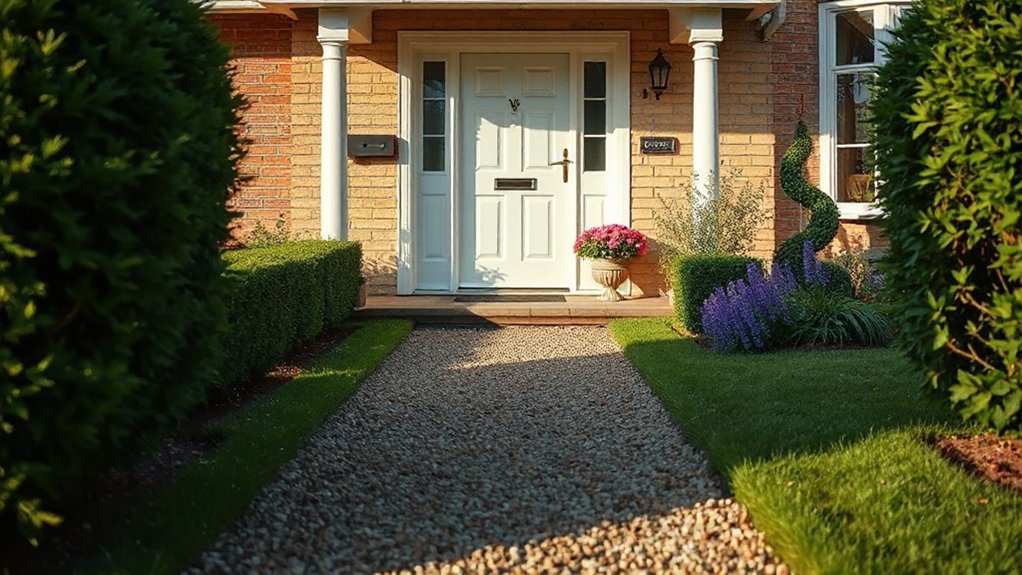
You’ll start by checking garden temperature cues, keeping beds tidy and soil edges crisp to signal ongoing care.
Refresh the look with fresh mulch, clearly defined mulch zones, and clean, even layering that reads as intentional design.
Guarantee pathways are clear and inviting, with unobstructed sightlines that enhance overall appeal.
Tidy Garden Temperature
A tidy garden temperature starts with clean, uncluttered borders and evenly mowed turf, since visible order sets a perceived value before anyone steps foot on the lawn. You’ll control microclimates by spacing large plants, choosing container placements, and rotating color so heat and shade zones feel intentional, not accidental.
- Align garden lighting with walkways and seating to extend usable hours and guide attention to focal plant selections.
- Select plant combinations that mature at different times, cooling hot spots with foliage density and reflective surfaces.
- Position airflow-friendly shrubs to buffer wind, while accenting with evergreens for year-round structure and consistent perception of care.
Fresh Mulch and Mulch
Fresh mulch instantly sharpens the garden’s look and improves immediate value by creating a uniform base that hides weeds and suppresses surface moisture. You’ll notice how a fresh layer ties beds together and signals care right away.
Choose mulch that complements your plant palette and house exterior for cohesive curb appeal. In practice, apply 2–3 inches evenly, keeping mulch a few inches away from stems to prevent rot.
Focus on plant integration, selecting textures and colors that echo neighboring foliage and hardscape. Use mulch to create subtle gradual changes between borders, enhancing landscape layering without overpowering focal plants.
Regular top-ups maintain clean lines and moisture control, especially during dry spells. This tidy foundation supports stronger, more confident first impressions from buyers.
Clear Pathways Appeal
Clear pathways instantly boost perceived value by signaling a well-kept yard from curb to doorstep. You tighten the visual loop with clean edges, smooth surfaces, and consistent scale that invites entry without friction. Pathway quality sets first impressions before you even speak, so your attention should focus on durability, safety, and flow.
Use materials that align with landscaping trends and eco-friendly options. Then, integrate lighting and edging to guide the eye. Keep the route unobstructed, parking clear, and transitions gentle from drive to door.
- Choose cohesive materials that echo your garden’s palette and prioritize non-slip finishes.
- Install lighting at intervals to extend usability and highlight focal plants.
- Ensure drainage and maintenance access are simple for ongoing care.
Lighting That Sells After Dark
Three quick tweaks set the tone after dark: guarantee your path lighting is bright enough to guide footsteps, curb appeal shines from multiple angles, and shadows are controlled to reveal the home’s best features.
You’ll use garden lighting to create depth, texture, and warmth without glare. Position pathway illumination along the easiest route, with low-profile fixtures that blend into the landscape while highlighting key architectural details. Aim for a consistent brightness level, blending warm white tones to avoid harsh contrasts.
Install subtle uplights to sculpt trees and the façade, and mount step lights to prevent missteps on entry stairs. Use timers or smart controls to cycle lighting, ensuring appeal remains visible for showings.
Keep cables discreet and weatherproof for reliable, year-round impact.
Exterior Framing: Windows, Boundaries, and Sightlines
You’ll start by aligning the framed window openings for clean sightlines and balanced exterior rhythms. Make boundary line visibility crisp so edges read clearly from the curb, guiding the eye along the façade.
Consider how sightlines frame the landscape and adjacent spaces to reinforce cohesion between indoors and out.
Framed Window Alignment
1) Aim for matching sightline height with adjacent openings to improve perceived symmetry.
2) Guarantee window casings are plumb and flush with the siding for a seamless shift.
3) Maintain uniform gaps around the frame to support framed window durability and weather resistance.
Boundary Line Visibility
Use consistent materials and colors to reinforce boundary perception without shouting. Low hedges, timber screens, or a subtle picket line can define space while preserving openness. Consider sightlines from key approaches—driveway, front door, and windows—to balance privacy with invitation.
Boundary enhancement relies on precise line work, aligned fencing, and thoughtful scale progression between front yard and facade. When boundary lines read clearly, your exterior reads organized, disciplined, and appealing. Boundary visibility supports cohesive design and faster buyer engagement.
UK-Friendly Color Schemes That Boost Curb Appeal
Curious how color can quietly raise curb appeal, especially in UK streets where weather and materials shape every choice? You’ll choose UK-friendly palettes that stay fresh longer, balancing mood with practicality. Consider color psychology to set curb tone—soft neutrals with a contrasting door can signal approachability and warmth, while muted greens echo gardens and reduce contrast glare.
Prioritise paint durability by selecting breathable finishes and high‑washable, UV‑resistant coatings for damp climates. Test trims and walls in daylight before committing, ensuring steps and paths remain legible.
- Neutrals with a bold front door to anchor the facade
- Muted greens or blues that compliment garden borders and natural textures
- Durable, washable finishes that resist UK weather and aging
House Numbers and Plaques That Make the First Impression
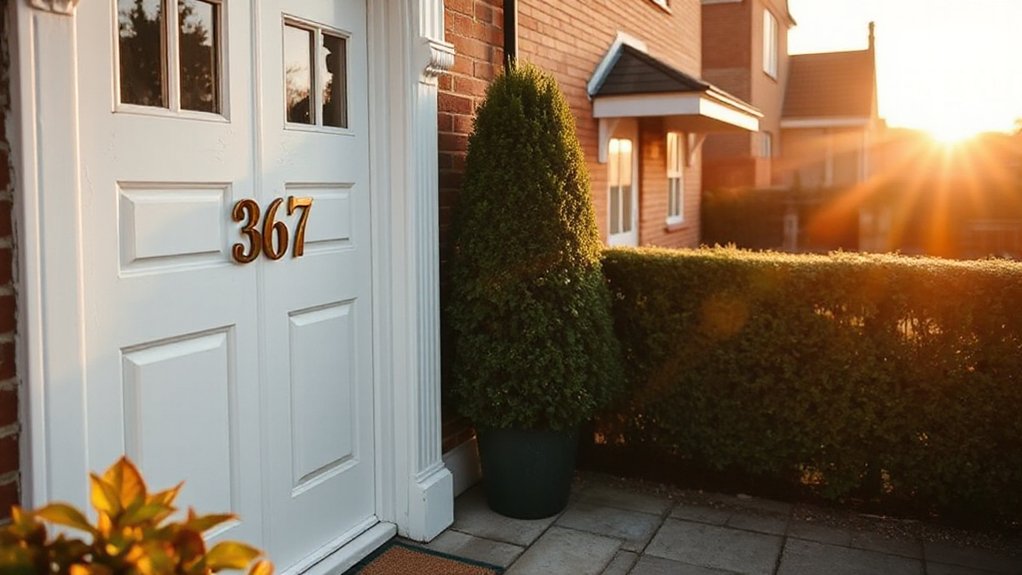
House numbers and plaques are small details that can drastically shape first impressions, so pick elements that read clearly from the curb and at a distance. You’ll boost curb appeal by choosing high-contrast numerals, weatherproof materials, and legible fonts sized for street visibility.
Position numbers above eye level yet visible from the footpath, avoiding shadows from overhanging branches. Match plaque finishes to your door hardware and exterior trim for cohesion, and confirm the style reflects your home’s character—modern, traditional, or cottage.
Garden lighting enhances nighttime legibility and adds warmth, so install low, warm LEDs that highlight the number without glare. Consider window treatments that frame the entry, directing attention toward the address.
Keep descriptors minimal; clarity wins over novelty in creating a confident first impression.
Fences, Gates, and Boundary Maintenance
A well-maintained fence, gate, and boundary line do more than mark property edges—they frame your home and set the tone for curb appeal. You’ll gain curb-side cohesion when you check alignment, repaint worn finishes, and repair posts before problems escalate. Focus on durability and function, so warranty and long-term upkeep stay simple. Consistent maintenance preserves value, resists weather, and supports security without shouting excess.
- Inspect for rot, rust, and loose fasteners; address early to uphold fence durability.
- Choose a gate design that complements architecture, opens smoothly, and uses weatherproof hardware.
- Reclaim boundary lines with fresh paint or stain and ensure clear sightlines for driveways and sidewalks.
Year-Round Seasonal Staging Ideas for Kerb Appeal
Year-round curb appeal hinges on smart, seasonal staging that stays practical and low-maintenance. You’ll plan focal points that adapt with the seasons, using compact, weather-friendly containers and a cohesive palette.
For spring, seasonal plantings deliver instant impact; choose bloom timing that extends from late winter to early summer, and pair with evergreen accents for continuity.
In summer, emphasize structure—planters with drought-tolerant mixes and a simple mulch bed to reduce upkeep.
Autumn requires color without clutter; swap in hardy mums, grasses, and weather resistant materials like metal or stone to resist rain and wind.
Winter design leans on texture: weathered wood, stone, and evergreens arranged to read well from the curb.
Keep lighting low-profile, consistent, and energy-efficient for year-round legibility.
Seasonal Maintenance Checklist to Stay Sale-Ready

To stay sale-ready, implement a seasonal maintenance checklist that focuses on curb presence, structural cleanliness, and durable, low-maintenance upgrades. You’ll protect appeal year-round by targeting key touchpoints and practical improvements that buyers notice first.
- Seasonal planting and lawn care: refresh borders with color, mulch, and drought-tolerant options. Schedule lawn aeration to improve drainage and root health.
- Exterior upkeep: power-wash siding, clean gutters, reseal any cracked paths. Tighten fixtures and replace weathered hardware for a crisp first impression.
- Low-maintenance upgrades: install durable signage, add low-height lighting, and select hardy, easy-care plants to sustain curb appeal with minimal effort.
Budget Guide: Curb Appeal Cost vs Impact
Smart budgeting starts by separating high-impact improvements from low-yield tweaks, so you invest where buyers notice most without overspending.
In curb appeal, target actions with visible payoff: tidy borders, fresh paint on front door, and lighting that highlights architecture. Compare costs against perceived value; prioritize items you can complete quickly with durable results.
Landscaping trends influence perception, so choose low-water, high-contrast plantings that look deliberate year-round. Use eco-friendly materials for planters, mulch, and hardscape accents to extend life without frequent replacement.
Keep a running estimate: deliverable list, unit prices, installation time, and return potential. Clip resources from reputable suppliers, and time purchases to seasonal discounts.
Remember: small, cohesive updates often surpass sporadic splurges when buyers judge the overall presentation.
Measuring Impact: Quick Metrics to Lift Value
You’ll start by identifying quick metrics that reflect value gains from your kerb appeal tweaks.
Track observable increments, like time-on-street interest, inquiry-to-visit ratios, and any boosts in perceived quality from passerby feedback.
Use clear targets and short review intervals to keep the discussion focused on practical, design-forward improvements.
Quick Metrics For Impact
Ever wonder which numbers actually reveal value when you’re sprucing up curb appeal? Quick metrics cut through guesswork, letting you measure impact without slowing progress. You’ll track small, actionable signals that correlate with faster offers and higher perceived value.
Focus on visuals, flow, and finish quality to keep the data meaningful and actionable.
1) Front façade read — assessor notes, photo ratings, and the proportion of first impressions that mention curb appeal.
2) Space harmony score — balance between path width, garden art, and outdoor furniture, plus perceived usability from a snap poll.
3) Maintenance cadence — frequency of maintenance visits, seasonal refreshes, and consistency of outdoor detailing.
Key terms to guide decisions: garden art, outdoor furniture.
Track Value Increments
Start with landscape design tweaks that nudge curb appeal without overhauling the home. Note how a refreshed path, edging, and focal plantings correlate with faster showings and slightly higher offers.
Next, compare exterior materials improvements—new cladding, coating, or porch finishes—to shifts in interest and price expectations.
Keep a running dashboard: pre- and post-update metrics, plus qualitative notes from agents. By isolating changes and timing them with market cycles, you’ll isolate value drivers and validate investments efficiently.
This disciplined approach sustains momentum without over-designing.
Real-World Before-and-After Principles for UK Homes
1) Start with daylight and access improvements, then refine planting choices to echo the home’s architecture.
2) Choose durable finishes and sustainable swaps that age gracefully, tracking maintenance needs.
3) Align texture, color, and form across hardscape and softscape for a unified, enduring first impression.
Frequently Asked Questions
How Long Does a Kerb Appeal Refresh Typically Take?
A kerb appeal refresh typically takes a day or two, depending on scope. You’ll plan garden landscaping and exterior lighting tweaks, source materials, and complete setup. You’ll wrap up with a quick clean, tidy, and final walkthrough.
What Trends Most Influence UK Home Buyers Now?
Spiked collars, you’ll notice, aren’t trending; instead, buyers prioritize front yard landscaping and exterior lighting. You personalize scale, texture, and warmth, prioritizing curb rhythms, path clarity, and energy-efficient fixtures for instant, practical visual impact.
Are There Quick-Win Upgrades With the Best ROI?
Yes—quick wins with top ROI include Garden landscaping and Exterior lighting. You’ll boost curb appeal fast by adding tidy beds, mulch, and low-voltage lights, creating inviting paths, improved contrast, and a safer, more welcoming façade for buyers.
Can Small Changes Impact Perceived Value Significantly?
A recent study shows homes with well-kept exteriors sell up to 7% faster. You can boost curbside charm by upgrading lighting and trim, enhancing exterior aesthetics, and creating cohesive, inviting sightlines that perceptually raise value for visitors.
Do Professional Consultations Exceed DIY Costs?
Professional assessment often costs more up front, but you gain targeted guidance, saving missteps. DIY affordability helps you test ideas first; weigh professional insights against budget, then decide if expert input improves curb appeal and sale speed.
Conclusion
You’ve got the blueprint for curb appeal that sells: quick wins, budget-minded tweaks, and a path to real impact. Focus on doors, trims, driveways, and tidy gardens, then seasonally maintain so your exterior stays sale-ready. Track cost versus perceived value and watch the numbers tilt in your favor. Think of your home as a well-kept invitation—open it, and buyers walk in with confidence. With consistent polish, your curb appeal becomes the banner that draws them in.