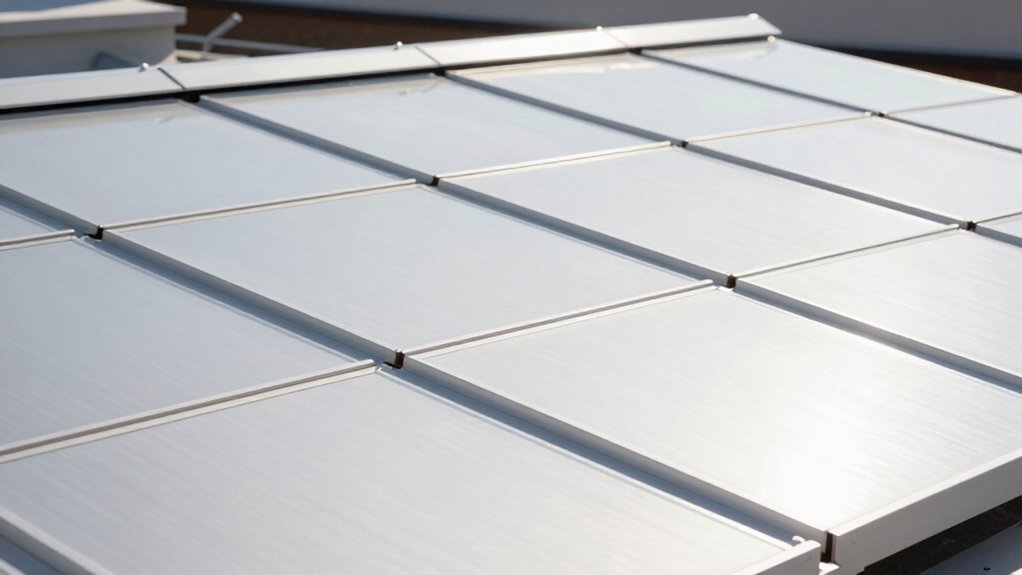
Solar reflective roof paint uses special pigments and coatings to reflect sunlight, reduce heat absorption, and lower roof surface temperatures. It relies on high albedo and infrared emissivity to reject heat, helping cut cooling loads and energy costs. Application requires proper surface prep, compatible materials, and controlled conditions for durability. Over time, performance depends on UV resistance, dirt shedding, and weathering. If you keep going, you’ll uncover how to measure reflectance, choose the right product, and optimize long‑term performance.
How Solar Reflective Roof Paint Works: Materials, Albedo, and Heat Rejection
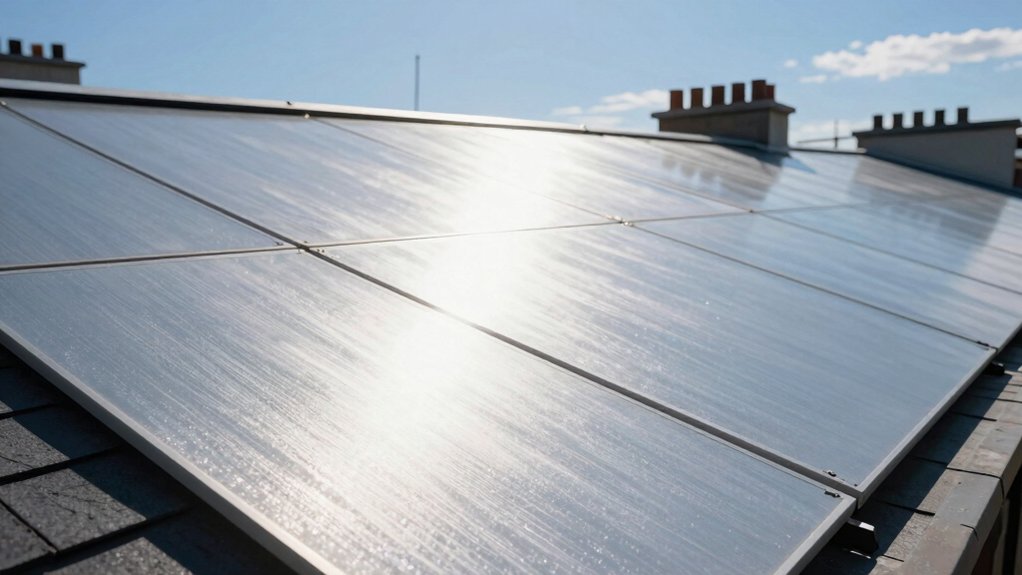
Solar reflective roof paint works by incorporating pigments and additives that reflect a large portion of solar radiation while minimizing heat absorption. You’ll study how the coating’s albedo and infrared-emissivity properties govern heat rejection from the surface, reducing the heat flux entering the building envelope.
The primary materials include reflective pigments, binders, and functional additives that enhance durability and weather resistance without sacrificing reflectivity. Albedo dictates how much solar energy is reflected rather than absorbed; higher albedo yields lower surface temperatures.
Thermal insulation continues to play a complementary role, limiting heat transfer through the roof structure. Energy savings arise from lower cooling loads, enabling smaller HVAC capacity or longer runtime efficiency.
Precision in formulation guarantees stability, longevity, and predictable performance under environmental exposure.
Solar Reflectivity vs. Traditional Roof Paint: A Practical Comparison
Although solar reflective coatings often deliver lower surface temperatures than traditional roof paints, the practical difference hinges on albedo, emissivity, and long-term performance under weathering.
In real-world use, you’ll compare reflectivity stability, color longevity, and upkeep needs to judge effectiveness beyond initial temps.
- Color options: solar reflective coatings come in a limited yet usable range, affecting curb appeal and integration with building aesthetics.
- Cost comparison: upfront material costs vary, but lifecycle costs matter, including potential energy savings and recoat frequency.
- Performance consistency: long-term weathering, dirt shedding, and UV resistance determine sustained reflectivity and ROI.
How to Measure Solar Reflectance and Read Albedo Ratings
To assess solar performance, you’ll measure surface solar reflectance using standardized tests and instrumentation.
Then, translate those values into albedo ratings.
We’ll outline step-by-step methods to guarantee consistent comparisons across materials and environments.
This discussion starts with defining measurement techniques and rating scales you’ll use to interpret albedo data accurately.
Measuring Solar Reflectance
Measuring solar reflectance is essential to evaluating a roof’s albedo, since precise readings dictate performance comparisons and compliance with efficiency standards. You’ll rely on standardized methods to ensure repeatable results, avoiding guesswork. When you measure, focus on surface texture, cleanliness, and wavelength-based reflectance to interpret albedo correctly.
The goal is consistency across samples and conditions, so you can compare products fairly.
- Use calibrated instruments and follow industry protocols to obtain objective values.
- Account for measurement angles and environmental factors that influence readings.
- Correlate reflectance data with practical outcomes, like solar heat gain and energy savings, while considering solar panel integration and architectural aesthetics.
Reading Albedo Ratings
So, how do you read albedo ratings accurately and efficiently? Albedo ratings quantify solar reflectance as a decimal or percentage, and you’ll compare values across paints, membranes, and coatings. Use standardized tests—ASTM/EGAR methods or regional equivalents—as benchmarks to guarantee consistency.
Read the rating as a percentage of reflected sunlight; higher values mean less absorbed heat. Check measurement conditions: wavelength range, surface texture, and application thickness can shift results, so verify the cited substrate.
When evaluating urban heat implications, prioritize coatings with sustained high reflectance under real-world conditions, not just initial numbers. For energy savings, focus on products that maintain reflectance in hot weather, resist soiling, and weathering.
Document the rated value for decision-making and track performance over time.
Choosing the Right Reflective Roof Paint for Your Roof Type and Climate
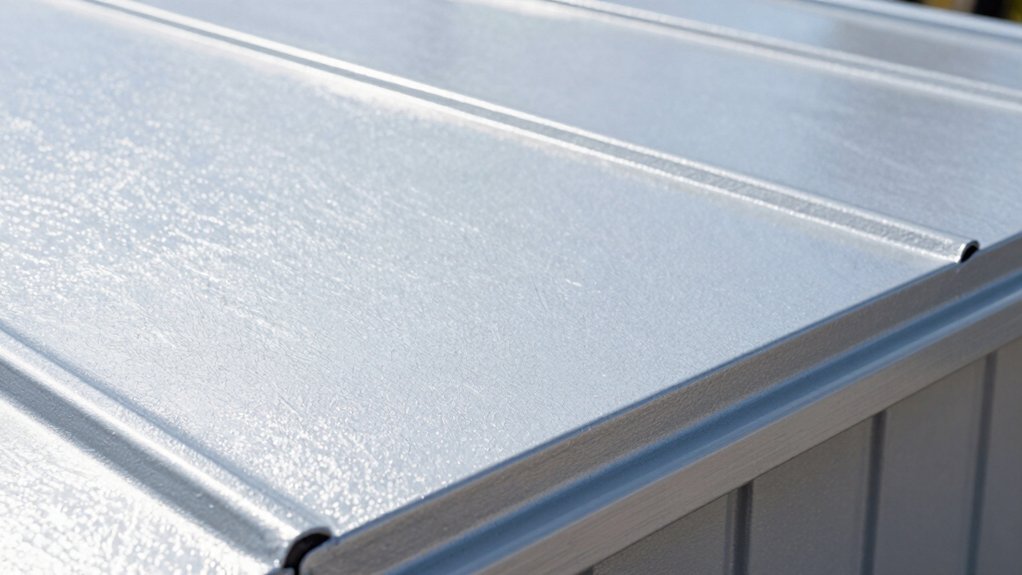
Choosing the right reflective roof paint hinges on climate impact, compatible roof materials, and expected durability with warranty terms.
You’ll assess how local temperatures, humidity, and UV exposure influence coating performance and longevity across roof types.
This focused approach guarantees you select a product that delivers sustained solar reflectance, material compatibility, and dependable coverage under warranty.
Climate Impact Factors
To choose the right reflective roof paint, you must consider how climate factors interact with your roof type to affect heat gain, cooling load, and long-term performance. Climate impact factors influence coating selection, durability, and efficiency projections.
You weigh solar reflectance, emissivity, and temperature-dependent performance against local conditions to forecast energy savings and material life. Urban heat islands and greenhouse gas reduction are central metrics for evaluating benefit.
Choose formulations that maintain high reflectivity across seasonal temperature swings and precipitation patterns.
- Assess local climate data (temperature ranges, humidity, solar intensity) to estimate long-term performance.
- Match paint chemistry to roof substrate and weather exposure for durability and sustained reflectivity.
- Model energy savings and emission reductions to justify lifecycle costs and environmental impact.
Roof Material Compatibility
Do you know how roof material influences the performance of reflective paints under varying climates? Roof material compatibility governs adherence, thermal expansion, and coating longevity, so you select formulations compatible with concrete, metal, asphalt, or clay tiles.
Each substrate has unique surface chemistry, porosity, and moisture dynamics that affect paint adhesion and durability. In metal roofs, for example, you’ll prioritize primers and elastomeric films that resist corrosion and temperature cycling.
Concrete and masonry demand breathable, moisture-tolerant systems to prevent blistering. Asphalt shingles require compatibility with bituminous sealants and UV-stable topcoats to avoid embrittlement.
Always verify manufacturer’s guidelines for substrate readiness, surface cleanliness, and cure times. Proper assessment minimizes failure modes, ensures consistent solar reflectance, and preserves roof aesthetics.
Durability And Warranty
Durability and warranty considerations directly drive long-term performance when selecting reflective roof paint for your roof type and climate. You’ll assess film integrity, UV resistance, and substrate compatibility to forecast lifespan and maintenance intervals.
Warranty terms hinge on substrate preparation, application conditions, and adherence to product data sheets, not just nominal color. Expect better color retention and reduced color fading when you choose paints with proven UV resistance and appropriate fluoropolymer or acrylic systems for your roof material.
Environmental exposure and traffic (foot or ladder) influence longevity, so verify impact resistance and cleaning requirements before purchase.
- UV resistance ratings and warranty alignment
- Color fading expectations under climate and debris exposure
- Surface prep, application conditions, and substrate compatibility requirements
Step-by-Step Installation: Preparation, Application, and Safety
Preparing for installation starts with a clear plan: inspect the roof, gather the proper tools, and wear appropriate PPE before you begin. You’ll verify surface condition, remove loose debris, and repair any defects to ensure adhesion.
Set up containment to protect surroundings and create a clean work zone. When you prepare the coating, check the paint chemical composition and ensure the batch matches the specification for your project. Mask edges, cover immovable fixtures, and protect vegetation.
Apply the product in recommended temperatures and humidity, using correct rollers or sprayers, with even, cross-pattern coats. Maintain ventilation and observe curing times between coats.
Document application parameters and environmental impact considerations for compliance, safety, and performance tracking. Clean tools promptly, store material per instructions, and dispose of waste according to local regulations.
Maintenance and Verification: Keeping Reflectivity High Over Time
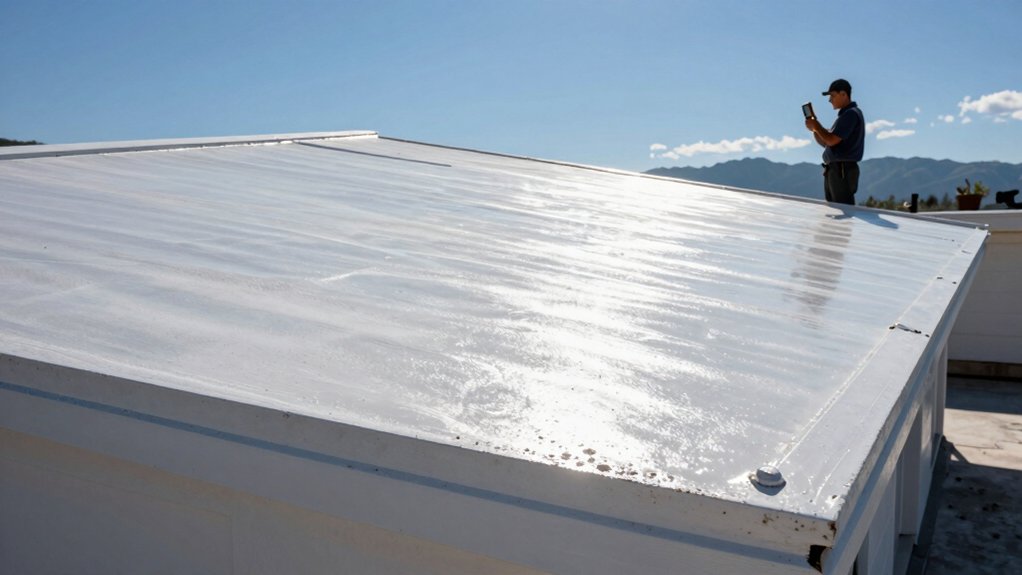
Maintaining high solar reflectivity requires ongoing inspection, timely cleaning, and periodic re-evaluation of coating performance. You’ll verify surface uniformity, note any discoloration, and track reflectivity metrics to ensure sustained benefits. Early detection of subtle UV damage helps you act before efficiency declines. Focus on UV resistance and color fading as primary indicators of aging, not just appearance. Document measurements, cleaning intervals, and recoat schedules to maintain a data trail for verification.
- Schedule periodic reflectivity tests and UV resistance checks, recording results for trend analysis.
- Clean surfaces to remove dirt, algae, and particulates that lower reflectivity without abrading the coating.
- Reassess coating integrity and plan reapplication if color fading or film degradation reduces performance.
Troubleshooting and Next Steps: When to Recoat, What to Watch For
When you start deciding whether to recoat, focus on visible signs of performance shift and measurable changes in coating behavior. You’ll assess adhesion, gloss loss, color fade, and surface chalking, noting any accelerated dirt pickup or coating degradation.
Track coating frequency and inspect for pooling, cracking, or peeling. Document dry film thickness if available, and compare against original specifications or manufacturer guidance.
Weather effects matter: intense sun, cycles of freezing and thawing, windborne particulates, and humidity can accelerate aging.
Consider the roof’s slope and drainage, which influence moisture retention and wash-off efficiency.
If performance drops beyond acceptable thresholds, plan a recoat window that minimizes downtime and ensures proper surface preparation.
Prioritize compatibility with existing layers, cleaning routines, and the local climate to sustain reflectivity long term.
Conclusion
Solar reflective roof paint reduces heat gain by reflecting a higher portion of solar radiation, lowering cooling loads and potentially saving energy costs. An interesting stat: roofs with high-albedo coatings can cut urban heat by 1–2°C and lower surrounding air temperatures modestly. You’ll want to verify albedo ratings, compatibility with your roof type, and proper application to maintain performance. Regular inspections and timely reapplications keep reflectivity elevated, ensuring long-term energy savings and roof longevity.