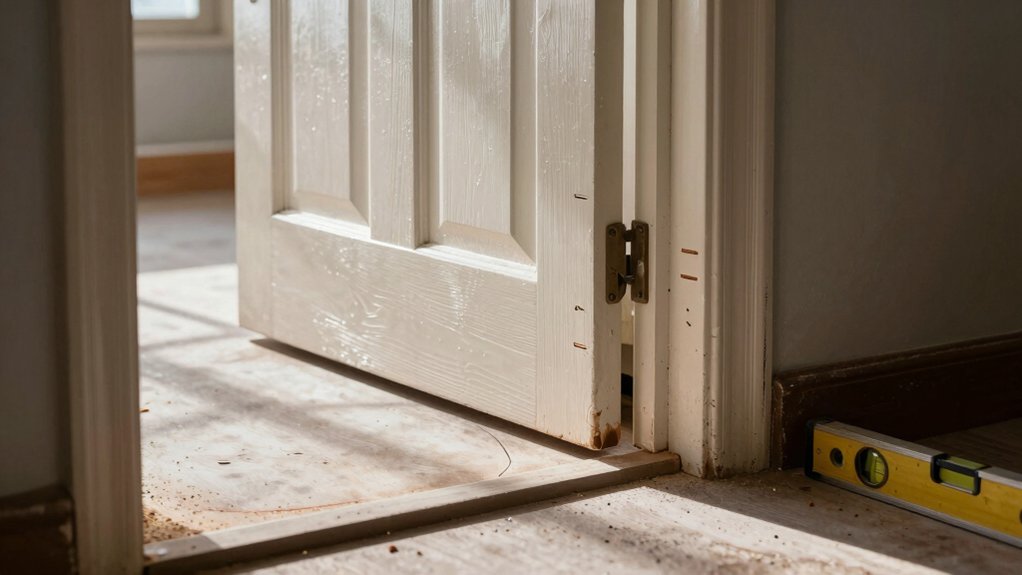
Humidity or settling can push your door out of square, causing sticking. First, check for loose screws, misaligned strike plates, and swollen edges, then tighten or reseat hardware. If the door binds, identify high spots and shave them with a sharp plane or sanding block. Secure hinges, add shims if needed, and align the latch plate. Apply light lubrication and avoid over-tightening weatherstripping. If issues persist, a pro may be necessary, and you’ll discover more steps ahead.
Is Humidity or Settling Causing the Stick?
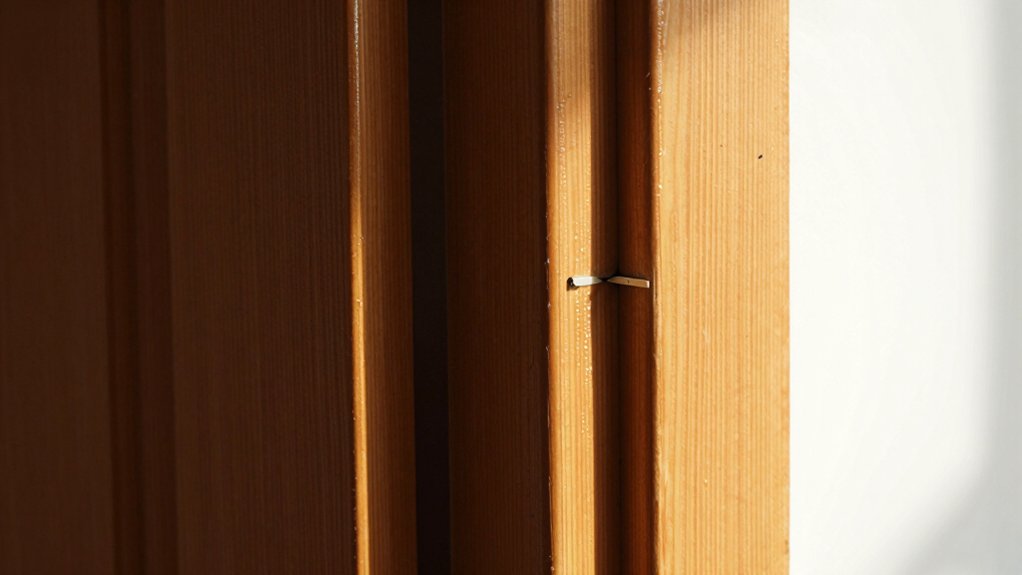
Humidity and settling can both cause a door to stick, but they affect things differently. You determine root cause by observing seasonality and movement cues.
If humidity drives the issue, expect minimal frame damage and prominent wood behavior: wood expansion, swelling at edges, and a door that rubs when humidity rises.
If the door sticks more in dry conditions, look for foundation settlement clues: cracks in walls, doors that stick at the hinge side or top, and shifting gaps between frame and jamb.
Measure consistency over several days; adjust climate control to test reversibility.
Treat humidity-caused sticking with door sweeps and proper ventilation, while settlement-related sticking may require structural assessment.
Prioritize precise diagnosis to guide effective fixes.
Quick Checks to Free a Sticking Door Now
If you want fast results, start with quick checks you can do right now.
First, inspect the door hardware for loosened screws or misaligned strike plate; tighten screws and reseat the latch.
Next, inspect the door material for swollen edges or warps from humidity; wipe any moisture and check for binding along the jamb.
Test the door in several positions to locate the exact rubbing spot.
Lubricate the hinges with a light oil or graphite, not heavy grease that attracts dust.
If the knob binds, adjust the latch screws lightly.
Ensure the door sits flush in the frame and that weather stripping isn’t squeezing.
Remove visible obstruction, and re-test.
These steps are fast, effective, and non-invasive.
Planing Edges and Adjusting Hinges for Clearance
Ever wonder how small edge imperfections or loose hinges can keep a door from clearing the frame? Planing edges and adjusting hinges for clearance is direct work you can do in minutes.
First, inspect the door for high spots along the edge and identify which side rubs on the door frame. Use a sharp cabinet plane or sanding block to shave only the high areas, checking fit after each pass.
Then test hinge alignment: tighten screws, replace stripped ones, and shim if needed so the door sits plumb and square. Recheck clearance at top and bottom corners; avoid over-planing.
If the gap remains inconsistent, adjust the hinge leaf alignment slightly, ensuring the door closes without binding.
Finish with a light wipe to remove dust.
Shim, Weatherstrip, and Alignment for the Long Term
To guarantee long-term performance, you’ll shim, weatherstrip, and fine-tune alignment now so the door stays on track over time.
Begin with the door frame: ensure hinges are secured, then insert shims where gaps persist, checking plumb and square with a level.
Apply weatherstrip along the edge to seal drafts without binding the latch mechanism.
Test opening and closing as you adjust, removing or adding shims until the door moves smoothly without sticking.
Align the latch strike plate on the door frame so the latch engages cleanly every time.
Revisit gaps at the top, bottom, and sides, repeating shimming if needed.
Finish with a light lubrication of hinges, avoiding excess.
This long-term approach preserves operation and minimizes future settling.
When to Call a Pro or Consider Replacement Options
Deciding when to call a pro or replace the door comes down to condition, cost, and safety. If the frame or hinge hardware shows persistent misalignment after repairs, you’re better off consulting a pro. A seasoned carpenter can evaluate wood swelling, settling, and structural integrity, and can determine if replacement is the most economical fix over time.
Consider replacement if the door won’t latch, if excessive gaps expose you to drafts, or if ongoing maintenance becomes impractical. For minor issues, a pro might still handle expensive adjustments efficiently, saving you headaches.
If you opt to DIY, address door lock issues promptly to prevent security risks, and plan paint touch ups after any work to maintain a uniform finish and curb appeal. Prioritize reliability and safety over short-term savings.
Frequently Asked Questions
Can Humidity Changes Affect Interior Doors Differently From Exterior Doors?
Yes, humidity effects differ: interior doors experience milder humidity swings, while exterior doors face more extreme changes. Material expansion occurs with moisture, potentially warping frames or panels. You’ll notice tighter fits indoors and looser fits outdoors.
Will Door Swelling Recur After Humidity Drops or Settling Stabilizes?
Will door swelling recur after humidity drops or settling stabilizes? Yes, seasonal expansion and material warping can still occur if humidity swings return, so you’ll need ongoing prevention and monitoring to keep doors functioning smoothly.
Are Pests or Termite Damage a Hidden Cause of Sticking?
Yes, pest infestations or termite damage can cause sticking. Inspect for compromised framing, gnaw marks, and moisture signs; address infestations promptly, and seal gaps to prevent further damage, since termite damage weakens wood and misaligns door frames.
How Do Door Materials Influence Dimensional Shifts Over Seasons?
Door materials influence dimensional shifts: wood expansion varies with humidity, while engineered options offer better material stability. You’ll see seasonal gaps close or widen; choose wood with proper sealing and consider laminates to minimize wood expansion fluctuations.
What Maintenance Routine Prevents Future Sticking Issues From Recurring?
Keep a routine maintenance schedule: perform routine inspections and address gaps, hinges, and frame distortions promptly. Schedule seasonal adjustments before extreme weather, lubricate moving parts, and check alignment, weatherstripping, and door stop contacts to prevent future sticking.
Conclusion
You fix a sticking door the way you fix a stubborn habit: with honesty, persistence, and a little leverage. When humidity swells or home settles, you don’t surrender to the door’s mood; you trim, shim, and align until it behaves. If you can’t persuade it, call a pro—or replace the stubborn hinge with better options. The deeper joke: shelter isn’t static, but your approach can be—toned, pragmatic, and stubbornly useful. So, don’t blame the weather; adjust your method.