
As in a well-tended garden that whispers of hidden roots, your project can spike in cost when plans meet reality. You’ll face scope changes, unforeseen site constraints, and volatile material prices, all quietly nudging budgets upward. If you don’t build in disciplined governance, regular cost checks, and clear decision points, overruns become almost inevitable. There’s a practical path forward—one that anchors costs, documents scope, and flags risks early—but it demands your ongoing vigilance. Let’s outline how to start.
Common Causes of Budget Overruns in Garden Projects

Common causes of budget overruns in garden projects often hinge on underestimated scope, inaccurate cost estimates, and unrealized constraints. You’ll find that scope creep quietly expands as design options multiply and approvals lag, yet you don’t recalibrate the baseline.
Inaccurate estimates emerge from optimistic unit costs, seasonal price swings, and insufficient contingency, leaving you with offsetting gaps later. Unrealized constraints—soil quality, drainage, utility lines, and access—become visible only after procurement begins, forcing costly adjustments.
You must track every assumption: material specifications, delivery windows, and labor rates, then stress-test them against historical data. Risk indicators, such as variance between initial budgets and supplier quotes, should trigger early reviews.
Documented thresholds help you pause expansion, request revised bids, and preserve financial controls throughout implementation.
How to Set a Realistic Initial Budget
A realistic initial budget starts with a clear, data-driven foundation: quantify every major cost category, assign defensible unit costs, and build a contingency based on historical variance. You begin by listing line items for labor, materials, permits, equipment, and subcontractors, then attach sourced price points and sensible ranges.
Use documented bids, supplier catalogs, and past project invoices to anchor estimates, avoiding guesswork. Allocate a 10–20% contingency tied to each category, escalating where volatility exists. Attach a timeline view to align costs with phasing, ensuring cash flow sufficiency.
Regularly reconcile estimates with bid revisions and known constraints, and document all assumptions. Maintain version control, review with an independent reviewer, and adjust for risk exposure rather than desires, preserving cost discipline while preserving project integrity.
The Role of Scope Creep and How to Manage It
Scope creep often starts with unclear boundaries and evolving requests, so you’ll want to document each change trigger and its cost impact.
We’ll compare early cost estimates to actuals, flag discrepancies, and adjust budgets before they compound.
Scope Creep Causes
Effective management of scope creep starts with identifying its drivers early and measuring their potential impact on schedule and budget. You’ll see late-stage design changes, imprecise requirements, and vendor substitutions as primary drivers, each with distinct cost vectors.
Documented decision points, change requests, and approval trails quantify ripple effects on milestones, procurement lead times, and quality checks. You should monitor inflation, material shortages, and supply-chain volatility that elevate unit costs over time.
Ambiguity in acceptance criteria increases rework, while concurrent initiatives amplify resource contention and deadline pressure. Prioritize risks using a predefined scoring system that links likelihood to impact on critical path.
Establish baseline scopes, limit exception processes, and require formal rebaselining when thresholds exceed predefined tolerances. Maintain ongoing, transparent dashboards to flag deviation before it compounds.
Early Cost Estimates
Determining early cost estimates hinges on bounding scope creep before it manifests in late-stage changes; you quantify potential drivers, assign unit costs, and model their impact on schedule and procurement.
You build a structured baseline that links work breakdown elements to price tags, probability, and time. Track assumptions transparently, document contingencies, and separate fixed versus variable components to expose risk.
You use historical data from comparable garden reforms to calibrate ranges, not single-point figures, and you stress-test against best-, worst-, and most-likely scenarios. You incorporate inflation, lead times, and supplier reliability, then recombine into an integrated cost-at-risk figure.
You communicate uncertainty without alarming stakeholders, prioritizing traceability, auditable calculations, and decision-ready summaries that guide early procurement and contract strategies.
Boundary-Setting Tactics
Boundary-setting starts with a clear boundary between planned work and potential additions. You quantify scope with measurable milestones, documenting what’s in and out of scope to prevent drift.
You assign decision rights for changes, requiring written justification and impact estimates before approval.
You identify trigger events that signal scope creep, such as new feature requests or revised planting plans, and you establish a formal change-control process.
You forecast risks associated with scope changes, including cost overruns, schedule slips, and resource reallocation, then mitigate them with predefined buffers and contingency plans.
You track variance against baseline weekly, reporting variances in dollars and time.
You enforce discipline: no unapproved work, no informal shortcuts, and no late changes that undermine budget integrity.
Hidden Costs to Anticipate When Planning
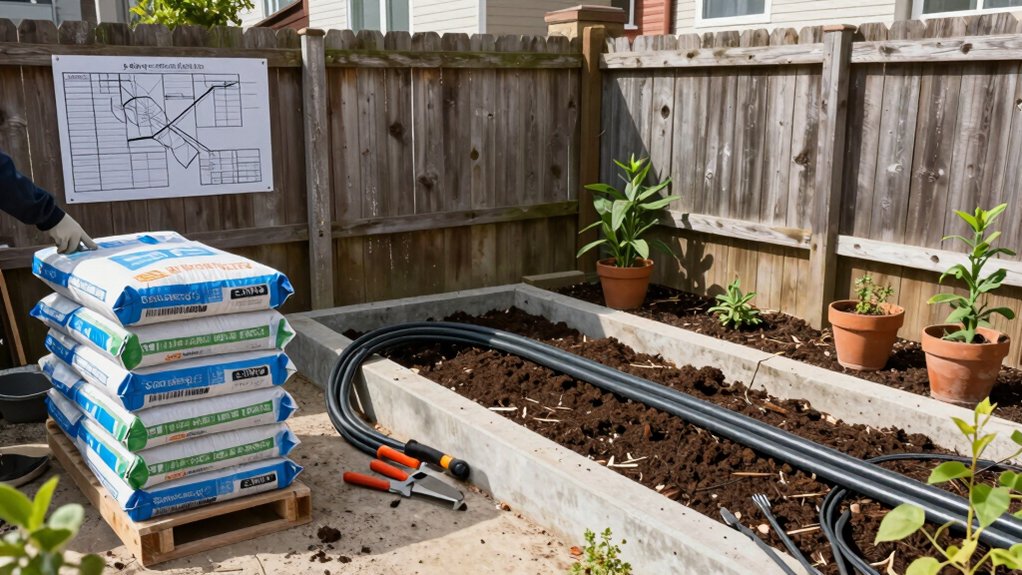
Hidden expense drivers can erode your budget if you don’t quantify them up front. You should map each driver to a likely cost range and build a planning margin to cover unexpected shifts.
Hidden Expense Drivers
Hidden cost drivers often emerge late in planning, so you should identify them early and quantify their impact. You’ll track categories like permits, contingencies, and supplier price volatility, then assign concrete ranges rather than vague estimates.
Start with a base scenario and stress-test it against worst-case driver movements to reveal exposure. For each driver, document probability, magnitude, and timing, so you can compare expected versus actual spend with a shared dashboard.
Expect auxiliary fees for site access, disposal, and equipment rentals to surface only after bids, so insert early market scans to pin these down.
Maintain a transparent risk register, updating it quarterly as prices shift and regulations evolve. Implement escalation clauses, predefined thresholds, and contingency splits to preserve the budget under uncertainty.
Planning Margin Gaps
Planning margin gaps arise once you map hidden costs against your base budget. You’ll quantify contingencies, permit delays, and schedule slippage to reveal where buffers truly belong. Start with a baseline for labor, materials, and permits, then add conservative error margins tied to historical variance.
You’ll identify mismatch risks between procurement lead times and on-site needs, ensuring long-lead items don’t stall progress. Consider seasonal spillovers, weather windows, and vendor price escalations; document each as a separate line item with a probability and impact score.
Build a dynamic reserve that adjusts as scope evolves, not a static cushion. Finally, stress-test the plan by simulating worst-case sequences, verifying that even under adverse conditions you maintain critical milestones and target ROI.
Maintain discipline, monitor deviations, and tighten controls promptly.
Step-by-Step Budget Tracking and Monitoring

Step-by-step budget tracking and monitoring starts with a clear baseline, so you can compare actual expenditures against planned costs in real time and quickly flag deviations. You establish a ledger that links each line item to a forecast, then log daily variances with timestamped notes.
Use a standardized format: purchase date, vendor, item, budgeted amount, actual amount, and difference. Reconcile receipts weekly and lock irreconcilable entries after verification. Implement threshold alerts—e.g., deviations beyond 5% trigger reviews, while 10% prompt corrective action.
Maintain versioned budgets to capture approved changes, ensuring traceability. Forecasts should be updated monthly using recent data, reflecting price shifts or scope amendments.
Document decisions, responsibilities, and escalation steps to minimize surprises and support auditable, data-driven governance.
Contingency Planning: When to Use It and How Much
Contingency planning builds on your tracked budget data by outlining when to activate backup resources and how much reserve to hold. You assess project-critical activities, identify uncertainty drivers, and quantify potential cost impacts using historical variance and confidence intervals.
Establish trigger thresholds that prompt pre-approved reallocation, rather than ad hoc approvals, ensuring quick, evidence-based responses. Define reserve categories: fixed contingency for known risks, contingent for emerging risks, and management reserve for unknowns, each with explicit funding limits and governance.
Regularly update probabilities as new data arrive, and rehearse response scenarios to validate timing and feasibility. Document decision criteria, ownership, and communication protocols so you avoid sudden scope creep and cascading overruns.
Your discipline reduces surprises, maintains accountability, and preserves the original reform intent.
Practical Strategies to Stay on Track Without Sacrificing Vision
To stay on track without sacrificing vision, anchor your actions in measurable milestones and disciplined governance that balance objectives with reality checks. Begin with a clear dashboard: monthly progress, budget burn, and risk flags, not vague promises. Use data-backed baselines; document assumptions and validate them quarterly.
Prioritize high-impact, low-variance tasks that advance core reform goals while preserving flexibility for course corrections. Implement stage gates: require sign-offs before spending beyond approved thresholds, and pause projects when variances exceed predefined tolerances.
Maintain transparent reporting to stakeholders, including owners and lenders, to deter scope creep. Build contingency buffers into schedules, not as afterthoughts, and reallocate resources only after dotted-line reviews.
Finally, conduct post-action reviews to extract lessons, tighten governance, and preserve the original vision with disciplined realism.
Frequently Asked Questions
How Can I Measure Garden Project Value Beyond Cost?
To measure garden project value beyond cost, you examine impact metrics: biodiversity increases, water savings, yield per square foot, energy use reductions, maintenance time, and user satisfaction. Track baselines, set targets, quantify risks, and compare alternatives with sensitivity analyses.
What Small Changes Yield Big Budget Savings Early?
Start small, you’ll save big: prune expensive upgrades, batch purchases, and reuse materials. You’ll track ROI per tweak, avoid overruns, and document risks; early wins compound, preserving budget with disciplined, data-driven decisions you monitor closely.
How Do Seasonal Costs Affect Long-Term Budgeting?
Seasonal costs shift annual cash flow, so you’ll experience peaks in spring and fall. You should forecast quarterly, build buffers for weather delays, and reallocate funds as seasons move, ensuring long-term budgets stay aligned with fluctuating maintenance needs.
What Trade-Offs Are Acceptable to Avoid Overruns?
Ironically, you should accept trade-offs: trim scope, favor proven options, and stage purchases. You’ll mitigate overruns by tracking real costs, allocating buffers, and prioritizing essential features with risk-adjusted timelines you can actually defend against.
When Should I Renegotiate Prices With Suppliers?
You should renegotiate prices when your supplier’s costs materially shift or you’re committing to long lead times; review quarterly, compare market data, quantify risk, and request updated price ladders before renewals to lock favorable, sustainable terms.