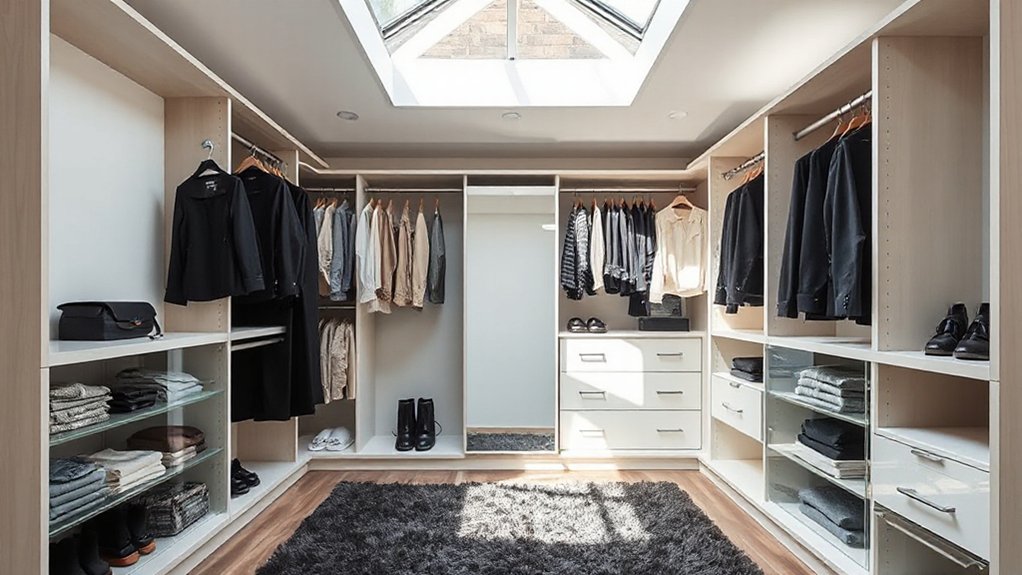
Maximize every inch with smart shelving that’s modular and adjustable, so you get depth and easy access without clutter. Opt for dual-purpose furniture, like storage beds or wall-mounted desks, to reclaim floor space. Layer lighting with ceiling, task, and under-shelf LEDs to keep the area open. Choose light colors, glass-front bins, and floating shelves to extend sightlines. Create defined zones for daily wear and accessories, and try budget-friendly DIY upgrades—you’ll see how much more you can fit and enjoy.
Maximize Space With Smart Shelving for Small Walk-In Closets
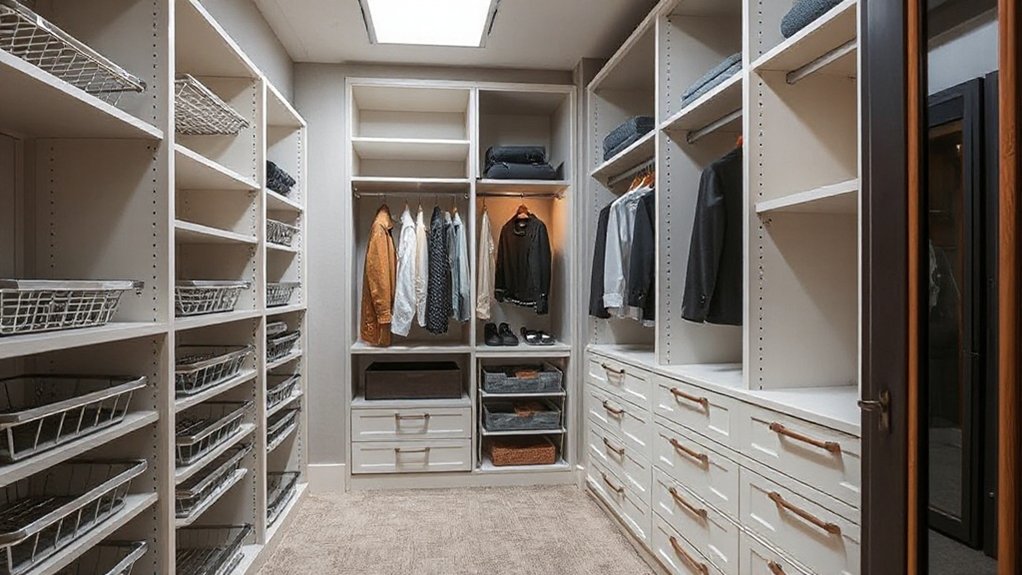
Maximizing space in a small walk-in closet starts with smart shelving. You’ll prioritize modular systems that fit your dimensions and daily routines.
Start with adjustable, high-density shelves to maximize depth without crowding. Use open, breathable materials to keep items visible and accessible.
Incorporate custom closet doors that slide or bi-fold to save surface area while concealing clutter.
For clothing, install hanging storage solutions at multiple heights to double your vertical space, plus a hanging rod for longer items and a shorter rod for shirts and sweaters.
Add slim pull-out drawers for accessories and folded basics. Label boxes or bins for quick retrieval.
Keep rarely used items on the top, frequently accessed pieces within easy reach, and maintain a clean, streamlined silhouette.
Free Floor Space With Dual-Purpose Furniture
Free floor space is the backbone of a functional small walk-in, and dual-purpose furniture makes every square foot count. Start with a bed or ottoman that opens for storage, so you reclaim floor area without separate bins. Choose wall-anchored pieces that double as desks, benches, or dressers to keep walkways clear.
When selecting multi purpose furniture, prioritize slim profiles, rounded edges, and integrated hardware to reduce clutter and snags. Use space saving storage inside furniture, like pull-out bins, hidden compartments, and tiered organizers, so you don’t lose reach or accessibility.
Opt for modular units you can reconfigure as needs shift, preserving floor space as your wardrobe grows. By prioritizing dual-function designs, you maintain a roomy feel without sacrificing function or style.
Light Up the Closet: Lighting Tips for a More Open Feel
Good lighting can instantly expand a small walk-in, so start with layered illumination that covers ceiling, task, and accent needs.
For ceiling light, choose a slim recessed or flush-mount fixture to reduce visual bulk.
Add task lighting along hanging rods or shelves so you can see fabric colors and details without squinting.
Use LED strip lighting under shelves or inside drawers for a clean glow that won’t clutter your sightlines.
Balance brightness with dimmers to shift mood and function as you change outfits.
Let natural window light heighten daytime views, but supplement with cool-white LEDs to maintain accurate color in the evening.
Keep cords hidden and fixtures minimal to preserve a sense of space and flow.
Color and Material Choices That Make a Small Closet Read Bigger
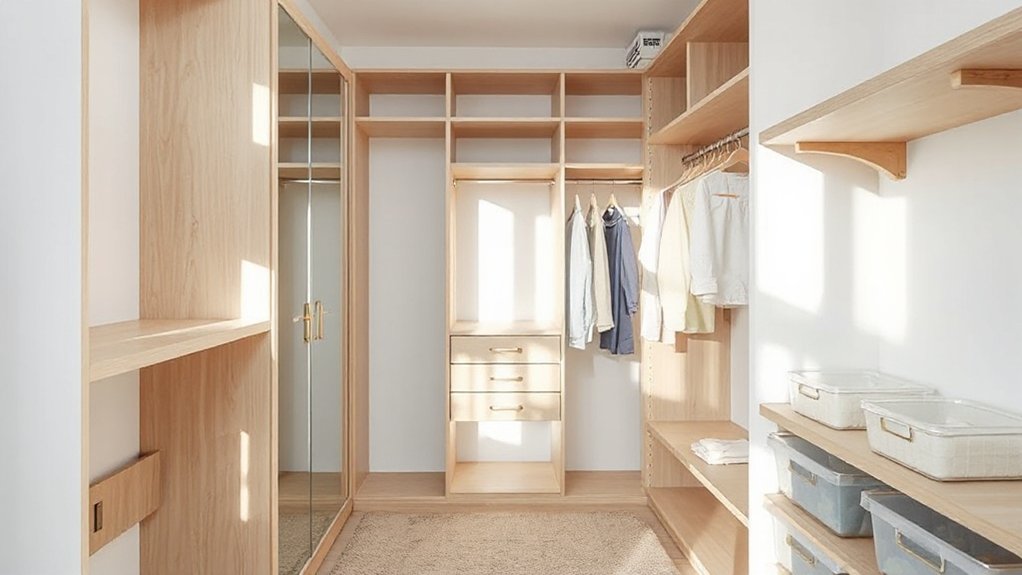
Lighten up your closet with brighter shelving materials and a reflective color palette to visually expand the space. Choose pale woods or white finishes for shelves and pair them with light, airy hues that bounce light around.
Keep surfaces clean and cohesive to avoid visual clutter and maximize the sense of openness.
Lighter Shelving Materials
Lighter shelving materials instantly open up a small closet by reflecting more light and reducing visual bulk. You’ll notice a roomier impression when you choose shelving materials that aren’t heavy-looking. Opt for lightweight shelving, such as aluminum, thin plywood with a white or pale finish, or laminated boards in pale tones.
Avoid dense, dark woods that absorb light and weigh down sightlines. Install open or glass-front bins to preserve the airy feel while keeping items organized. If possible, choose floating shelves to minimize bulky supports and create clean lines.
Keep the color palette light across shelves, brackets, and hardware to maximize cohesion. Pair with slim, unobtrusive dividers to maintain a tidy, expansive look without crowding the space.
Reflective Color Palettes
Could reflective color palettes instantly read a small closet as bigger? Yes, and you can harness light to do it. Choose colors with a high brightness level and low saturation for walls and backs. Matte finishes minimize glare while still reflecting space, so keep surfaces cohesive.
Integrate mirror accents on doors or panels to double the perceived depth without crowding. Light-reflective flooring, like pale oak or tile, keeps the floor visually continuous. Glass doors on wardrobes or storage units reduce visual heaviness and extend sightlines.
Use a single accent color sparingly, applied through textiles or hardware, to avoid clashing reflections. Maintain clean lines, minimal clutter, and purposeful symmetry to reinforce openness.
Quick-Access Organization Systems for Busy Schedules
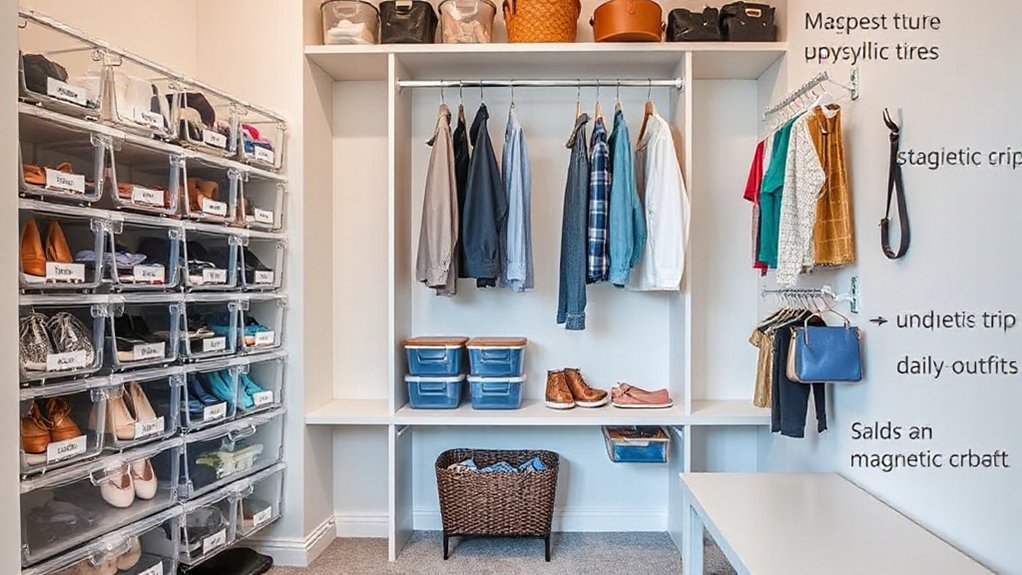
If you’re juggling a busy schedule, quick-access systems keep your closet from turning into a time sink. Start with clearly defined zones: daily wear, work outfits, and accessories.
Use a short, sturdy rod for morning essentials and a small open shelf for keys, belts, or bags. Mount baskets or slim bins at eye level for quick grabs, and keep a dedicated resting spot for items you’ll return later.
Choose hanging solutions that maximize vertical space, like a double-hang rod or a staggered rod setup, so you can see everything at a glance.
For jewelry storage, install a compact, accessible organizer near your routine area to prevent tangled pieces. Label bins lightly to speed re-sorting after laundry days.
Budget-Friendly Upgrades and Easy DIY Hacks
Get budget-friendly upgrades that can transform your walk-in closet without breaking the bank. Start with simple, practical DIY hacks like repainting shelves, adding inexpensive baskets, or installing pegboards for quick access.
We’ll share smart tips to maximize space and customize your closet on a budget.
Budget-Friendly Upgrades
You don’t have to break the bank to refresh a small walk-in closet. Budget-friendly upgrades focus on smart choices that maximize function without waste.
Start with modular shelving that adjusts as your wardrobe changes, and pair it with labeled storage bins to reduce clutter.
Reclaim vertical space by installing slim, wall-mounted organizers for accessories and shoes.
Update lighting with inexpensive LED strips or a warm, compact fixture to brighten corners and make the space feel larger.
Choose versatile hardware that looks polished without costing more, such as matte black or brushed nickel pulls.
Add small touches like a stylish rug or a fabric bin to hint at luxury closet accents, while keeping the overall footprint efficient and neat.
High end closet fixtures aren’t mandatory to achieve a refined look.
Easy DIY Hacks
Small tweaks can make a big impact, and easy DIY hacks are a perfect way to refresh a small walk-in closet without breaking the bank. You can start with closet ventilation by adding a simple vent fan or a lightweight dehumidifier to prevent moisture buildup and musty odors.
Next, optimize clothing organization with inexpensive acrylic risers, shelf dividers, and slim hanging rods to maximize vertical space. Use labeled bins for seasonal items and clear boxes so you can see contents at a glance. Add removable hooks for bags, belts, and scarves where walls allow.
Create a focal point by painting the back wall a light, bright shade to visually expand the space. Finish with a mirror on the door to reflect light and improve usability.
Frequently Asked Questions
How Can I Customize a Small Walk-In Closet on a Tight Budget?
On a tight budget, customize your small walk-in by installing DIY shelving and adding decorative lighting to maximize space and ambiance. You’ll maximize organization, save money, and create a bright, functional closet you actually enjoy using.
What Are the Best Doors or Openings for Narrow Spaces?
Sliding doors work best for narrow spaces, saving width and still opening wide. Pair them with open shelving for easy access and visible organization; keep tracks low and recessed to avoid snagging. You’ll maximize space and accessibility with this setup.
How Do I Protect Clothing From Humidity in Small Closets?
Like a quiet castle, you guard your clothes with smart ventilation strategies and moisture absorbers. You guarantee airflow, avoid damp corners, and swap absorbers regularly, keeping humidity low and outfits fresh. Your closet breathes, your fabrics thank you.
Can I Install a Closet in an Irregularly Shaped Room?
Yes, you can; a closet fits, even in an irregularly shaped room, with custom closet layouts and clever wall angles. You’ll use irregular room solutions to maximize space, install modular components, and keep accessibility and flow.
What Fingerprint-Free Finishes Work Best for Closets?
Touchproof finishes shine like a shield; you’ll want durability considerations and minimal fingerprints. Opt for powder-coated steel, epoxy, or melamine-faced laminates. You’ll enjoy easy care and clean aesthetics, balancing durability considerations with stylish, practical aesthetic options.
Conclusion
You’ll notice the theory in action: small spaces feel bigger when you optimize function over form. By pairing smart shelves with dual-purpose furniture, you reclaim floor space without crowding, while lighting and light colors create openness you can actually feel. If you test this, you’ll see organization reduces decision fatigue, saving minutes every day. So yes, the theory holds: practical tweaks beat pricey upgrades, and a well-planned closet becomes a daily, simple win.