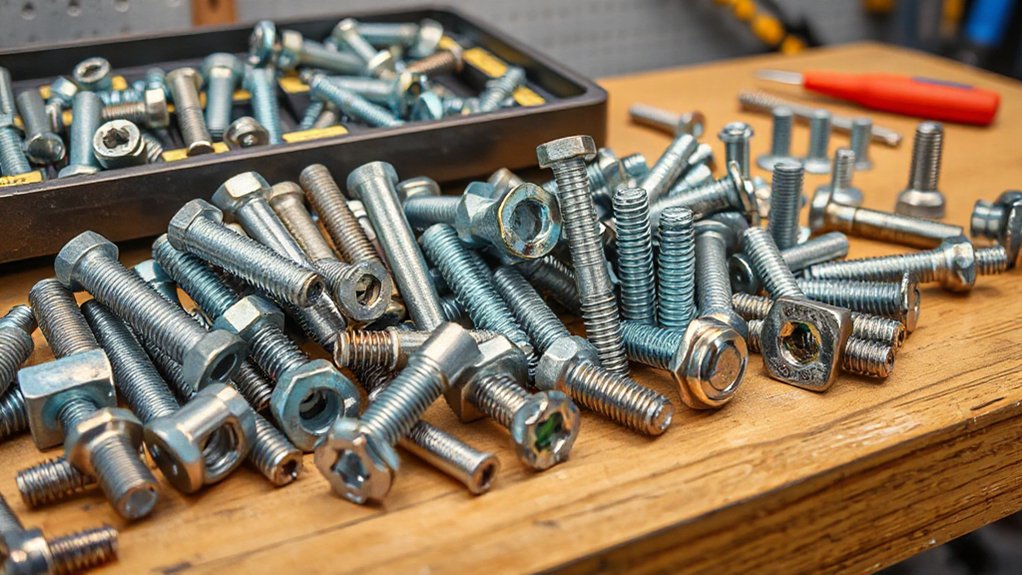
The most common bolts for home improvement projects are wood-to-wood bolts, outdoor lag bolts for rugged jobs, and versatile machine screws for hardware and fastenings. Choose materials and finishes that match your environment—stainless or galvanized for moisture, zinc-plated for light use. Match gauge, length, and thread pitch to your project, and pair bolts with the right nuts and washers. For strength and durability, consider pre-drilled or drill-and-tap setups where needed. You’ll pick up more tips as you continue.
Common Household Bolts: What They’re For and How to Choose
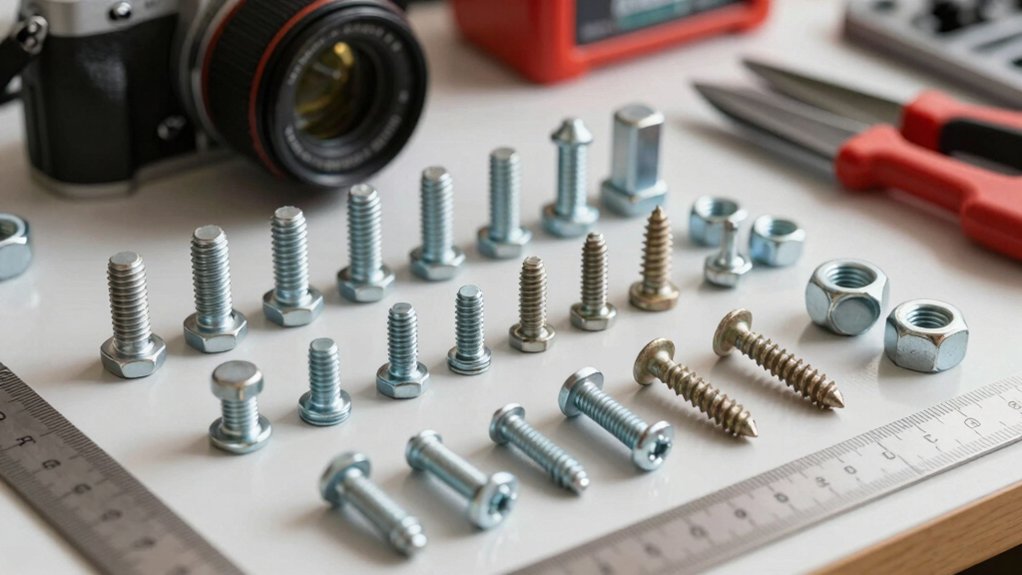
Common bolts are the backbone of everyday fixes around the house. You choose fasteners to fit task and load, not just what looks cheap. For strength, match bolt material to environment: zinc for light duty, stainless for moisture, and alloy steel where you demand power.
Consider head type and drive—hex for torque, button or flanged for flush surfaces—so you prevent slippage under pressure. If you want reliability, assess thread pitch and length to secure joints without overloading components.
Hardware aesthetics matter when visible fasteners set the tone of a project, so select finishes that blend with fixtures while delivering performance.
Bolt manufacturing quality determines consistency, so rely on reputable sources that guarantee uniform threading and alloy composition.
In short, choose purpose, material, and finish to dominate durability.
Reading Bolt Sizes: Decoding Gauges, Lengths, and Thread Pitches
Understanding gauge sizing helps you match bolts to tools and projects. You’ll read thread pitches correctly by counting threads per inch and noting whether it’s coarse or fine.
With clear length measurements, you’ll choose the right bolt for grip, strength, and fit.
Understanding Gauge Sizing
To read bolt sizes accurately, start by grasping gauge, length, and thread pitch together, since they determine fit and strength. You’ll decode where each value shows strength and compatibility, then compare against your project needs.
Gauge sizing uses standard scales, so know that larger gauges mean thicker bolts, which deliver more shear and tensile force, while smaller gauges enable lighter, precise fits.
Length choices affect engagement—too short, and you risk pullout; too long, and you introduce exposure or interference.
Thread pitch, the distance between crests, dictates compatibility with nuts and tapped holes. Seek consistency with gauge standards and existing hardware, and verify bolt patterns on plates, brackets, and fastener assemblies.
Precision saves labor, reduces failure risk, and empowers bold, reliable installations.
Reading Thread Pitches Correctly
Now that you’ve grasped gauge and length, it’s time to read thread pitches accurately. You’ll need sharp focus on how threads engage. Use thread pitch terminology to distinguish coarse from fine, and verify compatibility with your nut or tapped hole.
When you measure, apply a precise thread pitch measurement by counting threads per inch or millimeter along a known length, then compare against standard charts. Don’t guess; confirm pitch direction and start to finish.
Consider how pitch relates to strength and load transfer in your project, and recognize mismatches that cause stripping or cross-threading. Keep tools clean, save sample gauges, and document your findings.
With disciplined checks, you’ll ensure secure, reliable assemblies every time.
Machine Screws vs. Bolts: What’s the Practical Difference for DIY
Machine screws and bolts may look similar, but they serve different purposes in DIY projects. You choose based on load, material, and access.
Machine screws are for hardened material or precise fits, threaded along their entire length, with nut or tapping-hole methods.
Bolts rely on external threads paired with nuts or threaded inserts, creating quick, strong joins for thicker materials.
When deciding, consider bolt head styles for tool access and tightening leverage, and fastening techniques that suit the joint’s rigidity and permanence.
If you need a clean, flush surface, you’ll favor machine screws; for through-bolts, use bolts with washers and nuts.
Master these distinctions to sharpen your toolkit, accelerate assemblies, and ensure repeatable, reliable connections rather than improvised fixes.
Power up your setup with deliberate, informed choices.
Wood-to-Wood Bolts: Best Options for Framing and Shelves
When framing or installing shelves, wood-to-wood bolts shine by delivering clean, strong joints you can tighten with a standard wrench or socket. You want precise grip, predictable performance, and reliable repeatability, so pick bolt material that resists corrosion and fatigue in interior framing.
Focus on shank length that clears framing members without bottoming, and heads that seat flush for clean face‑ups. For shelves, choose bolts with good shear capacity and compatible threads to match your nuts or tapped holes.
Thread compatibility matters: ensure the bolt’s thread pitch matches your mating element to avoid cross-threading and looseness. Stainless steel offers durability, while zinc-plated varieties balance cost and performance.
Maintain proper preload, and you’ll achieve rigid frames and dependable, plank‑level stability.
Lag Bolts for Outdoor Projects: When to Reach for Heavy-Duty Fasteners
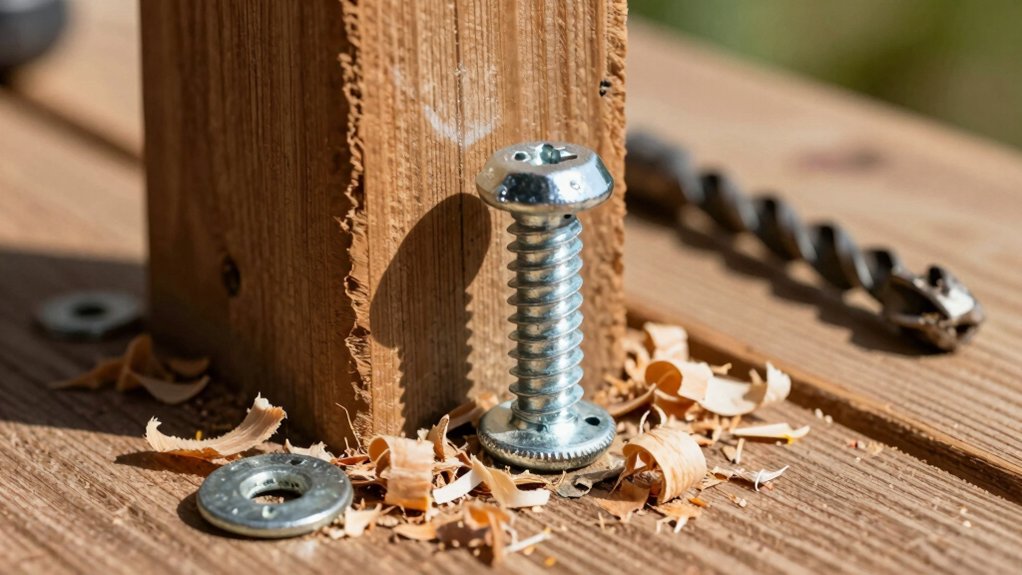
Lag bolts are your go-to when outdoor projects demand real strength and long-term durability. You choose lag bolts for heavy timber, fence posts, and mounting options where shear and pull-out resistance matter.
When selecting, evaluate bolt material for corrosion resistance and load requirements; stainless steel and hot-dip galvanized options offer outdoor longevity, while plain steel risks rust.
Consider fastener compatibility with your substrate—hardwood, pressure-treated lumber, or masonry—by pairing with appropriate anchors and washers.
Pre-drilling is essential to prevent splitting and to ensure even seating.
Head style, thread length, and grip diameter influence installation torque and withdrawal strength.
Use proper lubrication and tightening sequence to avoid over-tightening.
With the right bolt material and fastener compatibility, you achieve secure, durable outdoor connections that withstand weather and time.
Carriage and Coach Bolts: Use Cases in Furniture and Decks
Carriage and coach bolts shine in rustic furniture and concealed joints, where their smooth, rounded heads pair with tight, clean assemblies. You’ll see their use cases span sturdy table corners, bench supports, and deck connections that require a decorative yet strong fastener.
We’ll cover typical sizes for Carriage Bolt Applications, Coach Bolt Usage, and essential Decking Fastener Details to guide your project decisions.
Carriage Bolt Applications
Carriage bolts, also known as carriage or coach bolts, are a go-to for furniture and deck projects where a strong, clean, finished look matters. You’ll leverage their smooth, domed head and square undercut to resist rotation without bushings or nuts visible from above.
In carriage bolt applications, you’re prioritizing shear strength and a tidy exterior, ideal for table rails, bench legs, and outdoor seating. You’ll appreciate the ease of mid-construction adjustments, since the square shank bites into wood to prevent slipping.
For decorative bolt uses, pair with contrasting woods or exposed fasteners to create intentional, modern accents. Keep embedment shallow enough to avoid counterboring, yet deep enough for grip.
Choose stainless or galvanized variants for longevity in weather-exposed decks and furniture.
Coach Bolt Usage
Coach bolts, including carriage and coach bolts, offer clean aesthetics and strong shear resistance for furniture and decks. You’ll rely on their smooth, rounded heads to avoid snagging while delivering stable joints.
In furniture, they shine when securing rails, legs, and panels without visible fasteners, giving a manufactured look that sells strength. For decks, they provide dependable shear strength where boards meet support posts, especially in high-traffic areas.
Be mindful of bolt corrosion; choose coatings like zinc or stainless options to extend life in moisture-prone environments.
Coach bolt history shows traditional reliability, evolving with protective finishes and tighter tolerances for a precision fit. As you select fasteners, balance appearance, load, and exposure.
Proper installation, depth, and alignment maximize performance and guard against future loosening.
Decking Fastener Details
When choosing decking fasteners, carriage and coach bolts provide clean aesthetics and strong shear resistance for both furniture and decks, especially where boards meet posts.
In practice, these bolts shine in decking frames and outdoor furniture, delivering solid joining strength without visible heads that disrupt lines. Use carriage bolts for smooth, rounded tops and reliable seating in dense timbers, while coach bolts excel where you need flush, secure anchors in thick rails.
For decorative accents, pair bolt heads with complementary fastener sets to maintain a cohesive look across the project. Consider bolt color options to minimize contrast against decking and trim, opting for dark hues on dark woods or satin minerals on pale surfaces.
Choose consistently sized bolts for predictable tension and easy maintenance over years of use.
Hex Bolts vs. Carriage Bolts: Material and Finish Choices
Hex bolts and carriage bolts differ in how they’re used and finished, so choosing material and coating matters for strength, corrosion resistance, and appearance.
In this comparison, you’ll select bolt material based on load, environment, and stress points. Hex bolts excel where threads bite into reinforced surfaces; carriage bolts provide smooth tops for timber and decking with a security shoulder.
Your choice of bolt finish impacts rust resistance and longevity under outdoor or humid conditions. If you’re aiming for longevity, opt for stainless steel or plated finishes that resist corrosion without sacrificing torque.
For budget projects, coated carbon steel can perform well in dry interiors.
Prioritize the right bolt material and finish to maximize grip, stability, and a clean, professional look.
Self-Drilling and Self-Tapping Screws: Quick Mounting Options
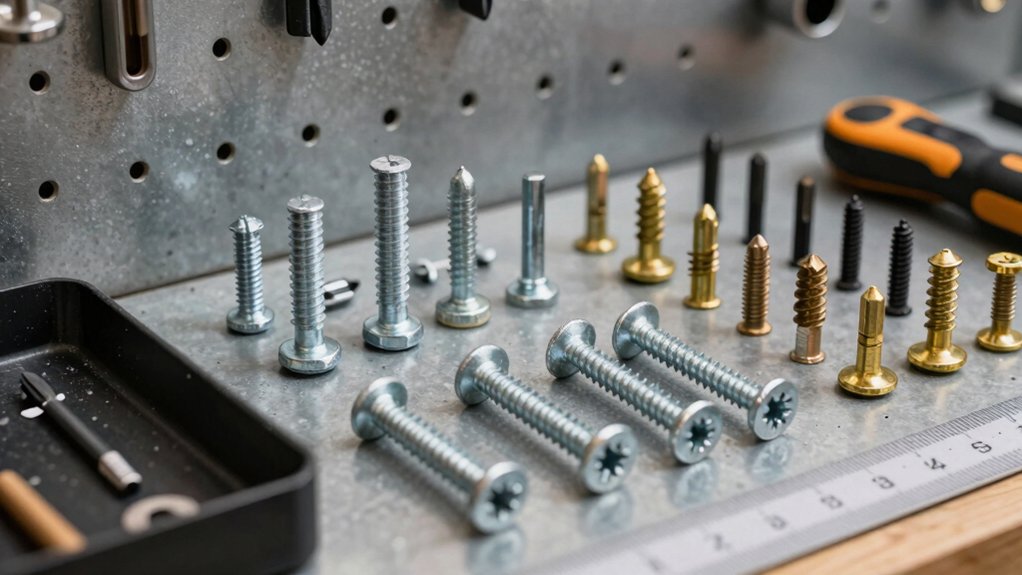
Self-drilling and self-tapping screws offer quick mounting by cutting their own path as you tighten, saving steps and time on the job.
They come in various head styles and thread types, so you can pick the right screw for wood, metal, or plastic applications.
Start with the benefits, then consider the screw types and practical tips to guarantee a secure, clean assembly.
Quick Mounting Benefits
Self-drilling and self-tapping screws streamline quick mounting by letting you drive fasteners directly into material without predrilling. You gain speed, fewer steps, and fewer tools, which means tighter schedules stay on track.
With immediate holding power, projects progress from plan to finish faster, increasing your efficiency and control. This approach reduces labor time and minimizes setup prep, so you can tackle more tasks in less time.
You’ll appreciate consistent torque and clean, compact installations, especially when working in tight spaces or on overhead tasks. Keep bolt safety in mind by selecting appropriate sizes and thread types for each job.
Also consider cost considerations: upfront material cost typically offsets labor savings, delivering a favorable overall value for quick mounting that still meets performance requirements.
Screw Types And Tips
When you’re choosing fasteners for quick mounting, self-drilling and self-tapping screws offer two clear paths: both drill into material without predrilling, but self-drillers create their own hole while self-tappers cut threads as they install.
Self-drilling screws save steps and speed up projects, delivering reliable grip with less fuss. Self-tapping screws require a prehole in hard materials but can produce strong, precise threads for long-term hold.
In metal, wood, or composite, choose coating and head style to match your aesthetic and load requirements. Consider decorative finishes to elevate appearance without sacrificing performance.
Guard against bolt corrosion by selecting stainless or coated options for damp or outdoor settings. Verify thread pitch and driver compatibility to ensure clean, frustration-free mounting from start to finish.
Structural vs. Non-Structural Bolts: How to Fit Safety Needs
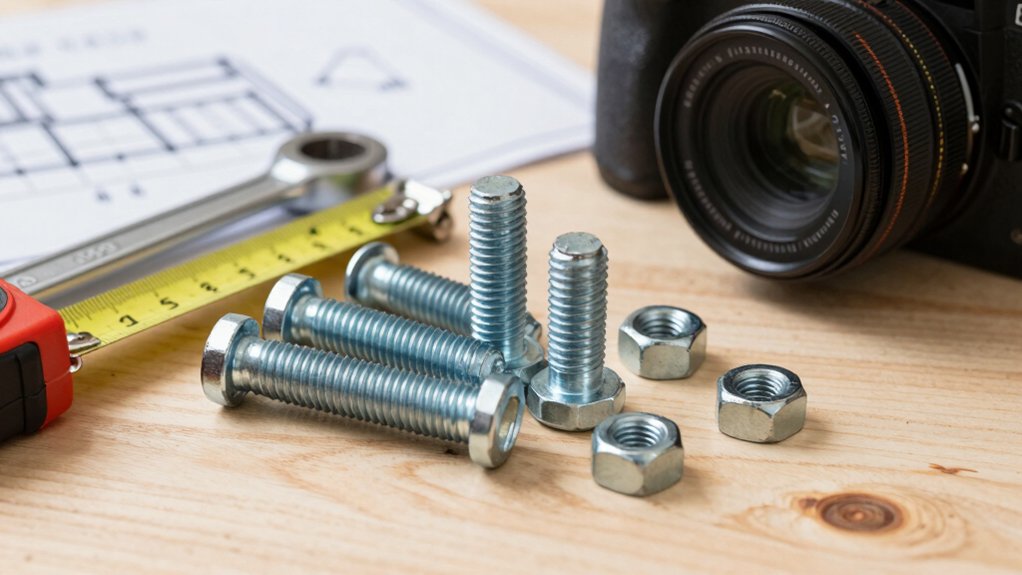
Structural bolts are built to bear load and resist shear, while non-structural bolts primarily fasten components where strict strength isn’t critical. You’ll choose structural bolts when the connection carries significant weight or impact, demanding precise bolt placement and alignment.
For safety, follow established standards and use the correct grade to meet safety standards, then verify torque values and pre-load.
Non-structural bolts excel in cosmetic or secondary assemblies where tight safety margins aren’t required, but you still maintain control over material compatibility and load paths.
Assess the project’s load path, environment, and potential dynamic forces.
Prioritize clear documentation, proper nut warranties, and documented testing results.
In every case, your goal is predictable performance, reduced failure risk, and compliance with applicable safety standards.
Stainless Steel vs. Zinc-Plated: Corrosion and Environment Impact
Choosing the right bolt finish matters for durability and safety, especially as you weigh a project’s environment after considering structural needs.
Stainless steel offers high corrosion resistance, ideal for moisture-rich or outdoor settings, where rust undermines strength. It preserves appearance and load integrity longer, delivering superior environmental durability in harsh climates.
Zinc-plated bolts, by contrast, resist everyday wear but succumb under active chemical exposure or salt spray, degrading performance sooner. If you’re facing coastal air, pool areas, or fertilizer moisture, stainless steel reduces maintenance and replacement costs.
For interior, dry spaces, zinc plating can be cost-effective without compromising safety.
Assess exposure, temperature swings, and maintenance plans to choose the finish that keeps joints secure and appearances uncompromised over time. Corrosion resistance and environmental durability guide your decision.
Drill-and-Tap vs. Pre-Drilled: Preparing Bolt Assemblies
Drill-and-tap offers a one-piece bolt-and-thread solution, letting you create a strong, threaded bore directly in your workpiece. When you compare drill-and-tap to pre-drilled methods, you gain speed and rigidity, reducing misalignment risks.
You’ll optimize bolt design by choosing tap size, thread pitch, and material compatibility upfront, ensuring uniform load paths and predictable torque resistance.
With drill-and-tap, you control hole location and depth, eliminating counterbore surprises and minimizing material waste.
Pre-drilled assemblies save on on-site tapping, but demand precise alignment and accurate pilot holes.
Your installation techniques should emphasize clean drilling, deburred edges, and proper tapping lubricant to avoid thread chipping.
In either approach, prioritize thread integrity and engagement length, then verify with measured torque values for consistent, high-strength joints.
Washers, Nuts, and Locking Options: Keeping Assemblies Tight
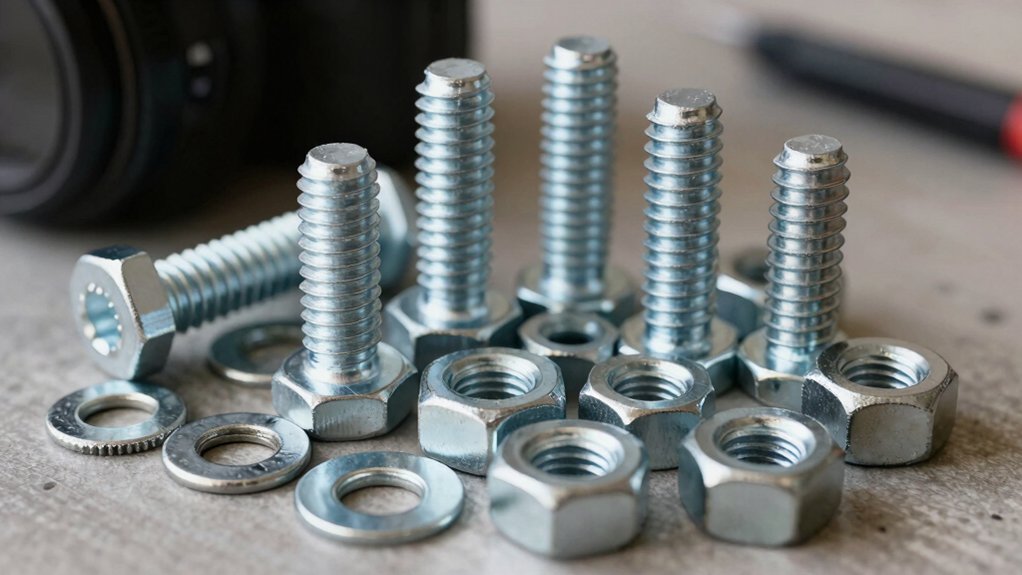
Washers distribute load and protect surfaces, while nuts secure the fastener from loosening. In this section, you’ll compare locking options—thread-locking compounds, nyloc nuts, and lock washers—and decide which fits your project and vibration needs.
Let’s explore how each choice affects tension retention, ease of installation, and long-term reliability.
Washers Role in Fastening
When you fasten with bolts, washers play a key role in distributing load, protecting surfaces, and preventing loosening. You’ll feel the difference in every joint when a washer spreads pressure and reduces embedment, especially under high clamping forces.
Choose washer types that suit the material and bolt size to maximize fastening strength without harming the surface. Plain washers prevent gouging, while spring washers add resistance to vibration and rotation—useful in dynamic or outdoor applications.
Locking washers provide modest retention without extra hardware, yet aren’t a substitute for proper nuts and torque. Remember, correct washer selection aligns with bolt diameter, thread pitch, and load conditions.
Prioritize clean seating, even load, and secure torque to ensure durable, high-performance assemblies.
Locking Options Essentials
Choosing the right locking options keeps your assemblies tight and reliable. You’ll prioritize washers, nuts, and locking devices that resist loosening under vibration and load.
Start with flat and spring washers to distribute pressure and absorb shocks. Then pair nuts with nylon insert or industry-standard lock nuts for secure engagement.
Select locking washers or thread-locking compounds for high-stress connections, but match them to material and temperature conditions.
Consider decorative finishes to protect aesthetics without compromising performance, ensuring fasteners stay visible yet sturdy.
Maintain a routine bolt maintenance plan: inspect threads, replace worn nuts, and verify torque specs after installations.
Keep assemblies clean and dry, and document fastener types for future upgrades.
With confident choices and proper tools, you’ll sustain peak performance and lasting rigidity.
Typical Bolt Sizes for Common Projects: Shelving, Decks, and Furniture
What bolt sizes do you actually need for common home projects like shelving, decks, and furniture?
For shelving, use 1/4-inch to 5/16-inch bolts, with the length chosen to bite through brackets without protrusion.
For decks, opt for 1/4-inch to 3/8-inch lag bolts or through-bolts. The lengths should engage framing by 1.5 inches or more.
For furniture, select 1/4-inch machine bolts or wood bolts with an appropriate washer load. This should be balanced by the gauge you can thread into prepped material.
Prioritize bolt materials suited to the load and environment, such as stainless for moisture exposure or coated steel for interior pieces.
Check thread compatibility with your nuts and anchors to maintain grip.
Keep fasteners compatible with your tools, avoiding cross-threading or stripped threads that reduce strength.
Precision matters; choose accordingly.
Budget vs. Performance: When to Upgrade Bolts for Longevity
Upfront savings can backfire later, so upgrade bolts when the long-term load, exposure, or environment justifies it. You assess risk by project type, not just price. If a connection bears structural load, corrosion risk, or vibration, invest in higher-grade alloy, proper coatings, and longer service life.
Performance earns reliability, especially in outdoor or moist settings where bolt color can signal zinc or stainless protection. For decorative applications, you still prioritize strength, choosing decorative fasteners that meet torque and shear specs without compromising safety.
Balance cost against maintenance. When longevity matters, upgrade now rather than pay later in replacements, failures, or hidden damage. Decide on material, finish, and hardware compatibility, then select bolts that preserve integrity and aesthetics.
Frequently Asked Questions
How Do I Choose Bolt Length for Metal-To-Wood Joints?
To choose bolt length for metal-to-wood joints, select a bolt long enough to penetrate at least 1.5 inches into wood, ensuring core coverage without protruding; prioritize bolt material and joint stability for maximum power and safety.
Are Stainless Bolts Worth the Extra Cost Indoors?
Yes, stainless bolts indoors are worth it if you value corrosion resistance and longevity; the cost vs durability trade-off favors them where moisture or cleaning chemicals exist, delivering steadier performance and fewer replacements over time.
Which Coatings Resist Salt Air for Outdoor Projects?
“Like a shield, coatings save metal.” You’ll want marine-grade coatings and zinc-nickel, epoxy, or powder coatings because they deliver corrosion resistance and coating durability against salt air outdoors, keeping fasteners strong and reliable for years.
Can Bolts Be Reused After Removal Without Weakening?
Yes, you can reuse bolts after removal, but check for damage or bending, and re-torque to spec. Assess bolt material, inspect threads, and apply proper removal techniques to avoid weakening or failure under load.
What Torque Specs Are Safe for Typical Home Hardware?
You should use torque specs that fit the fastener types and load capacity of your hardware, staying within manufacturer guidelines. For typical home projects, tighten safely, test secure feel, and avoid over-torquing delicate fasteners.
Conclusion
You now know the common bolts you’ll reach for and how to pick them for home projects. Don’t ignore thread pitch, length, or washers—the wrong combo can loosen fast. If you’re unsure, start with medium-strength stainless or zinc-coated bolts for indoor use, saving heavy-duty lag bolts for framing or decks. Objection: “I’m not handy.” You can measure, match hardware to the project, and tighten with a basic wrench—confidence grows as you build.