Think of your budget as a blueprint you can’t see yet. You’ll weigh regional costs, permit fees, and labour shares that can push a modest rear extension toward £40k–£70k, or beyond £100k in urban high-end builds. You’ll need precise quotes, clear scope, and contingency planning to avoid overruns, because the numbers shift with size, materials, and location. Keep momentum as you compare options and map out realistic scenarios that match your space and aims, or risk surprises down the line.
Kitchen Extension Costs in the UK: Quick Snapshot

Here’s a concise, data-driven snapshot of kitchen extension costs in the UK. You’ll start with major cost drivers: structural work, sizing, and location.
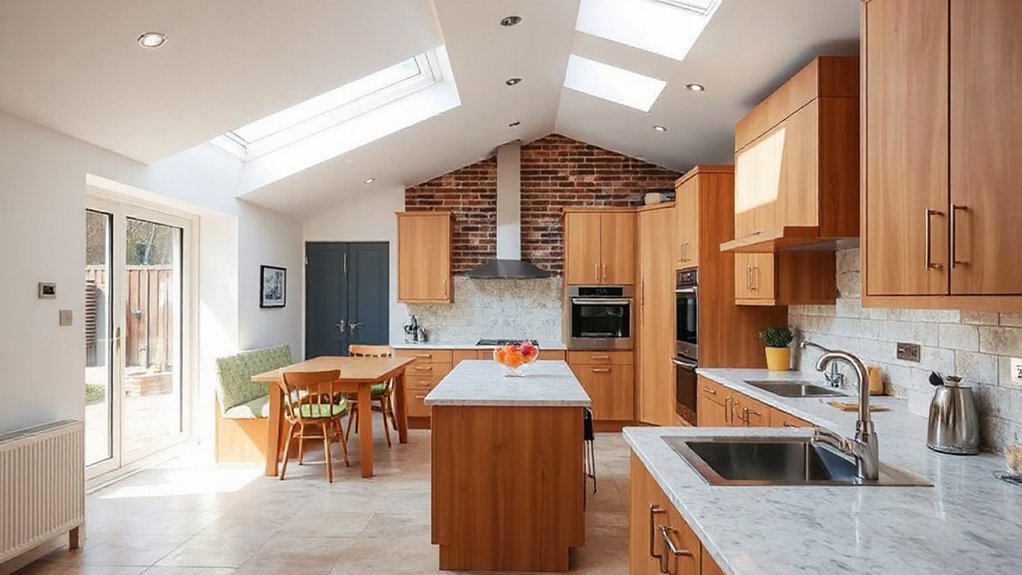
Typical base builds run from £40,000 to £70,000 for a modest single-storey rear extension, with high-end finishes pushing £100,000+ in urban areas.
Labour dominates, representing roughly 40–50% of total spend, followed by materials and permits.
You should plan for windows, doors, and insulation to guarantee energy efficiency, which influences long-term running costs.
Appliance maintenance should be considered in lifecycle budgeting, while kitchen decor choices determine finish-level spend and resale impact.
Regional variance matters: Southeast and London tend to be higher than the Midlands or North.
Contingencies of 10–15% help absorb price volatility and unexpected deliveries.
Planning Permission and Your Budget: What to Expect
Planning permission can be a major budgeting factor, and timing matters as much as cost. You’ll want a clear sequence: determine whether you need planning consent, consult your local authority, and factor potential delays into your cash flow.
Typical outcomes influence costs through application fees, potential structuring of the build, and possible changes to layout. If consent is required, you may encounter mitigation measures, which affect scope and timetable, not just price.
Buildability assessments and party-wall considerations can add line items to your budget. Budget for interior lighting and kitchen decor early, since these decisions often reshape ceiling lines and wall routes, impacting permits and services.
Accurate timelines and contingency margins help prevent overruns and align project milestones with funding.
Core Material Costs: What You’ll Buy
Core material costs set the baseline for your kitchen extension budget. You’ll buy core elements in predictable, quantifiable batches, enabling you to model total expenditure with confidence. Begin with structural components (timber, steel, concrete options) and cabinet carcasses, then move to fixtures (worktops, sinks, handles) and finishes (tiles, paint, sealants).
Quantity surveys drive accurate pricing; always adjust for waste—typically 5–10% for each category. Material durability informs longer-term value, reducing replacement cycles and maintenance fees, while supplier reputation shapes lead times and aftercare.
Compare multiple quotations to verify unit costs, delivery charges, and return policies. Document material specifications (thickness, grade, fire rating) to prevent misorders.
Align choices with your design intent, budget tolerance, and planned upgrade trajectory.
Regional Labour Costs for Extensions

We’ll start by outlining regional labour variance and area cost differentials to frame your budget decisions.
Regional Labour Variance
How do regional labor patterns impact extension costs? You’ll see variance across the UK driven by wage baselines, availability, and job maturity in each region.
Regional labour variance reflects the dispersion between local pay scales and national averages for trades such as carpentry, electrical, and plumbing. You compare contractor bids by normalizing hours, productivity, and access to skilled labour, then adjust estimates for travel time and site constraints.
In practice, you’ll notice higher rates where skilled trades are scarce, lower rates where competition is intense, and mid-range estimates where capacity is stable. Track data monthly, factor in regional cuisine preferences that affect hospitality overheads, and guarantee labour safety protocols are consistently applied to minimize risk and cost overruns.
Area Cost Differentials
You’ve seen how regional labour patterns shape extension costs, and you’ll apply that insight to area-based cost differentials. Labour rates diverge by region due to demand, skills density, and urban vs rural pressures, producing measurable differentials in project spend.
In the North typically, hourly rates are lower, yet travel and site access can offset savings, while the South often exhibits higher base rates and tighter labour pools, elevating total costs.
Area-based pricing also reflects local subcontractor competition and permit complexity, which alters advertised quotes.
When planning, you should normalize for regional productivity and inflation variance, then apply a buffer for geography-driven wage trends.
For context, garden furniture and kitchen decor choices influence scheduling and joinery expectations, subtly shifting regional cost footprints through ancillary labour time.
Demolition and Site Prep: Hidden Upfront Fees

Demolition and site prep often hide upfront costs that can surprise homeowners. You’ll want precise budgeting for hidden fees and site clearance implications before you commit to work.
- Permitting and inspections: compulsory approvals can add time and cost, even if you DIY some tasks.
- Waste handling: debris, hazardous materials, and recycling charges vary by council and waste contractor.
- Site clearance: removing vegetation, access paths, and obstruction clearing can exceed initial estimates.
- Utility disconnection and reconfiguration: temporary shutoffs, rerouting, and testing incur additional charges.
Plan buffers for weather-related delays, contractor access, and contingencies. Document every fee, request itemized quotes, and track changes. Hidden fees often emerge from small line items, so you’ll reduce surprises with rigorous comparison and clear scope definitions.
Site clearance matters for overall disruption and final cleanliness.
Foundation and Structural Costs: Footings to Beams
Foundation and framing costs begin with the footing layout and trenching, then move to concrete pours, reinforcement, and the installation of beams. You’ll quantify base soil assessments, footing depths, and sub-base compaction before concrete work.
Guided by structural drawings, you measure steel reinforcement spacing, embedment, and continuity to load paths, ensuring compliance with code. Post-pour curing and beam sequencing determine timelines and access needs.
Be mindful of hidden factors like groundwater and frost protection, which affect costs and schedules. Budget allocations should reflect variations in material grades, formwork, and crane access.
When planning, consider garden landscaping implications for trench sites and potential rerouting of utilities. Don’t overlook interior decor impacts from openings, lintels, or ceiling heights, which influence finished dimensions and aesthetic outcomes.
Roof Options and Price Ranges
There are several roof options to weigh for a kitchen extension, each with distinct costs, lifespans, and installation timelines. You’ll compare options by cost-per-metre, anticipated lifespan, and required maintenance, then align with your project schedule and energy goals.
Roof styles influence insulation performance and condensation risk, while material durability drives long-term reliability and re-roof intervals. Systematic evaluation yields an evidence-backed choice that fits UK climate variability and regulatory conditions.
- Pitched tile roof: moderate initial cost, high durability, long service life; typical maintenance every 10–20 years.
- Flat roof with membrane: lower upfront cost, moderate durability, quicker installation; inspect annually.
- Metal roof: higher upfront cost, excellent durability, low maintenance; reseal every 15–25 years.
- Living roof: premium cost, benefits for insulation and biodiversity, specialized maintenance.
Windows, Doors, and Glazing: Price Guide

You’ll compare window material costs, noting how uPVC, timber, and aluminum options affect up-front price and long-term maintenance.
We’ll outline glass type options—mono- and double-glazing, Low-E coatings, and safety glass—and their impact on energy performance and install complexity.
Finally, you’ll consider installation timing factors, like ordering lead times and weather windows, to align costs with project milestones.
Window Material Costs
Are window material costs predictable when planning a kitchen extension? You’ll gauge total spend by treating components as separate line items and weighting them by performance. Budget allocations depend on frame material, glazing, and hardware choices, plus installation complexity.
Expect window styles and glass durability to drive differences between basic and premium options, with energy performance impacting long-term running costs. Use measured quantities, then translate them into clear quotes.
- Frame material impacts upfront price and long-term maintenance.
- Glazing options affect heat loss, security, and durability ratings.
- Hardware quality influences operation ease and service intervals.
- Installation complexity can shift costs up or down by site constraints.
Glass Type Options
Glass type choices drive both initial cost and long-term performance. You’ll compare core options across windows, doors, and glazing to estimate value over time.
Glass designs influence U-values, solar gain, and sound reduction, so quantify each spec for your kitchen extension. Double-glazing with low-emissivity coatings typically adds upfront cost but improves insulation, while triple glazing raises prices further with diminishing returns in milder UK climates.
For doors, consider thermal breaks and insect screens to balance comfort and maintenance. Privacy options vary by tint, frosted textures, and smart glass potential, which can affect price and utility.
Record unit costs, installation margins, and yearly energy savings to assemble a data-driven total.
Select combinations aligning with your lifestyle, budget, and privacy requirements.
Installation Timing Factors
Timing matters: installation schedules for windows, doors, and glazing directly affect total cost, project duration, and disruption to your build plan. You’ll optimize timing by coordinating deliveries, permitting, and trades, reducing delays and overhead.
Add scheduling buffers for supplier lead times and weather contingencies, since delays ripple into labour costs and extended site occupancy. Consider post-installation tasks like sealant curing, glazing checks, and finish painting, all influencing final spend.
The timing of fit-out phases also intersects with kitchen planning, appliance delivery windows, and potential appliance maintenance needs after install.
- Align delivery windows with site readiness to minimize second trips and storage costs.
- Schedule trades to reduce idle labour and weather-related stand-downs.
- Plan for sealant and glazing cure times before cabinetry install.
- Factor in aftercare: cooking safety checks and routine appliance maintenance.
Insulation and Energy Efficiency: Upfront vs Long-Term
What upfront insulation and energy-efficiency decisions you make for a kitchen extension directly affect operating costs for the life of the project. You should quantify insulation standards impact using U-values and heat-loss calculations, then compare payback periods for different wall, roof, and floor assemblies.
Prioritize continuous air barriers and high-performance windows to minimize drafts and solar gain losses. Energy saving appliances reduce peak demand and annual consumption, but only if sized to actual load and integrated with smart controls.
Commissioned tests verify performance targets post-completion. Track incremental costs versus long-term savings: insulation upgrades, sealed cavities, and appropriate ventilation yield lower heating and cooling bills.
Your decision matrix should balance upfront price, climate data, and expected occupancy patterns to optimize total cost of ownership.
Wiring, Lighting, and Electrical Fittings: What It Costs
You’ll need to budget for wiring setup costs and the price of lighting and fittings as a single, integrated line item.
The costs vary by circuit count, fixture quality, and whether you upgrade panels or add smart controls, with data showing mid-range options delivering solid value.
We’ll compare typical price ranges, installation timelines, and trade-off considerations to start you planning with clear, actionable numbers.
Wiring Setup Costs
- Cable routing and containment
- Circuit sizing and breaker upgrades
- Socket and switch provision, including USB outlets
- Declarable testing and certification fees
Lighting and Fittings Price
How much do lighting and fittings add to a kitchen extension bill, and where do costs typically accumulate? You’ll see most expense concentrated in wiring and ceiling points, switchgear, and matching fittings.
Plan for robust circuits, compliant with UK regs, plus lighting design that minimizes trenching and covers zones such as task, ambient, and accent. Expect per-room lighting costs to range around £300–£1,000 for high-street fixtures, with an additional £200–£600 for bulkhead or under-cabinet options.
Fittings styles influence price: contemporary LEDs, dimmable fittings, and smart controls push costs higher, while traditional styles may reduce unit price but require more complex wiring.
Lighting trends favor energy efficiency, integrated drivers, and hidden fixings, enhancing aesthetics while maintaining reliability.
Allocate contingency for switches, sockets, and decorative elements.
Plumbing and Wet Areas for the Kitchen
Plumbing and wet areas in a kitchen are high-priority for reliability and safety, so you should plan for correct layout, appropriate piping, and proper sealing from the outset. You’ll define supply routes, trap sizes, and venting to minimize leaks and condensation.
Coordinate with appliance locations to avoid crossovers that raise heat or vibration risks, and specify moisture-rated fixtures. Use data-driven estimates for pipe runs, insulation, and access panels to reduce future disruption during maintenance.
Prioritize leak detection and easy isolation valves to limit water damage. Plan drainage fall, trap primer where needed, and correct sealants for splash zones. Focus on appliance maintenance and kitchen decor to sustain functionality without compromising aesthetics.
- Layout optimization and zoning
- Material choices and moisture resistance
- Access and maintenance planning
- Proactive sealing and leak detection
Internal Finishes: Plastering, Flooring, Tiling

Start with a clear plan for plastering, flooring, and tiling that aligns with moisture control, surface prep, and finish durability. You’ll specify substrate conditions, chosen materials, and installation tolerances to minimize cracking, uneven joints, and tile lippage.
You’ll assess walls as plaster-ready, floorboards or slab as sound, and confirm damp-proof membranes are in place where needed.
Plastering targets a smooth, crack-resistant finish with appropriate keys and primer.
Flooring choices balance moisture resistance and underfoot comfort; options include engineered timber, tile, or vinyl with correct underlayment and expansion gaps.
Tiling requires flat substrates, accurate layout, and butt-joined joints, plus grout sealing.
Consider interior decor implications and appliance selection early to avoid conflicts, securing consistent color, texture, and progression details.
Kitchen Cabinets, Islands, and Appliances: Price Bands
To estimate kitchen cabinets, islands, and appliances costs accurately, start by defining price bands for each category based on material, finish, and build quality. Then map those bands to common design choices and installation complexities. You’ll then compare total costs by design intent, ensuring consistency with kitchen decor and appliance brands.
Bands reflect cabinet core (P/F/MDF vs solid timber), hardware, and draw accuracy; islands vary by footprint, storage, and integrated features; appliances hinge on energy rating, size, and smart capabilities. Use data to forecast labor time, delivery, and installation. Maintain a tight, auditable budget path across categories.
1) Start with cabinet core choices and finishes
2) Align island features with traffic flows
3) Pair appliances by brand tier and spec
4) Factor delivery and install time variations
Structural Elements: Steelwork, Joists, Supports
Structural elements set the framework for your kitchen extension, linking the cabinet layout and appliance plan to the building’s performance. Steelwork provides primary load transfer and rigidity, while joists define floor spacing and allowable spans for cabinetry and equipment.
You’ll specify column positions, beam sizes, and connections based on loads from walls, roof, and future appliances. Sizing considers deflection limits, thermal movement, and sequencing during erection.
Supports must align with foundation conditions and satisfy building regulations, ensuring safe service life and ease of maintenance. Installers prioritize alignment tolerances to prevent misfit gaps in cabinets and appliances.
Budget implications arise from steel thickness, joist grade, and fastening systems, plus required protective coatings. Kitchen appliances and storage solutions drive load paths, influencing bracing, underfloor services, and access for future upgrades.
Outdoor Integration: Patios, Decks, Landscaping Costs
Outdoor integration affects overall project cost by framing patios, decks, and landscaping as a combined line item rather than separate add-ons.
You should start with per-square-meter estimates for hardscapes and plantings, then attach finishes pricing and maintenance assumptions to each zone.
This approach yields a transparent, data-driven basis for budgeting outdoor areas alongside kitchen extensions.
Outdoor Integration Costs
What’re the key costs you should expect when integrating outdoor spaces like patios, decks, or landscaped areas into a kitchen extension? You’ll balance initial build prices with installation specifics and ongoing maintenance.
Expect itemized allowances for surface materials, structural tying, drainage, and weatherproofing, plus electrics and lighting planning.
Budget for climate-appropriate decking or paving, plus space planning that preserves access and flow to the kitchen.
Consider the impact of garden lighting and outdoor furniture on lighting circuits and durability requirements.
Prices vary by scale, but data shows a clear correlation between area size, material quality, and long-term maintenance.
1) Surface material and finish
2) Structural integration and waterproofing
3) Electrical, lighting, and controls
4) Landscaping irrigation and drainage planning
Landscaping and Finishes Pricing
Landscaping and finishes for an outdoor integration hinge on area, material quality, and maintenance needs, with costs that scale with garden size, surface type, and durability requirements.
You’ll evaluate patio and deck options by life-cycle costs, including installation, drainage, and substrate prep. Expect concrete, paver, or timber surfaces to differ in longevity and upkeep; aluminum, composite, and dense hardwood often carry higher upfront prices but lower long-term maintenance.
Vegetation choices affect irrigation, soil stabilization, and erosion control, influencing total spend. Include garden maintenance as part of annual budgeting, ensuring compatibility with existing drainage and sun exposure data.
Check appliance warranties if you’re integrating outdoor kitchens, heaters, or lighting, and document coverage duration and exclusions to avoid unexpected repair costs.
Contingency Planning: How to Cap Cost Overruns
Contingency planning is essential to cap cost overruns in a kitchen extension project. You’ll set a realistic contingency based on scope, risk, and supplier lead times, then monitor it monthly against actuals. Track variances, forecast overruns early, and adjust plans before spending spikes.
- Establish a formal contingency budget at project outset and update it with any scope changes.
- Assign clear triggers for contingency usage tied to measurable risks (material price shifts, delays).
- Prefer fixed-price contracts for high-risk items to reduce exposure to volatility.
- Review earned value metrics monthly, reallocating funds only when justified by data.
How to Compare Quotes: What to Look For
When you’re evaluating quotes, you’ll compare more than the bottom line. Start with clarity: request itemized breakdowns for trades, materials, delivery, and permits. Check unit prices, implied scopes, and any allowances; question discrepancies that could hide costs.
Compare delivery timelines, payment terms, and warranty coverage—these affect total value, not just price. Verify supplier qualifications, contractor licenses, and insurance, then assess past performance through references or project records.
Look for exclusions and note any substitutions that could alter quality or schedule. Require a fixed-price option where possible to limit exposure to overruns.
Cross-check quotes against your project brief for alignment with kitchen decor and cooking recipes constraints, ensuring listed options achieve your design intent without triggering hidden contingencies.
Document decisions for transparent arbitration if needed.
Budgeting by Scenario: Realistic UK Cost Ranges
To plan effectively, you’ll segment the project into common UK scenarios—basic rebuild, mid-range extension, and high-end remodel—then attach proven cost bands to each.
You’ll quantify materials, labour, and contingency, ensuring realistic budgeting across phases. Align cost bands with operating needs like Cooking techniques and appliance maintenance to prevent later overruns.
Data-driven ranges reflect regional variance, labour market shifts, and scaffold/permit requirements, keeping expectations grounded.
- Basic rebuild: £12k–£28k
- Mid-range extension: £28k–£70k
- High-end remodel: £70k–£150k
- Seasonal fluctuations and VAT considerations: adjust by ±10–15% as needed
Financing and Grants: Money-Saving Options
You’ll start by clarifying Grant Eligibility Basics, so you know which programs actually apply to your project and household.
Next, we’ll outline Financing Options Overview with data-driven comparisons of interest rates, terms, and eligibility, so you can choose the most cost-effective path.
Finally, we’ll map Tax Credits & Deductions to potential after-cost savings, highlighting where timing and documentation matter most.
Grant Eligibility Basics
1) Confirm program scope, eligibility windows, and cap limits to guarantee realistic expectations.
2) Gather required documents, including proof of address, ownership, and project plans.
3) Cross-check grant or loan terms for interest, repayment, and reporting commitments.
4) Schedule milestones to ensure timely compliance with conditions, while tracking de minimis limits.
Cooking tips and appliance maintenance should influence budget planning, not eligibility decisions.
Financing Options Overview
Financing options for a kitchen extension fall into three main categories: grants, loans, and savings strategies. Grants provide non-repayable funds, but eligibility windows and caps vary by region and project type, so you should map criteria before applying.
Loans offer predictable repayment plans; compare interest rates, fees, and repayment terms, and model total cost over time with a simple amortization projection.
Savings strategies focus on staged spending, prioritizing essential works first to align with cash flow.
When evaluating options, quantify impact on total project cost and timeline, and document constraints imposed by lenders or grant bodies.
Consider how kitchen decor choices and appliance trends influence required scope and cost, ensuring selections fit available financing without compromising essential structural or safety standards.
Plan, compare, decide, and document outcomes.
Tax Credits & Deductions
Tax credits and deductions can reduce the after-tax cost of a kitchen extension and, in some cases, offset eligible project expenses. You’ll benefit by identifying programs, eligibility windows, and claim timelines before starting work.
- Tax incentives: UK government schemes may apply to energy-efficient upgrades, permitted development, or VAT relief for specific improvements.
- Deduction strategies: Track allowable costs, such as fittings, fixtures, and professional fees, to maximize deductible expenditure against profits.
- Eligibility checks: Verify project conformity with grant conditions, contractor certifications, and property type to avoid disallowance.
- Documentation pipeline: Maintain invoices, receipts, and approval notifications to streamline claims and audits.
This approach yields precise, data-driven planning and minimizes post-project financial surprises.
Timeline Realities: How Duration Impacts Total Price
Delays matter because longer projects incur more labor, material, and site-keeping costs, pushing total price higher even when unit rates stay the same. In timeline realities, duration directly influences total expenditure through extended labor hours, temporary accommodations, and frequent schedule adjustments.
You’ll see cost accumulation from sub-trade mobilization and permit renewals, plus contingency budgeting stretching over weeks or months. Shorter milestones limit overhead, while longer builds magnify rework risk and depreciation of equipment.
Planning accuracy matters: precise sequencing minimizes downtime and accelerates cash flow. Consider design trends and material durability; selecting durable finishes can reduce future maintenance and replacement costs, altering long-term value despite similar upfront quotes.
Track critical path tasks, deadlines, and weather windows to forecast fluctuations and align expectations with stakeholders. This disciplined approach preserves cost control without sacrificing functionality.
Frequently Asked Questions
How Long Does a Typical Kitchen Extension Project Take?
A typical kitchen extension takes around 8–12 weeks from permission to completion, depending on design complexity. You’ll see phased milestones: planning approvals, foundation work, structural changes, utilities, and final finishes. Design trends and material choices influence scheduling.
What Hidden Costs Commonly Surprise Buyers?
Hidden costs often surprise buyers: project management fees, VAT tweaks, and design revisions. Use budget planning and careful contractor selection to avoid overruns; track changes, request detailed quotes, and confirm inclusions before committing to any agreement.
Do Extensions Require Party Wall Agreements in the UK?
Yes, extensions often require a party wall agreement under the Party Wall etc Act 1996; you meet legal requirements by notifying adjoining owners, selecting a surveyor, and following measurement and timetable steps for compliance and risk mitigation.
Which VAT Considerations Affect Extension Pricing?
VAT considerations affect extension pricing: you’ll see VAT exemptions for certain refurb work, but construction taxes apply on standard build services. You’ll want to verify reduced rates, eligibility, and timing to optimize overall costs and cash flow.
How Do Local Planning Restrictions Affect Costs?
Local planning restrictions raise costs because zoning regulations and building permits require time, assessments, and potential revisions; you’ll face permit fees, neighbor consultations, and possible design tweaks to comply with codes and avoid delays.
Conclusion
You’ve got a clear framework now: know the base ranges, add regional labour, and guard with contingency. When you compare quotes, push for itemized line items—permits, design, materials, trades, and site prep. Track regional patterns, then stress-test with a realistic scenario and a worst-case plan. Treat the budget like a living document, updating as bids come in. In short, plan smart, forecast precisely, and let data steer your kitchen extension to shape and scale. It’s a well-tuned engine.