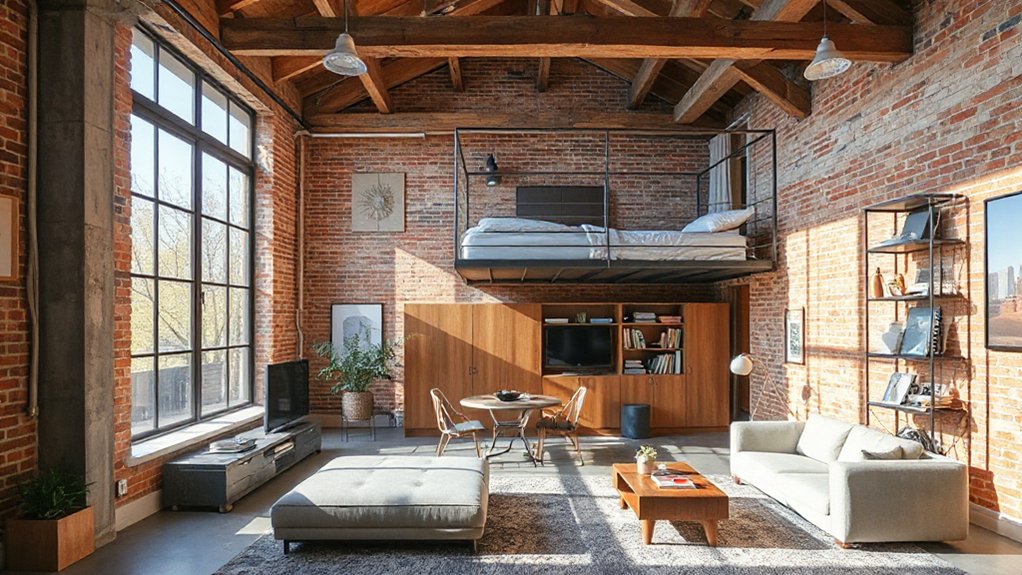
Loft ideas to maximise your space start with tame sloped ceilings using built-in storage along low sides and slim vertical modules so nothing crowds the floor. Choose multi-functional furniture—modular, expandable sofas, fold-away desks, and ottomans with hidden storage—that flex with your needs. Create distinct zones with open shelves and subtle dividers, then amp up light with sheer curtains, mirrors, and track lighting. Smart storage under beds and in stairs keeps clutter at bay, revealing more living space as you go. More tips ahead.
Tame Sloped Ceilings With Built-In Storage

Sloped ceilings can feel like a challenge, but built-in storage turns them into powerful design allies. You’ll shape the angles into smart, clutter-free zones that respect ceiling height while expanding usable space.
Start by integrating shallow cabinets along the low side, matching the slope’s rhythm to keep the room visually balanced. Use tall, narrow modules where height allows, maximizing vertical storage without crowding floor space.
For open storage, consider recessed shelves painted to blend with walls, preserving airiness. Choose lighting design that emphasizes depth—wall sconces or track lights can cast flattering shadows, reducing perceived ceiling sag.
Align storage fronts with room lines, avoid bulky hardware, and maintain a cohesive finish. The result: a clearer, brighter, more versatile loft.
Pick Multi-Functional Furniture That Frees Space
You’ll love how expandable seating options mold to your space, letting hosting and daily lounging share the same footprint. Hidden storage solutions keep surfaces clean and corners open, so every inch serves a purpose without shouting for attention.
Convertible work areas transform from coffee nook to desk in a snap, keeping you ready for projects, calls, or study, all without clutter.
Expandable Seating Options
Expandable seating options blend function with form, letting you reclaim floor space without sacrificing comfort. You’ll want pieces that adapt as your needs shift, from casual lounging to extra guests.
Consider modular sofas that reconfigure into layouts you actually use, rather than ones you own. They deliver seating and a subtle sense of openness when pieces split apart.
Fold away chairs, tucked under a compact console or behind a sofa, become instant seats without clutter. Look for lightweight frames, durable upholstery, and hidden hinges that stay quiet during daily use.
Choose options with easy, tool-free reassembly to maintain flow. Prioritize multi-function cushions that double as soft storage or back support, so seating stays tidy.
With the right setup, your loft gains versatility without visual heaviness.
Hidden Storage Solutions
Hidden storage doesn’t clutter a loft; it frees up space while you live in it. You’ll transform tight rooms with multi-functional furniture that conceals items in plain sight. Start with a bed frame that lifts to reveal hidden compartments beneath your mattress, perfect for seasonal gear or bulky bedding.
Choose coffee tables and benches with concealed shelves, so magazines, remotes, and charging cables stay out of sight yet reachable. Opt for ottomans that open to store pillows or blankets, maintaining a clean silhouette.
Integrate stair drawers or cabinets into loft access to stash tools and daily essentials without breaking the line of sight. Precision in design ensures hidden compartments remain accessible, but discreet, balancing form and function effortlessly.
Convertible Work Areas
Convert your loft’s workspace with furniture that earns its keep. You optimize by choosing multi-functional pieces that adapt as you need them. Think wall mounted desks that fold away when you finish, freeing floor space for living or sleeping.
Pair them with compact storage or floating shelves to keep cords tangle-free and tools accessible. When guests arrive, switch a desk into a breakfast nook or a workstation into a dressing area with a simple hinge or slide.
A fold away bed smartly tucks into a cabinet, making room for daily tasks without sacrificing overnight comfort. Prioritize modular, stackable forms and slim profiles to preserve sightlines and airflow.
Your space stays open, efficient, and ready for change.
Create Separate Living Zones Without Wasting Space
Want to carve distinct living zones in a loft without sacrificing floor space? You can define areas with smart, unobtrusive dividers like bookcases, open shelving, or partial screens that don’t trap light.
Use furniture as room cues: a sofa cluster, a compact dining nook, and a reading chair can signal separate zones without closing off flow. Choose scale-appropriate pieces to keep sightlines open, and place rugs to anchor each zone rather than cover the entire floor.
Implement cohesive loft color schemes that unify zones while preserving contrast for delineation. Add decorative accents to tailor character without clutter.
Maximize vertical storage to free floor space, and ensure lighting layers—ambient, task, and accent—stay balanced across zones for a breathable, functional layout.
Light Strategies That Make a Loft Feel Bigger

Lighting can amplify the openness you already cultivate with smart zoning. You optimize space by letting daylight do the heavy lifting, then heighten it with deliberate placement of mirrors and reflective surfaces. Use sheer window treatments to maintain soft, natural lighting throughout the day, avoiding heavy curtains that soak up a room’s airiness.
Align furniture to maximize sightlines, creating the illusion of more depth. Color schemes matter: choose light neutrals with one bold accent to bounce light without shrinking the room. Install recessed or track lighting that follows architectural lines, keeping ceilings visually higher.
Embrace glass partitions over solid walls when possible to preserve flow. By pairing natural lighting with thoughtful placement, you’ll feel bigger spaces, not just brighter ones.
Storage Hacks for Sloped Ceilings
Ever thought a sloped ceiling could hide more than it reveals? You can turn awkward nooks into smart storage with tailored solutions. Start by using built-in cabinets that follow the slope, pulling in vertical depth where possible to maximize capacity without crowding the room.
Low-profile shelves beneath eaves keep everyday items reachable, while pull-out bins in a shallow recess prevent clutter from piling up. Install hanging organizers high on the wall to use dead space above wardrobes or desks.
Decorate with decorative wall features to draw the eye away from gaps and emphasize function. Add ceiling molding to create clean lines that visually shorten surprises like angled corners.
Finish with labeled, color-coded storage zones for quick, confident access.
Loft Layout Recipes for Different Lifestyles
If you’re shaping a loft around how you live, start by mapping layouts to your daily rhythm—then tailor every inch to fit.
Think in zones: a compact workstation near a window, a lounge corner that doubles as a guest bed, and a compact kitchen that serves both cooks and movers. Position storage where it supports flow, not friction, so you’re never stepping over clutter.
For different lifestyles, swap open plans for defined partitions—sliding screens, booknook alcoves, or a crafted mezzanine.
Use Loft lighting to cue mood and task focus, from bright task lamps to warm ambient glows.
Pair with Loft color schemes that reflect your energy—calm neutrals for base, bold accents for focus zones.
Your space should breathe, adapt, and invite.
Frequently Asked Questions
How to Insulate Sloped Ceilings Effectively?
Insulate sloped ceilings effectively by choosing rigid foam or mineral wool insulation materials, then install continuous layers with proper air gaps and ventilation. Create thermal barriers at joints, seal edges meticulously, and use radiant barriers to reflect heat back outside.
What Budget-Friendly Loft Conversion Ideas Exist?
Budget-friendly loft conversion ideas include clever storage solutions, compact built-ins, and mezzanine shelves. You’ll maximize space with lighting techniques—spotlights, LED strips, and layered moods—while maintaining budget discipline, prioritizing flexible layouts, multi-functional furniture, and smart insulation for comfort.
Can Stairs Maximize Space Without Crowding Rooms?
Yes, stairs can maximize space without crowding rooms. Picture a compact, twisting staircase as a smart spine; you save floor area, and storage integration hides steps’ bulk, while staircase design keeps flow open and efficient for you.
Which Color Schemes Make a Loft Feel Taller?
Color contrast makes a loft feel taller; you should use bright, airy tones with darker accents. Pair ceiling paint with light walls, and you’ll notice vertical emphasis, spaciousness, and a crisp, creative mood.
How to Handle Ventilation in Tight Lofts?
Ventilate efficiently with vigilant ventilation: visualize airflow management, use strategic exhaust fan options, and install vents high and low. You’ll curb condensation, balance drafts, and feel cooler, calmer, and more comfortable while you snugly finish your loft.
Conclusion
You’ve seen how clever storage, multi-functional furniture, and thoughtful zoning unlocks a compact loft. With every slope, you’ve learned to tame the roof and reveal room to breathe. Use light to stretch the space, tuck essentials into built-ins, and define zones without crowding. It’s a quiet revolution under a pitched ceiling—where your ideas take shape like a gentle wave, lifting your life higher with less clutter and more personality. Your loft, finally harmonious.