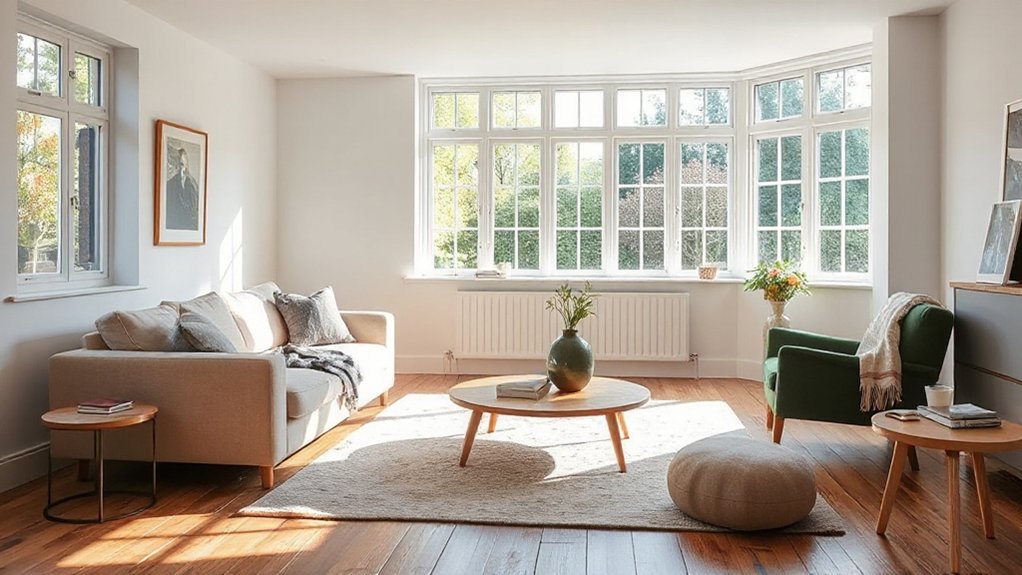
Need a fast refresh for a UK home? Start with budget-friendly lighting: layer ambient, task, and accent layers, use dimmable LEDs, and tune whites for a cohesive glow. Choose a flexible colour palette with timeless neutrals in walls, add warmth with carved features and light accents, and refresh storage with shallow pull-outs and hidden hardware. Textures matter: mix boucle, hemp, and brushed cotton for coziness, then introduce a few modern-vintage furniture pairings. Want more practical, theatre-ready ideas to transform your space?
How to Brighten a UK Home on a Budget (Foundational Approach)
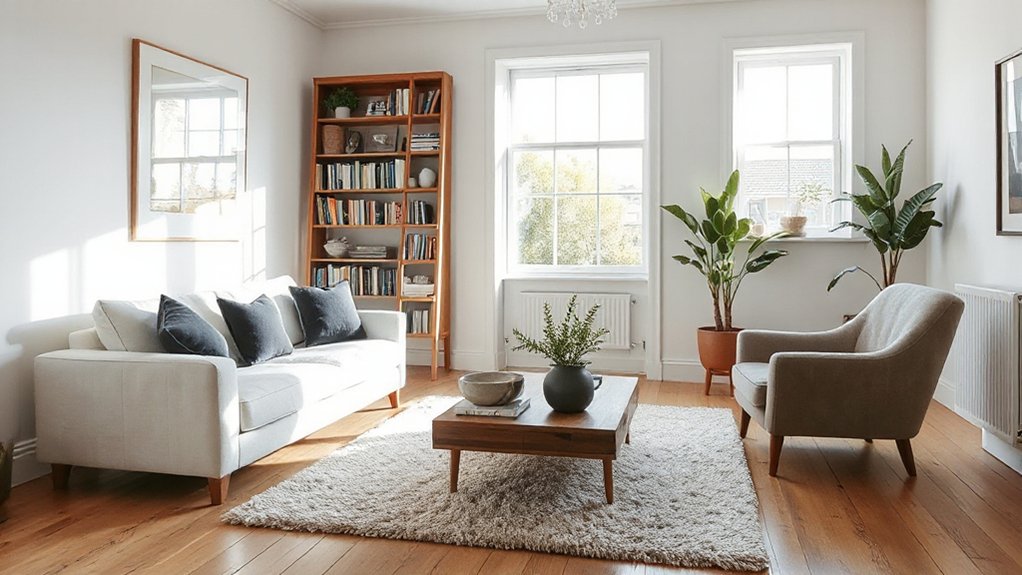
Brightening a UK home on a budget starts with smart light and color decisions, because light and shade define space before you add any furniture. You’ll evaluate natural daylight patterns first, then layer artificial light with tone-matched fixtures that minimize glare.
Choose white or pale neutrals as base walls to maximize reflectivity, and pair with cool or warm accents to control mood.
Implement a budget-friendly strategy by focusing on focal lighting, under-cabinet task lights, and energy-efficient lamps to reduce ongoing costs.
For furnishings, prioritize budget-friendly furniture that’s sturdy, modular, and easy to reconfigure as space shifts.
Introduce DIY wall art in measured quantities to personalize without oversaturating walls.
Maintain balance between light, color, and proportional scale to preserve openness.
Choose a Flexible Colour Palette for Period Rooms
A flexible colour palette for period rooms hinges on balancing historical character with modern versatility. You choose a base of timeless neutrals to anchor intricate woodwork, plaster details, and period mouldings, then layer color with purpose.
Color harmony guides your selections: lighter, cooler neutrals to illuminate chapels of wall, warmer accents to highlight carved fronts, and a restrained contrast to maintain legibility across spaces. Palette selection becomes a workflow, not a moodboard.
Start with 2–3 core hues and introduce secondary tones sparingly—accent cushions, upholstery, or drapery—so original architectural elements remain legible. Maintain consistent saturation rather than chasing trend peaks.
Test swatches in natural light at different times, then document how each hue interacts with textiles and metals. You’ll preserve authenticity while enabling flexible, evolving design.
Layer Lighting: Practical, Smart Solutions for UK Homes
Layering light in UK homes hinges on function as much as mood: layering combines ambient, task, and accent lighting to create depth, flexibility, and atmosphere. You’ll optimize layouts with LED fixtures that deliver consistent color and efficiency, paired with Smart controls for scenes and scheduling.
Precision becomes practical, not fussy: dimmers, tunable whites, and zoning keep spaces adaptable from work to relaxation.
- Use white-balance calibrated LEDs for true color in artwork and textiles
- Create zones with wall washers and hidden coves for seamless ambience
- Integrate smart controls to automate routines and energy use
- Select fixtures with compatible drivers and extendable brightness
This approach balances technical exactitude with tactile, sensory appeal, ensuring reliable performance without clutter.
Build Coziness: Mix Textures That Won’t Break the Bank
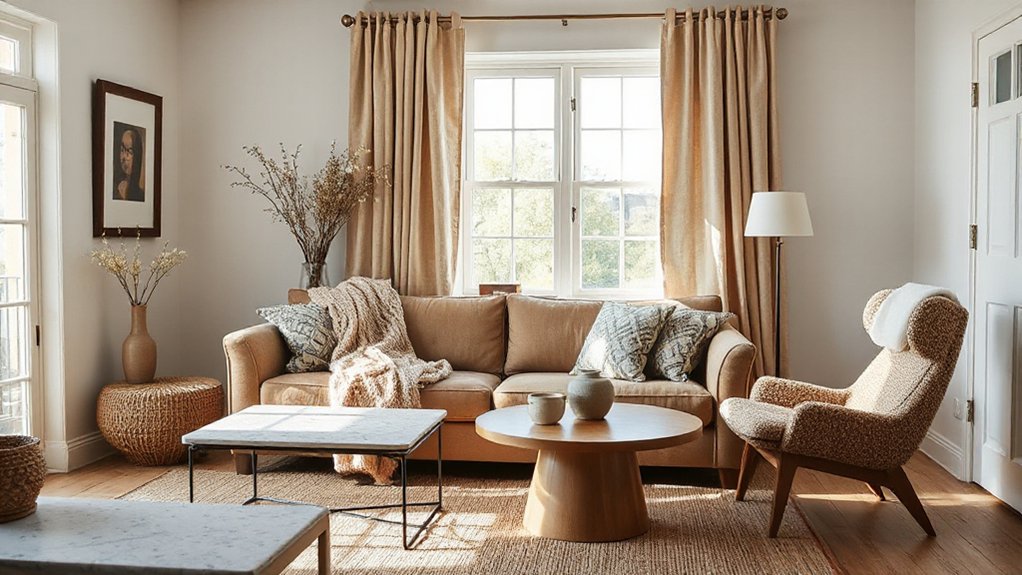
Mixing textures is the most economical way to add warmth and character without heavy investment: you can create depth and comfort by layering affordable materials like boucle, hemp, sisal, and brushed cotton across upholstery, rugs, curtains, and cushions.
You’ll implement textural layering with deliberate grain, weight, and sheen to control light reflection and silhouette. Choose a dominant base (sofa or rug) in a neutral weave, then introduce contrasting textures as accents to avoid visual clutter.
Prioritise durable, easy-care fibers for high-traffic areas, and vary scale to maintain balance. Pair matte finishes with subtle sheen to enhance perceived warmth without adding cost.
This approach delivers affordable coziness through precise material pairing, ensuring a cohesive, inviting environment that still reads modern and refined.
Refresh Walls Without Major Renovation
If you want a quick uplift without a full renovation, you can refresh walls with techniques that preserve structure and height while delivering a fresh mood. Focus on high-impact, low-fuss options that respect UK wall lines and lighting cues, using careful choices of texture and tone.
- Wallpaper patterns: select subtle geometrics or vertical motifs to elongate walls without overwhelming spaces.
- Paint techniques: use crisp edge lines, two-tone schemes, or soft ombré to modernise without removing existing features.
- Scuffed areas: spot-prime, then seal with a satin finish that resists marks and reflects light.
- Accent zones: carve a focal wall with one colour or a restrained pattern, balancing with neutral surrounds.
This approach preserves height, adds depth, and remains cost-efficient.
UK-Friendly Storage Solutions for Period Spaces
UK-friendly storage for period spaces hinges on maximizing compact, built-in solutions that respect architectural quirks while preserving ceiling height and light. You’ll exploit shallow pull-out units, alcove cabinetry, and under-sill drawers to maintain room proportions without crowding sightlines.
Fit modular systems behind original doors or within chimney breast recesses, prioritizing flush finishes and discreet handles to minimize visual heft. Opt for adjustable shelves and vacuumed vertical compartments to adapt to changing collections, ensuring accessibility from a comfortable eye level.
Use soft-close mechanisms to protect delicate fabrics or vintage books. Coordinate with Vintage charm and Antique accents through warm timber tones, brass detailing, and period-appropriate hardware. This approach delivers organized function, preserved authenticity, and a calm, breathable living aesthetic.
Elevate Period Architecture With Subtle Patterns
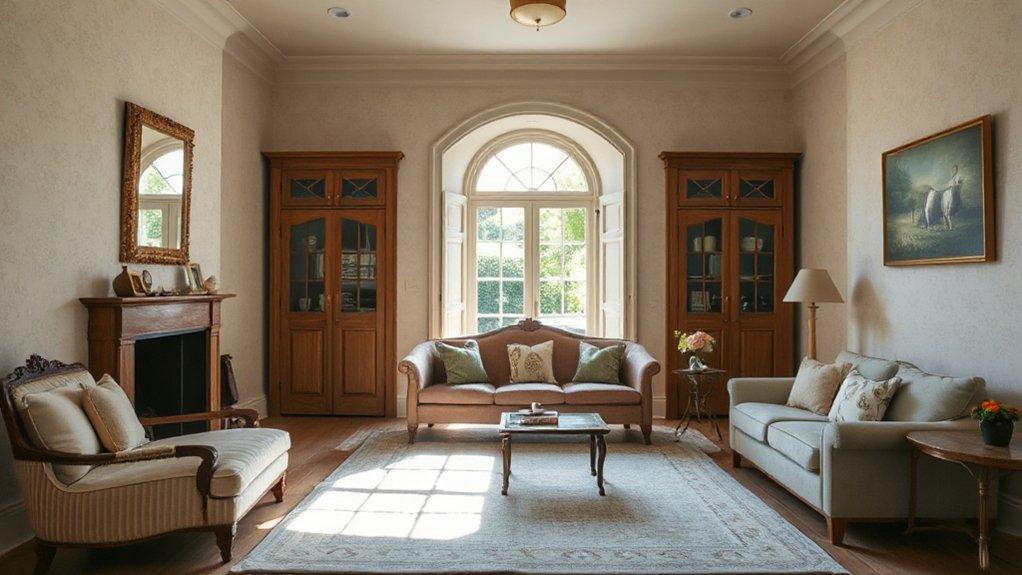
You can elevate period architecture by pairing subtle patterns that respect historic scale while adding visual interest. Use restrained motifs—think small repeats, muted color shifts, and texture-only contrasts—to modernize without dominating the room.
This approach aligns Subtle Pattern Pairings with Historic Style Modernized, delivering refined depth that feels both authentic and contemporary.
Subtle Pattern Pairings
Pairing subtle patterns with period architecture requires measured restraint: the goal is contrast, not competition. You’ll enhance historic detailing by prioritising texture and tone over loud motifs, letting architectural features lead.
- Use textile layering to add depth: a muted weave behind ornate woodwork creates a quiet dialogue rather than a clash.
- Favor pattern contrast through scale differences; larger motifs in soft hues offset fine, intricate plasterwork.
- Limit colour propositions to two neutrals with one accent—consistency keeps harmony and prevents busy walls.
- Align room function with fabric choices, so curtains, upholstery, and rugs reinforce coherence without overpowering the space.
Result: a refined, legible space where subtle pattern pairings elevate the architecture rather than compete with it.
Historic Style Modernized
Historic style can be elevated by weaving subtle patterns into period architecture without sacrificing its integrity. You approach restoration with measured restraint, selecting motifs that echo original crafts while staying legible to modern eyes.
Use restrained repeats—soft Greek keys, understated damask, or light bas-relief—in alcoves, borders, and plasterwork to create a quiet rhythm that enhances room proportions.
Apply color as a unifying thread: cool neutrals offset warm timber, with accent hues drawn from historic textiles.
Integrate proportionate hardware, mortised joinery, and traditional palisade railings where visible, ensuring craftsmanship remains legible.
This balance delivers Vintage charm while supporting Heritage preservation.
Pair textiles with performance fabrics, and employ smart lighting to highlight textural nuance without overpowering the architecture.
The result is disciplined elegance, timeless yet current.
Create Cozy Morning Nooks You’ll Actually Use
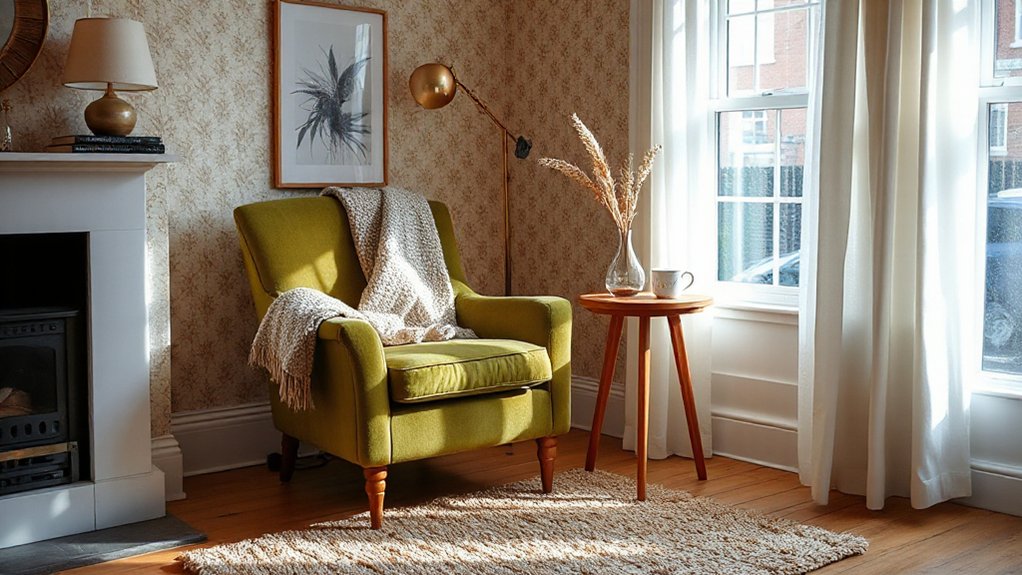
Set up your morning nook with a designated chair, a small side table, and a plug-in or star-rated lighting plan to minimize glare.
Use soft textures—plush throws and knit cushions—to boost comfort and warmth without clutter.
Prioritize practical elements like a nearby charging station and a simple tray for books or a cup, so you’ll actually reach for it each day.
Cozy Morning Nook Setup
A cozy morning nook starts with a simple, focused setup: a comfortable chair or window seat, a small table, and lighting that invites you to linger. You’ll optimize for function first, then atmosphere, balancing sightlines, accessible outlets, and glare control to support focused rituals.
Prioritize sun orientation and furniture scale to avoid crowding, ensuring you can reach coffee, notebook, or device without stretching.
- Sunlit mornings: place seating where natural light washes the space without harsh glare.
- Storage efficiency: tuck magazines, books, or a blanket into a slim, nearby basket.
- Texture balance: pair smooth surfaces with a single soft accent, like a throw.
- Vintage textiles: integrate a small, durable textile element for timeless character.
Soft Textures For Mornings
Soft textures are the backbone of a morning nook you’ll actually use: they invite touch, reduce visual fatigue, and anchor routines.
You’ll optimize textile layering to balance warmth, light reflectance, and tactile variety without visual clutter. Start with a neutral base possibly in wool or cotton, then introduce a knit throw and a velvet cushion for depth.
Pair a tactile rug with a tactile-mute underfoot for steady footing as you rise. Align fabrics with your morning ambiance: breathable, easy-care materials for quick refresh, plus subtle sheen to catch early light.
Keep seams and edges precise to avoid distractions in a small space. This approach yields a calm, functional zone where routine feels intentional and inviting.
Modern Meets Heritage: Furniture Pairings for UK Homes
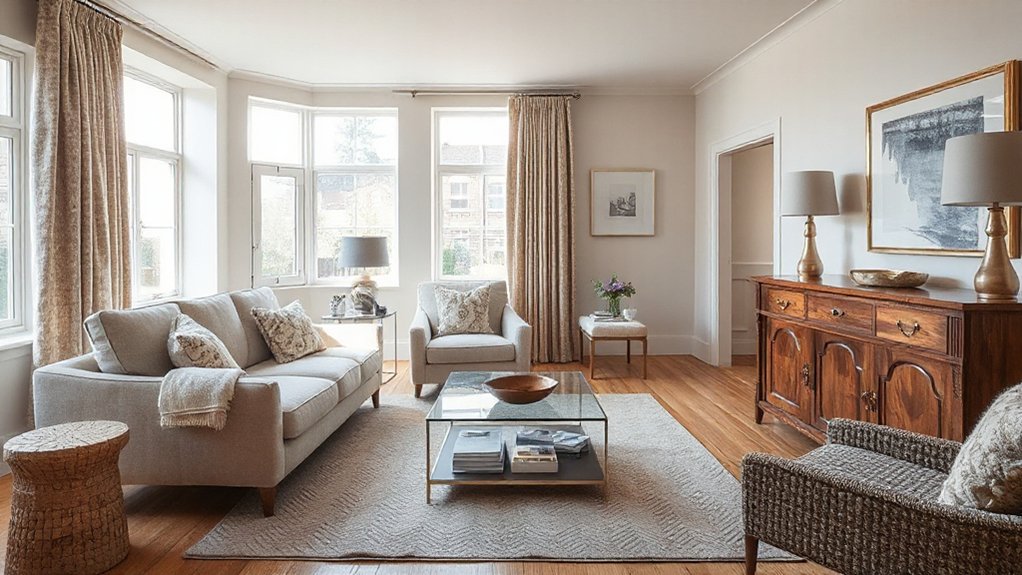
Pairing furniture that marries modern lines with heritage elements creates a balanced UK interior where function meets story. You approach scale, texture, and finish with deliberate restraint, ensuring each piece speaks clearly.
Combine clean, steel-frame seating with timber heritage tables, then anchor with antique accents for depth. Balance is achieved as vintage vignettes appear beside contemporary lighting, creating rhythm and continuity.
- Pair a streamlined sofa with a carved wooden coffee table to highlight contrast without clash.
- Use upholstery a shade or two lighter than the timber to preserve legibility.
- Introduce antique accents through small, deliberate accessories.
- Layer lighting to sculpt surfaces and emphasize material honesty.
This approach yields refined, usable spaces that feel curated, not crowded, and timeless.
Green Accents: Easy Indoor Plants for UK Living
Bringing greenery into UK interiors is about selecting robust, low-maintenance plants that thrive in varying light while anchoring rooms with natural texture. You’ll choose compact, forgiving species that adapt to indoor conditions, supporting a calm, cohesive palette.
Focus on sustainable, readily available options that require minimal fuss, yet deliver consistent foliage presence. Indoor greenery benefits from strategic placement: shelves, windowsills, and corners where light shifts through the day.
For plant care, watering routines should be measured and infrequent, avoiding soggy roots while maintaining humidity. Prioritize drainage and potting mediums suited to each species, with occasional pruning to sustain shape.
Regular dusting preserves leaf efficiency and photosynthesis. This approach yields durable greenery, elevating ambience without complexity, while enhancing air quality and perceived room height.
Quick, High-Impact Decorating Swaps That Last
If you’re after quick swap impacts, start with anchor pieces you see daily—the upholstery, cushions, and lighting—since small changes here shift rooms instantly.
Prioritize lasting decor tweaks by using high-quality finishes and stable color contrasts that tolerate wear and aging. This approach keeps your refreshed look cohesive over time while letting you swap accents as tastes evolve.
Quick Swap Impacts
Sometimes a few deliberate swaps can transform a room in days, not weeks. You’ll see rapid impact when you focus on color psychology and furniture rearrangement to refresh mood, function, and perceived space. This approach relies on intentional contrasts, scale, and focal points to deliver immediate polish without costly overhauls.
- Swap a bold accent pillow or rug to redefine energy and coherence
- Reposition sofas and chairs for better sightlines and traffic flow
- Introduce a lighter or darker secondary color to elevate contrast
- Swap lighting layers (ambient, task, accent) to sharpen depth
These moves yield perceptible brightness, improved balance, and a refreshed rhythm, while staying cost- and time-efficient. You’ll maintain restraint, ensuring each swap supports long-term harmony rather than fleeting novelty.
Lasting Decor Tweaks
Small, lasting tweaks can cement quick wins, turning fresh energy into everyday usability without repeated overhauls. You adjust with intention, selecting durable finishes and reversible accents that sustain momentum.
Start by layering vintage fabrics as upholstery accents or cushions; their patina elevates texture without demanding full redecoration. Pair these with a narrow colour rhythm across walls and textiles to maintain cohesion.
Consider artistic murals as controlled focal points rather than permanent commitments, choosing removable variants for flexibility. Prioritise scale: oversized prints on a single wall, understated frames elsewhere, preserving balance.
Implement hardware updates—handles, knobs, and switches—with matte finishes to reduce visible wear. Finally, document care routines and rotation schedules to preserve impact; quick swaps become trusted, lasting decor tweaks when executed with disciplined consistency.
Frequently Asked Questions
How Can I Maximize Natural Light in Small UK Rooms?
In small UK rooms, you gain 20% more light by widening usable surface area; maximize it with skylight installation and strategic window treatments. You’ll reflect daylight, and orient furniture to avoid glare, enhancing perception while you balance privacy.
What Budget-Friendly Flooring Options Suit Period Homes?
You can pair vintage rugs with laminate flooring for budget-friendly period-appropriate appeal, offering durable practicality. Opt a light-wood tone to brighten rooms, preserve authenticity, and layer textures; avoid overly glossy finishes to maintain vintage charm and gentle reflections.
How to Update Curtains for a Brighter Look?
You’ll brighten your space by selecting sheer curtain fabrics for diffuse light and lighter tones, then pair with minimalist Window treatments to maintain airflow. Opt for crisp folds, right track hardware, and easy-care fabrics for practical, precise results.
Which Wall Colors Suit Typical UK Lighting Conditions?
Choose warm, mid-tones like soft creams or greys with blue undertones; they flatter UK lighting. Color psychology favors calming hues. Use eggshell or satin paint finishes for depth, while avoiding stark whites that wash out.
What Are Low-Cost, Durable Storage Ideas for Small Spaces?
You optimize space with low-cost, durable storage by using creative shelving and multi functional furniture; you maximize vertical storage, minimize clutter, and choose modular units that flex with you, ensuring precise organization, aesthetic balance, and practical, lasting performance.
Conclusion
You curb the chaos with a budget-smart mindset, yet your space feels expansive and intentional. You chase brightness without glare, and you savor calm with texture. You mix bold, period-informed character with quiet, modern controls. You embrace greenery that breathes ease, not fuss. You swap quick, high-impact tweaks for lasting polish, then pause—appreciating the contrast: a light-filled room that still reads grounded, a heritage vibe that never feels dusty. In short, refresh without surrendering your identity.