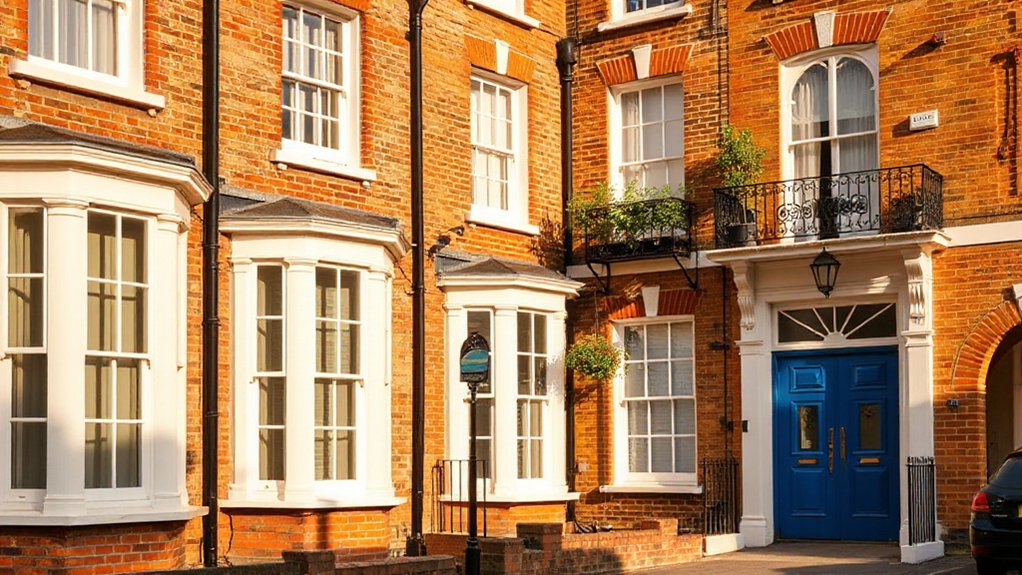
Refresh your Victorian terrace by starting with a precise assessment of its start point and the character you want to preserve. Choose a warm, period-respecting color palette and layer lighting to highlight architectural details. Restore or refinish windows and doors, balance energy upgrades with authentic profiles, and add durable, period-appropriate finishes. Maintain the rhythm of proportion and craftsmanship, and document decisions for consistency. With thoughtful planning, you’ll reveal charm while boosting comfort—and you’ll discover more as you continue.
Assess Your Victorian Terrace’s Start Point

To assess your Victorian terrace’s start point, begin with a clear, concrete inventory of what already exists and what needs attention. You map structural elements, roofing, walls, windows, and drainage, noting defects, materials, and age.
You evaluate interior layout, storage, and lighting, identifying functional gaps and safety concerns.
Outside, you inspect the façade, fencing, and boundary walls, plus soil, plants, and microclimates. This audit helps you determine what to keep, repair, or replace, and what to upgrade for efficiency and charm.
Consider Victorian gardens as a framework for growth, noting existing features you value and opportunities for restoration.
When planning, align work with period appropriate furniture and authentic detailing to preserve character while modernizing usability.
Your start point becomes a precise, actionable baseline.
Define the Character You Want to Preserve
Start by naming the core qualities that give your Victorian terrace its soul: proportion, materials, craftsmanship, and the rhythm of spaces. You’re defining the character you want to preserve, not chasing trends, so focus on architectural authenticity and historical significance as anchors.
1) Identify signature details you’ll protect, like cornices, mullions, and timber joinery.
2) Map how rooms flow, ensuring the original rhythm guides renovations without forcing collapse.
3) Prioritize durable materials that echo the era while permitting sensitive upgrades.
4) Document decisions, so future restoration remains faithful to intent and provenance.
With these touchstones, you keep a coherent voice across updates, balancing modernization with respect for the building’s heritage and the way it once spoke to its inhabitants.
Set a Warm, Period-Respectful Color Palette
A warm, period-respecting color palette isn’t about chasing fashion; it’s about inviting the house to speak in its own language. You’ll layer muted, authentic tones that echo historic hues without shouting.
Start with a grounded base—cream, soft greige, or warm taupe—and introduce restrained accents in olive, charcoal, or velvety terracotta. Let the palette flow across rooms, so hallways hear a quiet continuity rather than abrupt shifts.
Test swatches in daylight and by lamplight to capture evolving mood, and resist trendy extremes that erase character. Use color to emphasize architectural details—doors, plasterwork, cornices—with slightly deeper or lighter shades.
The aim is cohesion, not uniformity; the result should feel lived-in, timeless, and distinctly yours within period palettes.
Lighting That Breathes Life Into Historic Rooms

You’ll start with ambient light that respects the era, choosing warm, soft options that reveal details without overpowering them. Build depth with layered lighting—fixtures at different heights and purposes that guide the eye and transform each historic room.
Let subtle historic accents guide your choices, from period-appropriate finishes to fixtures that feel authentic while staying contemporary in function.
Ambient Light Choices
Why is ambient lighting the keystone of a Victorian living space? Because it sets mood, highlights, and textures without overwhelming original details. You’ll balance warmth with glow, ensuring rooms feel alive rather than staged.
Use antique or period-inspired fixtures that respect shape and scale, not mere brightness. Consider subtle contrasts between wall wash, table lamps, and ceiling radiance, so vintage fabrics and architectural features sing.
Include gas lighting accents where authentic, but pair with modern efficiency for safety and control. The aim is breathable, layered illumination that supports conversation and daily life.
- Curated wall sconces that echo period hardware
- Soft shaded table lamps for intimate corners
- Gentle ceiling wash to reveal cornices
- Discreet dimming for mood and function
Layered Lighting Effects
Layered lighting breathes life into historic rooms by combining purpose with nuance. You layer sources to sculpt mood, function, and texture without loud statements.
Start with a warm base: a dimmable ceiling fixture or wall sconces that wash walls softly, creating ambient ambiance. Add task lighting where you read, cook, or study, using adjustable beams that don’t glare or overwhelm original plasterwork.
Introduce accent lights to highlight architectural details—cornices, ceiling roses, and carved mantels—so your eye travels through the space with intention. Choose fixtures with period-appropriate lines but modern efficiency, ensuring the glow feels refined rather than fussy.
Maintain balance by spacing lights evenly, avoiding hotspots, and syncing color temperatures for cohesive, breathable layers. Layered lighting becomes quiet choreography that respects character while enhancing daily living.
Historic Room Accents
- Select softly shaded lamps that cast gentle pools of light, highlighting moldings.
- Layer fixtures at varying heights to create depth and focal points.
- Integrate warm-toned bulbs to compliment wallpaper hues and textile patterns.
- Mix period silhouettes with subtle contemporary controls for effortless ambiance.
Windows and Doors: Restore, Refinish, or Replace?
When you weigh restore versus replace, you’re balancing authenticity, cost, and performance for your windows and doors.
Refining or refurbishing finishes can sharpen character without forfeiting history, while decisive replacement may boost efficiency and daylight.
Consider how much of the original joinery you want to keep and how it will age with the rest of the terrace.
Restore vs Replace Tradeoffs
Choosing between restoring, refinishing, or replacing windows and doors in a Victorian terrace hinges on condition, value, and long-term goals. Start by weighing structural soundness, historical integrity, and energy performance to decide which path delivers the best balance of craftsmanship and practicality.
1) Assess structural condition: framing, sills, and muntins—weakness here sways toward replacement.
2) Gauge historical integrity: original profiles, glazing beads, and patterns favor restoration when feasible.
3) Compare energy performance: draftiness, insulation, and glazing efficiency; modern materials and synthetic alternatives can improve results.
4) Weigh costs and lead times: restoration delivers charm, while replacements offer speed and predictability.
Refine or Refurbish Finishes
Refining or refurbishing finishes on Victorian windows and doors is about preserving character while selecting the best path for durability and ease of use. You weigh options: restore to a faithful glaze, refinish to enhance grain, or replace with modern equivalents that mimic era details. Your aim is a balanced outcome—authentic look, smooth operation, long life.
Begin with a close inspection: identify soft finishes, cracked paint, or rot, and separate decorative from structural needs. If the frame supports, opt for careful sanding, compatible primers, and a breathable topcoat to resist weathering.
When replacement is necessary, choose profiles that honor scale and proportion. Embrace artisan craftsmanship in repair work, and consider vintage textiles as inspiration for patina and color depth, not just aesthetics.
This holistic approach sustains charm with practical resilience.
Authentic Timber Details You Can Restore or Recreate
Authentic timber details can transform a Victorian terrace from period piece to polished, lived-in home, and the good news is many elements are repairable or reproducible with careful technique. You’ll rediscover Victorian craftsmanship in every restore, from precise mouldings to joinery.
Focus on preserving patina while reinforcing structure, then recreate without over-embellishment.
- Salvage and refit original skirting boards with clean, handled returns.
- Replace damaged architrave with matched profiles, keeping grain direction consistent.
- Reproduce timber balustrades using traditional mortise-and-tenon joints.
- Sand, stain, and seal to mimic authentic aged tones.
This approach honors Ornamental woodworking roots while ensuring durability.
You’ll enjoy authentic detail that feels timeless and cohesive throughout your home.
Heating and Insulation That Respect the Era
Victorian heating and insulation isn’t about chasing modern efficiency at the expense of character; it’s about integrating period-appropriate comfort with smart, unobtrusive upgrades. You’ll prioritize tight envelopes and discreet controls that respect historic spaces while reducing drafts.
Begin with secondary glazing on sash windows and door animates, paired with weatherstripping that’s sympathetic to original profiles. Consider column radiators with thermostatic controls to maintain steady warmth without visual intrusion.
Use hemp or mineral wool insulation behind plaster where accessible, preserving plasterwork integrity. For ventilation, employ balanced, quiet systems that minimize heat exchange losses while avoiding noisy or conspicuous equipment.
Finally, document every intervention for Victorian architecture and Historical preservation records, ensuring future caretakers understand the choices and their lasting value.
Flooring Choices That Honor the Period
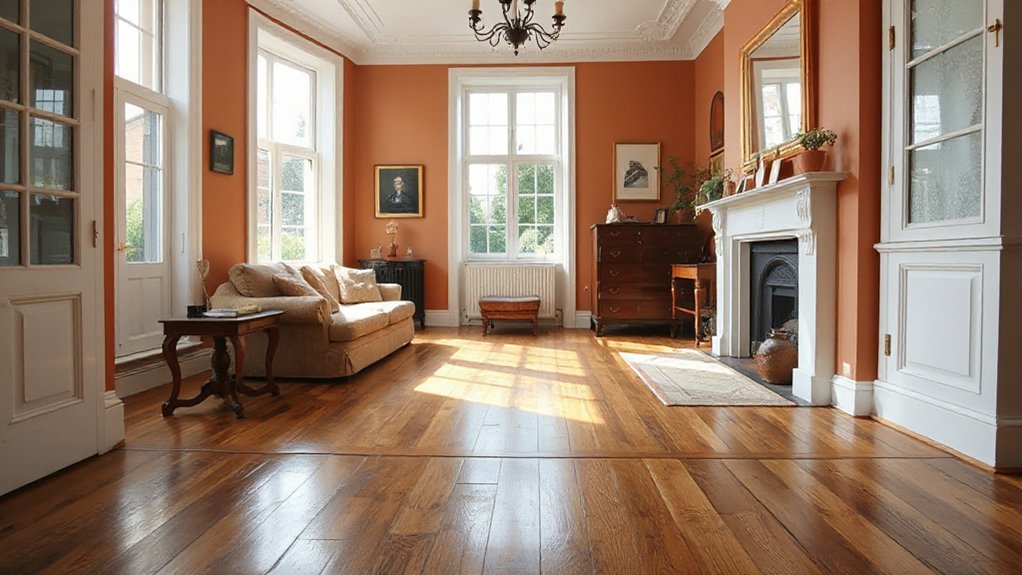
You’ll strike the right balance by choosing Classic Wood Clarity for warmth and character, paired with careful grain and finish that respect the period.
Toned Stone Harmony brings enduring dignity and tactile quiet, echoing Victorian restraint without feeling fussy.
Durable Tile Balance rounds out the palette, offering practical durability while preserving a cohesive, timeless look.
Classic Wood Clarity
Wood flooring in a Victorian terrace should feel honest and enduring, so focus on finishes and tones that enhance the wood’s natural character rather than mask it. You’ll preserve period detail by selecting clear wears and subtle sheens that emphasize grain, not gloss. Use finishes that age gracefully, resisting dramatic color shifts.
Also, align wood with period paint harmonies and let antique hardware inform your trim and inlay choices.
- Choose a low-lustre finish to reveal grain depth.
- Pair warm browns with cream or olive highlights for balance.
- Match boards to existing moldings, avoiding stark contrast.
- Maintain patina with careful cleaning, not aggressive refinishing.
This approach keeps authenticity intact while feeling fresh for modern living.
Toned Stone Harmony
Toned stone adds a grounded, timeless backbone to a Victorian terrace floor, offering warmth and texture without competing with period detailing. You’ll achieve harmony by selecting stone hues that echo brickwork and softened plaster, not by shouting contrast.
Opt for honed surfaces in warm greys, taupes, or subtle greens that age gracefully with foot traffic. Keep patterns simple: a restrained linear run, or a gentle checkerboard in a pale palette if you must contrast. Seal minimally to preserve natural variation and patina.
Pair flooring with understated border detailing and period-appropriate molding. Consider garden landscaping adjacent spaces to frame the stone, guiding sightlines without overpowering interiors.
In-use scenting should be light and complementary, avoiding cloying finishes that clash with stone’s quiet presence.
Durable Tile Balance
Sustainably sourced materials reduce footprint without compromising look, and you’ll notice the difference in long-term upkeep. Use decorative accents to punctuate the scheme—an inlay border, a checker motif, or a subtle medallion can anchor the room.
The key is balance: durable, easy-clean surfaces meet refined detail. Consider these ideas:
1) Select long-lasting ceramic or stone blends.
2) Limit color to muted earth tones for cohesion.
3) Integrate period-inspired borders sparingly.
4) Pair tiles with sustainable materials and carefully placed decorative accents.
Kitchen Refresh: Modern Practicality, Vintage Aesthetics
A kitchen refresh for a Victorian terrace blends modern practicality with vintage charm, proving that function and character can coexist without compromise. You optimize layout to maximize workflow while preserving period personality, choosing cabinetry with clean lines and soft closes that nod to period furniture.
Integrate durable surfaces in neutral tones, then punctuate with warm metal hardware for subtle contrast. Storage should feel generous yet unobtrusive, so you keep counters clear and use clever organizers.
Lighting matters: vintage lighting fixtures add warmth, while under-cabinet LEDs ensure precise tasks without glare. Choose appliances with a compact footprint and retro-inspired fronts that don’t shout, just harmonize.
Palette stays restrained, allowing architectural detailing to breathe, and you subtly weave fabric textures and natural materials to complete the cohesive, timeless, kitchen-charmer feel.
Bathroom Updates With Period-Perfect Touches
You can start by choosing period-perfect fixtures that balance charm with everyday reliability, so your bathroom feels authentic without sacrificing modern comfort.
Layer timeless tile details—ikea? no, classic; think crisp hexes or subway patterns—that echo the era while remaining easy to clean and maintain.
This approach ties the overall feel together, ensuring a cohesive, polished space that reads as deliberately old-world yet practical.
Period-Perfect Fixtures
- Select a pedestal or wall-mounted basin with period contouring and contemporary cartridges for leak-free use.
- Pair a clawfoot-inspired tub with modern anti-slip finishes and efficient drains.
- Install a traditional-style mixer and rainfall showerhead for comfort without visual clash.
- Add discreet storage and textiles that nod to era textures, avoiding clutter.
This approach complements a Victorian garden backdrop and subtle period-appropriate textiles, ensuring a cohesive, timeless feel.
Timeless Tile Details
In bathrooms, choose Victorian tile as a deliberate feature: a splash of color, a narrow dado, or a border to frame fixtures. You’ll gain cohesion by mixing a patterned mosaic with solid-field tiles, ensuring contrast without clutter.
Consider a restrained palette: soft whites, creams, or muted blues that echo original schemes. Subtle texture—matte finishes or lightly glazed surfaces—adds warmth while staying timeless.
Maintain longevity with proper sealing and periodic regrouting where needed. This approach preserves the authentic feel, yet delivers refreshed practicality in daily use, aligning form with function.
Victorian tile supports enduring character and modern ease.
Smart Storage Solutions for Clutter-Free Surfaces
Smart storage can transform a Victorian terrace by keeping surfaces clear without sacrificing style. You’ll blend hidden storage with everyday practicality, ensuring clutter control without visible bulk. Use these ideas to preserve charm while gaining function:
- Hidden storage under seating and in ottomans
- Wall-mounted cabinets that tuck away daily essentials
- Built-in window seats with lift-top lids for linens or magazines
- Dual-purpose furniture, like coffee tables with drawers
Keep surfaces free by labeling and rotating items seasonally, so only daily essentials remain out. Choose finishes that echo woodwork and period details to maintain cohesion.
Prioritize quiet hardware and soft-close mechanisms to reduce noise and wear. With deliberate placement, you’ll enjoy cleaner surfaces and a calmer, more confident home.
Decor Rules to Maintain Proportions and Scale

Understanding proportions and scale in a Victorian terrace isn’t about chasing exact measurements alone—it’s about how everything feels in the room. You balance room height with furniture mass, letting verticals draw the eye upward and avoiding overcrowding corners.
Keep major pieces in harmonious percentages: a sofa and chairs sized to the room’s width, not its lost corners. Choose Modern furniture with clean lines to respect historic details while preserving airiness.
Allow negative space to breathe between grand mantels and seating clusters, so proportions stay legible. Use Minimalist accents to punctuate, not overwhelm—think a single, sculptural lamp or a restrained art board.
Let texture, light, and scale converse calmly, preserving charm while ensuring everyday comfort.
Textile and Pattern Strategies for Victorian Sensibility
Textile and pattern strategies for a Victorian sensibility balance richness with restraint, using fabric and print choice to reinforce period charm without overwhelming the eye. You’ll layer textures thoughtfully, letting textile layering create depth rather than distraction.
Pattern mixing works when you anchor with a unifying color or tempo, then introduce complementary motifs in small doses. Keep scales varied: large ditto prints paired with tight weaves avoid visual overload. Subtle sheen, like satin lisere or muted velvet, adds nuance without shouting.
Coordinate trims and upholstery to echo architectural details, so textiles feel intentional.
1) Choose a restrained palette and repeat it across rooms.
2) Mix one bold print with two quieter mates.
3) Introduce texture through weave and finish.
4) Tie fabrics to period features for cohesion.
Exterior Curb Appeal That Belongs to the Street
As you shift from coordinating interior textiles to shaping the streetside impression, curb appeal becomes the public face of your Victorian terrace. You curate a disciplined first impression with restrained, respectful touches that nod to history while welcoming today’s pedestrians.
Begin with a clean, inviting entry; verify steps, railing, and path materials read as curated, not cluttered. Integrate historical landscaping through native-informed plant palettes, seasonal color, and tidy lawns that highlight architectural details rather than compete with them.
Incorporate Victorian art in a few low-contrast accents—gentle chemises of ironwork, discreet plaques, or a modest weatherproof focal feature—that celebrate craftsmanship without shouting. Maintain symmetry and balance, preserve original massing, and favor durable finishes.
The street-facing gesture should communicate confidence, care, and timeless locality.
Energy-Efficient Upgrades That Don’t Look Out of Place

To keep a Victorian terrace efficient without compromising its character, focus on targeted, discreet upgrades that blend with the architecture. You’ll save energy while preserving charm by selecting finishes and placements that echo architectural detailing and garden landscaping sensibly.
- Switch to high-performance sash windows with slim liners that mirror original frames.
- Insulate lofts and cavity walls behind tasteful architectural detailing so nothing looks bulky.
- Install efficient radiators or underfloor heating beneath period floors, kept visually quiet.
- Choose LED lighting and smart controls integrated into existing switchgear for subtle, practical gains.
These choices respect proportion, texture, and outdoor context, delivering comfort without clad transformations.
Maintenance Habits to Preserve Character Over Time
A steady daily care rhythm keeps your Victorian terrace authentic, from light dusting to quick checks of trim and plaster for telltale cracks.
Build preservation habits around gentle cleaning, timely repainting, and moisture control to protect original finishes without erasing character.
This practical, holistic approach sets the foundation for lasting charm while you live in and enjoy the home.
Daily Care Rhythm
Maintaining the character of a Victorian terrace isn’t a once-a-year task—it’s a daily rhythm. You tune small habits that protect texture, patina, and proportion, so the home breathes without effort. Start with clean edges, wipe surfaces, and inspect paint in good light to catch flaking early. You’ll notice that consistent care compounds charm over time.
- Tidy thresholds and sills each morning, then seal gaps as needed.
- Wipe railings, doors, and hardware weekly to prevent tarnish and corrosion.
- Schedule seasonal checks for garden landscaping and outdoor lighting.
- Refresh cushions, curtains, and fabrics sparingly to preserve historic feel.
A disciplined routine keeps the essence intact, letting garden landscaping and outdoor lighting echo the home’s original cadence.
Preservation Habits Guide
Preservation habits aren’t a gimmick; they’re a practical framework for keeping a Victorian terrace’s character intact as it evolves. You adopt routines that respect original fabric while allowing thoughtful updates.
Start with documentation: note colors, fixtures, and textures before you touch them, so future decisions stay grounded in historical accuracy.
Schedule regular inspections for masonry, timber, and ironwork, addressing issues promptly to prevent cascading damage.
Prioritize reversible changes and clearly labeled alterations so the home’s story remains legible.
When integrating modern comforts, pursue discreet, purposeful choices that support function without shouting modernization.
Favor breathable finishes, sympathetic palettes, and durable materials, ensuring durability alongside charm.
Balance restoration with adaptation, embracing modern integration that enhances living without erasing the terrace’s identity.
Budgeting Smartly for a Respectful Refresh
Smart budgeting sets the tone for a respectful refresh, letting you balance stylish upgrades with the building’s character without overextending your wallet. You’ll protect historical accuracy while still embracing modern amenities, choosing solutions that feel inevitable, not borrowed.
Plan with a clear priority list, and track every pound against tangible outcomes.
- Prioritize essentials: durable materials, energy efficiency, and finishes that echo era details.
- Allocate a flexible contingency for unexpected fixes that preserve structure over novelty.
- Source authentic-but-cost-conscious fixtures that nod to history without over-modeling.
- Phase projects to spread costs and maintain ongoing preservation momentum.
Case Study: A Step-by-Step Victorian Terrace Makeover
Starting on a Victorian terrace makeover, this case study follows a clear, hands-on sequence that honors heritage while delivering modern comfort.
You begin by evaluating existing features, prioritizing structural safety, and identifying elements worth preserving within Victorian architecture.
Next, you draft a cohesive palette that respects historic preservation, choosing muted tones and authentic textures to echo the era without overwhelm.
You implement precise upgrades: insulation, upgraded lighting, and concealed wiring, all while maintaining parade-ready plasterwork and cornices.
The transformation emphasizes natural light, smart storage, and functional layouts that suit daily living.
Throughout, you document decisions, measurements, and finishes, ensuring the project remains faithful to the house’s character.
The result blends timeless charm with contemporary ease, preserving essence while improving livability.
Frequently Asked Questions
How Can I Assess the Terrace’s Original Materials Accurately?
You assess the terrace’s original materials by documenting remnants, cross-checking historical photos, and consulting restorations guides; it’s practical, precise, and respectful. You note restoration challenges, verify sourcing, and plan careful material sourcing for authenticity and longevity.
What Are Subtle Ways to Test Historic Color Authenticity?
Symbolism blooms as you test historic paint and authentic finishes, you feel the weight of time. You dab and compare, trusting grain and patina, noticing subtle shifts. You reveal true hues, preserving character with thoughtful, skilled restraint.
Which Modern Updates Best Mimic Victorian Detailing Without Overdoing It?
You’ll choose Victorian lighting sparingly, pairing it with Modern fixtures to preserve charm while signaling progress. You guide space with restrained detailing, balancing period warmth and today’s efficiency, and you’ll accent rooms thoughtfully, avoiding heavy ornament, embracing cohesive, timeless elegance.
How Do I Budget Without Compromising Period Integrity?
You budget by prioritizing essential repairs first, then allocate for authentic restoration accents, like period-appropriate fixtures, while leaving room for tasteful modern comforts. Visualize wearing Historical preservation as a shield, guiding choices without compromising character and authenticity.
What Maintenance Rituals Protect Charm Long-Term Without Fuss?
You protect charm with simple maintenance rituals: regular dusting, humidity control, and timely repaints. Embrace restoration techniques that honor woodwork and plaster, and apply preservation strategies for fixtures. Schedule annual inspections, document changes, and trust sustainable, expert guidance.
Conclusion
As you refresh, you’ll feel the house answering back—steady, patient, a little wiser. Like a well-loved novel passed through hands, it retains its glow even as chapters change. You’ll thread light through plaster and wood, choosing colors that whisper of the era while inviting today’s ease. When you close the door, the past and present nod to one another, a shared vow: care well, and the charm stays, enduring, ever welcoming.