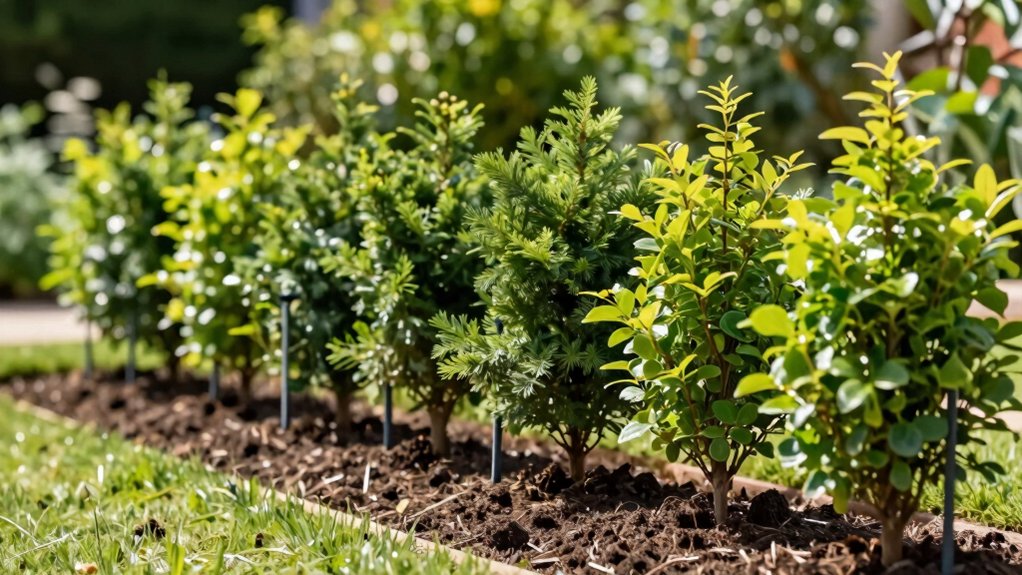
To plant a fast, effective privacy hedge, start by evaluating your site: sun exposure, drainage, and utilities, then choose evergreen or seasonal options based on climate and maintenance. Space plants to mature width, plan for deep, infrequent watering, and mulch to conserve moisture. Prepare the soil with compost and near-neutral pH; plant during ideal temperatures for root establishment. Prune to shape and density, monitor pests, and adjust feeding. If you keep going, you’ll uncover even more practical steps.
Assess Your Site for a Hedge Privacy Screen
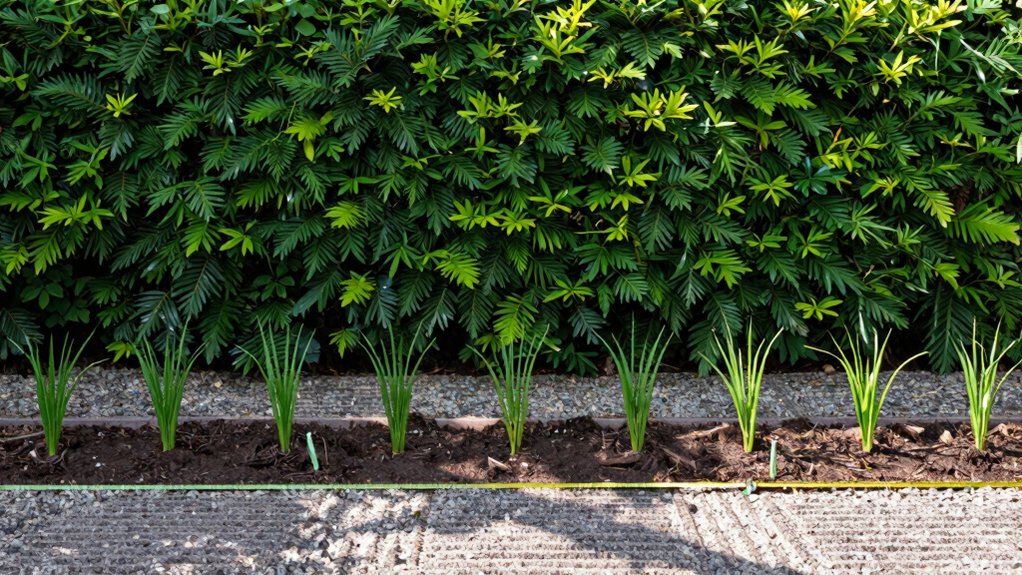
Assess your site for a hedge privacy screen by evaluating where you’ll gain the most screening with the least maintenance. You’ll start by mapping sun exposure, wind patterns, and drainage, then identify sections that align with growth goals.
Consider root development: choose locations that allow ample underground space without competing utilities or underground structures.
Assess soil compatibility by testing texture, pH, and moisture; select plants that tolerate these conditions to minimize supplemental irrigation and soil amendments.
Observe existing vegetation, nearby structures, and pedestrian access to prevent future conflicts.
Plan for space to accommodate mature width and vertical growth, ensuring future trimming won’t damage foundations or utilities.
Finally, evaluate accessibility for installation and ongoing care, prioritizing sites with easy irrigation, mulching, and periodic pruning for consistent screening.
Define Your Privacy Goal: Height and Coverage
Set a target height that fits your sight lines and local rules, then choose a hedge that reliably fills the space to that height.
Consider how quickly you want coverage and whether you need ongoing maintenance to keep the look uniform.
Define both the final height and the level of coverage to avoid gaps and guarantee your privacy goals are met.
Define Desired Height
To define your privacy goal, start by choosing a target height that blocks the view while matching the space and climate you have. Your chosen height guides which species to select, so you can balance density, growth rate, and eventual maintenance.
Consider how much vertical space you actually need without crowding overhead wires, windows, or eaves. When evaluating options, weigh species selection for rapid height gain versus long-term stability and pruning needs.
Keep in mind that taller plants don’t always mean better privacy if they branch unevenly or shed leaves seasonally. Additionally, assess root depth to ensure you won’t disturb foundations, sidewalks, or underground utilities as the hedge establishes.
A precise height target minimizes maintenance while maximizing consistent screening.
Ensure Full Coverage
To guarantee full coverage, pair your height target with a plan for even, dense growth across the entire hedge. You’ll define a clear goal for both vertical and horizontal reach, then select species that align with that trajectory. Consider growth rate, branching pattern, and sun exposure to avoid gaps or thin spots.
Schedule regular pruning to maintain uniform density, trimming to encourage outward vigor rather than interior growth. Space plants according to mature width, ensuring overlap without crowding, so each shrub contributes to a seamless screen.
Monitor for disease or nutrient gaps that could disrupt coverage, and amend soil proactively. In your garden design, prioritize steady fill-in and predictable habit to maximize aesthetic appeal and privacy, delivering a reliable, low-maintenance barrier.
Choose Hedge Types by Climate: Evergreen vs. Seasonal
Choosing hedge types by climate means weighing evergreen constant privacy against seasonal variation and color.
Consider how climate shapes evergreen retention, drought tolerance, and maintenance, versus seasonal loss and recovery cycles.
Factor in growth rates to align your goal with steady screening and manageable upkeep.
Evergreen Versus Seasonal
Evergreen and seasonal hedges each suit different climates and goals, so your choice should hinge on hard climate realities and maintenance priorities.
In practical terms, evergreens provide year-round screening and windbreaks, but they demand steadier soils and patience for gaps to fill. Seasonal hedges, by contrast, offer rapid bulk and seasonal color, yet they require more frequent pruning to maintain shape and density.
Your climate dictates performance: warm, wet zones favor dense evergreens with lower disease risk, while cooler or variable zones benefit from seasonal varieties that flower prolifically and shed less foliage in winter.
Plan around maintenance capacity: evergreen types need steady, year-round care; seasonal ones reward timely hedge pruning and attention to bloom windows.
Consider your privacy timeline, then align choice with long-term stability and ease. Seasonal flowering remains a key attraction to weigh.
Climate Impact Choices
Climate drives hedge performance more than any other factor. When choosing by climate, you’ll weigh evergreen and seasonal options against your seasonal cycles, rainfall, and temperature swings.
Evergreen varieties offer year-round privacy and structure, but they demand steadier moisture and sometimes higher site tolerance to heat or cold.
Seasonal hedges provide seasonal cues and quicker annual fill, yet may expose gaps in winter privacy.
Prioritize drought tolerance in arid or drought-prone regions, selecting species that conserve moisture and have deep root systems.
Native species often align with local rainfall patterns and soil biology, improving establishment and resilience.
Consider microclimates—shaded, windward, or exposed edges—to tailor shelter, windbreak value, and maintenance needs while preserving long-term durability.
Growth Rate Considerations
Growth rate shapes how quickly a hedge fills in and delivers privacy, so match your species choice to your desired turnover and maintenance capacity.
When choosing by climate, evergreen hedges typically show steadier year-round growth, while seasonal varieties push rapid height gains during warm periods but pause in winter.
Consider your site’s sun exposure, wind levels, and soil moisture to assess true growth potential.
Faster growers aren’t always better if they demand high maintenance or aggressive root systems that disrupt sidewalks or utilities.
Evaluate root growth tendencies—some species spread aggressively underground, affecting foundations.
Soil fertility matters: nutrient-rich soil fuels robust growth, but excessive nitrogen can promote weak wood and increased pruning needs.
Balance rate with long-term stability, disease resistance, and the hedge’s ultimate height.
Plan Spacing for Quick Coverage
To achieve quick coverage, plan spacing that matches the hedge’s mature width and your site needs. You’ll space plants so they fill gaps without overcrowding, accounting for growth habit, eventual width, and spread.
Use a conservative density if you’re pruning lightly for a formal screen, and increase spacing slightly for a looser, natural look. Reference species-specific data from nurseries or extension guides, then adjust for your soil quality and sun exposure.
Consider root barrier installation in areas with invasive roots or adjacent hardscapes to prevent horizontal spread. Conduct soil testing to confirm nutrient levels and pH, then amend accordingly before planting.
Document spacing in your plan, marking where each specimen will go to maintain uniform coverage over time.
Timing and Planting: When to Start a Privacy Hedge
Begin planting when your local soil and air temperatures have settled into the species’ ideal range, not in the heat of summer or deep winter. You’ll maximize root establishment by timing planting to match seasonal timing, ensuring new roots quickly anchor and access moisture.
Choose a window when daytime highs and nighttime lows stay within the plant’s tolerance, and avoid late freezes or extreme heat waves. Proper scheduling minimizes transplant shock and jump-starts growth.
By aligning planting with ambient conditions, you give your hedge a faster head start toward dense, uniform coverage.
- Target the suitable season windows for your species
- Check extended forecasts for temperature stability
- Water logistics aligned with seasonal moisture
- Space plants to support immediate root spread
- Monitor establishment and adjust as needed
Soil Prep and Irrigation for Rapid Growth
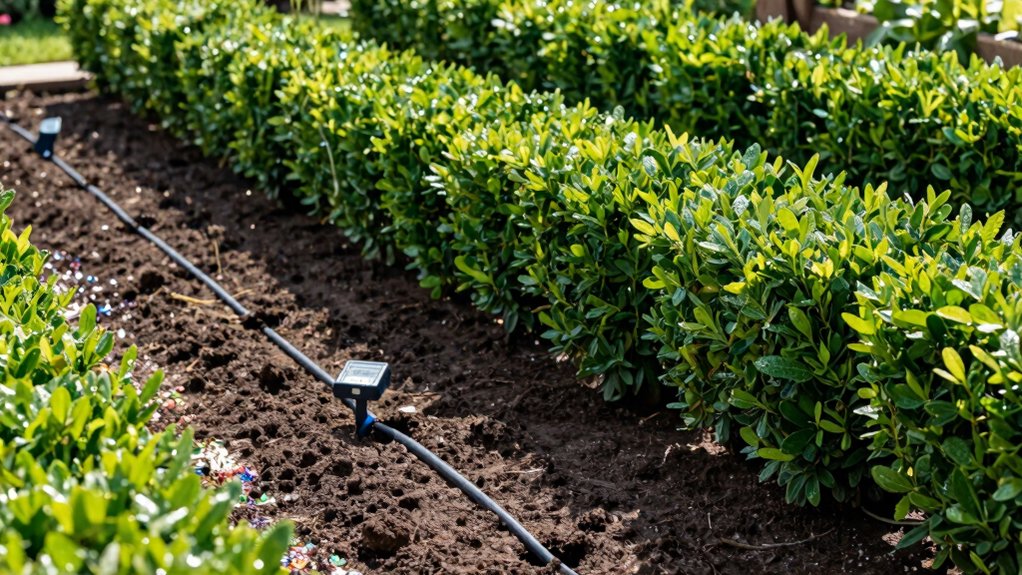
Soil prep and irrigation set the pace for rapid hedge growth: amend and structure the bed, then deliver water efficiently to support steady establishment.
You start with a loose, well-draining mix, incorporating topsoil and compost to boost microbial activity and nutrient availability. Assess your site’s drainage; if clay binds, add coarse sand or grit to enhance structure. When amending, target a pH close to neutral to optimize nutrient uptake for transplants.
Apply soil amendments evenly across the root zone, then lightly till to integrate them without damaging roots.
For irrigation, implement deep, infrequent watering that promotes deep rooting. Use mulch to conserve moisture and suppress weeds. Employ irrigation techniques like drip lines or soaker hoses, avoiding overhead spray that can promote fungal disease.
Pruning, Feeding, and Maintenance for Density
Pruning, feeding, and maintenance focus on density: prune strategically to remove weak, competing shoots and encourage a tighter, more uniform canopy. Then feed with balanced nutrients timed to growth spurts. You’ll use pruning techniques that target interior growth first, so light penetrates and side shoots thicken.
Maintain a disciplined schedule to prevent overgrowth and ensure consistent spacing. Monitor for signs of stress, then adjust feeds and trims accordingly. Keep equipment clean to avoid disease, and prune when plants are actively growing for best results.
Combine timely watering with feeding schedules to support dense, vigorous shoots without encouraging frost damage or scorch.
- pruning techniques that prioritize interior thinning and outer-rise
- consistent feeding schedules aligned with growth spurts
- timely, light pruning to avoid sudden shocks
- disease and tool hygiene for rapid recovery
- even moisture and nutrient distribution for density
Common Pests and Problems for Hedge Health
After building a dense hedge, you’ll want to protect that investment by recognizing common pests and problems that threaten health and appearance. You’ll monitor for signs of stress, including yellowing leaves, stunted growth, or unsightly spotting.
Common pests to watch for include aphids, spider mites, scale, and caterpillars; inspect shoots, undersides of leaves, and new growth regularly. Early detection enables targeted action, reducing spread and damage.
For disease management, prioritize proper spacing, air circulation, and timely pruning to prevent fungal intrusion. Use resistant varieties when available and rotate care practices to minimize pathogen buildup.
Maintain consistent watering at soil level, avoiding leaf wetness that promotes disease. Apply appropriate treatments only when thresholds are met, and follow label directions precisely for effectiveness and safety.
Troubleshooting Slow Growth and Underperformance
Slow growth usually signals underlying issues with light, soil, or water, so start by checking you’re giving the hedge full sun and well-drained soil, with consistent moisture.
If growth remains slow, assess nutrient levels and consider a balanced fertilizer applied per label guidance, while avoiding overfeeding that can burn roots.
Address any root or soil compaction, pests, or diseases promptly, and set a monitoring plan to track improvements over the coming weeks.
Slow Growth Factors
There are several common reasons your privacy hedge may pause its growth, and identifying the root cause quickly helps you set the right fix in motion. Slow growth factors often hinge on competition and soil conditions that choke vigor. You’ll see stunted height, thinner canopies, and uneven emergence if roots battle for resources or if pH and nutrients are out of reach.
Delineate issues by inspecting the base, drainage, and leaf color, then prioritize fixes that restore steady development.
- Root competition from nearby plants or dense turf
- Poor soil structure limiting root spread
- Soil acidity (pH too high or too low) restricting nutrient uptake
- Insufficient watering or drought stress
- Nutrient imbalances or deficient micronutrients
Remedies and Care
If slow growth or underperformance is the issue, start with a targeted diagnostic and practical fixes that address root causes rather than symptoms. First, inspect soil drainage and compaction, then test moisture levels; overwatering or drought stress both stunt development.
Next, assess light exposure and spacing, ensuring you’re not crowding plants or shade-clogging roots. Implement pruning techniques to remove dead wood and encourage new shoots, but avoid aggressive cuts that shock the hedge.
Apply appropriate soil amendments to balance pH and nutrients based on test results, focusing on nitrogen for fast growth and potassium to improve vigor. Mulch to conserve moisture and regulate temperature, and adjust irrigation to maintain consistent soil moisture.
Finally, stagger pruning after seasons of establishment to sustain steady, healthy growth.
Real-World Hedge Plans: 3 Climate-Friendly Combinations
Choosing the right combination of climate-friendly hedges can create a resilient, low-maintenance privacy screen. Real-world plans show three reliable templates you can adapt to your site, climate, and soil. Each pairing emphasizes fast growth, drought tolerance, and seasonal interest, while minimizing maintenance.
You’ll deploy strategic spacing, proven species, and mindful pruning to sustain dense coverage. Focus on local resilience, rather than just fast results, and adjust with soil amendments to optimize root health. Remember to select flower varieties that attract pollinators and provide color year-round.
Use mulch to conserve moisture and reduce weeds, and monitor after establishment to prevent lag in growth. These combinations deliver privacy with smart water use and long-term landscape value.
- Climate-smart evergreen trio for temperate zones
- Drought-tolerant mix with native understory shrubs
- Fast-growing columnar and broadleaf partners
- Mixed hedge with seasonal bloom highlights
- Low-maintenance, nutrient-conscious soil plan
Frequently Asked Questions
How Fast Do Different Hedge Species Reach Full Height?
Hedge growth rates vary by species, but you’ll see many reach full height within 3 to 8 years, depending on conditions. You pursue growth rates and assess species maturity to select the best fit for your hedge project.
Can I Mix Deciduous and Evergreen Plants in a Hedge?
Yes, you can combine deciduous and evergreen in a hedge. Plan seasonal pruning and soil preparation, selecting compatible species for height and density. Monitor growth, guarantee root spacing, and stagger pruning to maintain year-round privacy and structure.
What Signs Indicate Root-Watering Is Needed?
You notice wilted leaves and drooping stems; that signals root-watering is needed. Maintain a consistent watering schedule, checking soil moisture deep down to half the root zone, then water thoroughly to avoid soggy roots and runoff.
Are There Legal Height Limits for Privacy Hedges Locally?
Yes, you should check local regulations and height restrictions before planting. You’ll want to verify with your city or HOA, measure your setback, and document permitted hedge heights to avoid fines or required removals.
Which Root Barriers Prevent Underground Spread?
Root barrier materials that stop underground root spread include rigid, high-density plastics or steel, plus deep concrete-encased walls. You select: guarantee proper depth, seal joints, and maintain above-ground protection, preventing invasive, undirected growth into foundations or utilities.
Conclusion
Ready to plant your hedge? Think fast, then act: your privacy depends on a perfect intersection of goal, climate, and timing. As roots take hold, your border will shift from idea to shield. Stay vigilant—soil, spacing, and pruning discipline determine speed and density. One misstep can stall progress; the right combination accelerates it. Stay curious, adjust as growth reveals itself, and soon you’ll glimpse a private, wind-swept line rising before you. Secrets lie in steady, informed steps.