To modernise a UK bungalow without major structural work, focus on lighting, finishes, and flexible layouts that brighten the space. Layer ambient, task, and accent lighting, plus reflectives like mirrors and light surfaces to boost perception of space. Use non-structural tweaks: optimize zones with furniture placement, introduce cohesive textures, and upgrade hardware. Improve insulation around drafts and radiators for comfort, while keeping existing walls intact. Finish with a unified colour palette and durable materials; you’ll discover practical steps that release a refreshed feel without upheaval.
Pinpoint Structural Elements Worth Keeping in a Bungalow
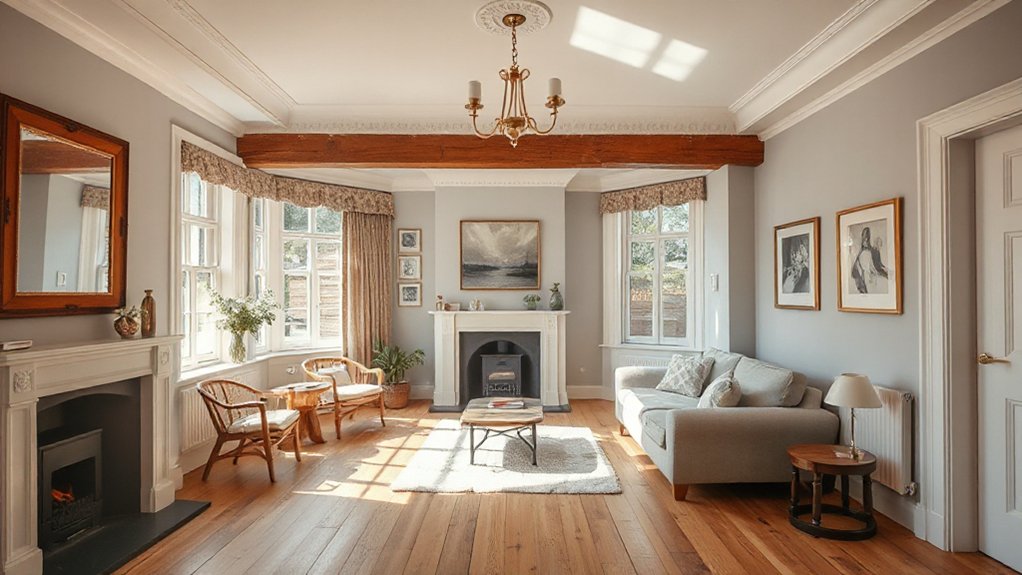
If you’re modernising a bungalow, start by identifying the structural elements you can keep without compromising safety or layout flexibility. Begin with the foundation and load paths, confirming Foundational stability remains intact after any cosmetic changes.
Preserve load-bearing walls or studs that align with future floor plans, and note beam positions that support the roof and upper structure. Retain floor joists where spacing and span still meet modern codes, avoiding unnecessary cutting or rearrangement.
Inspect the roof structure for integrity, ensuring Roof integrity isn’t compromised by openings or new systems. Where openings are possible, consider non-structural alterations that don’t alter weight distribution.
Document existing elements you’ll reuse, and plan new layouts around them to maximize space efficiency and serviceability.
Illuminate Your Space: Lighting Upgrades for Small Rooms
You can transform small rooms by layering light: combine ambient, task, and accent layers to keep spaces feeling open and functional.
Use reflective surfaces and light-coloured finishes to bounce the glow, and pick smart lighting options that adapt to different tasks and moods.
Start with a simple plan for where each layer will live, then refine with precise placements that match your furniture and traffic flow.
Light Layering Techniques
Layering light is all about combining sources to make small spaces feel bigger and more functional. Start with a bright overhead task light, then add table and floor lamps at varying heights to create depth without clutter.
In practice, map zones: a task beam for reading, a softer ambient glow for evenings, and a gentle wash to open corners.
Use layered textiles to soften shadows—light curtains and woven shades reflect warmth without dulling brightness, while dimmable controllers let you tune ambience on demand.
Favor warm white LEDs to maintain a welcoming feel in tight rooms. Avoid heavy metal finishes that read busy; instead, choose matte textures and subtle metallic accents.
The result is ambient lighting with purposeful, design-led precision that enlarges perception and enhances usability.
Reflective Surface Strategies
Reflective surfaces bounce light around the room to amplify brightness without adding fixtures, so start with a solid plan for where glare helps and where it’s better muted. You’ll use reflective surfaces to reflect daylight deeper into corners, balancing task light with ambient glow.
Choose finishes with high clarity for mirrors and glass, but avoid busy frames that create visual noise. Mirror placement matters: position mirrors opposite windows to double natural light, yet prevent glare on screens or glossy surfaces.
Consider tabletop or cabinet fronts in high-gloss or satin finishes to reflect light without overwhelming color. Keep edges clean and corners uncluttered to avoid shadow traps.
Test sightlines from seating areas, ensuring reflections don’t require squinting or repositioning lamps. Pair with warm neutrals to maintain cohesive, bright, calming spaces.
Smart Lighting Options
Smart lighting can transform a compact bungalow without major rewiring, so start with a plan that pairs controls with wall space you already use. You’ll benefit from layered illumination: ambient light for general tasks, task lighting for desks and counters, and accent glow to highlight textures.
In small rooms, opt for compact fixtures, slim profiles, and wall-mounted options to keep sightlines clear. Choose smart lighting and automation systems that integrate with a single app or hub, enabling schedules, scenes, and voice control.
Prioritize dimmable LEDs to modulate mood and energy use. Use warm white to feel welcoming and cool white for focus areas. Consider motion sensors for hallways and entryways, reducing energy waste while preserving convenience.
Document wiring-free possibilities before committing to any ceiling or wall changes.
Open Perception With Non-Wall Layout Tricks
To open perception in a bungalow without major structural work, think in terms of sightlines, zones, and light choreography rather than partitions. You’ll create openness by aligning furniture to create continuous flows, using color and texture to cue zones, and exploiting reflections to extend rooms.
Emphasize an Open concept feel with smart furniture placement, shallow shelving, and mirror-backed accents that punch up spatial illusions without walls. Plan lighting as a sculptor: uplights, task lamps, and ambient washes to soften edges and widen perceived depth.
Choose low-profile pieces to avoid crowding sightlines, and pick cohesive materials that unify spaces. The aim is clarity, not exposure; balance function with a curated sense of air and continuity.
- Align sightlines with furniture to hint at larger space
- Use reflective surfaces and coherent materials for spatial illusions
- Layer light to carve zones without walls
Energy Wins: No-Trade Insulation Upgrades That Make a Difference
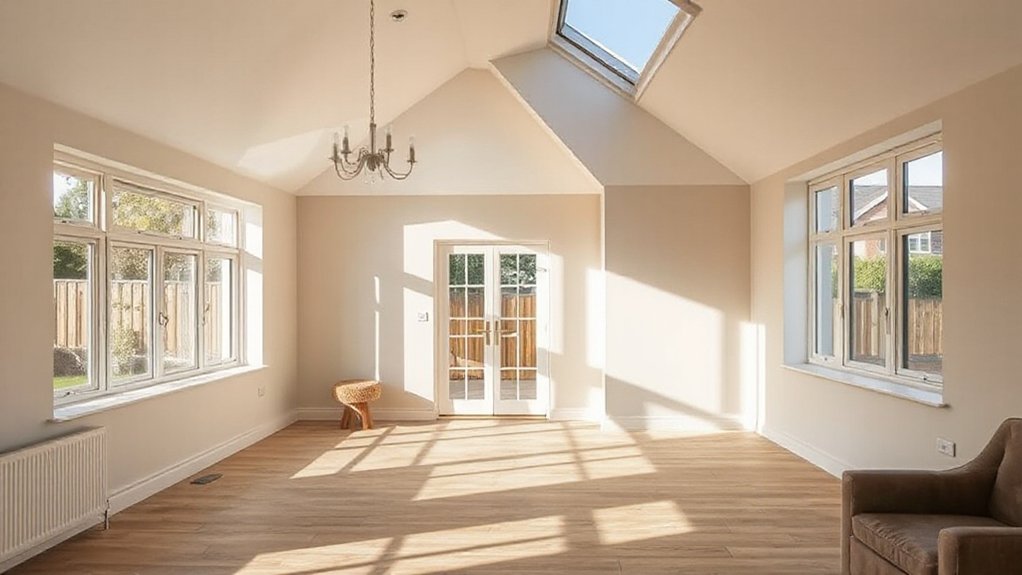
Energy efficiency isn’t about big retrofits; it’s about smart, no-trade insulation upgrades that tighten a bungalow without major upheaval. You’ll focus on gaps around existing walls, floors, and ceilings, targeting cold spots without structural work.
Start with door and window reveals: weatherproof seals and draught-proofing reduce heat loss immediately, improving insulation benefits without disruption.
Add advanced reflective insulation behind radiators and in lofts where possible, maximizing existing warmth.
In crawlspaces, install smart batts or rigid boards beneath floors to curb drafts and improve comfort.
Consider airtight layering near living zones to minimize convective heat loss while preserving ceiling height and layout.
Document results with simple notations; you’ll notice steadier temperatures, lower heating bills, and clearer, more energy-efficient living spaces.
Upgrade Finishes and Textures for a Contemporary Feel
Start by selecting materials that read as premium but stay practical for daily living, such as matte ceramic tiles, microcement, and quality wood veneers.
Layer textures deliberately—combine smooth wall finishes with a tactile textile or paneling to create depth without clutter.
Use restrained color and consistent detailing to elevate the finishes, then pair them with durable trims and fixtures to sustain a contemporary, cohesive feel.
Elevate With Materials
Elevating finishes is the quickest way to read contemporary without adding structural work. You’ll choose materials that feel modern yet durable, balancing warmth with restraint. Prioritize clean lines, low-sheen surfaces, and honest textures that read as purposeful, not decorative.
Consider how architectural details can be echoed in trim, doors, and cabinetry, so you preserve architectural intent while updating the vibe. When selecting finishes, respect historical preservation cues where relevant, but use contemporary palettes and high-performance materials to keep maintenance minimal.
Aim for a cohesive material language across floors, walls, and ceilings to avoid a disjointed aesthetic.
- Use exposed timber, stone, or concrete textures to unify spaces
- Match metal finishes with hardware and fixtures for a streamlined look
- Keep progressions smooth between old shell and new surfaces
Textural Layering Techniques
Textural layering is where a contemporary bungalow truly comes to life: you pair tactile finishes at different scales so spaces feel stitched together, not patchworked. You’ll mix soft, matte surfaces with crisp, reflective accents to create a controlled contrast.
Start with wall treatments: a velvet-like paint texture or woven wallcovering paired with a smooth plaster for textural contrast that reads as deliberate depth.
In furniture, layer hides of leather, brushed timber, and satin metals to modulate light and touch.
Flooring should vary too—engineered oak underfoot with a cork or sisal rug to define zones without visual clutter.
Use textiles strategically: curtains, cushions, and upholstery in tonal families that reinforce tactile layering.
Finally, keep hardware simple and cohesive to retain calm, modern lines.
Budget Kitchen Tweaks That Don’t Require a Full Renovation
If you’re aiming to refresh a UK bungalow’s kitchen without a full renovation, start with practical, high-impact tweaks that don’t disturb walls or plumbing. You can transform the space with cosmetic upgrades that feel cohesive and calm, prioritising lighting, surfaces, and small storage gains.
Focus on flow, color restraint, and tactile finishes to elevate everyday use. Subtle vintage touches, like retro hardware or glass door fronts, can read as design-led without a full gut. Pair these with organized counter real estate and improved task lighting to boost usability.
Consider garden landscaping-inspired greens to harmonise the exterior and interior mood, grounding the kitchen in nature.
- Swap to vintage fixtures for instant character
- Add clear, open storage and under-cabinet lighting
- Refresh with countertop-friendly, garden-inspired accents
Modernise the Bathroom With Smart Fixtures
Smart fixtures can simplify daily routines while boosting efficiency in your bathroom.
We’ll cover how intelligent taps, shower systems, and smart lighting create a cohesive, design-led update without big rewires.
Expect practical tips on performance, reliability, and the small details that make a bathroom feel modern and user-friendly.
Smart Fixtures Overview
Anticipate how smart fixtures can transform a compact bathroom by focusing on water and energy efficiency, intuitive control, and timeless design. You’ll pair a smart fixture with compact fittings, trimming run times and enabling precise temperature and flow, all while preserving a calm, cohesive look.
Modern automation simplifies daily routines without clutter, letting you tailor schedules and scenes to your habits. Choose fixtures with clean lines and durable finishes to sustain a timeless aesthetic.
Prioritize ease of installation and reliable compatibility with your existing fittings, so updates feel cohesive, not add-on. The result is a practical, design-led upgrade that reduces waste, increases comfort, and adds subtle, lasting value.
- Consistent finishes and intuitive controls
- Efficient, programmable usage
- Seamless integration with existing plumbing
Efficient Bath Updates
A smart bath update hinges on choosing compact, efficient fixtures that deliver precise temperature and flow while preserving a streamlined look. You’ll want a balanced mix of form and function: a thermostatic shower mixer with a compact valve, a wall-hung basin, and a slimline tub that fits your space without crowding.
Choose low-profile fittings, a single lever, and soft-close lids to cut noise and touchpoints. Integrate smart sensors for occupancy and ambient light to adjust heating and lighting automatically.
Opt for minimalist, corrosion-resistant finishes and easy-clean surfaces to maintain the clean lines you’re after. Consider vintage charm in hardware choices and subtle tiling that nods to garden landscaping, tying indoors to outdoor views while keeping maintenance minimal.
Fast, precise updates, minimal disruption, maximum impact.
Integrate Smart Tech for Comfort and Control
Integrating smart tech transforms a bungalow from basic comfort into precise, effortless living. You’ll simplify daily routines with intuitive controls, climate presets, and instant access to information.
Prioritize reliable devices that integrate smoothly with a single app, ensuring Home automation feels seamless rather than alienating. Choose scalable systems that evolve with your needs, avoiding overcomplication.
Focus on core comfort: lighting, heating, and security, all respond to you, not the other way around.
- Simplified control routines that adapt to your day
- Energy-efficient, layered lighting and climate management
- User-friendly security with remote access and alerts
Smart tech choices should enhance livability without shouting for attention. Keep interfaces clean, consistent, and easy to troubleshoot, so your bungalow remains calm, not cluttered, even as tech becomes second nature.
Create Flexible Living Zones With Moveable Elements

Flexible living zones hinge on movable elements that adapt to daily rhythms and changing needs. You design with intent, choosing flexible furniture that redefines space without spreading clutter.
A compact sofa can anchor a lounge while a coffee table nests beneath it, freeing floor area for a quick studio or reading nook.
Introduce movable partitions to sculpt intimate corners or expansive, open-plan runs. Use track-mounted screens or light screens that slide smoothly, avoiding door-like heaviness.
Consider a fold-away desk that tucks into a wall cavity, transforming a bedroom into a study in moments.
Align furniture heights to sightlines and traffic flow, ensuring clear paths.
Balance materials and finishes so movable pieces feel part of the home, not temporary add-ons.
Styling Rules: Protect Character While Elevating Value
Balancing the charm of a bungalow with modern updates starts with smart styling that protects character while elevating value. You align fixtures and finishes with period-inspired silhouettes, so contemporary touches feel intentional, not intrusive.
Prioritize proportion, scale, and quality materials that echo the home’s heritage while delivering today’s performance. Subtle contrasts—warm woods, soft neutrals, and restrained metals—maintain Vintage charm while updating curb appeal.
Keep decorative details focused and cohesive, avoiding overwhelming patterns that clash with the exterior.
- Use period-accurate hardware and lighting to reinforce authentic character while upgrading usability.
- Select durable, low-maintenance surfaces that reflect the home’s era without compromising modern needs.
- Integrate landscaping and entry details that boost Curb appeal while preserving architectural integrity.
Plan a Cohesive Colour and Material Palette
A cohesive colour and material palette unifies the look of your bungalow by tying characterful details to modern performance. You begin with a limited, flexible scheme: three core colours and two accent tones, chosen for natural light and room function.
Prioritise colour harmony by pairing warm neutrals with cooler accents to avoid visual fatigue. When selecting materials, pursue restrained material pairing that supports durability and easy maintenance—think timber, stone, ceramic, and low-sheen finishes.
Map finishes to spaces: matte walls in living areas, washable paints in kitchens, and durable surfaces in bathrooms. Consider grain direction, texture, and reflectivity to create depth without clutter.
Test swatches in daylight, then refine until gradual change feels seamless across zones. This approach yields cohesion and a timeless, practical aesthetic.
Hiring the Right Trades and Managing the Project
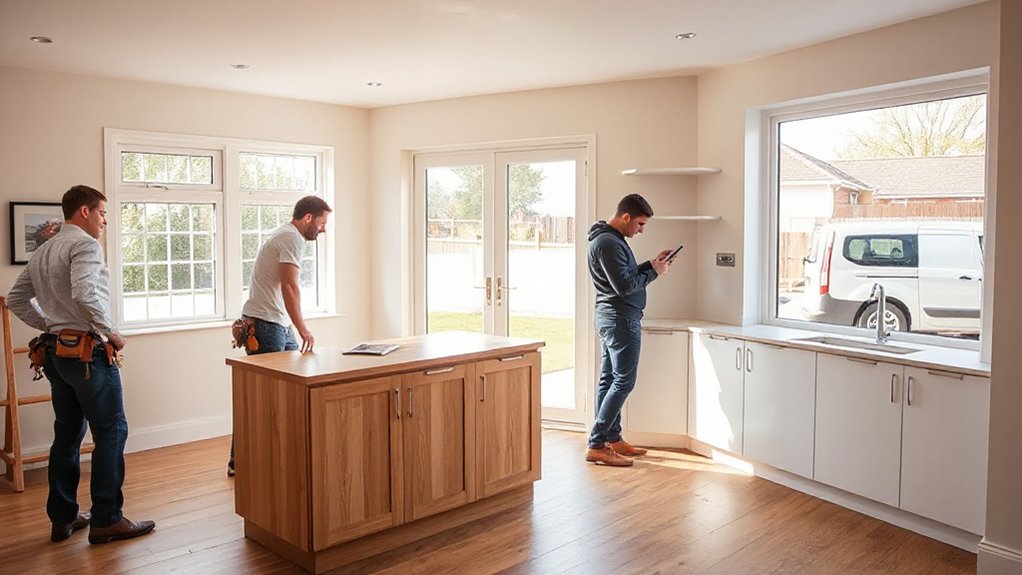
Hiring the right trades and keeping the project on track starts with a clear brief and vetted partners. You’ll define scope, budget, and milestones up front, then select trades who understand your design intent and timeline. Vet credentials, compare quotes, and insist on detailed contracts with milestones, payment triggers, and warranty terms.
Maintain momentum by appointing a single project manager or lead tradesperson who coordinates daily tasks, check-ins, and quality checks. Clear communication, rapid issue resolution, and documented decisions prevent scope creep.
Tie exterior maintenance and garden landscaping goals into the plan so weatherproofing, finishes, and landscaping align with your look and durability targets.
- Define decision authorities and change-control processes
- Schedule regular progress reviews and site cleanups
- Prioritize safety, accessibility, and long-term maintenance
Frequently Asked Questions
Is There Any Quick Market-Friendly Bungalow Upgrade With Low ROI Risk?
Yes. You can quickly boost value with a low-risk fix: update garden landscaping and interior decor, focus on curb appeal and cohesive palettes, choose timeless finishes, install energy-efficient lighting, add smart storage, and keep changes reversible for fast ROI.
Can I Add a Loft or Mezzanine Without Major Structural Work?
Sure—you can, with careful planning. Loft conversion or mezzanine addition require headroom and structure checks, plus reinforced joists and fire safety. You’ll need permits, proper insulation, stairs, and a design-led plan that minimizes disruption.
How Can I Improve Acoustics in a Small Bungalow?
You can boost comfort by savvy soundproofing techniques and choosing acoustic panel options that suit a small space. Install dense curtains, soft furnishings, and mass-loaded vinyl, then pick wall panels with absorption ratings tuned to your room’s needs.
Are There Cost-Effective Eco-Friendly Improvements for Bungalows?
Yes—you can, with cost-effective eco-friendly tweaks: install solar panels to cut bills, and add rainwater harvesting to reduce usage. You’ll gain practical, design-led improvements that feel deliberate, detailing placement, storage, and integration with your bungalow’s rhythm.
What Permits or Permissions Are Commonly Required for These Upgrades?
You’ll typically need building regulations compliance and planning permission for significant upgrades, even if non-structural, to guarantee safety and energy standards; consult your local authority early, document design intent, and secure approvals before proceeding with any changes.
Conclusion
You can modernise a UK bungalow without major structural work by treating it like a curated workshop: keep the sturdy bones, but rewrite the skin with light, texture, and flexible zones. Prioritise bright lighting, clever storage, and seamless flows that feel larger. Choose durable finishes, a cohesive palette, and movable elements to adapt as life changes. Manage trades with clear briefings and strict timelines, and you’ll gain a timeless, design-led home that respects its character while embracing contemporary ease.