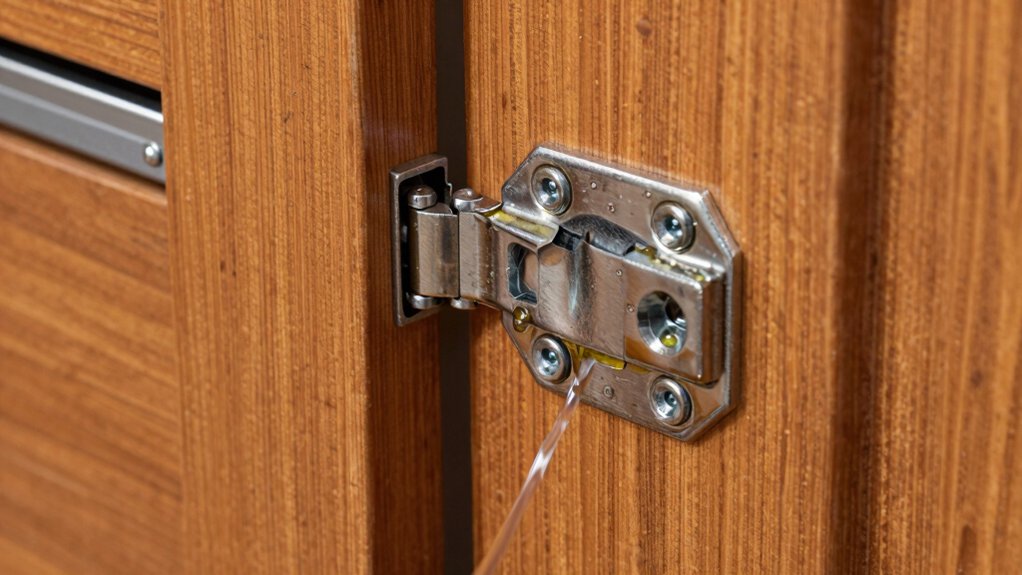
To stop squeaks, first identify whether the noise comes from hinges or sliding tracks. Clean surfaces thoroughly, removing dust, oil, and residue, then dry completely. Choose a lubricant that suits the parts—dry lubricants (graphite, PTFE) for dusty, high-traffic hinges or tracks, or a light oil for deeper crevices. Apply sparingly to all moving parts, recheck alignment, and re-lubricate as needed. If squeaks persist, you’ll uncover more tips that can help.
Identify Squeaks: Hinges or Sliding Tracks
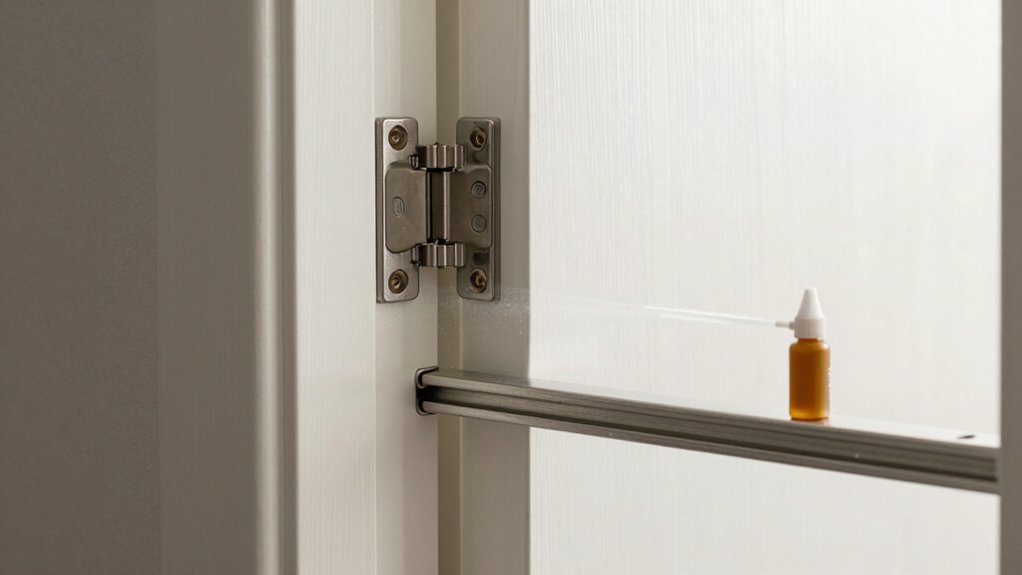
Squeaks in doors or drawers usually point to hinges or sliding tracks. You’ll start by listening closely: does the sound occur when you open, close, or pause mid-swing? If it’s present during movement, it’s often door hinge squeaks or sliding track noises.
Check for misalignment, loose screws, or debris lodged in the hinge knuckles or along the track. If the noise happens only at a specific position, the hinge pin or roller may bind. In that case, you might notice dry metal, rust, or a dirty track.
Don’t mistake cadence for cause: dry friction, pin friction, and worn bushings can all produce squeaks. By isolating the source—hinge vs. track—you direct your lubrication and avoid unnecessary work.
Choose the Right Lubricant for Hinges and Tracks
Choose the right lubricant by matching the type to your hinges or tracks and the environment.
Consider proper lubricant types—silicone or lightweight oil for springs and metal, graphite for dry, dusty areas—and apply only as required.
Follow best practices for application to guarantee smooth operation without attracting grime.
Proper Lubricant Types
To keep hinges and tracks moving smoothly, pick a lubricant tailored to metal doors and the environment.
For hinges and sliding tracks, choose a lubricant type that matches metal hinge materials and exposure conditions.
Dry lubricants (like graphite or PTFE) reduce dust buildup and work well on squeaks without attracting grit; they’re ideal in dusty, high-traffic areas.
Lubricant oils and light greases penetrate crevices, offering quieter operation but may attract debris if overapplied.
Silicone-based sprays provide water resistance and long-term slipperiness on metal-to-metal contact, though they can attract dust.
Avoid generic household oils for long-term wear, which can gum up.
Consider lubricant toxicity and safety guidelines to minimize exposure.
Select a purpose-built product for metal hardware to ensure compatibility and durable performance.
Application Best Practices
When applying lubricants to hinges and tracks, start with a clean surface and select the product that matches your metal hardware and environment; this guarantees ideal adhesion and long-term performance.
Choose a lubricant compatible with door hinge materials and the operating conditions (dust, humidity, and temperature). For metal hinges exposing metal-to-metal contact, light machine oil or a dry-graphite spray reduces squeaks without attracting dirt. Avoid thick greases on sliding tracks that can gum and slow movement.
If your hinges are plastic or coated, use a silicone-based or specialized plastic-safe formulation to prevent material degradation. Apply minimally—just enough to coat moving parts, then operate to distribute.
Reapply on a schedule or after moisture exposure, ensuring the lubricant remains clean and free of debris for consistent performance.
Prep and Clean Surfaces for Best Results
Start with a clean surface to guarantee the lubricant lasts. Remove debris first, then wipe away dust and grime so nothing interferes with the hinges or tracks.
Dry completely before you apply any lubricant to prevent trapping moisture.
Clean Surface Prep
Proper surface prep guarantees your hinges and tracks bond securely and perform smoothly. Before lubrication, you prep by cleaning and drying all contact surfaces to remove dust, oil, and old residue. Wipe hinge barrels, pins, and sliding track edges with a solvent or mild cleaner, then dry thoroughly.
Identify door hinge types and sliding track materials to ensure compatible products and technique choices. Lightly scuff shiny metal areas to improve adhesion only if needed, avoiding damage.
Pay attention to gaps and alignment; prepping helps you spot misfits that could hinder performance. Don’t skip masking around hardware or weather stripping. Use lint-free cloths and a fresh rag for each surface.
A precise prep sets the foundation for lasting, quiet operation.
Remove Debris First
Debris left on hinges and tracks can ruin lubrication. Before you apply any lubricant, remove loose gunk, dust, and grit that can trap moisture and grit the surfaces. Debris removal isn’t optional—it’s essential for lasting results.
Use a brush, microfiber, or compressed air to sweep away particles from both hinges and sliding tracks. Wipe with a damp cloth if residue clings, and dry the areas thoroughly before proceeding.
Surface cleaning should be deliberate, not rushed; inspect pivots, rollers, and jambs for embedded debris that can cause binding. Avoid forcing parts during cleaning.
Dry Before Lubricate
Before applying lubricant, make certain all cleaned surfaces are thoroughly dry; moisture traps contaminants and can dilute lubricants, reducing effectiveness. You’ll get the best results by fleshing out the dry surface first, then timing the lubrication correctly. Wipe away dampness with a clean cloth, and allow any residual moisture to evaporate fully before you proceed.
Inspect hinges and tracks for remaining residue, and remove it with a mild solvent if needed. Avoid applying lubricant to wet parts, which can trap dirt and hinder performance.
Set a clear lubrication timing: apply once every few months or after cleaning, not during humidity spikes. This prep ensures lasting protection, smoother movement, and quieter operation, maximizing every drop’s effectiveness and extending hinge life.
Lubricate Door Hinges: Step-by-Step
To lubricate door hinges effectively, start by removing the hinge pin and cleaning any old gunk from the hinge bore. Wipe the pin and bore clean, then inspect for rust or wear.
If you spot door hinge rust, treat it with a penetrating lubricant and remove any corrosion before proceeding. Apply a small amount of high-quality grease or oil to the pin and hinge knuckles, then reassemble and work the hinge to distribute the lubricant.
Open and close several times to verify smooth motion. Wipe away excess fluid to prevent drips.
For lubricant longevity, use a product designed for metal hinges and avoid over-lubricating, which can attract dust. If squeaks persist, repeat after a short break-in period, ensuring pins seat fully and hinges align correctly.
Lubricate Sliding Tracks and Rollers: Step-by-Step
Even if tracks look clean, lubricate sliding tracks and rollers to guarantee smooth operation. Begin by removing debris from the track and rollers, then wipe with a clean cloth.
Choose a lubricant suited to door hinge materials—prefer a lightweight, evaporative-free formula that won’t attract dust. Apply a thin bead along the sliding surface, spreading evenly with a small brush or cloth.
Focus on roller axles and guide grooves, avoiding over‑lubrication that can attract grit. Move the door back and forth to distribute the lubricant, listening for improved glide.
Recheck for smooth movement; wipe any excess. Consider the sliding track design when selecting lubrication points, ensuring coverage at pivots and contact zones.
This keeps hinges quiet and operation consistent without affecting finish.
Troubleshoot Stubborn Squeaks After Lubrication
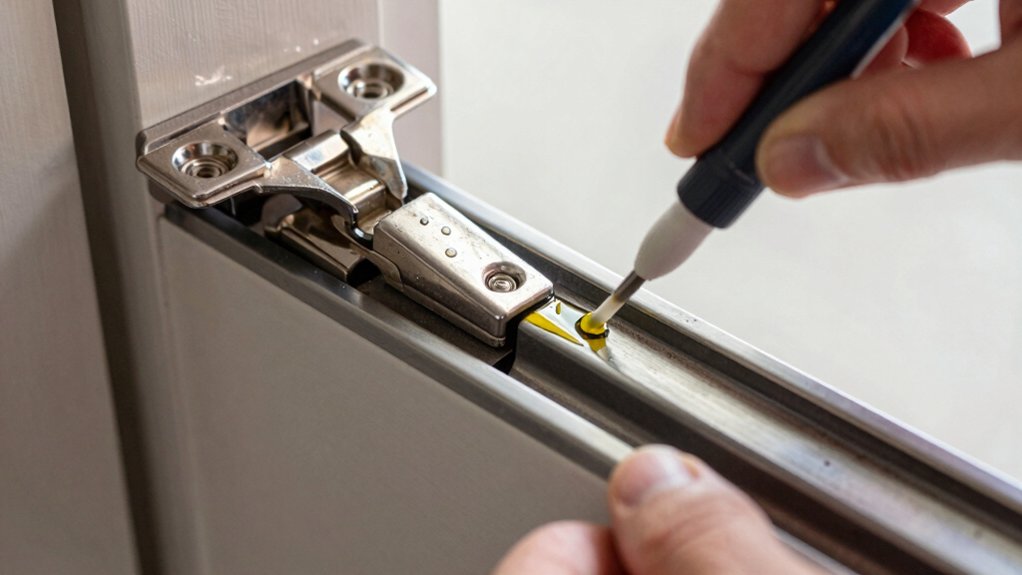
If squeaks persist after lubrication, you’ll want a focused check of the hinge castings and tracks to pinpoint noise sources. Begin by inspecting door hinge materials for wear or binding, and confirm the pivot points aren’t rubbing against loose screws.
Next, listen for mistimed squeaks—these often come from misalignment or debris trapped in the hinge cup. Then verify lubricant longevity; reapply only where coverage remains thin and wipe excess to avoid dust attraction.
Finally, test movement on both sides of the door, noting any uneven resistance and re-lubricate as needed.
- Inspect hinge materials for wear and binding
- Check alignment and debris in hinge cups
- Assess lubricant longevity and reapply properly
- Test door movement for consistent, noise-free operation
Maintenance Tips to Keep Doors Whisper-Quiet Long-Term
Keep door noise minimized long-term with a proactive, routine care plan. You’ll prevent creep, sag, and squeaks by scheduling short, regular checks.
Inspect door hinge anatomy file-by-file: pins, screws, leaves, and mounting alignments; tighten loose screws and replace damaged components promptly.
For sliding tracks, review clearances and track materials to ensure smooth movement; remove debris, wipe clean, and re-lubricate with purpose-made products suitable for your material.
Calibrate hinges and adjustment screws to maintain plumb and level doors, preventing binding.
Apply lubrication sparingly to pivot areas, avoiding excess that attracts dust.
Establish a quarterly routine: clean, tighten, lubricate, test door operation, and record changes.
Use high-quality lubricants suited to door hinge anatomy and sliding track materials, ensuring compatibility with finishes and environment.
Frequently Asked Questions
Can Squeaks Come From Misaligned Doors or Tracks?
Yes, misaligned doors or tracks can cause squeaks. Check door alignment and track adjustment, then tighten hinges and screws, and verify the door clears stops evenly as you test. This resolves most squeaking without lubrication.
How Often Should Hinges or Tracks Be Lubricated?
You should maintain a regular maintenance schedule, lubricating every 6–12 months in normal use. Use appropriate lubricant types, like graphite for metal hinges or silicone for sliding tracks, and recheck for squeaks after seasonal changes.
Are Graphite or Silicone Lubes Better for Metal Doors?
Graphite vs silicone: for metal doors, silicone-lube tends to last longer on hinges, while graphite excels in dry,rust-prone environments. Choose silicone for smoother, quieter operation; expect longer lubricant longevity with regular reapplication every 6–12 months.
Will Lubricant Attract Dust or Cause Staining?
Dust attraction is minimal if you use a small amount and wipe excess; stains risk exists mainly with oil-based formulas. You’ll reduce both by choosing a dry or silicone lubricant and keeping surfaces clean and dry afterward.
Can You Lubricate Without Removing the Door?
Yes, you can lubricate without removing the door. Apply lubricant to hinges while door is supported, then open and close to distribute. If noise persists, consider door removal or hinge replacement as a longer-term fix.
Conclusion
If you’re curious whether squeaks vanish because dry lubrication was the culprit, the theory holds up: dirt-free, properly chosen lube reduces friction and restores smooth motion. You’ll hear less creak after cleaning, matching, and applying the right product. Keep hinges and tracks clean, reapply as needed, and maintain a light, even coating. When you test by opening and closing slowly, you’ll notice the difference—and your doors stay whisper-quiet longer, proving the method works.