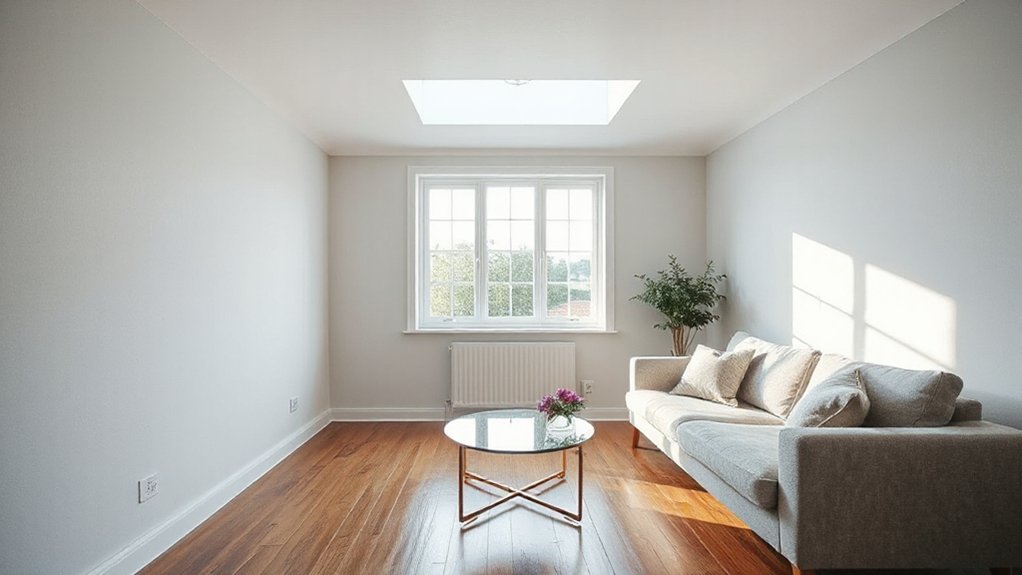
To maximize natural light in a north‑facing UK room, start by mapping daylight paths and placing seating to face lighter walls, with mirrors angled to bounce daylight deeper. Use light-reflecting neutrals in matte finishes, and layer bright fixtures at multiple heights. Upgrade with low‑e glazing and slim frames, plus shading to diffuse glare. Choose reflective textiles and light textures, and keep floors and ceilings light and matte. Quick swaps plus longer-term tweaks can sustain brightness as seasons change. Continue for more ideas.
Brighten a North-Facing Room: Quick Start Guide

If you’re trying to brighten a north-facing room, start with a quick, practical game plan: maximize natural light while keeping the space comfortable. Begin with a clean palette: light walls, reflective surfaces, and minimal clutter to bounce every lumen.
Choose furniture with slim profiles and glass or acrylic accents to reduce bulk shade. Prioritize layering light: combine ambient, task, and accent sources, and use dimmers to control mood.
Integrate indoor plants near light sources to sharpen perception of brightness without risking overwatering in dim corners. Consider skylight installation where feasible to introduce overhead daylight without sacrificing wall space.
Use mirrors opposite windows to double the visible daylight. Finally, schedule seasonal checks on seals and blinds to maintain efficiency.
Assess Your Space: Windows, Walls, and Layout
Start by mapping how daylight already moves through your space. You’ll note where sun hits during the day and how long it lingers in each zone. Identify windows that admit the most light and those shadowed by eaves or neighboring structures.
Measure wall orientations and consider how your layout guides or blocks glare and diffusion. Evaluate doorways, furniture stacks, and built-ins that disrupt flow or cast dense shadows.
Plan for Window placement to maximize morning or late afternoon light without overheating, and align seating and work zones to those bright pockets.
Assess Wall insulation quality, checking for cold walls that dampen perceived brightness. Document findings, then translate them into a precise, scalable plan for reconfiguring angles, openings, and focal points.
Pick Light-Reflecting Paint Colors for North-Facing Rooms
North-facing rooms can feel dim, so choose light-reflecting paints that bounce natural daylight deeper into the space. Select pale neutrals with subtle warmth, like off-white, eggshell, or misty gray, to avoid cold casts while maximizing brightness. Test swatches on multiple walls at different times of day to confirm true reflectivity.
Prioritize low-luster finishes—matte to satin—so texture isn’t highlighted, which can dull light. Consider paint durability; opt for a formula with good scrubbing resistance and stain release for busy UK homes.
Color psychology matters: warmer undertones can feel more inviting than stark whites. Document how each color reads under your room’s natural light, and choose a shade that maintains brightness without sacrificing depth.
Keep colors cohesive with existing furnishings for a polished, luminous result.
Use Reflective Finishes to Multiply Daylight

You can multiply daylight by choosing reflective finishes that bounce light around the room. Use light-colored surfaces and strategically placed mirrors to maximize brightness without glare.
Keep textures subtle and finishes smooth to prevent dulling reflections, so the space feels more open and lively.
Use Light-Colored Surfaces
Using light-colored surfaces can dramatically boost daylight in north-facing UK rooms by reflecting existing light deeper into the space. You’ll want flat, non-glossy whites or soft creams on walls and ceilings to minimize glare while maximizing bounce.
Choose matte finishes that evenly diffuse illumination and avoid busy patterns that trap visual weight in corners. Light wood tones on cabinetry or shelving maintain warmth without absorbing too much light, while ceramic or plaster textures can add subtle surface reflection without glazing glare.
Consider color psychology, selecting cool neutrals to feel airy or warmer tones to counter cool northern skies, then balance with strategic accents. Keep shifts clean and edges crisp to prevent shadowed boundaries, and measure improvements with a simple daylight meter for consistency.
Mirror Strategically For Brightness
Natural light can multiply quickly when you place mirrors and reflective surfaces where they catch and bounce existing daylight.
To maximize brightness, position a large mirror opposite a window, angled to redirect morning and afternoon sun without glare. Consider multiple smaller mirrors in a staggered layout along a wall to create a gallery of reflected light, rather than one dominant pane.
Choose frames and glass with low iron content for crisper reflections that stay true to color. Keep edges clean and avoid heavy, opaque decor that blocks the bounce.
Integrate reflective decor, like metallic accents or glass-tinish surfaces, to amplify subtle daylight. Maintain symmetry for calm, uncluttered scenes, and test angles at different times of day to refine mirror placement.
Layered Lighting: Create an Even, Daylight-Feel

Layered lighting blends multiple sources at different levels so the room feels bright from morning through evening, not one fixed glare. You balance ambient, task, and accent layers to maintain daylight diffusion while supporting moods.
Use a dimmable ceiling light as your base, plus under-cabinet or desk lamps for focused tasks, and a couple of softly glowing accents to warm the space.
- Place a dimmable ceiling fixture to set overall brightness without harsh hotspots.
- Add task lamps at eye level for reading or work areas, with adjustable arms.
- Incorporate wall or shelf accents to create depth and subtle highlights.
- Tweak color temperature to mimic daylight shifts, keeping cool tones in the morning and warmer tones later.
Layered lighting ensures steady luminance and practical versatility.
Window Treatments That Invite More Daylight
To maximize natural light, choose window treatments that are lightweight, reflective, and mounted close to the glass to reduce obstructions.
Consider sheer fabrics, pale colors, and unobtrusive hardware that won’t cast heavy shadows, plus track or stud-mounted systems for clean lines.
We’ll explore how light-enhancing options pair with your room’s layout and insulation goals to brighten north-facing spaces.
Maximizing Natural Light
Have you noticed how much daylight slips past heavy drapes or shuttered panes in your north-facing UK room? You can maximize light with small, targeted changes that respect both function and design.
Use bright, high-contrast finishes on walls and ceilings to reflect more light around the room, and keep furnishings low and open to sightlines. Integrate subtle daylight strategies rather than dramatic shifts.
- Choose sheer or lightly woven curtains that barely block, paired with reflective roller blinds.
- Place indoor plants near windows to draw attention outward and filter glare without sacrificing brightness.
- Consider skylight installation where feasible to channel overhead light downward.
- Use mirror accents opposite windows to bounce daylight deeper into the space.
Light-Enhancing Window Treatments
Consider sheer curtains with a high thread count or light-filtering roller blinds that lift fully to expose clear glass. Pair them with unobtrusive hardware in matte chrome or warm brass to keep lines clean and modern.
Window films offer daytime privacy without dimming brightness, ideal for ground-floor rooms or street-facing windows.
Light diffusers—like frosted acrylic panels or honeycomb shades—scatter light evenly, reducing hotspots.
Keep framing simple and install flush-mounted treatments to avoid shadow lines, ensuring daylight travels deeper into the space.
Regular maintenance preserves clarity and performance.
Furniture Placement for Brightness and Flow
Strategic furniture placement matters most when a north-facing room lacks direct sun: you’ll want to maximize natural light by keeping sightlines clear and arranging pieces to reflect and distribute what comes in.
You’ll use layout choices that prioritize openness, mirror potential highlights, and keep energy flowing from one area to another.
- Place seating to face light sources or lighter walls, creating visual brightness without blocking windows.
- Elevate mirrors or reflective surfaces near windows to bounce daylight deeper into the room.
- Choose low-profile, non-cluttering furniture to preserve pathways and air movement.
- Integrate lighting fixtures with warm, diffused light at multiple heights to supplement daytime glow, reinforcing brightness where needed.
Brighten Floors and Ceilings on a Budget
Brightening floors and ceilings on a budget is about clever materials and finishes that reflect more light without breaking the bank, using accessible upgrades you can do in a weekend.
You’ll pick light, low-glare tones for floorboards or laminate, and consider matte rather than glossy surfaces to minimize reflections that look harsh.
Use bright, neutral ceiling paint in an eggshell or satin finish to reduce glare while keeping durability.
Color contrast matters: pair light floors with slightly warmer walls to create depth without diminishing brightness.
Introduce reflective accents with strategically placed lighting fixtures and slim mirrors.
Choose underlayments with built-in brightness if you’re replacing flooring.
Keep edges clean and gradation sharp, so the light travels smoothly rather than stopping at seams.
Avoid bulky patterns that trap shadows and overwhelm the room.
Window Upgrades and Daylight-Reflecting Glass Options

Window upgrades can dramatically improve daylight in north-facing UK rooms, especially when you choose glazing and frames that maximize transmission while minimizing glare.
- Assess glazing types: choose low-e coatings and high hours of visible transmittance to boost brightness without sacrificing energy efficiency.
- Frame materials: opt for slim profiles in colors that reflect heat and reject heat gain, maintaining ambient light.
- Solar shading: integrate external or internal shading that fades glare while letting in diffuse light.
- Window tinting: apply light-tinted films to reduce hotspots and improve contrast without darkening the room.
Actionable tip: pair daylight-reflecting glass with strategic placement of mirrors and light shelves to amplify every ray.
Textures and Textiles That Bounce Light Without Glare
You’ll want fabrics and textures that bounce light without creating glare, so start with reflective textiles that glow subtly in daylight.
Pair smooth, light-reflecting surfaces with soft, minimal-glare fabrics to maintain warmth while waking up dim corners.
Consider fiber choices and weave structures that balance brightness with diffusion, keeping the space crisp rather than harsh.
Reflective Textiles That Glow
- Choose glowing fabrics with a matte, pearl, or frosted finish to avoid specular glare while guiding light deeper into the room.
- Pair reflective textiles with neutral walls to prevent color shift and maintain true daylight feel.
- Test placement near windows; angled surfaces multiply diffusion without creating glare pockets.
- Opt for high-quality weaves that resist creasing and keep an even glow across the day.
Soft Fabrics With Minimal Glare
Soft fabrics that bounce light with minimal glare rely on matte or slightly textured surfaces that diffuse rather than reflect harshly. You’ll choose materials like brushed cotton, linen blends, and bouclé in light, warm neutrals to soften daylight without creating hotspots.
Opt for tight weaves with subtle texture rather than shiny finishes, which can amplify reflections. For upholstery, select low-luster, durable fabrics in pale stone, oatmeal, or blush.
Curtains or drapery should lean toward matte linings or unlined gauzy textures to filter, not flare, the sun. Layer textiles at different heights to break glare and guide ambient light deeper into the room.
Pair with soft, tactile accessories—throws, cushions—in the same soft palette. Soft fabrics create inviting warmth while maintaining minimal glare throughout the day.
Seasonal Strategies for Year-Round Brightness
Seasonal strategies hinge on pairing light-boosting tactics with the specific quirks of north-facing rooms, so you’ll want to tailor your approach to winter’s low sun and long evenings, spring’s changing angles, summer’s midday glare, and autumn’s fading daylight. You’ll focus on practical planning, intentional reflectivity, and durable finishes that keep brightness consistent year-round.
1) Seasonal lighting adjustments: map daylight hours, adjust lamping, and layer layers of light to cover all seasons.
2) DIY daylight solutions: install mirror galleries, skylights where feasible, and light tubes to push daylight deeper.
3) Color and finish choices: opt for high-reflectance whites and ash or pale woods to scatter light.
4) Window management: use sheer panels, movable blinds, and shaded resends to reduce glare while preserving mood.
Quick Swaps and Long-Term Improvements to Sustain Brightness
Quick swaps can deliver noticeable brightness now, while long-term improvements set a durable baseline for north-facing UK spaces. You’ll start with high-contrast, light-reflecting surfaces: satiny whites, pale ceilings, and minimal matte texture to avoid absorption.
Swap heavy drapery for sheer blinds or unobtrusive shades that layer daylight without glare. Use mirrors to double the light reach, positioned opposite windows or skylights to bounce illumination deeper.
For quick wins, relocate seating to face the brightest wall and purge clutter that traps shade. Integrate indoor plants near light sources to soften corners and add life without clutter.
Plan longer-term steps: consider skylight installation where possible to channel direct daylight inward. Choose energy-efficient, bright fixtures as a supportive layer for overcast days.
Regularly refresh whites and streamline storage for enduring clarity.
Frequently Asked Questions
Can Mirrors Alone Truly Brighten a North-Facing Room?
Yes, mirrors alone can brighten a space, but you’ll need smart choices: place opposite windows, use window treatments that reflect light, and pair with light color schemes. Focus on scale, positioning, and reflectivity to maximize daylight.
What Ceiling Height Maximizes Daylight Distribution?
Ceiling height matters: taller rooms can improve natural illumination by allowing light to diffuse more evenly. You optimize daylight distribution by standardizing ceilings around 9 feet, balancing proportions with clerestory or light-well strategies for steadier, broader brightness.
Do Skylights Benefit North-Facing Interiors in the UK?
Yes, skylights help north-facing interiors by adding daylight and reducing gloom; pair with indoor plants and window treatments to control glare, maintain warmth, and distribute light evenly across your space with thoughtful placement and shading.
How Do Reflective Wallpapers Affect Glare Risk?
Yes, wallpaper reflectivity can affect glare risk: opt for matte or low-sheen finishes to minimize reflections, and place lighter tones strategically. You’ll achieve glare reduction by testing swatches in your lightest spots before committing to a design.
Are Energy-Efficient Windows Worth the Cost?
Yes, energy-efficient windows are worth it for long-term savings and comfort. You’ll optimize solar panel placement and choose window frame materials that reduce heat loss, improve glare control, and maximize natural light without breaking the bank.
Conclusion
You’ve got the plan, now watch the light move. As you swap paint, swap textiles, and trim blinds, the room breathes with brighter, more even daylight. Each choice—color, finish, fabric—plays a part, weaving a subtler glow that doesn’t glare or fade. But something’s waiting just beyond the glare: a daylight shift that could reveal a better layout or a hidden corner. Stay curious, test each tweak, and let the North-facing room reveal its brightest possible version.