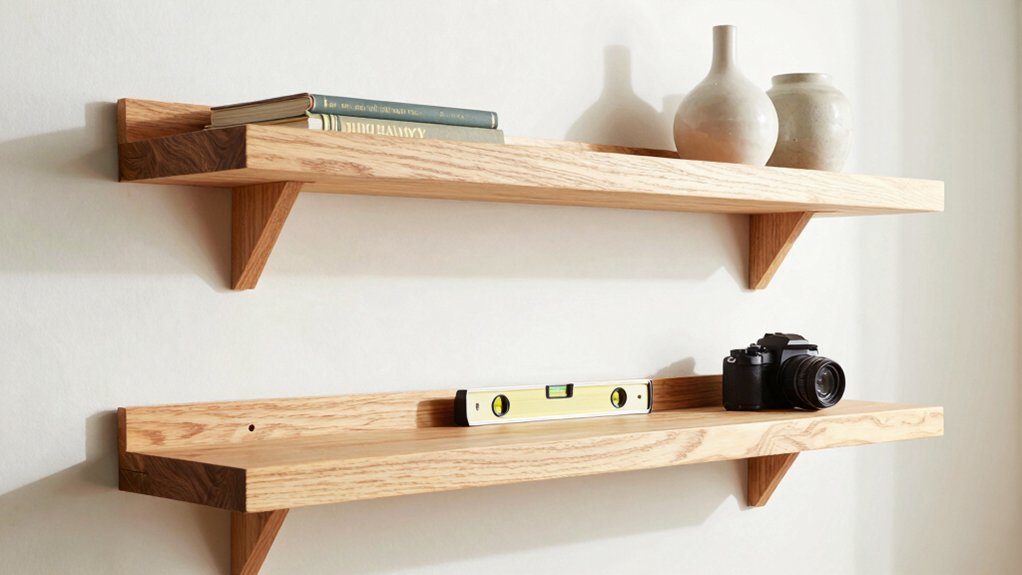
To build floating shelves that hold significant weight, you must plan loads and spans, choose high-strength materials, and install concealed supports anchored into studs with careful fastener distribution. Use solid hardwood, reinforced plywood, or high-density backing, and employ multiple supports plus hidden rails or cleats to spread load. Align brackets with studs, level precisely, and test progressively with heavier items. Verify end and midspan support, then finish and inspect regularly for long-term safety as you optimize the setup. More tips await as you progress.
Identify Your Load and Span for Floating Shelves
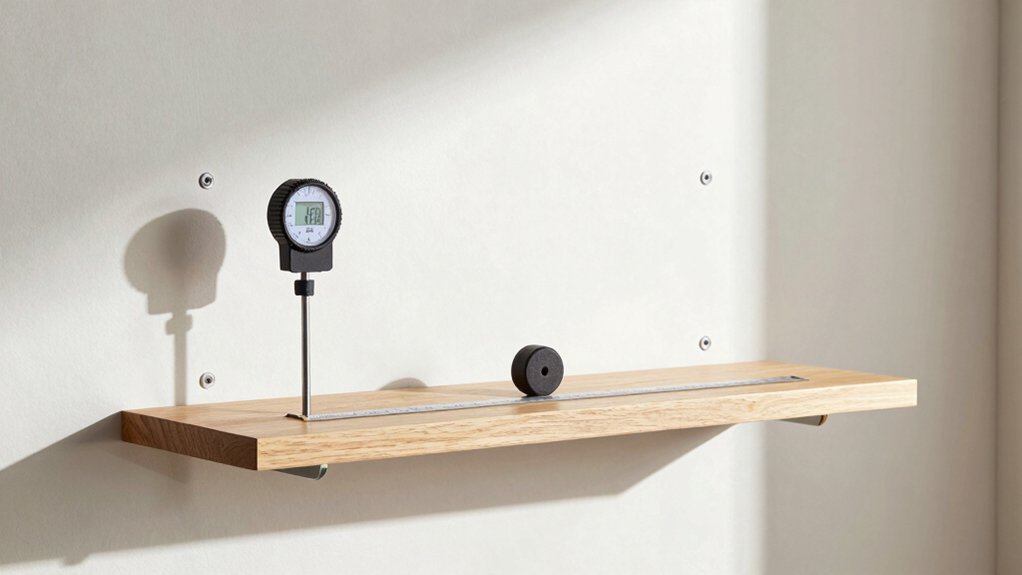
Before selecting hardware or mounting methods, determine the load you expect the shelf to carry and the span you plan to span. You’ll size the system by identifying two factors: the anticipated load distribution across the length and the dynamic elements you’ll encounter.
Start with a conservative estimate of the total weight, then partition it into anchor points to reveal how weight transfers to the wall. Record the maximum live load, dead load, and any concentrated loads near ends or midspan.
Assess span length, height, and potential deflection limits for your chosen material. This clarity informs hardware selection and mounting pattern.
Accurate load and span data reduce risk, ensure reliable performance, and guide you to appropriate fasteners, brackets, and anchor points for secure support.
Floating Shelf Materials: Weight-Rated Choices
Choosing the right shelf material hinges on weight capacity, rigidity, and how the panel interacts with fasteners. For weight-rated choices, select materials with predictable strength and stable dimensions to avoid sag. Practical options include solid hardwood, plywood core with veneers, and high-density fiberboard with proper backing.
Each material requires appropriate fasteners, spacing, and edge treatments to optimize load distribution. Consider decorative trim and color coordination to match interiors while preserving structural performance. The balance between aesthetic goals and engineering needs drives material selection, not sentiment.
- Solid hardwood with increased thickness and edge reinforcement
- Plywood core with high-grade veneer and cross-grain stability
- High-density fiberboard with proper backing and sealed edges
Note how trim profiles influence mounting scope and weight distribution, ensuring reliable performance under load.
Hidden Mounting Methods for Maximum Strength
Hidden mounting methods maximize strength by transferring load directly into studs or structural elements, not just the shelf itself. You’ll use concealed brackets and hidden fasteners to create a flush, rigid assembly that resists rotation and lever action.
Start with a full stud scan to locate high-density framing, then align mount points with shared studs for maximum shear capacity. Concealed brackets distribute weight over a broader area, reducing point stress and minimizing visible hardware.
Hidden fasteners, installed with precision, prevent wobble and maintain vertical alignment under load. Use dedicated mounting screws matched to each bracket’s specification, and ensure screw depth engages solid framing. Avoid adapters that rely on drywall alone.
Verify levelness after installation, then test with incremental loads to confirm predictable performance. Maintain documented load ratings for ongoing safety.
Choose Brackets, Cleats, and Supports That Last
When selecting brackets, cleats, and supports, prioritize hardware rated for the intended load and the mounting surface. You must choose components with proven load ratings and corrosion resistance, aligned to wall type and weight distribution.
Favor bracket types designed for shelf depth, and verify mounting screws match stud or masonry anchors. Consider support materials that resist shear, bending, and creep over time. The right hardware reduces deflection and preserves level alignment under load.
Ensure compatibility between brackets, cleats, and supports to avoid misfit and uneven support. Inspect finish durability to avoid coating failure. Use standardized fasteners and attach to solid substrates.
- bracket types optimized for high loads
- compatible cleats for full-depth support
- robust screws and anchors for masonry or stud walls
Install Floating Shelves With Load in Mind
To install floating shelves with load in mind, start by aligning the chosen brackets, cleats, and supports with the wall type and intended weight, then secure them to solid substrates using the proper anchors and screws.
Verify that fasteners penetrate stud centers or use rated hollow-wall anchors for lighter walls, and tighten to a firm bite without overdriving.
Install brackets level and plumb, and confirm shelf positive clearance against the wall surface for consistent support contact.
Assess load distribution by planning which items occupy higher versus lower tiers and ensure the shelf depth matches item width to prevent overhang.
Apply decorative finishes uniformly after mounting, and follow cleaning tips to preserve hardware longevity and finish integrity.
Maintain tightened connections and recheck periodically for sustained performance.
Distribute Weight Across Long Spans and Multiple Supports

To optimize weight distribution, plan load paths that span long sections while leveraging multiple supports.
Consider where you place fasteners and brackets to create balanced reactions, reducing sag and minimizing local stress.
This approach aligns with distributing weight strategically, optimizing span with multiple support points for stable, durable shelves.
Distribute Weight Strategically
Distribute weight across long spans and multiple supports to prevent local overloading and sagging. You’ll optimize weight distribution by planning support points first, then aligning loads to those points. Prioritize even carriage of heavy items, and keep lighter pieces centered to minimize tipping moments.
Consider how each shelf segment shares load with adjacent supports, and adjust positioning accordingly.
- Position brackets where studs or anchors occur to maximize load transfer
- Group heavy items toward the center of each span, not at ends
- Use staggered, complementary supports to balance cantilever forces
In your support planning, verify that every load path terminates at a solid substrate and remains within bracket or rail ratings. Recheck after adding high‑weight items.
Support Span Optimization
Optimizing how you span shelves matters as soon as you start placing long spans or multiple supports. You design for even load distribution across the length, reducing peak bending moments. Align studs or backing with calculated support nodes to minimize cantilever effects.
When you extend beyond a single stud, use continuous rails or multiple brackets connected to shared anchors to maintain rigidity. Choose wall anchors rated for your load capacity and the substrate, then verify drilling depth and affixment pattern to prevent shear failure.
For heavy items, model the shelf as a simply supported beam with calculated reactions; distribute weight to create balanced midspan stresses. Test assembly with incremental loads, recheck fasteners, and preserve clear access for maintenance and inspection.
Multiple Support Points
When spanning long distances or mounting multiple shelves, use several well-placed support points to share load paths and reduce peak bending moments. You distribute weight across posts, brackets, or embedded anchors, preventing localized failure and enabling higher total load ratings.
Plan supports at equal intervals and near fastener junctions to maintain stiffness and minimize deflection, especially under dynamic loads. Integrate decorative accents and lighting with spacing that preserves structural integrity while enhancing aesthetics.
Use hardware rated for your intended load and ensure secure connections to studs or backing panels. Maintain uniform shelf thickness and consistent mounting depth to avoid stress concentrations.
- Evenly spaced supports improve span efficiency and reduce sag
- Choose hardware that complements decorative accents and lighting integration
- Verify load paths with simple calculations or professional guidance
Test Shelf Strength Safely: What to Check
To test shelf strength safely, start by inspecting mounting points and hardware for compatibility with the shelf’s load. You’ll verify that fasteners, brackets, and cleats are rated for the anticipated weight and that the wall anchors match the substrate.
Check mounting security by confirming screw depth, thread engagement, and level alignment across all points. Examine stud location or appropriate anchors, ensuring even load transfer and absence of wobble when loaded.
Assess shelf-to-bracket connections for tightness and proper seating, with locking mechanisms engaged where used. Validate weight distribution: heavier items near the center and distributed toward the supports to prevent tipping.
Reconfirm that the overall system remains rigid under simulated loads before final use. Document findings for traceability and future inspections.
Practical Uses: Books, Kitchen Gear, and Décor
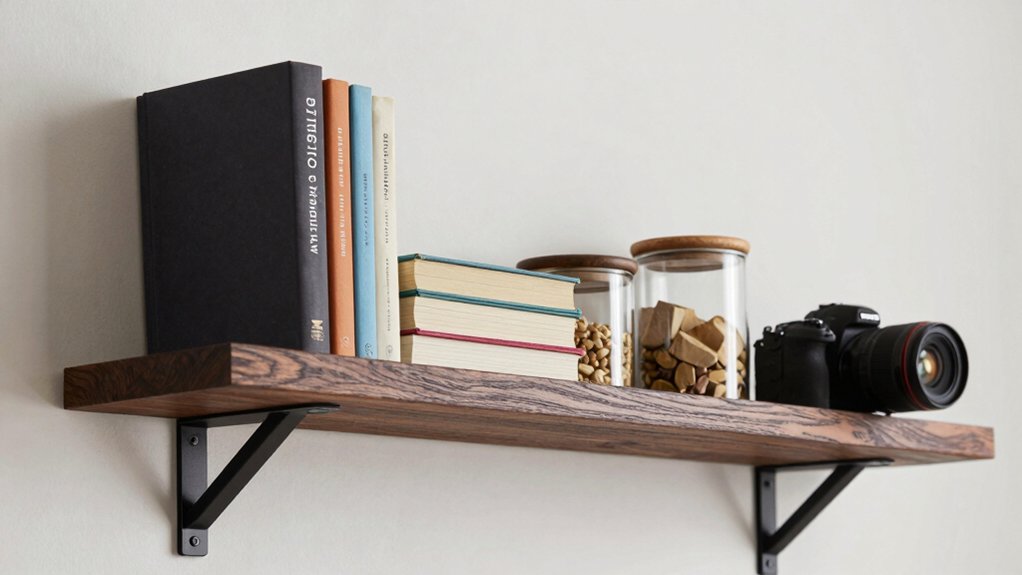
Floating shelves act as compact, accessible storage that expands organizing options without sacrificing space. You’ll use them to support practical loads while preserving a clean aesthetic, aligning with decorative accents and interior design trends.
Place books to balance weight and visibility, kitchen gear for easy access, and curated decor that reinforces style continuity. The system remains rigid, so you’ll rely on proper mounting and evenly distributed content to maximize capacity.
For clarity and efficiency, group items by function and frequency of use, ensuring quick retrieval without clutter.
- Books in height-graded stacks for readability and texture
- Kitchen tools and small appliances mounted by access pattern
- Decorative accents that echo color, material, and motif
This approach delivers functional, design-forward results with predictable behavior and minimal maintenance.
Prevent Sagging: Long Spans and Multiple Supports
To prevent sagging, you’ll optimize spans and apply multiple supports where needed.
Consider span optimization techniques, load distribution, and member stiffness to reduce deflection.
Plan material and fastener choices that reliably transfer weight to the wall while maintaining trim aesthetics.
Span Optimization Techniques
Span optimization minimizes deflection and prevents sagging by combining longer spans with strategic support placement. You balance loads by aligning supports under key points and selecting strong materials, ensuring predictable behavior under weight.
- Position mid-span and end supports to create favorable moment distribution
- Use mid-span ribs or cleats to stiffen long runs without adding excessive weight
- Choose cross-sectional profiles that optimize section modulus for the expected load
Applied correctly, longer spans with measured supports reduce sag, while preserving clean lines. Consider decorative accents and color schemes to enhance appearance without compromising stiffness. Maintain uniform fastening patterns and verify that fasteners reach solid backing.
For heavier shelves, incorporate hidden brackets or modular spacer systems to distribute load smoothly. Document span lengths and material properties to guide future improvements and maintain structural integrity.
Multiple Support Strategies
Long spans still sag without proper support, so you combine multiple supports to control deflection and maintain clean lines. You distribute load with a primary bracket system plus secondary supports at strategic intervals, minimizing sag in the shelf and preserving alignment with adjacent units.
Use continuous, low-flex rails or a concealed steel rod to resist differential movement between ends and center. Mountments should locate at least two supports per span, with spacing matched to the shelf length and anticipated load.
Ensure fasteners engage solid framing behind the wall or into studs, not drywall alone. Consider decorative accents or lighting integration to enhance appearance without introducing leverage points.
Verify deflection with a simple load test, then adjust support positions if needed for precision and safety.
Material and Fastener Choices
When planning for long spans and multiple supports, select materials and fasteners that minimize deflection and guarantee secure attachment to structural framing.
Material and Fastener Choices emphasize proven strength and stiffness. For material selection, prioritize high-grade plywood or solid wood cores with minimal cupping, plus a dense veneer or MDF backing to reduce sag. Use metal brackets or reinforced cleats anchored to studs or joists, not drywall anchors.
For fastener types, choose long, weather-resistant screws or lag bolts sized to load, with washers under heads to distribute force. Pair with corrosion-resistant anchors where appropriate and apply thread-locking compounds to prevent loosening.
- Material selection guidance for stiffness and load paths
- Fastener types and sizing for long spans
- Getting secure framing connections and load transfer
Finish, Protect, and Maintain Floating Shelves
Proper finishing and protection are essential to maximize load stability and longevity. You’ll apply a finish that penetrates and seals, reducing moisture exposure and fibers’ swelling. Start with a finish coating that suits your shelf material—plywood, MDF, or solid wood—ensuring even coverage and minimal runs. Allow adequate cure time between coats, inspecting for pinholes or uneven spots.
After final cure, apply a protective sealant tailored to your environment: water resistance for bathrooms or kitchens, UV resistance for sunlit rooms, and abrasion resistance where contact is frequent. Maintain shelves by cleaning with a soft cloth and reapplying sealant as wear appears.
Inspect mounting hardware annually and tighten or replace as needed to preserve safety margins and weight performance. Schedule refresh cycles to sustain long-term stability.
Frequently Asked Questions
How Much Weight Can a Single Floating Shelf Hold?
A single floating shelf can hold roughly 25–50 pounds, depending on wall material and mounting. You’ll maximize load by proper weight distribution, using sturdy shelf materials, secure anchors, and evenly distributing items along the length. Always test gradually.
Can I Mount With No Studs or Only Drywall?
Yes, you can mount with no studs or only drywall, but use alternative mounting methods like heavy-duty drywall anchors and concealed brackets. Verify proper weight limits, then assess decorative shelf designs to maintain balance and structural safety.
Do Metal Brackets Increase Load Capacity Significantly?
Yes, metal brackets increase load capacity. You’ll improve distribution and rigidity, reducing shelf deflection under heavy weights. Choose brackets rated for your span, use proper screws into studs, and verify mounting hardware matches your load targets.
How Do I Prevent Sag Over Long Spans?
You prevent sag over long spans by selecting proper material and using reinforced mounting techniques. Choose high-strength plywood or solid wood, apply strategic support blocks, and make sure wall anchors and screws maximize load transfer for consistent, durable performance.
What Maintenance Extends Shelf Lifespan and Safety?
Your maintenance plan extends shelf life and safety by inspecting hardware monthly, tightening screws, and testing loads. Like a tuned instrument, you prevent sag. You’ll refresh decorative finishes, recheck shelf anchoring, and replace worn supports promptly.
Conclusion
You’ve got the basics to build shelves that actually hold weight. By matching load and span, selecting weight-rated materials, and using robust hidden mounts, you guarantee rigidity from the wall to the shelf. Choose dependable brackets, cleats, and fasteners, install with load in mind, and test safely before loading. Finish and maintain to prevent sag, and you’ll transform simple boards into storage powerhouses. Do it right, and your shelves will outlive your furniture—pretty close to infinite, honestly.