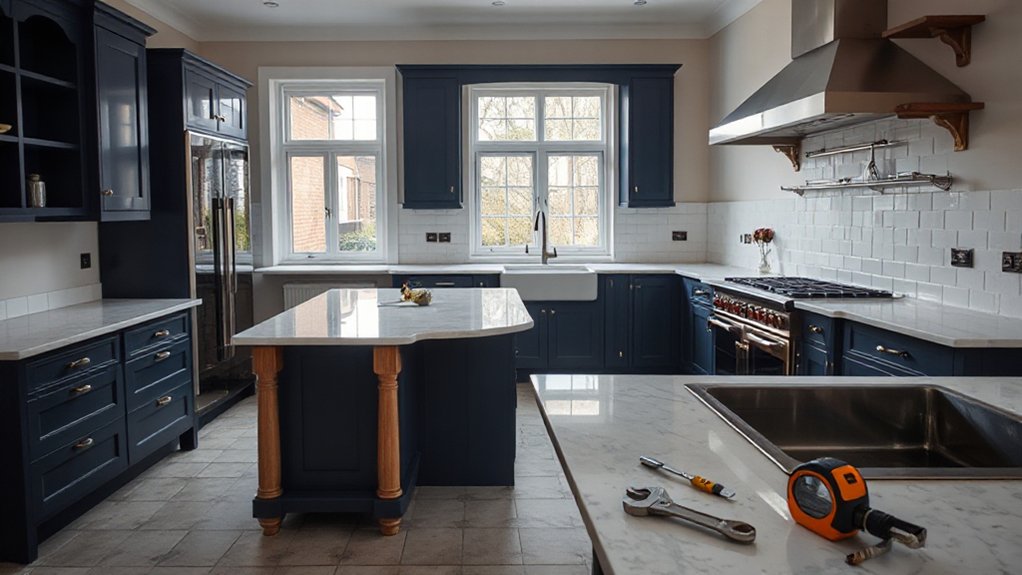
You may not realize how quickly costs can escalate once you layer in appliances, plumbing, and compliance fees. In the UK, a kitchen remodel often lands between £10,000 and £30,000 depending on scope and finishes, with 10–15% contingency for surprises. You’ll need to pin down scope, brands, and materials before finalizing a budget, then map a phased plan that aligns with your targets—and that’s where the hard part begins. Curious how to optimize without compromising quality?
What a UK Kitchen Remodel Entails: Scope, Phases, and Typical Costs

A UK kitchen remodel typically involves three core elements: design scoping, trade-led phases, and a clear budget with contingencies.
You’ll begin with a quantified scope: layout changes, storage optimization, and lighting plans, then translate them into a phase schedule that assigns responsibilities, lead times, and required permissions.
In design scoping, you’ll evaluate impact on plumbing, electrical, and ventilation, establishing measurable targets for space efficiency and flow.
During trade-led phases, you’ll monitor contractor performance, sequence tasks to minimize disruption, and track material lead times to avoid delays.
Budgeting remains central: itemize cabinetry, surfaces, and labour, plus a contingency cushion around 10–15%. Include Kitchen lighting specifications and guarantee Appliance warranties are documented, so post-install maintenance is predictable and costed.
This approach yields transparent costs and informed decisions.
Set Your UK Kitchen Budget: A Practical Guide
Set your UK kitchen budget by breaking costs into clear, non-negotiable components: cabinetry, surfaces, appliances, plumbing and electrical work, lighting, and installation. You’ll allocate fixed amounts to each area, then build in a contingency of 10–15% for unforeseen items.
Track spend monthly against a detailed ledger to avoid overruns, and prioritize value over upfront aesthetics. Include ongoing costs like appliance maintenance and essential kitchen accessories in the long-term plan to prevent surprise dips in cash flow.
1) Define baseline prices for each component using supplier quotes and regional variances.
2) Reserve a contingency fund (10–15%) and a separate line for appliance maintenance cycles.
3) Schedule phased purchases and installation windows to optimize timing and avoid price spikes.
Major Cost Drivers in a UK Kitchen Makeover
Start with cooking gadgets and appliance brands; premium models can double or triple the budget if you chase features you rarely use. Energy-efficient buys save long-term running costs but may add upfront expense, so cost-per-year now matters.
Labour for demolition, electrical work, and plastering often dominates the total, especially in older homes requiring rewiring or damp remediation.
Materials beyond basic fixtures—underlayment, tiling, and finishes—drive spend if you pursue durability and aesthetics.
Finally, contingency reserves, typically 10–15%, protect you from unforeseen fixes. Budget with these drivers in mind to avoid surprises.
Cabinetry Choices in the UK: Ready-to-Install vs Custom

Choosing between ready-to-install (RTI) cabinetry and custom units hinges on budget, timeline, and how you value fit and durability. RTI can slash lead times and upfront costs, while custom options maximize space utilization and long-term resale value.
In the UK market, RTI typically carries lower upfront taxes and simpler installation, but can limit layout options compared with bespoke designs. If you’re prioritising eco friendly appliances, RTI may constrain integration, whereas custom builds can optimize energy-efficient layouts.
Consider vintage cabinetry as a styling influence to balance cost with resale appeal. Your decision should reflect current price per door, installation charges, and expected life cycle costs. Align choices with a 5–10 year budgeting horizon for total cost of ownership.
1) Compare door material durability and warranty periods.
2) Estimate installation complexity and site disruption.
3) Assess potential resale value and tax implications.
Worktops and Surfaces: Materials, Durability, and Price
When selecting worktops, you’ll weigh material durability, maintenance needs, and upfront price to fit a budget and timeline.
In UK kitchens, countertop materials vary by cost, durability, and install complexity, so quantify options against projected use.
Quartz composites offer high surface durability and low maintenance, but mid-range price; solid wood delivers warmth yet requires periodic sealing and more upkeep.
Laminate provides the lowest upfront cost with acceptable durability for light to moderate use, while granite sits higher on price and longevity, resisting heat and scratches well.
PVC alternatives reduce costs further but may stain or dent.
For budgeting, assign a per-metre-cost, include edge profiles, and plan for installation and waste.
Track price-per-use metrics to compare long-term value versus purchase price.
Countertop materials influence overall kitchen spend.
UK Appliances: Efficient, Sizing, and Compliance
Appliances in UK kitchens affect both efficiency and long-term cost, so size, performance, and compliance must be weighed against your budget and renovation timeline. You’ll want data-driven choices that minimize energy use and maximize usable space, while meeting UK standards and warranties.
Choose models with verified appliance efficiency ratings, and map cycle times to your typical cooking load to estimate annual energy costs.
Sizing compliance matters for ventilation, clearance, and plug placement, reducing retrofit risk later. Prioritize uniform dimensions to simplify installation and future replacements.
1) Compare energy labels and running costs for ovens, hobs, and fridges to forecast yearly savings.
2) Verify cabinet clearances, ventilation, and electrical/gas hook-ups align with manufacturer specs.
3) Budget for delivery, installation, and certification checks to avoid delays.
Flooring and Subfloor Prep: What Influences the Total

Flooring and subfloor prep set the foundation—and the total cost—of any UK kitchen remodel. You’ll influence the bottom line through material choice, subfloor condition, and chosen installation method.
Flooring materials vary widely, from affordable vinyl to midrange engineered wood and premium natural stone; each tier drives material and installation costs differently.
Subfloor preparation is a cost lever you can’t ignore: levelness, moisture barriers, and repairs add days of labor or require specialty subfloors. Expect prep to account for a meaningful portion of your budget if the existing slab or boards aren’t flat or are moisture-damaged.
Flooring type also dictates underlayment, junctions, and adhesive needs.
Plumbing and Electrical in the UK: Compliance and Costs
You’ll want a clear view of compliance costs and how wiring and plumbing standards affect your budget from the start.
Expect a data-driven breakdown of typical certification fees, inspection charges, and mandatory safety measures, plus how these shape upfront and ongoing spend.
This sets a precise baseline for decisions on scope, timing, and contingency in your kitchen remodel.
Compliance Costs Overview
How much will compliance cost you when tackling plumbing and electrical work in a UK kitchen remodel? You’ll budget around mandatory checks, certifications, and installation standards that keep trades compliant and insured.
Costs vary by project scope, location, and complexity, but data shows a baseline impact of permits, inspections, and registered professional labor on total spend. Expect minor variances if you add decorative accents or select premium kitchen accessories, which can push compliance-related fees slightly higher due to added fixtures and positioning.
- Permit and inspection fees, plus competency certificates
- mandatory PIR tests, circuit checks, and commissioning with accredited electricians/plumbers
- compliance-driven service charges for risk assessments and documentation
These elements shape a predictable, budgeting-focused cost profile without fluff.
Wiring And Plumbing Standards
Plumbing costs hinge on pipe route optimization, isolation valves, and high-efficiency fixtures, with potential upgrades to venting and waste systems. Expect inspections that may require certified electricians and plumbers, plus possible building-control fees.
Budget for product standards, such as CE/UKCA markings, and for compliance documentation. When choosing finishes, eco-friendly materials can lower long-term running costs, but may add upfront sourcing time. Vintage styles can influence fixture prices due to specialized fittings.
Layout Changes: When to Move Plumbing or Walls
When planning layout changes, moving plumbing or walls should hinge on load-bearing considerations, water access, and future appliance placement to prevent costly reworks later. You’ll want clear cost signals before demolition, since concealed work drives budgets. This section focuses on practical decision points and risk mitigation, not delays or guesswork.
1) Wall removal decisions should prioritize structural safety, keeping load paths intact and coordinating with a structural engineer if needed to avoid expensive retrofit.
2) Plumbing relocation plans must map existing lines, water access, and waste routes, anticipating shutoffs and potential trenching or wall reconfiguration.
3) Budget buffers should account for contingency, access constraints, and potential re-plastering or tiling adjustments to minimize surprises.
Wall removal and Plumbing relocation drive overall project duration and costs.
Lighting and Tech: Budgeting for Ambience and Smart Features
Lighting and tech decisions directly affect both ambience and ongoing operating costs, so you should quantify upfront how much you’ll invest in fixtures, smart controls, and required wiring.
In budgeting terms, itemize lighting design components by function—general, task, and accent—and assign unit costs. Then apply projected wattage and hours per day to calculate annual energy.
Include smart technology like dimmers, hubs, and motion sensing switches, estimating purchase and installation fees.
Include contingencies for wiring upgrades, switches in multiple zones, and compatibility with future appliances.
Prioritize efficiency with LEDs and color tuning, and forecast maintenance over 5–10 years.
Create a phased cost plan with a clear break-even horizon.
Track variances monthly to guarantee your Kitchen Lighting ROI stays on target.
Hiring the Right Tradespeople in the UK: What to Look For

When budgeting for a kitchen remodel, you’ll want tradespeople with clear qualifications and licenses, so you know they’re certified for the work.
Verify insurance and guarantees upfront to protect against cost overruns and defects, and ask for proof from each candidate.
Use a transparent quotation process to compare truly apples-to-apples bids and avoid hidden charges.
Qualifications and Licences
To hire the right tradespeople for a UK kitchen remodel, you must verify qualifications and licences up front, because this directly affects safety, compliance, and budgeting. You’ll reduce risk of costly rework and delays by confirming regulatory standing before work begins.
Rely on verifiable credentials, like trade memberships, certificates, and city/region approvals, plus up-to-date health and safety training. Inspect previous project outcomes and confirm any required gas or electrical authorisations.
Expect transparent cost implications for non-compliance or scoping changes, and factor these into your budget from day one.
- Verify trade memberships, certifications, and current licences
- Check gas/electrical authorisations and safety records
- Review past project outcomes, timelines, and compliance documents
Keywords: kitchen accessories, colour schemes.
Insurance and Guarantees
You should verify that every tradesperson carries appropriate insurance coverage, including public liability and employer’s liability, to safeguard against property damage and workplace accidents. Request current certificates and confirm validity with the insurer, noting policy limits and retroactive dates.
In budgeting terms, confirm that insurance costs are factored into quotes and won’t appear as hidden add-ons later.
Look for guarantee policies that cover workmanship and materials for a defined period post-completion; understand what’s excluded, claim processes, and required maintenance.
Compare at least two providers, and document coverage specifics alongside cost estimates to prevent gaps between expected and actual project spend.
Transparent Quotation Process
How transparent is your quote? You deserve a breakdown that’s easy to verify and budget against. A clear quotation should itemize labor, materials, contingency, and timelines, with unit costs and VAT shown separately.
Look for fixed-price elements vs. time-and-materials, so you can compare apples to apples across trades. Demand written scope of work and a schedule of values, plus assumptions and exclusions.
Request example invoices from similar projects to gauge accuracy. Verify how kitchen decor decisions affect pricing, like fixture upgrades or finishes, and confirm appliance maintenance requirements are accounted for in future costs.
Ask for a discount if the quote omits waste, delivery, or disposal fees. Rely on transparent quotes to avoid mid-project surprises and protect your budget.
- Itemized scope, costs, and exclusions
- Fixed vs. variable pricing with clear assumptions
- Timelines, contingencies, and warranty details
Managing Overruns: Contingencies That Save You
Overruns are inevitable in kitchen remodels, but you can limit their impact with concrete contingencies and tight budgeting. You’ll build a contingency buffer of 10–15% of total project cost to cover unforeseen supplier delays, material shortages, and scope changes.
Track unit costs weekly and compare against base estimates; if variances approach 5%, reallocate funds from noncritical tasks or secure staged payments to suppliers. Maintain a detailed spend-by-category dashboard, separating materials, labour, and overhead.
Prioritize critical-path activities; delay cosmetic work if prices spike, and reserve a small fund specifically for appliance maintenance and replacements during handover. Include risk-adjusted allowances for key items like cabinetry and flooring.
When budgeting for kitchen decor, allocate a separate but connected line item to avoid cross-subsidizing future changes.
Permits, Regulations, and UK Building Standards
- Permitted development or planning permissions determine whether you need formal approval, affecting timelines and fees.
- Building regulations require safe electrical, plumbing, and ventilation work, shaping contractor scope and acceptable variances.
- Certification and sign-offs guarantee post-completion compliance for items like Kitchen accessories and appliance installation, safeguarding you against retrofit costs.
Hidden Costs You Might Miss: Delivery, VAT, Waste

Delivery costs aren’t fixed and can vary by supplier and timing, so you should start by mapping out a delivery deductions framework to compare options.
VAT timing affects when you pay and reclaim, so align invoices with your cash flow and budget milestones.
Waste costs break out by disposal, skip hire, and recycling, then normalize them per item to avoid hidden surcharges.
Delivery Deductions Deep Dive
Hidden costs often catch you by surprise, especially when delivery, VAT, and waste charges aren’t clearly itemized upfront.
In this delivery deductions comprehensive analysis, you’ll quantify how small line items affect your budget, focusing on predictable patterns rather than vague estimates.
You want transparency: compare supplier quotes, confirm what each delivery includes, and track shipment delays that push costs higher.
Use real data to model total landed cost, not just upfront price.
Expect deductions for curbside vs. room-ready delivery, handling surcharges, and venue fees that vary by postcode.
Align timelines with project milestones to minimize disruption.
Apply these checks to stay on target.
1) Delivery tier differences and price cliffs
2) Hidden handling and surcharge flags
3) Shipment delays and cost recomputation
VAT Variations And Timing
Containing fittings, labor, and installation may shift costs if you’re refurbishing a business or residential project with eligible criteria. Timing matters: ordering early accommodates rate changes and potential price variance, while delaying deliveries can trigger temporary VAT changes on pre-orders.
Track invoices by date of supply, not just receipt, to ensure accurate budgeting. Eco-friendly upgrades and vintage styles often influence VAT categorization due to materials and certification.
Plan with a clear calendar to stabilize cash flow and keep the budget precise.
Waste Management Costs Breakout
Do you realize how waste management can quietly inflate your kitchen remodel budget? In budgeting terms, waste costs break out into disposal, handling, and recycling fees, which can skew project forecasts if unaccounted.
You’ll want firm figures for tonnage, skip hire duration, and any permits, plus potential VAT on waste services. Track recycling options versus general waste to optimize costs and reduce landfill charges. Concrete planning reduces surprises at invoicing time.
- Waste disposal charges by weight or volume, with clear unit rates and removal frequency.
- Recycling options and any incentives, plus contractor-supplied separation of recyclables.
- Delivery and skip-hire surcharges, permits, and timing adjustments to minimize idle days.
Cost-Saving Tactics Without Skimping on Quality
To trim costs without sacrificing quality, start with a clear budget and strict itemized plan. Then compare options by total lifetime cost rather than upfront price.
You’ll maximize value by evaluating fixtures, fittings, and trades against durability, maintenance, and energy efficiency. Prioritize mid-range, well-reviewed components with long warranties and local service availability.
Use a cost-per-year framework to forecast replacement needs and ongoing utility bills. Invest in Eco friendly materials where durability and cleaning ease justify premium, and offset with bulk purchases or off-peak install windows.
Leverage Smart technology to reduce energy use and long-term maintenance, but avoid excessive features that raise upfront cost without proportional savings.
Secure competitive quotes, verify compliance, and track variances against the baseline budget in monthly reviews.
Step-by-Step Timeline: From Design to Finish in a UK Kitchen
Launching a kitchen remodel in the UK follows a strict, data-driven timeline: from initial brief and budget to design sign-off, procurement, and on-site completion, with each phase mapped to concrete milestones and cost checkpoints.
You’ll progress through a clear sequence, with budgets updated at each milestone and decisions logged to control scope creep. Design sign-off locks specifications, then procurement quotes materials and appliances, factoring in lead times for delivery and installation.
On-site work proceeds in controlled phases—demo, rough-in, cabinetry, surfaces, and final fit-off—each staged for quality checks and contingency allowances. Throughout, monitor Kitchen decor choices and appliance maintenance plans to avoid post-install surprises.
1) Brief and budget alignment
2) Design confirmation to order placement
3) Installation, snagging, and handover
Return on Investment: Valuing a UK Kitchen Remodel
You’ll want to weigh Investment Value Trends against upfront and ongoing costs to gauge true ROI.
We’ll compare recent UK data on average resale uplift and time-to-payback with your budget, using clear metrics like payback time and net present value.
This discussion centers on budgeting precision, so you can anchor decisions to tangible figures rather than impression.
Investment Value Trends
Across the UK kitchen remodels, ROI hinges on cost control and market appeal: high-visibility upgrades like cabinets, counters, and layout improvements tend to yield the strongest value-to-cost ratio, while smaller tweaks offer diminishing returns.
You’ll see value shift with trends in kitchen decor and appliance brands, influencing resale and rental appeal, even if upfront costs rise. Track value drivers quarterly to avoid overinvestment in features that buyers don’t price in.
1) Upright cabinet faces and durable worktops drive the highest marginal ROI per pound.
2) Integrated appliances from recognized brands tend to preserve value through long-term reliability.
3) Layout optimizations that improve workflow and daylight use often deliver more resale impact than cosmetic fixes.
Payback Time Metrics
Payback time, or return on investment, measures how quickly a UK kitchen remodel pays back its costs through increased selling price or reduced operating expenses. You’ll assess payback using net incremental cash flow, comparing upfront fit-out and ongoing maintenance against projected resale uplift and energy savings.
In budgeting terms, calculate the break-even horizon by dividing total remodel costs by annual incremental net benefit.
Kitchen accessories, like smart lighting or soft-close drawers, can shorten payback if they boost value and curb appeal without excessive spend.
Appliance maintenance costs influence long-run payback: well-maintained units preserve value and minimize replacement timing, improving retirement of capital.
Use conservative resale estimations and sensitivity tests for interest rate shifts, labour volatility, and regulatory changes to reflect realistic ROI scenarios.
Frequently Asked Questions
How Long Does a Typical UK Kitchen Remodel Take End-To-End?
A typical UK kitchen remodel takes 4 to 8 weeks end-to-end. You’ll plan a tight schedule, align a fixed budget, and track milestones for Kitchen layout changes and appliance upgrades, ensuring contingency for delivery delays and installation coordination.
What Is the Average UK Kitchen Remodel Downtime for a Home?
Your average UK kitchen remodel downtime is about 2–6 weeks. You’ll likely pause for kitchen flooring and appliance upgrades, plus scheduling buffers. Budget tight? Plan contingencies, track days, and allocate extra weeks for deliveries and fixes.
Can Refunds or Rebates Reduce UK Kitchen Remodel Costs?
Aiming for a lean budget is a tightrope; yes, refunds can help. You can leverage recycling incentives and tax rebates to trim costs, guiding your project with data-driven budgeting and precise savings estimates for a kitchen remodel.
Do Kitchen Remodels Require Planning Permission or Building Regs?
Yes, you’ll often need building regs and possibly planning permission; consult your local authority. For budgeting, plan design inspiration and material choices around compliance, costs, and timelines to guarantee you meet requirements and stay on track.
What Hidden Costs Commonly Surprise Homeowners in the UK?
Hidden fees commonly surprise you: permit shifts, disposal, and timing gaps. You’ll face material upgrades as you budget, plus VAT spikes and trade fluctuations. Track costs monthly, factor contingencies, and lock quotes to avoid overruns.
Conclusion
You’ll love the numbers: a UK kitchen remodel ranges roughly from £10,000 to £30,000, with a sensible 10–15% contingency. If you chase premium dressed cabinetry, top-tier appliances, and major layout shifts, expect higher. Budget designer vibes without the drama by trimming bespoke elements and leaning on ready-to-install solutions. Track costs, resist vanity add-ons, and bake in VAT, delivery, and waste. In short: plan, budget, adjust—satirically, your wallet deserves a steady drip rather than a fountain.