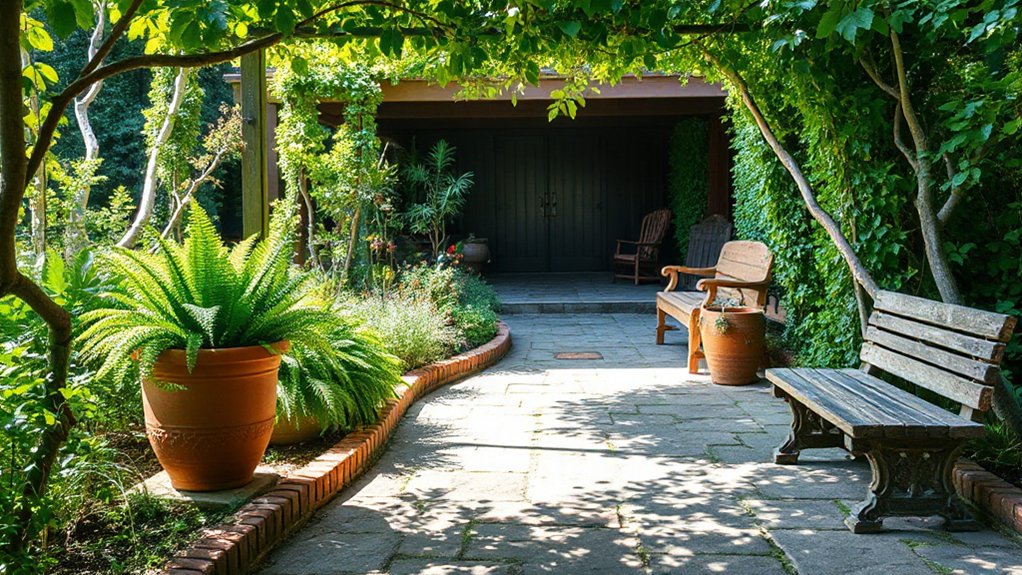
A welcoming garden path guides the eye toward destinations while engaging the senses with aromatic plants near the approach and a light-reflecting, non-slip surface. Create a cohesive flow to a patio by matching materials, textures, and scale, using sightlines and repeating textures to unify spaces. Choose climate-appropriate, durable, permeable surfaces, with low-maintenance edging and groundcovers to define borders. Layer lighting and comfortable seating to extend outdoor time—and if you keep exploring, you’ll uncover more tips and techniques.
What Makes a Garden Path Feel Welcoming and Inviting
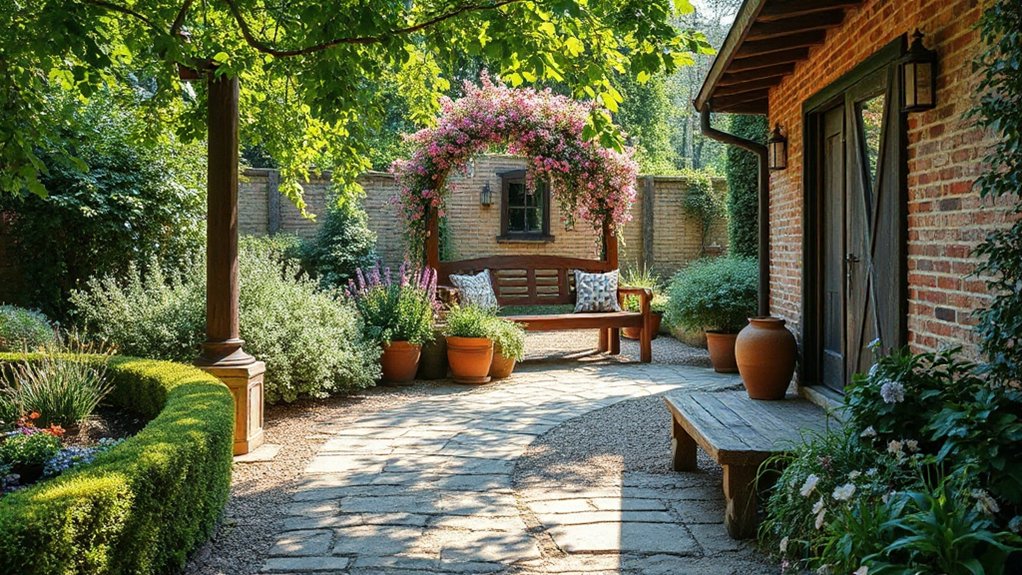
A welcoming garden path blends function with atmosphere by guiding the eye smoothly and inviting foot traffic toward a destination. You design with precise material choices, consistent cadence, and tactile cues that encourage steady pacing.
Prioritize garden aromatic elements near the approach to stimulate curiosity without overpowering nearby seating or planting beds. Use a modest, non-slip surface that reflects light softly, enhancing visibility under varying conditions.
Texture variety matters: welcome textures through edging, mulch, and flagstone that reward every step with subtle feedback. Align plant forms to maintain sightlines while offering seasonal color and fragrance, ensuring the path remains legible from multiple angles.
Calibrate width, turning radii, and sighting lines to balance accessibility with an intimate, inviting atmosphere.
Designing a Cohesive Flow: From Path to Patio
By ensuring the path and patio read as a single narrative, you create a seamless progression that keeps movement fluid and intention clear. You align materials, textures, and scale so shifts feel intentional, not accidental. A cohesive flow relies on sightlines, repeated motifs, and purposeful contrasts that elevate garden aesthetics without drama.
Integrate plantings that soften edges, guide pace, and reinforce the route from walk to lounge. Balance form and function, so seating zones emerge as natural extensions rather than afterthoughts.
- Subtle edging that echoes garden elements and unifies zones
- Repeated plant textures and foliage colors to stitch spaces
- Boxes and troughs that frame views and direct movement
Focus on plant integration and rhythm; let space read as one curated story.
Selecting Climate-Appropriate Materials That Last
Choosing climate-appropriate materials that last starts with a realistic assessment of your site’s weather patterns and exposure. You’ll select durable substrates by matching material properties to sun, moisture, temperature swings, and wind, then validate performance with local data.
Prioritize sustainable materials that resist decay, fading, and thermal stress, reducing maintenance while maximizing longevity. Consider climate adaptability as a core criterion: materials should perform across seasonal cycles without cracking, warping, or staining.
For paths, opt for permeable surfaces that handle runoff and freeze-thaw cycles, such as properly installed pavers or stabilized aggregates.
For patios, prioritize sealed yet breathable surfaces that minimize heat buildup and moisture intrusion.
Assess maintenance needs, warranty terms, and supplier provenance to guarantee consistent quality over time. End-use expectations and environmental context should guide every material decision.
Edging With Groundcovers: Dress Borders With Ease
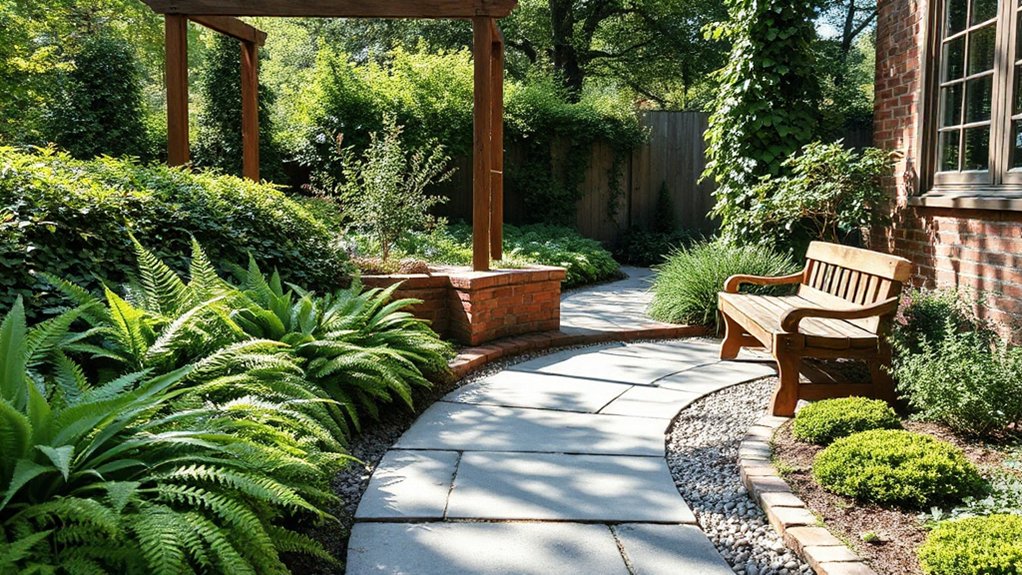
Edging with groundcovers offers a low-maintenance, visually cohesive border that naturalizes hard edges while keeping beds tidy. You’ll select groundcover varieties that form a dense, weed-suppressing mat, reducing upkeep and irrigation needs.
Use deliberate edging techniques to guarantee the plant mass remains contained, preventing encroachment onto walkways and mulch. Choose textures and colors that contrast with adjacent materials to heighten definition while conveying a seamless transition between path and border.
By layering foliage height, you create depth and year-round interest, even as seasonal tones shift. Maintain edges with precise mowing and occasional renewal to sustain uniformity.
This approach maximizes space, speeds installation, and preserves garden airflow and drainage.
- Variegated thyme weaving along stones
- Creeping Jenny spilling over pavers
- Dwarf mondo grass edging accents
Lighting and Seating to Extend Outdoor Time
Why settle for dusk when your outdoor room can glow into the night with purpose and comfort? You design zones with layered lighting and purpose-built seating to extend usable hours.
Begin with garden lighting that contrasts warm and cool tones, guiding traffic and highlighting textures without glare. Use low-profile path lights, step LEDs, and shaded uplights to sculpt shadows and safety.
Pair this with durable outdoor seating that supports conversation and posture; choose weatherproof frames, cushions with quick-dry fills, and modular pieces for flexible layouts. Integrate dimmers and smart controls to adjust ambience as needed.
Consider solar accents for sustainability, and guarantee electrical connections are code-compliant and weather-sealed. The result is a cohesive, inviting outdoor room that feels both technical and welcoming.
Common Path and Patio Mistakes: and How to Fix Them
Even small missteps in path and patio design can undermine usability and safety, but they’re easy to fix with a methodical approach. You’ll spot issues in material consistency, drainage, and scale, then apply precise corrections to restore flow.
Prioritize pathway symmetry to reduce missteps and invite confident navigation, while balancing color and texture for cohesive aesthetics. In patios, pursue clear sightlines, adequate privacy, and durable surfaces that resist wear.
Avoid clutter that traps moisture or causes trip hazards; confirm grade transitions are gentle and slip-resistant. Use intentional planting as visual anchors, not obstacles.
- Misaligned pavers that create trip hazards become a tight, even surface with proper spacing.
- Poor drainage causes puddling; regrade and install channeling for quick runoff.
- Overexposure or under-privacy fails erode comfort; introduce strategic screens for patio privacy.
Small Spaces, Big Impact: Path and Patio Tricks
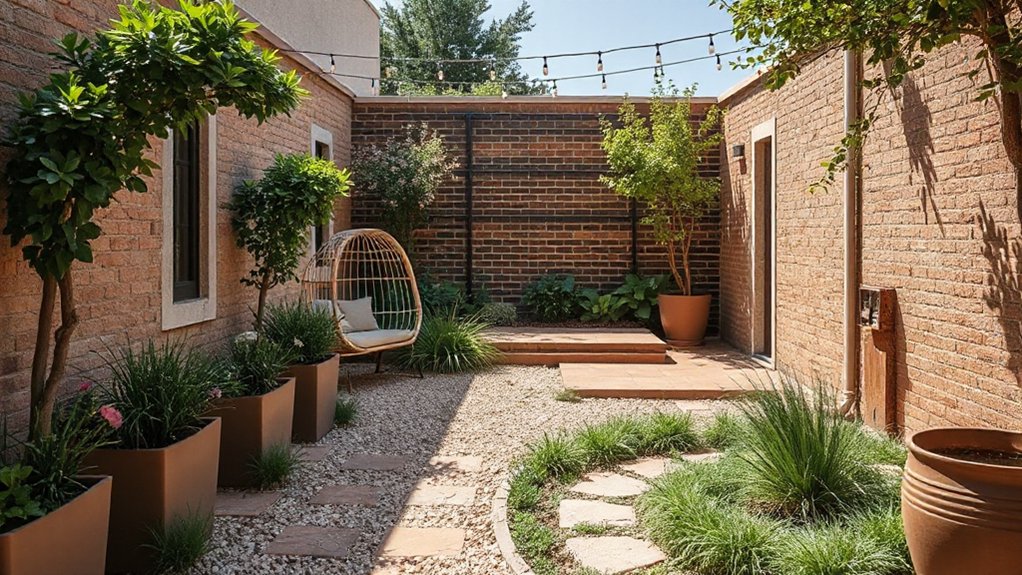
Small spaces punch above their weight when you optimize layout, scale, and texture for maximum impact. You’ll craft efficient routes with modular stepping stones and narrow borders that frame each zone without crowding it.
Use vertical elements—trellises, narrow pergolas, and hanging planters—to add height and depth, while keeping sightlines open for flow.
For vegetable gardening, position raised beds in a compact grid that’s accessible from multiple angles, and choose compact cultivars to maximize yield without expanding footprint.
Integrate wildlife habitats by incorporating native grasses and pollinator-friendly blooms at margins.
Choose durable materials with subtle texture to reduce visual noise, and apply shade-tolerant groundcovers under seating.
Finish with adaptive lighting that highlights focal plants and pathways, enhancing safety and ambience after dark.
Simple, Realistic Maintenance Routines for Outdoors
Maintaining outdoor spaces doesn’t have to be complicated; with a simple, realistic routine, you’ll keep paths clear, soil healthy, and plants thriving year-round. You implement predictable cycles, focusing on soil, moisture, and plant selection.
Start with native plantings to reduce irrigation and pests, then monitor soil structure and drainage. Schedule light, frequent tasks rather than sporadic, heavy workloads, and consolidate tools to streamline maintenance.
Incorporate mulch maintenance to preserve moisture, suppress weeds, and regulate temperature. This approach creates cohesive harmony between hardscape and greenery, preserving aesthetic appeal while minimizing effort.
- Native plantings support resilience, reduce water needs, and attract pollinators.
- Mulch maintenance protects soil, regulates moisture, and debugs weed growth.
- Routine checks align irrigation, prune timing, and seasonal cleanups for year-round balance.
Frequently Asked Questions
How Can I Ensure Safety Without Sacrificing Design?
You can balance safety and design by prioritizing lighting safety and surface traction, choosing glare-free lighting and slip-resistant materials, while maintaining cohesive color and texture. Plan pathways with even surfaces, non-slip pavers, and clearly lit passages for confidence.
What Budget-Friendly Upgrades Create Instant Impact?
Nearly 60% notice yard upgrades instantly; with Garden lighting and decorative edging, you’ll create ambiance and structure. You upgrade on a budget, you’ll boost safety and appeal, you’ll elevate night scenes, and you’ll enjoy cohesive, colorful pathways.
Which Plants Deter Pests Naturally Around Paths?
You can deter pests naturally by using companion planting and natural repellents along paths. Plant marigolds, basil, and thyme near borders, rotate companions seasonally, and spray neem-based mixtures to reinforce defense without harming beneficial insects or foot traffic.
How Do Seasons Alter Path and Patio Usability?
Seasons alter path and patio usability by shifting surface grip, moisture, and shade; you’ll notice seasonal foliage changing foot comfort and weather resilience. You adapt materials and maintenance, ensuring safety, drainage, and aesthetics remain cohesive throughout varying conditions.
Can DIY Projects Match Professional Results Safely?
Yes, you can, but you must prioritize DIY safety and planning. You’ll achieve professional aesthetics by using proper PPE, precise measurements, vetted materials, and methodical joins, because careful execution prevents hazards and delivers polished, durable results you’ll proudly own.
Conclusion
You’ve designed a route that invites lingering, not rushing. As you lay pavers like tiny steppingstones toward a shaded patio, your space becomes a narrative—functional, durable, and inviting. Picture a 20% reduction in weeding after smart edging, or a chilly evening glow that doubles usable hours. Think of the path as a heartbeat: steady, cohesive, and resilient. When materials age gracefully and light shifts with seasons, your garden tells a welcoming, low-maintenance story that endures.