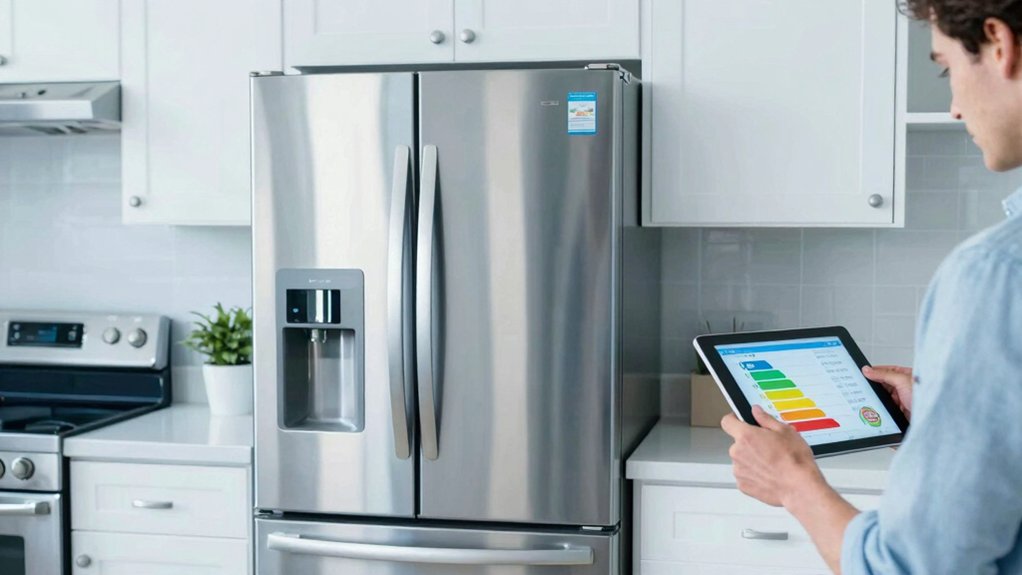
Energy Star appliances typically pay back their premium through lower operating costs, especially as you select models that balance efficiency with durability. You’ll see quicker payback when incentives reduce upfront price, and when the unit aligns with your climate and usage patterns. High-efficiency designs, robust warranties, and smart controls boost long-term value. Consider total ownership—purchase price plus installation, maintenance, and net energy savings. If you keep going, you’ll uncover how to maximize ROI across your whole home.
What Energy Star Ratings Mean for Energy Use and Costs
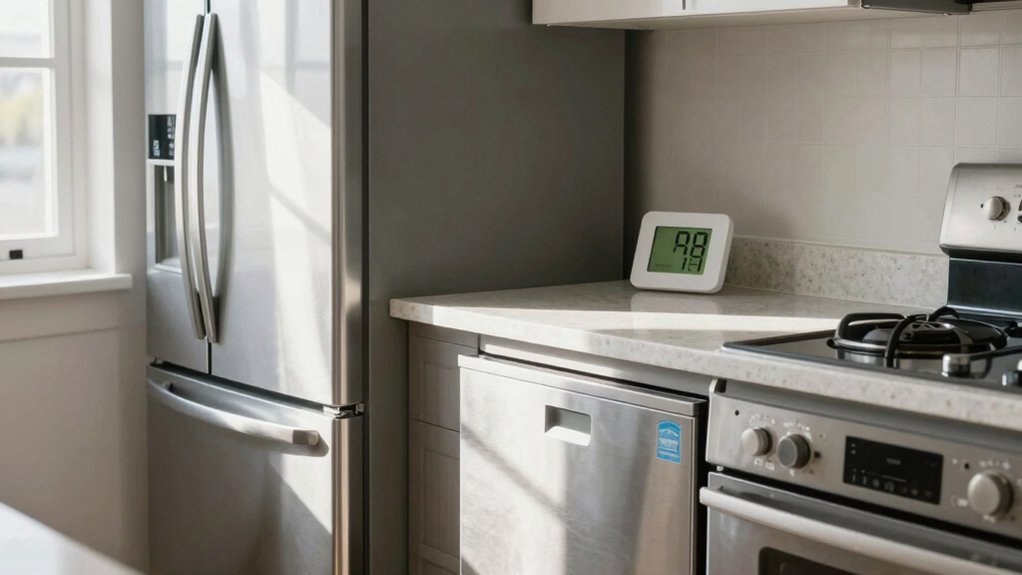
Energy Star ratings signal how efficiently a product uses electricity relative to a baseline, and they translate into measurable operating costs. You evaluate a unit’s efficiency once you compare its energy star ratings across similar models, not just the label.
The ratings reflect design choices, compressor and motor efficiency, heat exchange, and control algorithms, all of which drive consumption under typical loads. Appliance efficiency standards translate into tangible monthly or annual bill impacts, with higher ratings yielding lower energy use over time.
For procurement, you should benchmark products against peers with equivalent capacities and features, using standardized testing methods and syllabi of usage scenarios. This helps you forecast total cost of ownership and demand-side benefits for energy management programs.
How Much Will You Save With Energy Star Appliances?
Upfront costs for Energy Star appliances set a baseline tradeoff against long-term savings, so you’ll want to compare purchase price, incentives, and financing against projected energy bills.
I’ll help you quantify how payback periods vary by model, usage patterns, and utility rates, and show where insulation of short-term costs pays off in annual savings.
This first look frames the key tension between upfront investment and cumulative efficiency gains, guiding you to prioritize options with the strongest long-term impact.
Upfront Cost Tradeoffs
Choosing Energy Star appliances involves weighing upfront costs against long-term savings, because efficiency alone isn’t the only driver—payback matters. You’ll assess upfront price, incentives, and installation, then measure against expected energy reductions and resale value.
Precision budgeting avoids sunk-cost regret and aligns with market signals like brand reputation and product tier. Consider these factors:
1) Cost comparison across models with similar efficiency
2) Manufacturer rebates and utility incentives
3) Installation complexity and potential premium for advanced features
4) Expected payback period based on energy savings and local utility rates
Long-Term Savings Impact
By focusing on real-world usage and local utility rates, you can quantify long-term savings from Energy Star dishes, laundry, and heating/cooling appliances.
In practice, your gains hinge on efficiency differences, usage patterns, and climate. Energy Star ratings reflect lower operating watts and better seasonal energy performance, translating to meaningful annual cost reductions when you run these units regularly.
Compare total cost of ownership, not just upfront price, by factoring expected service life and maintenance needs.
Manufacturing standards and appliance certifications guarantee consistency across models, enabling credible savings projections.
Variability arises from occupancy, load factors, and utility tiering, so model scenarios using your bills.
Relative to baseline, prudent selections yield compounding savings that justify the initial premium over time.
Do Star-Rated Appliances Last? Longevity and Build
Star-rated appliances tend to deliver longer service lives than non-rated peers, thanks to tighter manufacturing tolerances, higher-quality components, and stricter durability testing.
You’ll evaluate longevity by focusing on build quality, component sourcing, and lifecycle testing. To guide your assessment, consider these factors:
1) Material fatigue resistance in major modules
2) Thermal management and compressor/ motor reliability
3) Door seals, gaskets, and load-bearing joints durability
4) Aftermarket serviceability and availability of replacement parts
These elements directly influence appliance durability and product lifespan, reducing failure modes and maintenance cycles.
In market terms, Star-rated models often exhibit lower warranty claims and steadier performance curves over time. Your choice should align with expected usage patterns, frequency of cycles, and planned service intervals.
Balance upfront energy efficiency with proven long-term reliability to maximize total value.
Upfront Costs vs. Long-Term Savings: A Practical Budget Guide
You’ll weigh upfront cost tradeoffs against expected energy and maintenance savings to map a clear budget path.
Over time, the long-term savings outlook informs payback periods, resale value, and total cost of ownership with Energy Star focus.
This discussion sets a framework for precise cost benchmarking and market-tested budgeting decisions.
Upfront Cost Tradeoffs
Are upfront costs worth the longer-term payoff when choosing Energy Star appliances? You’ll weigh price against efficiency gains, resale value, and reliability. The objective is to quantify tradeoffs without fluff, using precise market signals and installation-ready expectations.
- First-year ROI: capture efficiency credits and rebates, offsetting higher sticker price.
- Payback horizon: estimate annual energy savings versus incremental cost, factoring utility rate trends.
- Total cost of ownership: include maintenance, replacement cycles, and potential performance incentives.
- Installation impact: recognize appliance installation quality as a capital factor influencing realized efficiency.
Remember energy star myths can skew perception; verify labeling and performance claims. Focus on practical budgeting, not hype. Prioritize correct installation, verified ratings, and documented warranties to ensure the expected long-term payoff aligns with your financial plan.
Long-Term Savings Outlook
Long-Term Savings Outlook hinges on a disciplined assessment of upfront costs against projected energy savings over the appliance’s life. You’ll quantify total cost of ownership by modeling purchase price, installation, and maintenance, then apply standardized energy-use profiles and expected efficiency gains.
Focus on performance consistency, not peak ratings alone, because real-world usage drives payback. Compare alternatives with transparent brand comparisons, noting warranty terms, service networks, and scheduled maintenance implications that affect longevity.
Use conservative efficiency projections to avoid overstated returns, and discount future savings to present value for accuracy. Align your budget with expected maintenance cycles, filter replacements, and potential repair costs.
This disciplined approach clarifies whether higher-priced, more efficient units deliver meaningful long-term advantage for your household.
Which Climates and Uses Maximize Energy Star Benefits?
Different climates and usage patterns determine how much Energy Star appliances save, so choosing models with appropriate energy ratings is essential for maximizing benefits. You’ll see best results when selecting products matched to climate compatibility and your usage optimization goals, rather than generic labels alone.
- High-humidity regions favor appliances with efficient dehumidification modes and sealed insulation.
- Extremely cold or hot climates benefit from variable-speed components that maintain steady performance.
- Frequent, partial-temperature cycling improves efficiency for refrigeration and HVAC with adaptive defrost or intelligent controls.
- Heavy, multi-user usage emphasizes load-shaping and energy management features to sustain savings over time.
Tax Breaks, Rebates, and Net Cost Considerations
Tax incentives, rebates, and net cost considerations substantially affect the true price of Energy Star appliances. You’ll see the sticker price tempered by tax incentives and program rebates that lower upfront outlays, shifting payback dynamics.
In regions with robust rebate programs, the effective cost may drop by a meaningful percentage, accelerating ROI. Duration and eligibility rules matter: some incentives phase out, others require installer documentation or product registration.
Many programs target efficiency tiers, not brands, so your selection should align with certified performance metrics to maximize savings. Consider total cost of ownership, including energy savings over typical usage profiles.
Track local and federal offerings, as well as utility incentives, to compare net costs accurately and avoid missed opportunities. Plan procurement around qualifying periods and required verifications to optimize value.
A Simple Framework to Decide If You Should Upgrade
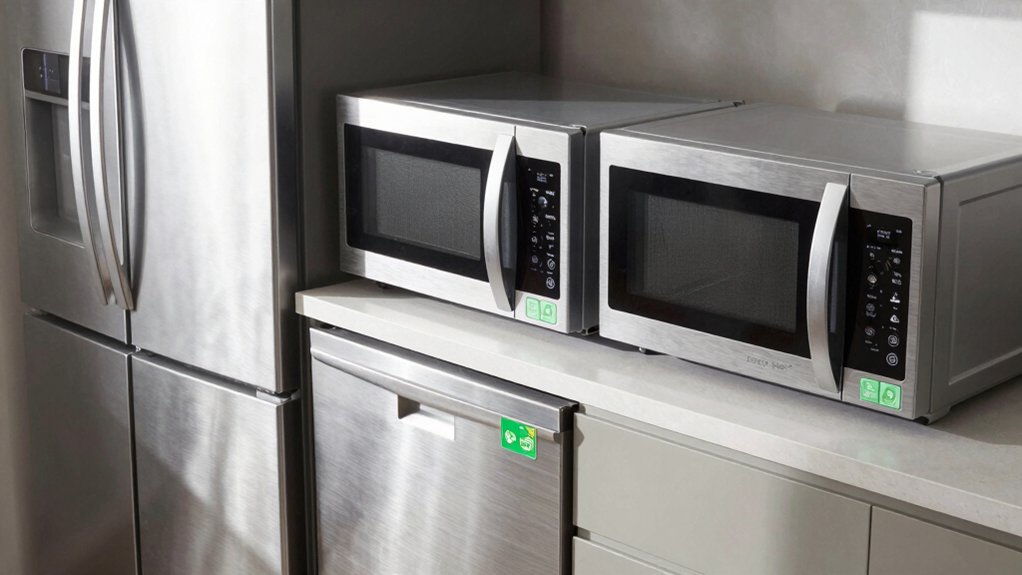
To decide whether you should upgrade, start with a simple framework that centers on three practical questions: will the new appliance meaningfully reduce energy use, will the upfront cost, after incentives, deliver a favorable payback period, and does it fit your usage patterns and home infrastructure?
This approach emphasizes measurable impact, known maintenance needs, and total ownership costs, not hype. Use the framework to compare models on efficiency, reliability, and support.
- Assess energy savings versus baseline usage and expected lifetime.
- Calculate net cost after incentives, installation, and maintenance.
- Evaluate fit with your space, wiring, and appliance maintenance routines.
- Consider brand reputation and long-term serviceability to reduce risk.
Extending Energy Star Beyond the Kitchen: Whole-Home Efficiency
Whole-house energy efficiency with Energy Star goes beyond kitchen appliances by aligning labeling programs, building envelopes, and connected systems to optimize total consumption. You’ll see value when appliances, HVAC, insulation, and windows share performance data, enabling predictive maintenance and synchronized operation.
A smart approach integrates smart home controllers with Energy Star metrics, reducing peak demand and smoothing load profiles through coordinated cycling. Consider the broader framework: labeling harmonization across products, whole-home benchmarking, and demand response participation.
Renewable energy sources become more effective when appliances and systems optimize on-site generation and storage, not just consumption. Market insight shows homeowners, builders, and utilities benefit from standardized credibility, faster ROI, and higher comfort.
In practice, you gain tighter control, lower utility bills, and measurable environmental impact.
Conclusion
You stand at a crossroads where upgrades glitter like fixed stars. Energy Star isn’t just a badge; it’s a compass for your household engine. Think of each appliance as a small crew member: efficient, durable, and budget-smart when you align them with your climate and usage. The upfront cost reshapes your annual ledger, but the voyage pays off with steadier sails and quieter days. Upgrade where it counts, and your home becomes a ship that weatherproofs tomorrow.