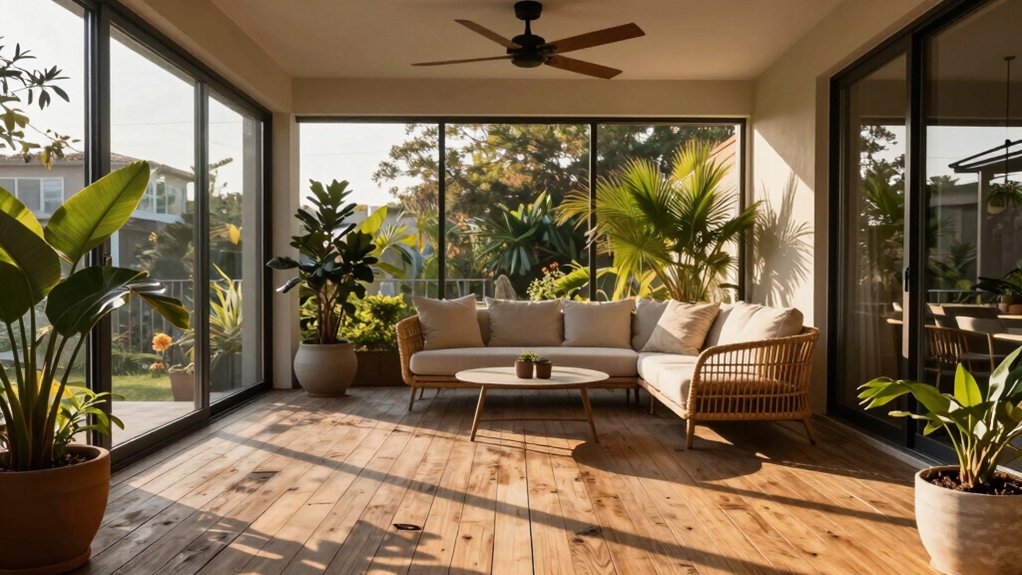
Transform your deck into a sunlit retreat with tall, low-iron glass that blurs indoor–outdoor lines while shading and ventilation keep comfort year‑round. Prioritize climate-smart materials, breathable coatings, and wind‑resistant framing, then layer flexible furniture and modular textiles for dining and lounging. Add skylights, operable panels, and warm LEDs to extend day into evening. Plants in staggered heights boost brightness and airflow without crowding sightlines. Want more tips that perfect this balance? Keep going.
Maximizing Natural Light With Glass Extensions

To maximize natural light with glass extensions, start by orienting the deck so that the sun track feeds the space for most of the day. You’ll feel the glow sketching across surfaces as daylight shape defines mood, texture, and function.
Choose large panes with low-iron glass to minimize tint and maximize clarity, then align glass doors to create seamless thresholds that blur indoor–outdoor boundaries. Consider skylights or clerestories to pull light deeper without direct glare.
Indoor décor decisions should support daylight without competing with it—soft, reflective finishes and restrained color schemes bounce light and reduce contrast fatigue. Use shading strategies in the design to prevent harsh hotspots while preserving ambient luminance.
Ensure ventilation remains responsive to changing sun angles for lasting comfort.
Climate-Rated Materials for Year-Round Use
You’ll select climate-ready materials that adapt to temperature shifts while highlighting textures and color.
We’ll balance year-round insulation strategies with airflow, moisture control, and durability, pairing high-performance products with careful detailing.
Think of safety-rated weather components as the final touch—seamlessly integrated, precise, and built to endure.
Materials for Climate Adaptability
When you design a year-round deck sunroom, climate-rated materials are the backbone that keeps comfort consistent across seasons. You’ll select substrates and finishes that respond to sun, wind, and humidity without sacrificing beauty.
Favor materials with low thermal mass variation, high moisture tolerance, and stable color over time, so you feel steadier indoors. Solar shading becomes a design tool, not an afterthought, allowing precise control of glare and heat gain while preserving view.
For structure, choose treatments that resist warping and UV degradation, yet remain touchably refined. Decorative finishes layer texture and nuance, giving you warmth without compromising durability.
Consider coatings that breathe, joints that flex, and fasteners that resist corrosion. Our climate-adaptive approach blends performance with polish for year-round comfort.
Year-Round Insulation Strategies
Smart climate-rated materials set the stage for year-round comfort, and insulation is the bridge from seasonal style to constant livability. You’ll feel the difference when you choose low-void, high-R assemblies that pair exterior painting with breathable membranes, reducing thermal bridges without sacrificing aesthetics.
Focus on continuous coverage: well-sealed joints, taped seams, and perimeters that resist air leakage while allowing moisture to vent. Solar shading becomes a practical ally, trimming heat gain without dimming daylight, so your deck sunroom maintains steady temperatures across seasons.
For sustainability, opt for materials with stable R-values under temperature swings and minimal thermal drift. In practice, document the envelope, then layer insulation mid-wall and roof, aligning with your chosen finish for a cohesive, energy-efficient space.
Safety-Rated Weather Components
Safety-rated weather components set the standard for reliable year-round use, ensuring each deck sunroom resists wind, water, and temperature swings without compromising design. You’ll feel how storm proof windows frame light with crisp edges, delivering panoramic views while guarding against drafts.
The materials you choose for framing and glazing translate climate demands into a confident silhouette, where insulation, seals, and coatings merge into a single, elegant system. Wind resistant roofing stitches the space together, steering movement and noise while maintaining a steady interior climate.
You assess performance visually and technically: UV stability, condensation resistance, thermal breaks, and compatibility with existing structure. Aesthetics meet engineering, yielding a serene, enduring enclosure that remains functional through dramatic skies and changing seasons.
Flexible Furniture Arrangements for Dining and Lounging
You’ll explore flexible dining layouts that adapt to your deck sunroom’s flow, pairing compact tables with seamless seating to maximize both circulation and charm.
Start with a lounge-first arrangement that invites conversation, then introduce modular pieces that reconfigure for alfresco dinners or quiet mornings.
This approach blends aesthetic cohesion with technical practicality, keeping sightlines, comfort, and stability at the forefront.
Flexible Dining Layouts
Flexible dining layouts in a sunlit deck room merge form and function, letting you switch between intimate meals and open lounging with ease. You curate a plan that reads as both geometry and poetry, prioritizing flow and sightlines. Use modular furniture to reconfigure zones in minutes, keeping traffic clear and inviting.
A narrow dining nook can expand with a leaf table, while a low lounge pulls you into conversation without barriers. Embrace light and texture: contrast smooth table surfaces with soft cushions, and position seating to capture afternoon sun without glare.
Consider outdoor decor as a unifying palette, then tune plant selection to harvest fragrance and color. Precision matters: measure clearance, test pivot arcs, and document configurations for future tweaks.
Lounge-First Arrangements
Could you arrange the room around a lounge-first rhythm, where seating dictates flow and dining settles into the edges? In a lounge-first arrangement, flexible furniture anchors the core, so you can reconfigure with intent.
Start with a primary sofa vignette that invites conversation, then nest occasional chairs to sculpt intimate pockets and generous pathways. Low-profile coffee tables, modular ottomans, and compact benches adapt to groups or solo stretches without clutter.
Prioritize sightlines to outdoor scenery, balancing light, texture, and color. Outdoor decor decisions influence both mood and practicality: weather-resistant fabrics, durable wood tones, and subtle metallic accents.
Consider color schemes that weave continuity between indoor and deck spaces, then layer with rugs, greenery, and artful lighting. This approach optimizes flow, comfort, and expressive space.
Windows, Skylights, and Ventilation Strategies

If you’re designing a deck sunroom, thoughtful window, skylight, and ventilation choices define comfort as much as views. You’ll balance daylight with shade through window treatments that modulate glare without isolating scenery. Skylights bring ambient glow, yet require careful placement to avoid overheating; consider operable panels or insulated units to control heat and condensation.
Ventilation systems should pair with soffit and ridge vents to promote cross-flow, while quieter fans minimize distraction. Frame materials and glazing choices influence thermal performance and acoustic quietude, so select low-E, UV-filtering glass for long-term clarity.
Passive strategies—overhangs, louvers, and planting—complement active systems, enhancing air exchange and mitigating glare. Prioritize seamless integration of aesthetics and function to sustain comfort, connection, and energy efficiency.
Weatherproof Fabrics and Cozy Textiles
Weatherproof fabrics and cozy textiles anchor the deck sunroom’s comfort, pairing durability with tactile warmth. You’ll select performance blends that resist fading, mildew, and moisture while inviting touch. Think outdoor furniture fabrics with tight weaves, UV inhibitors, and easy-care finishes, so spills wipe away without staining.
Layer textiles in complementary scales—sofas, cushions, throws—in textures like brushed weave and interlock, balancing form and function. For decorative accents, choose coordinating patterns that read as cohesive rather than competing, using colorfast palettes that persist through seasons.
Consider sunroom lighting that enhances textile depth, highlighting texture without glare. Match pillows to chairs, blankets to drapery, and mats to access zones. Practical picks create a sanctuary where durability meets sensory comfort without sacrificing style.
Plant Placement to Enhance Brightness and Airflow
To boost brightness and foster airflow in a deck sunroom, position plants with light, airy foliage in the path of natural drafts and near windows to capture diffuse daylight without creating hotspots. You’ll guide energy through the space by layering plants at varying heights, using vertical space with hanging baskets, and keeping leaves well spaced for diffusion.
Choose an indoor herb near the kitchen window for quick access, steering scent and utility into the atmosphere without crowding the seating area. Favor compact, architectural forms that read as light rather than weight.
Rotate pots monthly to balance light exposure and prevent stagnation. Maintain clean lines, avoid clutter, and let the greenery read as a structured texture that breathes with every draft.
Privacy Solutions for Open-Air Sunrooms
Open-air sunrooms demand privacy solutions that respect openness while curating intimate, sheltered zones. You balance transparency with enclosure by selecting privacy shades that soften sightlines without blocking natural light, preserving the airy feel you want.
Consider fencing options that read as architectural accents: slatted screens for airflow, vertical panels for pause between public and private, or low-crest hedges woven into a lean metal frame.
Materials matter: durable woods age gracefully, aluminum resists weather, and composites minimize maintenance.
Mounting height and spacing control perceived intimacy and airflow, so test layouts before committing.
In shade strategy, gradient opacity creates depth without flattening the scene beyond the glass.
Finally, integrate discreet hardware, keeping lines clean to maintain the serene, open ambiance you crave.
Lighting Ideas for Evening Enjoyment
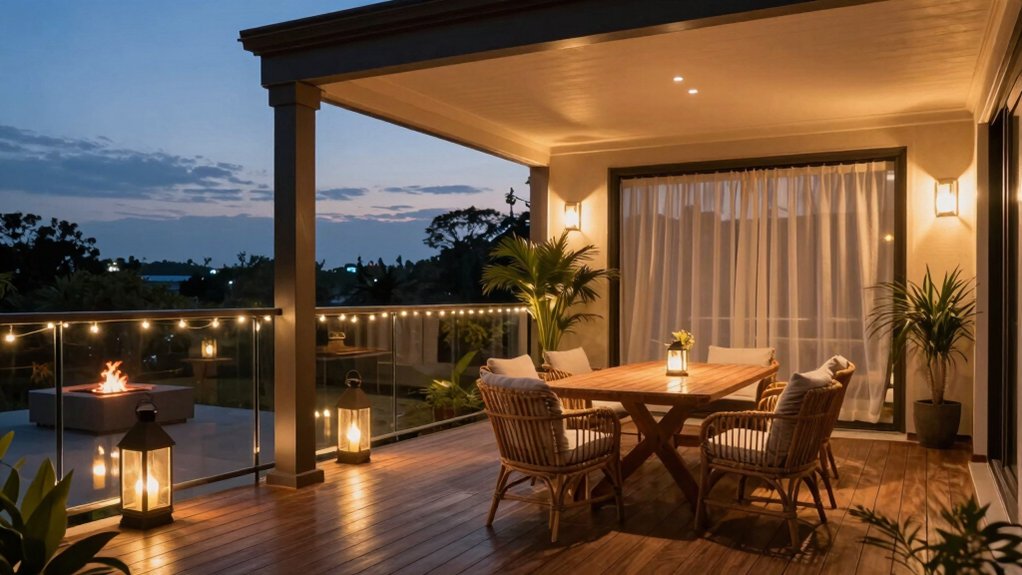
Evening lighting for a sunroom blends mood with function, guiding the eye and extending the space as daylight fades. You choose lighting that respects architectural lines while enhancing texture and view.
Prioritize layered illumination: dimmable ambient, targeted task light, and accent highlights that reveal plant life, furniture silhouettes, and exterior scenery.
Solar powered fixtures offer cordless placement and eco-friendly appeal, letting you position lamps without outlets, while maintaining a clean ceiling or rail line.
Adjustable wall sconces provide flexible angles to emphasize built-in features or artwork, letting you sculpt shadows as you settle in.
Opt for color temperatures in the warm 2700–3000K range to preserve evening mood.
Guarantee weatherproof ratings match exposure, and design with glare control to keep sightlines inviting.
Budget-Friendly Deck Sunroom Upgrades
If you’re aiming to refresh a deck sunroom without a big splurge, start with smart, high-impact upgrades that pair value with atmosphere. You’ll optimize daylight with light, reflective paints and a simple, durable finish that resists heat and glare.
Introduce easy, budget-friendly splashes through textiles and furniture cushions in cohesive interior decor, aligning textures with your color schemes for a unified feel. Use modular planters and weatherproof shelving to create structure without heavy remodeling.
Swap curtains or blinds for light-filtering fabrics to control glare while preserving views. Lighting should emphasize task zones and ambiance with warm LEDs and dimmers.
Choose adaptable shades and rugs that anchor the space, balancing practicality with mood, so every surface communicates intentional, refined simplicity.
Final Thoughts Regarding Deck Sunroom Ideas
Draw the sunroom’s memory of a glass garden to life: you slip into the light, as if stepping through a painting where breeze is a brushstroke and glass is a window to a brighter room. You measure space like a craftsman, weigh textures like a poet, and let the day tilt your mood. In this quiet archive of shade and sun, practical design becomes a soft invitation—a horizon you can live inside.