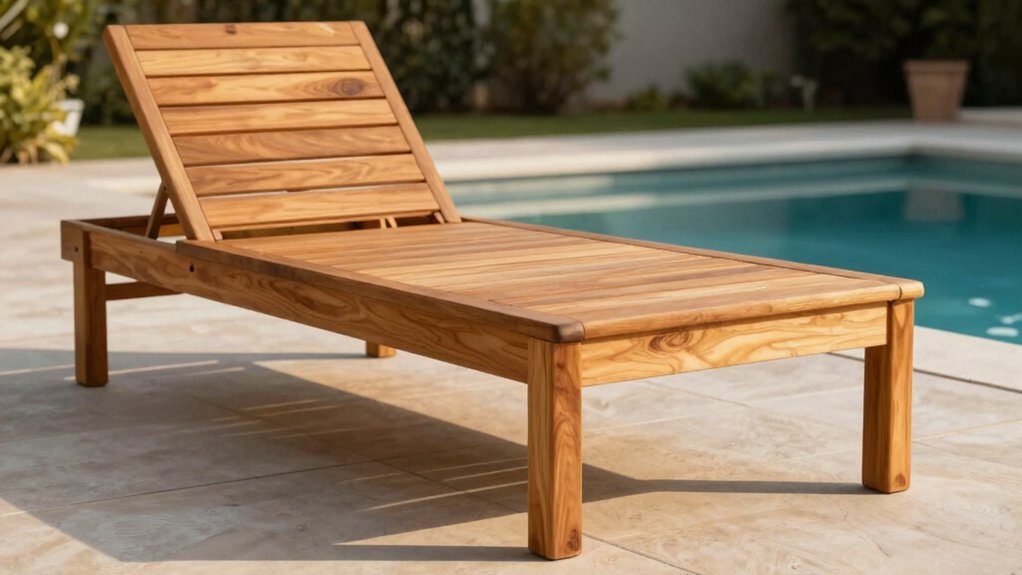
The best finish for outdoor teak treats the wood with a penetrating approach that preserves its grain and breathability while offering UV and moisture protection. Choose a penetrating teak oil for a natural, matte look and frequent reapplication (every 3–6 months), or pair a penetrating oil with a compatible sealer for longer life (1–2 years) and enhanced durability. Proper surface prep matters: clean, brighten, light sand, and apply 2–3 coats. More specifics await.
Why Teak Needs Protection
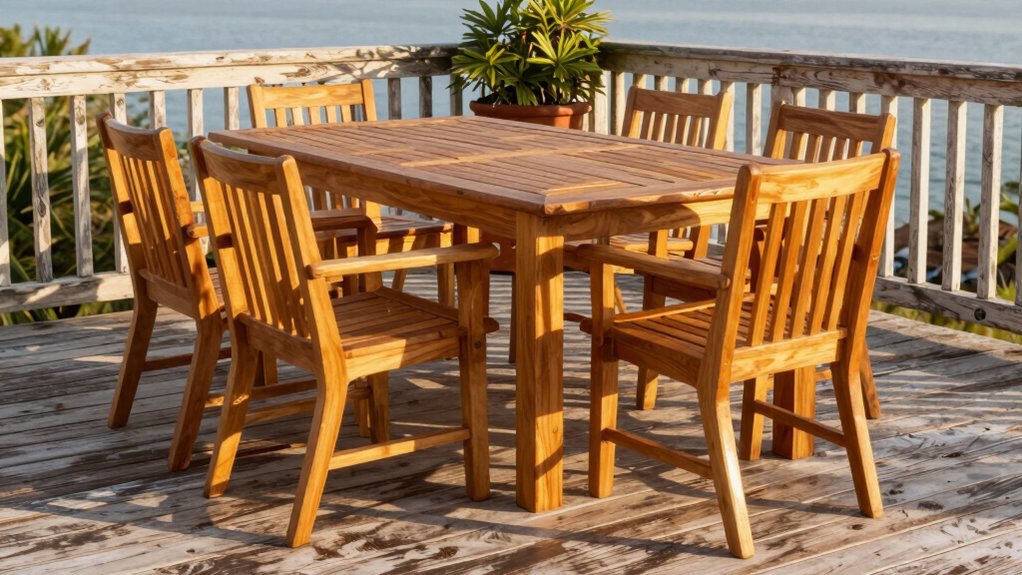
Teak’s natural oils help it resist decay, but without protection, the sun and weather take a toll. You’ll face color loss as UV exposure greys the surface and dulls the vibrancy you expect from outdoor teak.
Weathering accelerates aging through cycles of moisture, heat, and humidity, promoting surface cracks if left untreated. Without protective finishes, water penetration compounds rot risk, warping, and mold growth, undermining both form and footprint.
You need a deliberate protection strategy that seals pores, reduces water ingress, and preserves structural integrity. Implementing protective finishes yields a closed, stable surface, minimizes staining from rain and dew, and extends service life.
Regular maintenance, appropriate waterproofing, and periodic reapplication sustain aesthetics, prevent deterioration, and keep outdoor teak furniture visually and functionally sound for years.
Comparing Teak Oil Vs Varnish
When choosing between teak oil and varnish, the decision hinges on how you weigh natural aesthetics against long-term protection. Teak oil penetrates the wood’s surface, enhancing natural grain and color, and requires reapplication every 1-3 months for outdoor furniture. It offers a more natural look and easier maintenance, while permitting the wood to breathe to reduce cracking risk.
Varnish, by contrast, creates a hard, glossy film on the surface, delivering long-lasting protection that can endure for years but is harder to apply and maintain. It provides durability and a high-gloss finish, yet can trap moisture, crack, peel, or mottled with sun exposure, often requiring stripping and reapplication.
Choose teak oil for ongoing breathability and refreshability; choose varnish for enduring surface protection and gloss. teak oil, finish, wood, varnish.
Benefits of Penetrating Teak Oils
Penetrating teak oils soak into the wood fibers, delivering protection from within rather than as a surface film. You’ll notice enhanced grain and color without a glossy veneer, preserving a natural teak finish.
Because these oils absorb, you should expect more frequent reapplication than film-forming options, but you gain breathability essential for longevity. This breathability helps reduce cracking and peeling caused by trapped moisture, maintaining structural integrity over time.
Aesthetic stability is achieved through deep saturation that stabilizes tone while resisting fade. In performance terms, penetrating oils deliver durable UV resistance and water repellency, slowing weathering processes and extending service life.
For outdoor teak furniture, this combination emphasizes rugged practicality with a refined, authentic appearance. Choose penetrating oils when you prioritize natural feel and ongoing maintenance practicality.
When to Choose a Sealant or Sealer

Sealants and sealers shine when you want to preserve teak’s natural color while adding a durable shield against weathering and stains. You should choose a sealant or sealer after teak cleaning and brightening to lock in appearance and slow weathering.
Use a sealer for outdoor furniture exposed to moisture, UV, and pollutants, to extend lifespan with a single protective layer. If you prioritize a consistent color or a weathered look without the natural silver patina, sealants deliver that option.
Opt for products that offer a long interval between reapplications, reducing maintenance burden. In practice, apply a sealant to create a uniform finish that resists UV damage, moisture intrusion, and staining, while maintaining the wood’s character.
Maintenance Routines for Outdoor Teak
You maintain outdoor teak with a disciplined cleaning schedule, using mild soap or Teak Cleaner to remove dirt, mold, and stains.
Plan reapplication intervals for sealers and oils—annually for protective sealer and every 3–6 months for oil finishes—to sustain color, water resistance, and nourishment.
Couple these with mildew shields and ensuring the wood is clean and dry before any finish to maximize adhesion and durability.
Regular Cleaning Schedule
Regular cleaning keeps outdoor teak looking its best and extending its life. You maintain visibility of grain and sheen by using mild soap and water or a teak cleaner, preventing dirt, mold, and stains from accumulating.
Frequency depends on exposure, but you typically schedule an annual or semi-annual routine to preserve appearance and performance. Use a soft brush or sponge to avoid abrading the surface or washing away natural oils.
When you clean, you’ll see a uniform tone that doesn’t reveal embedded grime. For longer intervals, consider applying a protective sealer, such as a Golden or Gray Sealer, to repel water and stains.
Repeating cleaning and reapplication of protective treatments every 6 to 12 months helps preserve natural beauty and structural integrity, as you keep the look cleaned with our teak. Apply as needed.
Reapplication Intervals
Do reapplication intervals vary by finish type and exposure, and if so, what’s the practical timing for teak? Yes, they vary by finish and weathering. Oil-based finishes typically require reapplication every 1 to 3 months, driven by sun, rain, and wear.
Varnishes and sealers extend to roughly 1 to 2 years, delivering sustained protection and appearance with periodic maintenance.
Water-based finishes like TeakGuard push intervals to about 6 to 12 months, thanks to breathability.
Use regular cleaning and inspections to gauge timing, especially when water stops beading.
For weathered teak, expect shorter cycles and potentially reconditioning steps before reapplication.
Proper surface preparation before reapplication improves adhesion and longevity, ensuring consistent color and finish across the frame, slats, and joints.
Protective Measures Taken
Protective measures for outdoor teak center on timely cleaning, sealing, and proactive containment of moisture and mildew. You perform routine maintenance with a teak cleaner or mild soap and water to remove dirt, mold, and stains, preserving the finish’s integrity.
After cleaning, apply a teak sealer annually to curb moisture ingress and retain color, whether you prefer a pristine or weathered look. Reapply oils or sealers when water stops beading, signaling diminished protection.
For mildew control, Mildew Shield helps prevent mold without accelerating weathering. Covering outdoor teak when unused further minimizes sun, rain, and spill exposure, reducing upkeep frequency.
Integrate these steps with durable hardware and tight seams to sustain performance. Make certain the sequence: clean, seal, cover, and monitor water spots between sessions.
Specialized Products for Longevity
Specialized products for longevity extend teak’s life by balancing protection with breathability and appearance. You select finishes that pair barrier performance with dynamic moisture management to minimize cracking and swelling.
Marine spar varnish delivers a durable, glossy shield that resists weather and UV damage, preserving color and detail while remaining reasonably flexible.
For a more natural look, teak oil enhances the timber’s inherent grain with UV protection and water resistance, without overly occluding the pores.
A water-permeable finish, such as products designed to vapor-escape, reduces trapped moisture that causes peeling, while still offering protective heft.
Consider milder protection strategies, like UV-blocking sealers, to slow aging.
Coordinated use of these options supports maintenance intervals and aesthetic longevity in outdoor environments.
Surface Prep That Extends Finish Life
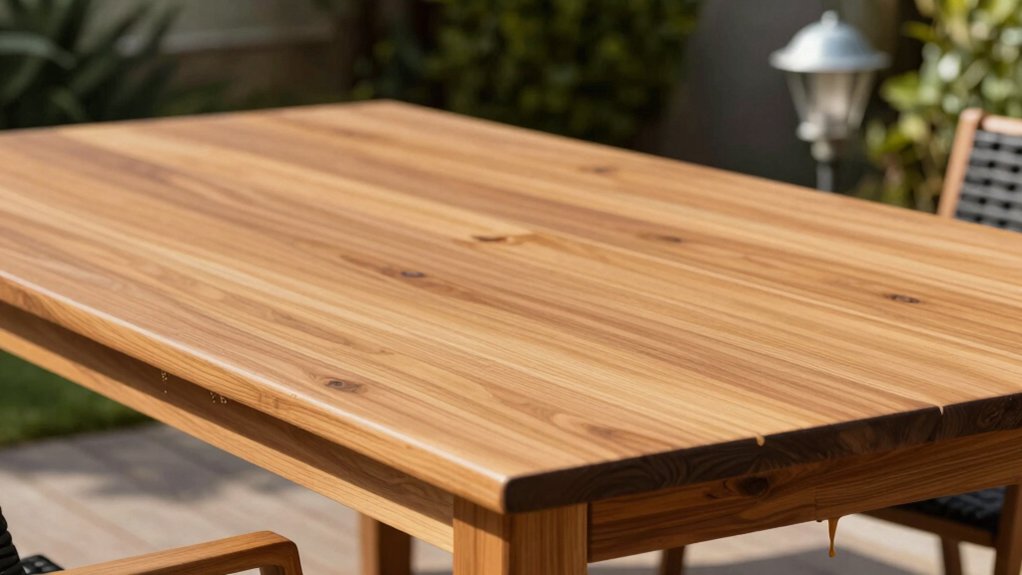
Surface prep sets the foundation for lasting finish performance. You maximize finish life by thorough surface preparation, including cleaning and removing old coatings to guarantee ideal adhesion.
Use a teak cleaner or a two‑part cleaner to strip dirt, oils, and prior finishes, preventing peeling and cracking of the new coat. Let the wood dry completely after cleaning—typically 24–48 hours—to reduce moisture-driven blistering and uneven application.
Light sanding with fine‑grit sandpaper creates a smooth substrate, enhancing finish adhesion and supporting an even, durable coat. Apply a cleaning or brightening treatment before finishing to restore natural color and improve the protective film’s performance.
This disciplined surface preparation elevates longevity, consistency, and overall aesthetic of outdoor teak furniture.
How to Apply and Reapply Finishes Effectively
To apply teak finishes effectively, start with a clean, dry surface and follow the product’s directions for coats and drying times. You’ll achieve durable adhesion by pairing thorough cleaning with precise timings, typically 2-3 coats spaced 4-6 hours apart.
Use appropriate application tools—brushes, rags, or spray—applying evenly to prevent drips and uneven film formation. In practice, monitor the application thickness to avoid pooling, then allow recommended cure intervals between coats.
For ongoing protection, reapply annually or when water stops beading, preserving the finish’s integrity and appearance. Inspect the surface for wear, cracking, or peeling, and touch up as needed to maintain ideal teak protection.
This disciplined approach supports long-term depth, sheen, and surface performance in outdoor conditions.
Choosing Teak Accessories for Optimal Finish
Choose teak accessories that reinforce outdoor durability, favoring solid teak, stainless steel, or galvanized metal for longevity. Prioritize smooth, rounded edges with minimal joints to reduce water infiltration and wear, while selecting finishes that match your teak’s tone for a cohesive aesthetic. Pair with teak-specific sealers and anti-slip surfaces to enhance protection and safety without compromising design.
Teak Accessory Aesthetics
Teak accessories should complement your outdoor furniture with a cohesive finish. Choose items that echo the warmth of teak and maintain visual balance across spaces.
Genuine teak preserves authenticity; it aligns with outdoor furniture for a seamless look and minimal cross-material distraction. Consider surface treatment parity: match the accessory’s finish—oil or sealer—with your furniture’s protective coat to reduce tonal shifts.
Properly treated teak accessories resist staining, weathering, and UV damage, extending uniform perception under sun and rain. You can also opt for untreated pieces to develop a natural silver grey patina, if you prefer a changing, time-silvered aesthetic.
For color consistency, prefer teak accessories that age similarly, ensuring the natural grain and hue stay harmonious with your outdoor furniture ensemble.
Outdoor Durability Choices
If you aim to maximize outdoor durability, select teak accessories that shield against moisture, UV exposure, and stains, while harmonizing with the furniture’s finish. You’ll optimize life and look by pairing teak outdoor furniture with weather-resistant materials like stainless steel or marine-grade fabrics.
Use UV-resistant finishes or sealers on cushions and covers to extend lifespan and preserve color. Choose covers, mats, and tablecloths that resist mold, impact, and abrasion to minimize wear.
Teak Care principles guide cleaning schedules and reapplication intervals, ensuring consistent protection. Integrate protection without compromising form, ensuring hardware harmonizes with the wood’s tone.
Properly maintained accessories become a passive defense layer, amplifying teak’s inherent durability and sustaining the contemporary, refined aesthetic of outdoor spaces.
Conclusion
To keep your outdoor teak looking sharp, choose a finish that matches your climate and use. If you want deep protection with easy reapplication, lean toward penetrating teak oils; for maximum surface gloss and UV defense, sealants or varnishes. Prep matters more than the product—clean, sand, and dry thoroughly. Apply evenly, recoat when the finish dulls. Think of your teak as a sculpture: the finish is the polish that reveals its enduring grain.