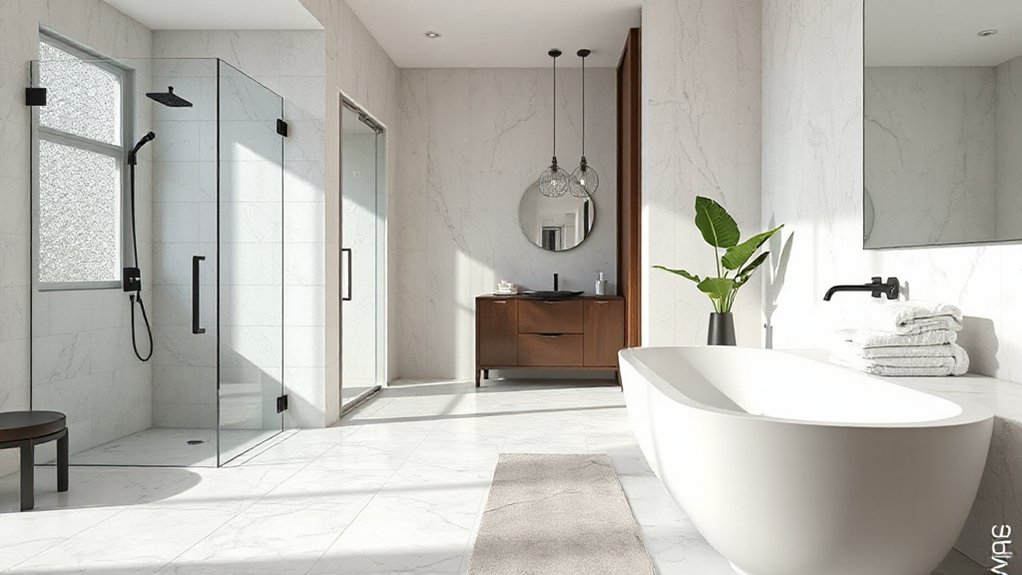
Like a quiet benchmark you’re about to surpass, bathroom ROI hinges on scope, cost control, and durable choices. You’ll weigh mid-range upgrades, smart lighting, and timeless fixtures to lift resale without overinvesting. Timing, regional market factors, and careful budgeting matter as much as design decisions. The numbers exist to guide you, but the real question is how to align expectations with what buyers actually value — and that alignment keeps you curious for what comes next.
What Bathroom ROI Really Means: Core Metrics You’ll Use
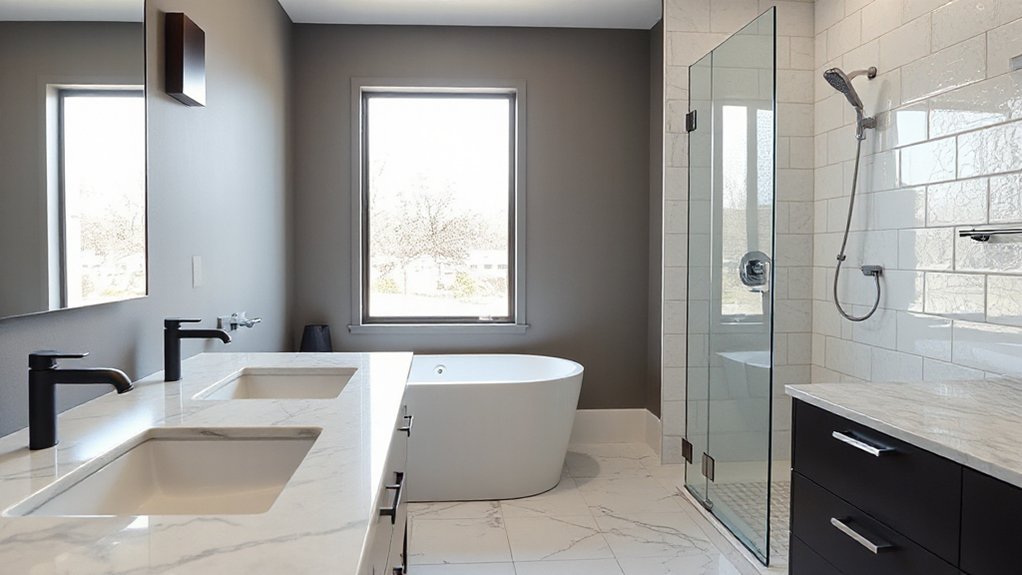
When evaluating bathroom renovations, ROI hinges on clear, measurable metrics rather than intent or aesthetics alone. You’ll anchor decisions to trackable data: cost per square foot, projected resale value, and time-to-payback.
Measure utility changes through upfront-to-operating-cost comparisons, including water usage and energy efficiency. You’ll compare baseline design costs to final spend, noting variance drivers like materials and labor.
Core metrics include Net Present Value, Internal Rate of Return, and payback period, plus sensitivity analyses that test market volatility.
Luxury fixtures influence perceived value but should align with cost thresholds and target buyers.
Eco-friendly materials can reduce long-term costs and appeal to sustainable buyers, yet require robust life-cycle assessments.
Use benchmarking against comparable remodels to validate your ROI model and avoid overemphasis on trend-driven choices.
Baseline Bathroom Renovation Costs by Project Size
Baseline bathroom renovation costs scale with project size, so you’ll see clear cost-per-square-foot patterns across small, mid, and large remodels.
In small projects, you’ll typically encounter lower total costs but higher per-square-foot rates due to fixed labor and permit basics. Mid-sized renovations spread fixed expenses over more square footage, improving cost efficiency while enabling essential updates like upgraded bathroom lighting and basic shower fixtures.
Large projects maximize economies of scale, yet material premiums and system overhauls can push totals higher; however, unit costs rise less sharply per square foot than in smaller builds.
Across sizes, expect a mix of plumbing relocations, vanity upgrades, and durable finishes to drive variability. Your planning should anchor on fixture quality, lighting layers, and anticipated remodel scope to forecast costs accurately.
Most ROI-Smart Bathroom Upgrades
You can boost value by prioritizing high-ROI upgrades that vendors and appraisers consistently flag as cost-effective.
Data shows targeted improvements—like efficient fixtures and smart controls—deliver strong payback relative to upfront costs.
Start with budget-friendly enhancements that reliably move the needle, then layer in higher-ROI options as your budget allows.
High ROI Upgrades
Upgrading key bathroom components yields the strongest ROI, with high-impact choices delivering measurable value in both resale price and buyer appeal. You’ll find the most cost-efficient gains come from targeted replacements rather than full overhauls.
Focus on durable, water-efficient bathroom fixtures, which tend to attract broader buyer interest and reassure appraisal values. Quantified data show mid-range fixture updates often yield ROI near or above 70% when paired with modern aesthetics and reliable performance.
Lighting upgrades matter too, attracting energy-conscious buyers and enhancing perceived space, brightness, and tile quality. Choose fixtures and fittings with standardized dimensions to minimize labor costs and avoid nonstandard replacements later.
Avoid trend-driven overhauls; prioritize quality, ease of maintenance, and code-compliant installations for lasting value.
Budget-Friendly Improvements
To maximize ROI without a full overhaul, focus on budget-friendly upgrades that yield measurable value. You’ll notice the strongest returns come from low-cost, high-impact changes driven by data rather than intuition, including targeted fixture updates and functional enhancements.
Prioritize options with documented payback periods and reliable performance metrics to guide decisions about material choices and installation timelines.
- Eco friendly fixtures reduce operating costs while aligning with sustainability trends, enhancing resale appeal.
- Vintage restoration preserves character while upgrading essential systems for efficiency and reliability.
- Simple tile refreshes and sealant upgrades improve moisture control and perceived quality without major demolition.
In aggregate, these moves optimize cash flow, minimize downtime, and maximize perceived value, aligning with ROI benchmarks from recent market analyses.
Timing Your Renovation for Maximum Payback
Timing your bathroom remodel to hit the market-driven window can boost payback, so you should align start dates with local demand cycles and material lead times.
By targeting periods with higher buyer activity and stable pricing, you maximize value from the Ideal Renovation Timing and Market-Driven Scheduling Window.
We’ll assess timing signals, cost buffers, and project durations to frame a data-informed plan.
Optimal Renovation Timing
Careful timing can maximize resale value and minimize carrying costs, so plan renovations when market momentum and project readiness align. You should target periods with stable demand, moderate competition, and firm contractor schedules. Then quantify payback using cost vs. value data. Prioritize projects that *release* the highest return per dollar, favoring upgrades that appeal to broad buyers.
- Eco friendly fixtures integrate long-term savings and green branding, boosting appeal without breaking the bank.
- Luxury features differentiate your home without overcapitalizing on nonessential spaces.
- Scheduling alignment minimizes downtime and price volatility while preserving project quality.
Base decisions on local comps, ROI dashboards, and construction timelines, and adjust for energy codes, warranty windows, and supplier lead times to optimize overall value.
Market-Driven Scheduling Window
Market-driven timing centers on aligning renovation start dates with observed market momentum and project readiness, so you maximize resale impact while controlling costs. You’ll follow a data-informed window that reflects local seller cycles, inventory trends, and permitting lead times.
In practice, these insights tighten your scheduling window to reduce downtime risk and price erosion due to delays. You should quantify periods of peak buyer activity, then precedent-adjust your project phases—demolition, plumbing, finishes—to hit post-listing milestones.
Track historical cap rate shifts and median days on market to estimate incremental value from a shorter cycle. By coordinating contractor availability with market signals, you minimize overrun costs and maximize return.
This market driven approach emphasizes agility, precise timing, and measurable payback impact for bathroom renovations.
Regional Variations That Shape Bathroom ROI
Regional variations in bathroom ROI reflect how local construction costs, labor availability, and housing markets drive value differently across regions. You’ll see regional preferences shape fixture choices, material accessibility, and project timelines, while climate considerations influence durability, moisture control, and maintenance expectations.
When evaluating ROI, compare neighboring metros with similar wage patterns to gauge price-to-value consistency, and adjust for supplier lead times that can skew completion dates. Data shows coastal markets often command higher rehab premiums due to aging housing stock and seismic or flood resilience needs, whereas inland regions may favor cost-conscious upgrades with rapid payback.
- Higher-end finishes in tech-forward markets with strong demand
- Moisture-resilient materials optimized for humid climates
- Local labor shortages extending timelines and elevating labor costs
Quick Facelift vs Full Remodel: Budget Tiers
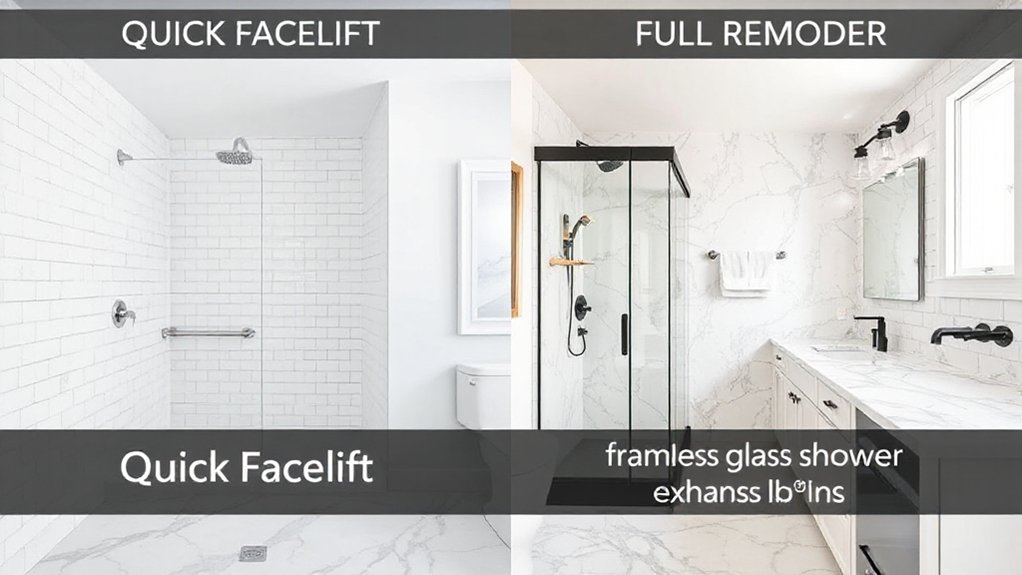
You’ll compare quick facelift budgets with full remodel costs to see how tiered spending translates into value, timing, and disruption.
Quick remodels typically fall within a lower cost range but offer modest value impact, while full remodels push up both investment and potential ROI with broader functional gains.
We’ll quantify each tier’s cost range and linked value shifts to guide disciplined, data-driven decision-making.
Budget Tiers Overview
So, where do you start when choosing between a quick facelift and a full remodel, and how do budget tiers shape that decision? Your analysis hinges on scope, cost-per-square-foot, and expected ROI.
Quick facelifts favor lower upfront risk, shorter timelines, and moderate depreciation of value. Full remodels pursue higher normalization of finishes and greater long-term resale impact.
Budget tiers translate features into clear trade-offs, enabling you to prioritize essentials versus enhancements. Consider these anchors:
- Efficiency gains and eco friendly features that reduce operating costs
- Durable materials and long-term warranties to lower replacement cycles
- Vintage fixtures strategically restored for character without inflating costs
This framework helps you align design intent with financial performance while avoiding unnecessary embellishments.
Quick Remodel Cost Range
A quick remodel, or “facelift,” typically costs less upfront and delivers faster ROI, with a range that usually falls between $5,000 and $25,000 for standard updates in a midrange bathroom. You’ll see the most impact from selective upgrades that optimize appearance without wholesale changes.
Budget tiers influence fixture quality, finish durability, and installation complexity, so plan around a data-driven mix of cost-per-component. Bathroom fixtures selection often shifts total spend by 15% to 40%, depending on whether you choose standard, midrange, or premium options.
Tile selection also drives material costs and labor time, particularly with intricate patterns or large formats. A focused facelift prioritizes visible upgrades, minimizes demolition, and preserves plumbing, delivering efficient ROI without overextending resources.
Full Remodel Value Impact
Full remodels deliver substantially different value than quick facelifts, with budget tiers driving the cost-to-benefit balance. When you compare scopes, the delta in value hinges on long-term durability, energy efficiency, and maintenance needs.
Higher budgets typically yield lower lifecycle costs per year and stronger resale appeal, especially in mid-to-upper price brackets. You’ll see measurable gains in function, layout optimization, and material quality, with diminishing returns beyond premium tiers unless you couple with smart technology and luxury fixtures.
Remaining cost drivers include permit complexity, site containment, and installation schedules, which influence payback timing. Focused planning targets the right balance of upfront spend and expected appreciation.
- Luxury fixtures elevate perceived value and tactile quality
- Smart technology optimizes water use, lighting, and reliability
- Premium finishes reduce ongoing maintenance and enhance resale appeal
Measuring ROI: How to Calculate and Track
Measuring ROI starts with a clear, data-driven formula: you compare the project’s total costs to the financial gains it yields, typically as incremental benefits over a defined period.
You safeguard the calculation by separating hard costs (materials, labor) from soft gains (buyer appeal, reduced maintenance).
Track changes over time using consistent baselines, then compute ROI as net benefits divided by total costs.
Use incremental cash flows to reflect resale impact and utility savings, discounting for time value if needed.
When comparing options, include Tile patterns and Faucet styles as decision variables, quantifying their influence on perceived value and sale timelines.
Document assumptions, sensitivity scenarios, and measurement intervals to ensure transparency.
This disciplined approach yields actionable insights for budgeting, prioritization, and performance monitoring.
Hidden Costs and Common Overruns to Plan For
Hidden costs and overruns frequently erode expected ROI in bathroom renovations, so anticipate them with a disciplined budget and guardrails. You’ll uncover variances before they compound by tracking line items like permits, plumbing changes, and material delivery timelines. Use data-driven thresholds to trigger contingency actions; a common practice is a 10–15% contingency on hard costs and 5% for soft costs.
Expect overruns planning to reveal itself through sequencing delays, subcontractor dependencies, and unanticipated code updates, all of which erode margins if unchecked. Maintain transparent scope definitions and documented change orders to preserve ROI sensitivity.
- Permit and inspection delays that ripple through scheduling
- Supplier lead times and backorders disrupting material plans
- Unforeseen code or retrofit requirements altering costs
Design Tricks That Deliver Big Impact on a Budget
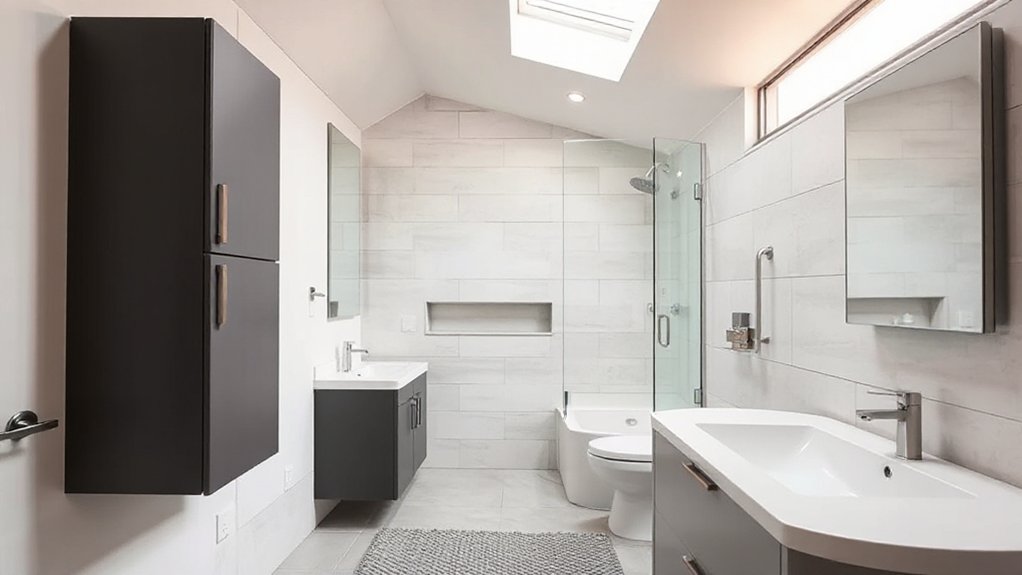
Smart design choices can amplify ROI without inflating costs. You’ll prioritize high-impact, low-cost moves backed by data: replace fixtures with water-saving models, install dual-flush toilets, and choose durable, easy-clean surfaces to reduce long-term upkeep.
Opt for mid-range vanities with clean lines and concealed storage to maximize perceived space without overspending. Lighting matters: layer ambient, task, and accent light, using efficient LEDs to lower operating costs and boost perceived quality.
Color and texture are multipliers; neutrals with bold accents create timeless appeal while minimizing repaint cycles. Integrate eco-friendly features where feasible, like recycled glass tiles or low-VOC paints, to appeal to sustainable buyers.
If possible, preserve historical preservation cues—trim, molding, or vintage hardware—that respect era authenticity without sacrificing modern performance.
When a Bathroom Renovation Isn’t Worth It: Cautionary Scenarios
Even if a bathroom renovation seems prudent on paper, there are scenarios where the ROI simply doesn’t justify the investment. You should consider market conditions, home value baselines, and neighborhood comparables before committing to major changes.
If your home is near the upper end of the market, minor updates often outpace full renovations, delivering similar returns with lower risk. In older homes with dated plumbing, structural constraints, or limited resale appeal, the cost of Fixture upgrades or reconfigurations may not translate into proportional value.
Focus on targeted improvements rather than sweeping overhauls, and weigh long-term maintenance costs against up-front spend. Your decision should balance Bathroom decor shifts with functional durability and projected sale timing.
- Aesthetic refresh without major plumbing disruption
- Limited neighborhood demand for extended layouts
- High maintenance costs overshadowing gains
Frequently Asked Questions
How Long Does a Typical Bathroom Renovation Timeline Take?
Typically, a bathroom renovation takes 2–3 weeks for a small upgrade and 4–6 weeks for a full remodel. You’ll schedule Bathtub replacement repairs and Tile remodeling efficiently, minimizing delays while you track materials, permits, and contractor timelines.
Which Features Most Influence Resale Value in the Short Term?
Luxuries that boost short-term resale appeal include high-end fixtures, premium countertops, and efficient layouts. You’ll see stronger resale appeal when you invest in water efficiency, quality tiling, and smart storage; luxury upgrades correlate with quicker, higher-value buyer interest.
Do Luxury Fixtures Always Increase ROI or Just Appeal?
Luxury fixtures don’t always boost ROI; they primarily boost resale appeal when your budget aligns with buyer expectations. You’ll see stronger value if the upgrade matches market norms and improves perceived quality, not just adds opulence.
How Can Permits Affect Project Cost and Schedule?
You’ll see permits affect costs and schedules via building codes, permit fees, and review timelines, so plan buffers. You, like a precise analyst, compare approvals, anticipate delays, and budget contingencies to keep projects on track and within scope.
What Maintenance Costs Recur After a Bathroom Upgrade?
Maintenance costs recur with periodic resealing, plumbing checks, and filter replacements, totaling moderate ongoing expenses. You benefit from cost effective upgrades and maintenance free materials, reducing long-term upkeep and ensuring steadier budgets, while your renovation remains durable and efficient.
Conclusion
In short, bathroom ROI hinges on solid data and disciplined budgeting. Track core metrics, compare project sizes, and target durable, timeless upgrades to maximize resale value. Timing and regional market conditions matter as much as the finishes you choose. Expect a 60–70% ROI on well-planned remodels, with cost overruns lurking if you over-customize. If you skip the basics, you’ll miss the sweet spot—like finding a unicorn in a hardware store. Stay precise, stay data-driven, and ROI stays on your side.