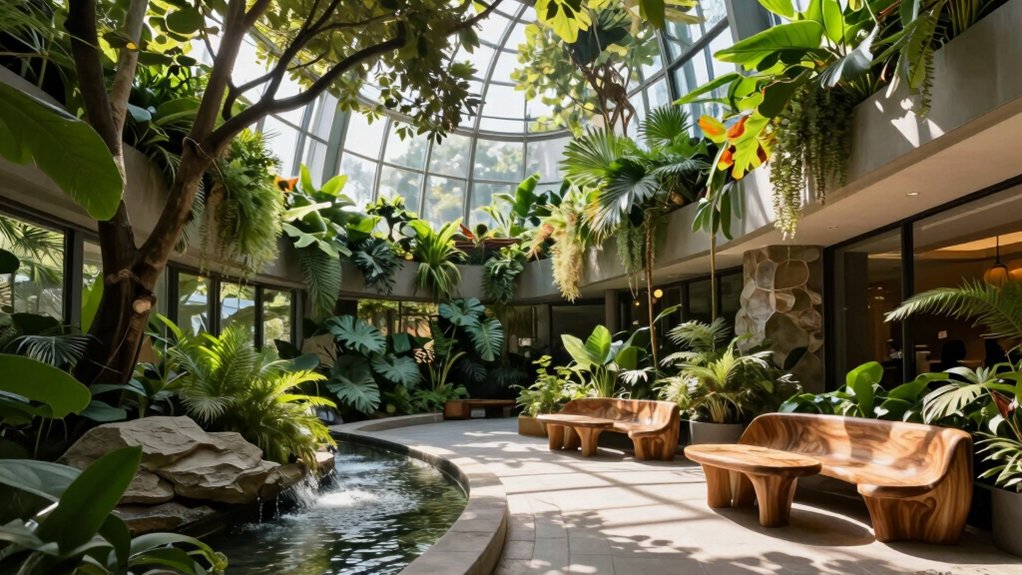
Biophilic design brings nature into your built spaces to boost well‑being, focus, and performance. You combine direct elements—sunlight, air, plants, water—with indirect cues like natural materials, patterns, and views to create restorative environments. Grounded in the biophilia concept, it guides you to use environmental features, natural forms, place-based ties, and evolved human-nature connections. Engagement happens through multiple senses, with case studies showing faster recovery, creativity, and higher satisfaction. If you keep exploring, you’ll uncover how to apply these principles across projects.
Understanding Biophilic Design
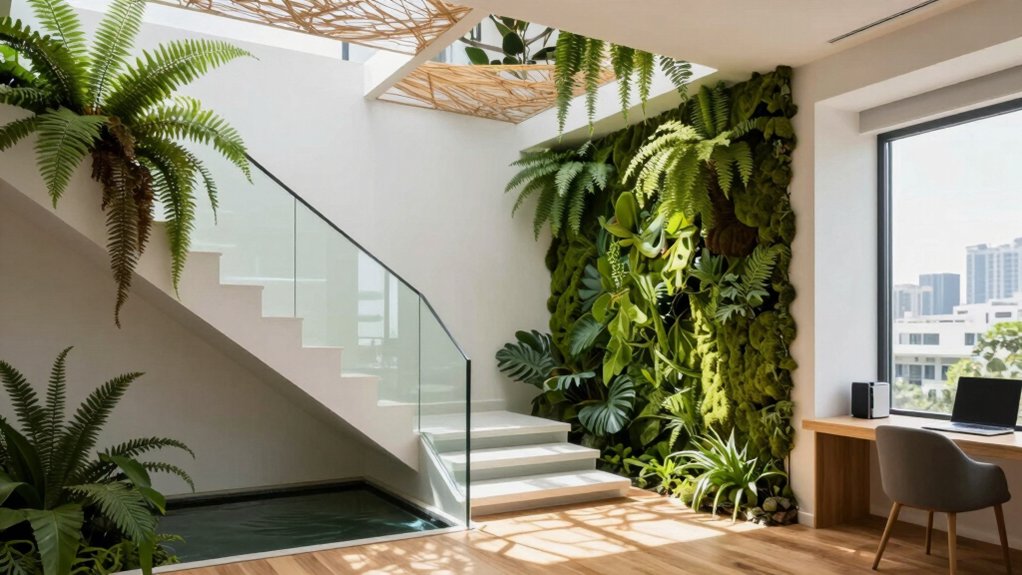
Biophilic design is a practical approach that brings nature into built settings to boost well-being and performance. In this understanding, you’ll see how natural elements and patterns are integrated to support human connection with nature within the built environment.
You’ll experience direct natural experiences, like sunlight, water, and plants, complemented by indirect representations such as natural materials and imagery.
Grounded in the biophilia hypothesis, this approach assumes you have an innate affinity for nature, which improves mood, attention, and health when engaged repeatedly and meaningfully.
Across scales—from individual buildings to cities—you’ll observe environments designed to optimize health, sustainability, and quality of life.
The outcome is a clearer, evidence-driven path to create spaces that genuinely enhance your daily work and living.
Core Concepts and Origins
You’re exploring the core concepts and origins of biophilic design, grounded in the idea that people naturally respond to nature. In practice, you’ll anchor projects in biophilia—the innate drive to connect with living systems—and translate that insight into measurable outcomes.
The origins trace to ancient architecture and the Hanging Gardens of Babylon, showing long-standing human preference for natural contexts. Contemporary practice formalizes this through the deliberate use of natural elements: water, plants, natural materials, and natural light, all designed to foster emotional attachment and reduce stress.
Evidence from environments that mimic ecosystems indicates improvements in well-being, productivity, and satisfaction. Early thinkers like Fromm and Wilson popularized the concept, reinforcing that our built spaces should reflect nature’s cues to support health and resilience.
Origins inform design strategy, guiding client-focused decisions.
The Six Elements Framework
Curious how to translate nature into measurable outcomes? The Six Elements Framework guides you to structure biophilic design around six interconnected natural features: environmental features, natural shapes and forms, natural patterns and processes, place-based relationships, evolved human-nature relationships, and natural representations.
Developed by Stephen Kellert to address spaces that foster genuine human affinity with nature, this framework serves as a practical, evidence-driven playbook. You’ll see how environmental features emphasize water and sunlight, while natural forms highlight biomorphic shapes, and all elements work together to create a holistic natural experience.
Applying the full framework enhances depth and sustainability, supporting physical, mental, and emotional health through intentional integration of natural features, environmental features, and natural forms.
Environmental Features in Built Environments
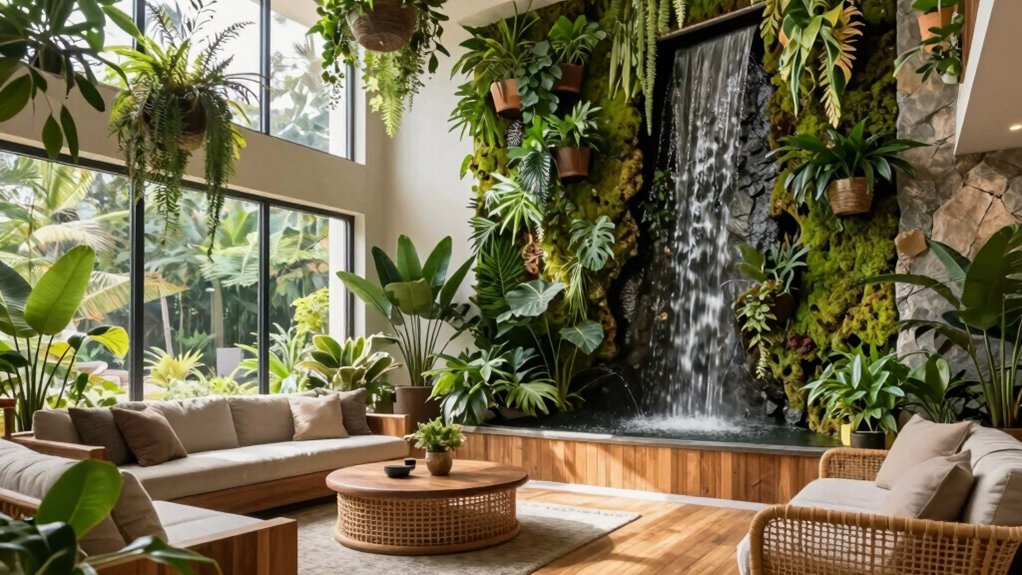
Environmental features in built environments bring nature indoors and outside, creating spaces that feel calm, healthy, and culturally rooted. In our case study, you’ll see how natural elements like plants, water, and wood transform building environments into restorative settings.
Well-ventilated spaces, abundant natural sunlight, and nature-inspired color palettes elevate environmental quality, supporting comfort and focus.
Ivy-covered walls, views of geological features, and integrated habitats demonstrate biophilic design in practice, linking occupants to place and history.
Water features and unobstructed views of natural landscapes calm the senses and reduce perceived stress.
When designed with biophilic principles, these environmental features enhance aesthetic appeal, bolster mental and physical wellbeing, and strengthen the culture-ecology relationship, delivering measurable outcomes for occupants, operators, and communities.
Natural Shapes, Forms, and Patterns
You’ll see how Organic Form Inspirations guide projects toward flowing, natural geometries that mimic plants, shells, and geological features.
Biomorphic Pattern Signals translate these cues into spaces with curved lines and tactile resonance, reinforcing ecological context and sensory comfort.
In our case studies, these design choices consistently improve usability, perception of calm, and biophilic connectedness for occupants.
Organic Form Inspirations
Organic form inspirations bring nature’s geometry into built spaces, leveraging shell-like curves, tree silhouettes, and animal-inspired motifs to create visually soothing environments. You’ll notice how natural shapes guide spatial organization, shaping circulation and focal points with fluidity rather than rigidity.
In practice, designs favor flowing, biomorphic patterns—spirals, arches, and vaults—that echo organic growth, supporting calm perception and ease of movement. By integrating organic forms, projects demonstrate biomimicry and biomorphy, aligning interiors with ecological logic and perceptual harmony.
Natural geometries resembling geological features or living organisms foster a sense of rhythm and fractal detail, enhancing sensory engagement. This approach illustrates how organic forms can: elevate well-being, strengthen brand narratives, and sustain long-term environmental connections within built environments.
natural shapes, biomorphic patterns, organic forms.
Biomorphic Pattern Signals
Biomorphic pattern signals translate nature’s shapes, forms, and patterns into built environments to create immediate visual and tactile resonance. You’ll see biomorphic patterns emerge in spaces through spirals, shells, and branching structures that mimic natural forms. These design cues often rely on fractal geometry, reflecting self-similar, repeating motifs found in trees, coastlines, and other ecosystems.
When you integrate natural shapes into architecture and interiors, you heighten aesthetic appeal while fostering harmony and comfort. Studies indicate environments featuring these naturalistic forms can boost psychological well-being and reduce stress, supporting a stronger biophilic connection.
Place-Based Relationships and Cultural Ties
You’ll see how place-based cultural ties and landscape–culture connections anchor your project in local identity, ecology, and history.
By incorporating indigenous materials and regional features, you define form and foster an emotional attachment that supports ongoing stewardship.
This approach reduces placelessness, strengthens community continuity, and motivates careful, sustainable engagement with the environment.
Place-Based Cultural Ties
Place-based cultural ties root a project in the local landscape, history, and community, creating an emotional resonance that fuels ongoing care and stewardship. In this case study, you’ll see how integrating local ecological, cultural, and historical features drives meaningful attachment.
Utilizing indigenous materials and landscape features that define the building form strengthens cultural identity and promotes environmental stewardship, delivering measurable outcomes for clients.
Designing with landscape orientation and ecological context guides sustainable interactions, preventing placelessness in built environments.
Incorporating regional geological and cultural motifs reinforces belonging and respects the community’s unique character.
Fostering emotional bonds through place-based design elevates community engagement, supports cultural continuity, and nurtures a deeper appreciation of local ecosystems.
The evidence shows stronger stewardship, clearer decision-making, and longer project longevity.
Landscape–Culture Connections
When a project roots itself in its landscape and culture, occupants form a genuine connection to place that informs every design decision. You’ll see how place-based relationships foster emotional attachment by weaving local ecological, cultural, and historical features into the built environment.
Using indigenous materials and landscape features helps buildings harmonize with their geographic and cultural context, strengthening community identity. Designs that reflect local geology, flora, fauna, and cultural practices promote stewardship and a sense of belonging among occupants and visitors.
Incorporating landscape ecology principles ensures the natural environment and cultural heritage are preserved and celebrated within architectural projects. Emphasizing place-based connections reduces placelessness, creating meaningful, authentic spaces that resonate deeply with local communities.
This is evidenced in client-centered case studies and measurable outcomes.
Evolved Human-Nature Relationships
Humans have evolved in close concert with nature, and that long history shapes today’s needs for light, water, and vegetation. In this case study, you’ll see how evolved human-nature relationships guide client outcomes: environments wired to support mental health, physical well-being, and emotional attachment through biophilic design.
Our evidence shows that 99% of human history occurred in natural settings, embedding preferences for sunlight, water, and vegetation into behavior and physiology. The concept of prospect and refuge explains why open views paired with shelter drive comfort and safety, a principle you can leverage in space planning.
Mechanisms for Engagement With Nature
Engagement with nature happens on multiple senses, not just sight. You’ll see how a view of landscapes or green walls reduces stress and boosts occupant satisfaction, driving measurable outcomes in client spaces.
Non-visual senses come alive through natural sounds—water and birds—that promote relaxation, while plant aromas support well-being. A water feature provides calming auditory and visual stimuli, reinforcing mental health benefits.
When you incorporate natural materials like wood and stone, tactile engagement deepens your clients’ connection to nature, elevating perceived quality and comfort.
Daylighting and airflow strategies mimic natural systems, strengthening environmental performance and sensory engagement without added complexity.
The result is a natural connection that aligns well-being with measurable business value.
Real-World Applications and Case Studies
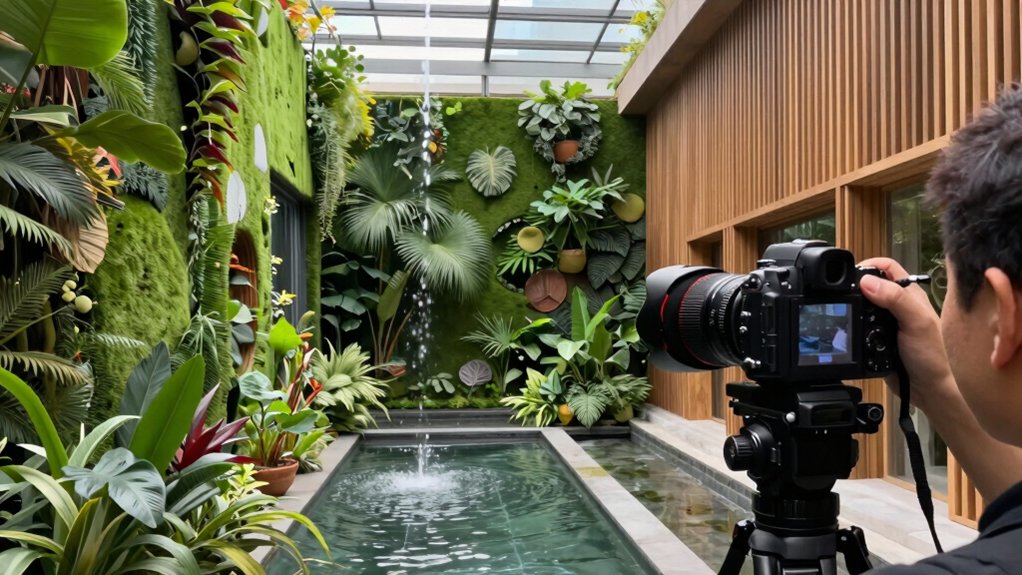
Real-world applications demonstrate how biophilic design translates into tangible outcomes across varied sectors. You experience environments that blend natural landscapes, daylighting, and water features to drive measurable benefits.
Khoo Teck Puat Hospital uses extensive natural landscaping and daylight to speed recovery times, illustrating health gains from built-in nature.
Second Home Lisboa demonstrates how over 1,000 indoor plants and natural light boost creativity and well-being, supporting worker performance.
The Vibes Office in Ho Chi Minh reduces energy use and enhances indoor air quality through gardens, water features, and green walls, proving efficiency and comfort can coexist.
Apple Park surrounds employees with 9,000 trees and a wildlife habitat, elevating mental health and productivity.
The Jewel’s Rain Vortex and 100,000 plants advance biodiversity and occupant well‑being, aligning with biophilic cities goals.
Conclusion
Biophilic design isn’t a trend; it’s a proven path to healthier, more productive spaces. You’ve seen how biophilic principles reduce stress, boost focus, and shorten learning curves in real projects. Some worry it’s costly or impractical—it isn’t when you quantify returns and tailor to culture, climate, and program. When you invest in natural light, textures, and adaptable greenery, you create spaces that people feel, remember, and perform in, delivering measurable outcomes for clients and communities.