Before you start, map out goals and a clear vision for garden reform, then assess site conditions and resources to anchor decisions in reality. Consider design approaches that align with community needs and environmental constraints, and draft a theory of change that links activities to measurable outcomes. Build a practical budget, sourcing plan, and schedule, sequencing tasks across seasons to maintain momentum. This structured groundwork will reveal tradeoffs and prompt critical choices as you move forward.
Clarifying Your Goals and Vision

Clarifying your goals and vision starts with a clear question: what does a successful garden reform look like for you and your community?
You identify desired outcomes, constraints, and stakeholders, then translate them into measurable targets.
Begin by distinguishing strategic aims (environmental impact, food security, equity) from operational aims (budget caps, timelines, governance).
Map these aims to policies, approving authorities, and funding streams to ensure alignment across departments.
Create a concise theory of change that links activities to outcomes, with explicit assumptions and risk indicators.
Establish success criteria, indicators, and data sources to track progress.
Document prioritization, trade-offs, and governance mechanisms that enable accountability and learning.
Conclude with a brief, testable road map detailing milestones, responsibilities, and decision points for stakeholders.
Assessing Your Site and Resources
Evaluating your site and resources begins with a clear inventory of constraints, opportunities, and inputs that will shape reform options. You map physical conditions, water and soil quality, shade patterns, microclimates, access, and maintenance capacity.
You quantify material costs, labor availability, and timing windows to guarantee feasible sequencing. You assess regulatory and policy constraints, zoning, permits, and stewardship responsibilities that influence scope and pace.
You categorize assets and liabilities, including existing infrastructure, community support, and potential partnerships. You identify data gaps and monitoring needs to track progress.
You prioritize objectives by impact, risk, and cost-effectiveness, then translate findings into measurable criteria. Finally, you document assumptions, uncertainties, and decision points to guide subsequent design and implementation steps.
Design Approaches for Garden Reform
Design approaches for garden reform should align with the site assessment and governance framework, translating objectives into concrete, implementable pathways. You’ll prioritize policy coherence, integrating ecological, social, and economic considerations to inform action steps.
Start with modular design principles that enable phased adoption, minimizing disruption while maximizing learning. Emphasize measurable milestones, governance roles, and risk controls to maintain accountability.
Map interventions to ecosystem services, food security, and community engagement, ensuring equity is central in access and outcomes. Choose adaptable layouts, resilient planting palettes, and data-informed monitoring to guide adjustments.
Establish decision criteria, escalation protocols, and evaluation benchmarks that support iterative refinement. Finally, document assumptions, dependencies, and alignment with regulations, so reforms remain transparent, scalable, and defensible within the broader planning framework.
Budgeting, Sourcing, and Scheduling
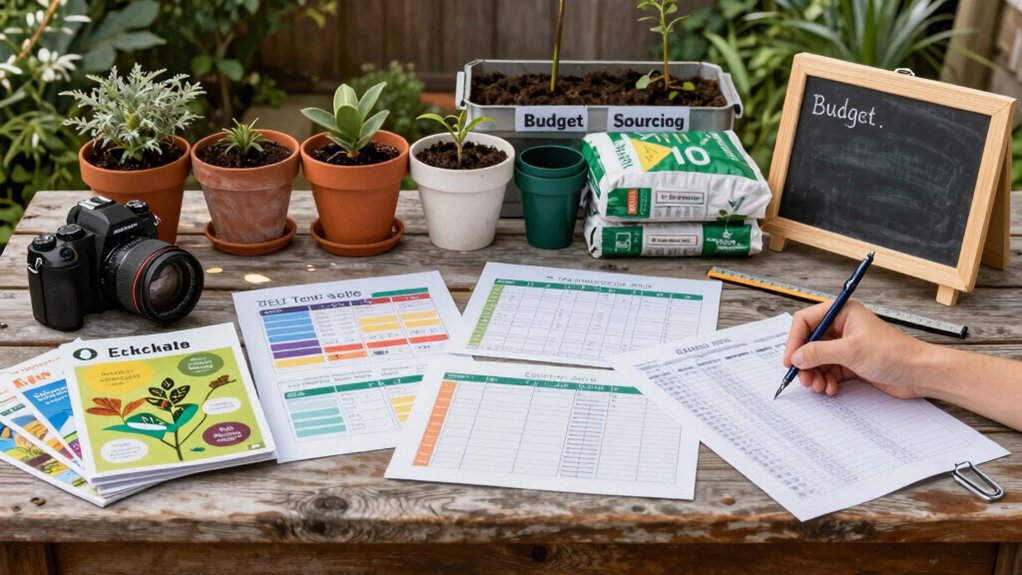
Building on the governance framework and modular design of garden reform, this subtopic translates strategic priorities into concrete financial and procurement actions. You assess what you can spend, what must be procured, and how timelines affect cash flow.
Budgeting becomes a policy instrument to allocate funds by priority, risk, and impact, not mere accounting. Sourcing translates requirements into supplier criteria, competitive processes, and compliance checks, with emphasis on transparency and value for money.
Scheduling aligns milestones with procurement windows, permitting constraints, and seasonal availability, ensuring you avoid cost overruns and delays. You establish governance controls, document assumptions, and set review points to maintain accountability.
This approach integrates cost realism, procurement ethics, and operational timing into a cohesive, auditable plan.
Sequencing Tasks Across Seasons
Sequencing tasks across seasons requires a clear, policy-driven plan that aligns seasonal constraints with project priorities. You map activities to windows of opportunity, balancing climate, soil readiness, and labor availability.
Start with a milestone-based calendar that translates long-term goals into seasonal deliverables, then assign responsibilities and decision gates for each period. You evaluate risks, such as drought, frost, or equipment downtime, and embed contingency steps within each phase.
Prioritize critical path activities that facilitate subsequent work, ensuring dependencies are visible to all team members. You establish performance metrics, review cycles, and approval thresholds to maintain accountability and alignment with budget and sourcing policies.
Regularly update the plan as conditions shift, preserving flexibility without sacrificing strategic direction.
Frequently Asked Questions
What Is the Ideal Timeline for a Phased Garden Reform?
The ideal timeline spans six to twelve months, with phased milestones. You define objectives, secure funding, and map tasks. You implement in stages, monitor progress monthly, adjust priorities as feedback comes, and finalize with an evaluation and scalable handoff.
How Do I Measure Soil Health Before Planning?
You measure soil health by testing texture, pH, nutrient levels, organic matter, and moisture. Use baseline results, then compare over time; document methods, sampling depth, and frequency to guide planning decisions and align with your reform objectives.
Which Staffing Needs Are Essential for a Small Project?
You’ll need a project manager, a qualified supervisor, a small team of technicians, and part-time admin support. You establish roles, define responsibilities, and track progress; policy-mindedly you allocate budget, set milestones, and monitor compliance with staffing standards.
How Will Climate Change Impact My Plant Selections?
Climate change will shift your plant selections toward drought-tolerant, heat-loving varieties, with earlier heat waves and unpredictable freezes. You’ll diversify palettes, seasonally stagger plantings, monitor microclimates, and adjust irrigation, soil health, and maintenance policies accordingly.
What Hidden Permitting or Zoning Rules Apply Locally?
Hidden permitting and zoning rules vary locally; you should consult your city or county planning department, check online portals, and review overlay districts, setbacks, and tree protections before any project begins to avoid fines or delays. Seek professional guidance.