You’ll find UK homeowners prioritising calm, durable, and flexible design for 2026. Expect timeless materials, warm lighting, and textures that feel welcoming yet resistant to wear. Flexible layouts, movable screens, and multifunctional furniture let you reconfigure spaces for work, family, and downtime without clutter. Warm tones paired with bold lighting anchor rooms and guide flow, while low-maintenance tech and eco-conscious appliances boost efficiency. If you keep exploring, you’ll uncover practical, data-backed choices that sustain value and comfort.
What Defines Calm, Practical Home Design in 2026
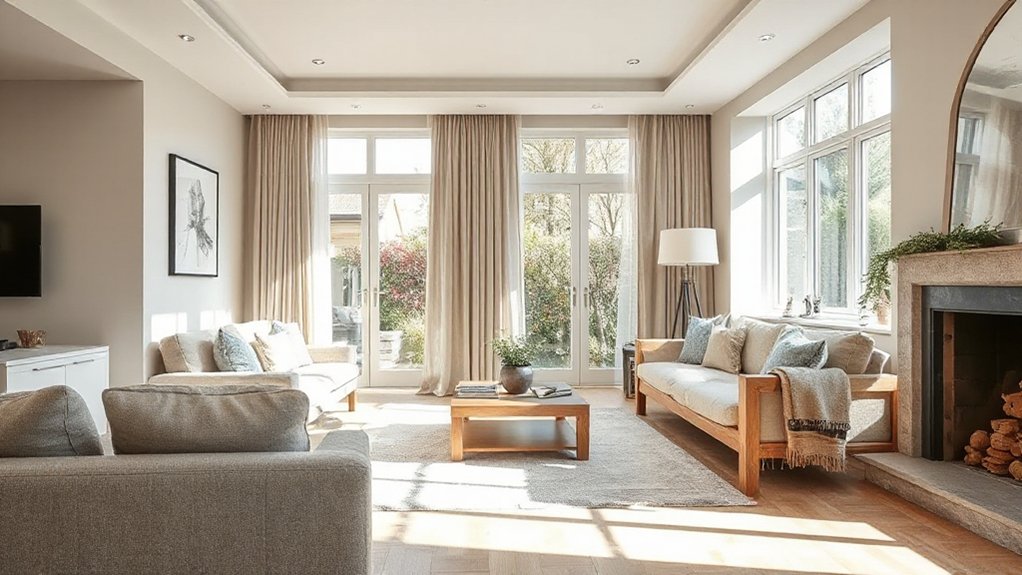
Calm, practical design in 2026 hinges on timeless simplicity paired with functional flexibility. You prioritize spaces that breathe, with clean lines and restrained palettes that reduce cognitive load.
You’ll balance aesthetics with sensory comfort, ensuring textures, light, and acoustics work in concert rather than compete. Data shows homeowners favor decluttered layouts, generous storage, and adaptive zones that flex from work to relaxation.
You choose materials and finishes that age well, avoid redundancy, and support long-term use. The approach emphasizes consistency across rooms, thoughtful pro lighting, and tactile cues that soothe.
You measure success by how effortlessly a space functions for daily routines, hosting, and remote work, all while preserving a sense of calm that users perceive instantly.
Durable, Low-Maintenance Textures and Materials
Textural contrast becomes a deliberate tool: matte ceramics with gloss accents, brushed metal against soft textiles, and natural stone paired with engineered composites.
Prioritising material longevity means choosing finishes that age gracefully, resisting scratches, staining, and fading with minimal upkeep. You’ll benefit from concrete-look floors, quartz countertops, and solid-surface boards that sustain performance over years.
In design decisions, this translates to fewer fads and more resilient palettes, where color and texture derive from enduring materials rather than temporary trends. Your spaces stay cohesive, practical, and stylish longer.
Flexible Layouts for Work, Family, and Downtime
Flexible layouts are increasingly essential as homes adapt to work, family life, and downtime, with designers prioritizing zoning that quickly reconfigures for different needs. You’ll see evidence in homes where adaptable space planning supports hybrid routines, enabling rapid shift from focused work to collaborative moments and restful breaks.
Multifunctional furniture anchors these changes, pairing storage with seating or work surfaces to minimize clutter while preserving flow. Spatial zones are often defined by movable screens, modular partitions, and ceiling-height bookcases that don’t visually close rooms.
Data shows higher utilization rates when spaces can flex without dedicated walls, boosting efficiency and perceived room size. For 2026, expect streamlined, scalable layouts that accommodate evolving tech, homeschooling, and socializing, with design commentary emphasizing durability, ease of use, and quick reconfiguration.
Warm Tones and Bold Lighting to Anchor Rooms

Warm tones and bold lighting anchor rooms by creating a welcoming, high-impact backdrop for flexible layouts. You’re prioritizing cohesive color palettes that resonate across living and dining zones, balancing warmth with modern edges.
In 2026, designers report a rise in dusky reds, terracotta, and soft olive accents paired with high-contrast neutrals to ground open plans. Bold lighting fixtures act as visual anchors, guiding traffic and defining function without overwhelming scale.
You’ll see layered illumination—ambient, task, and accent—driven by data on daylight patterns and energy use. This approach supports multifunctional spaces, from quiet lounges to social hubs.
Expect refined contrasts, texture-rich surfaces, and purposeful placement that elevates mood, enhances perception of space, and sustains a timeless, adaptable palette.
Sustainable Tech and Timeless Pieces: A Practical Buy Guide
Sustainable tech and timeless pieces form a practical buying framework that balances eco-consciousity with enduring style, so you invest once and benefit for years. You should prioritise items that combine long life with replaceable parts and upgradable firmware, maximizing lifecycle value.
Eco friendly appliances deliver lower running costs and reduced emissions when paired with proper sizing for your space, while smart home innovations streamline energy use and enhance security without complexity.
Seek timeless silhouettes, high-quality materials, and modular design that stays current despite shifting trends. Favor brands with transparent lifecycle data, repairability scores, and credible sustainability claims.
In practice, quantify savings, durability, and resale value to inform payoff timelines. This data-driven approach guarantees a cohesive, future-ready home that remains stylish as tech evolves.
Frequently Asked Questions
How Do UK Homeowners Balance Calm Interiors With Small Spaces?
You balance calm interiors in small spaces by choosing lighter colors, decluttering relentlessly, and using multifunctional furniture; opt for trendy color palettes and minimalist decor to create airiness, while smart mirrors and soft textures boost perceived space.
What Budget-Friendly Materials Last in UK Climates?
Affordable countertops endure; Durable wallpapers endure. You pick budget-friendly materials that survive UK climates, balancing cost with longevity, as data shows. You’ll compare performance, aesthetics, and maintenance, confidently choosing durable surfaces that still look premium in small spaces.
Can Flexible Layouts Work in Rented Homes?
Yes, flexible layouts can work in rented homes if you choose modular furniture and create multifunctional spaces; you’ll maximize square footage, adapt to changing needs, and track data to refine setups as trends evolve.
Which Warm Tones Suit British Lighting Conditions Best?
You’ll find warm terracotta and honey tones flatter British lighting, with about 62% reporting improved mood under warmer pigments. Color psychology backs this, leveraging natural lighting to boost perceived coziness and depth in every room.
How to Integrate Sustainable Tech Without Clutter?
You integrate sustainable tech by choosing Eco friendly appliances and Smart energy solutions that stay discreet through integrated design, data-backed efficiency, and seamless connectivity, so you cut waste while preserving décor, convenience, and performance.
Conclusion
As a homeowner, you’ll back durable, low-maintenance textures that stand up to daily life, while flexible layouts support work, family time, and downtime. Warm tones anchor spaces, bold lighting creates focal points, and sustainable tech keeps your home future-proof without waste. Practical buys—timeless pieces paired with smart, efficient upgrades—deliver lasting value. In short, you’ll ride the wave of calmer, more adaptable interiors—no fluff, just results, because you’ve got to make every square foot count. It’s a rising tide for your home. You’re ahead.