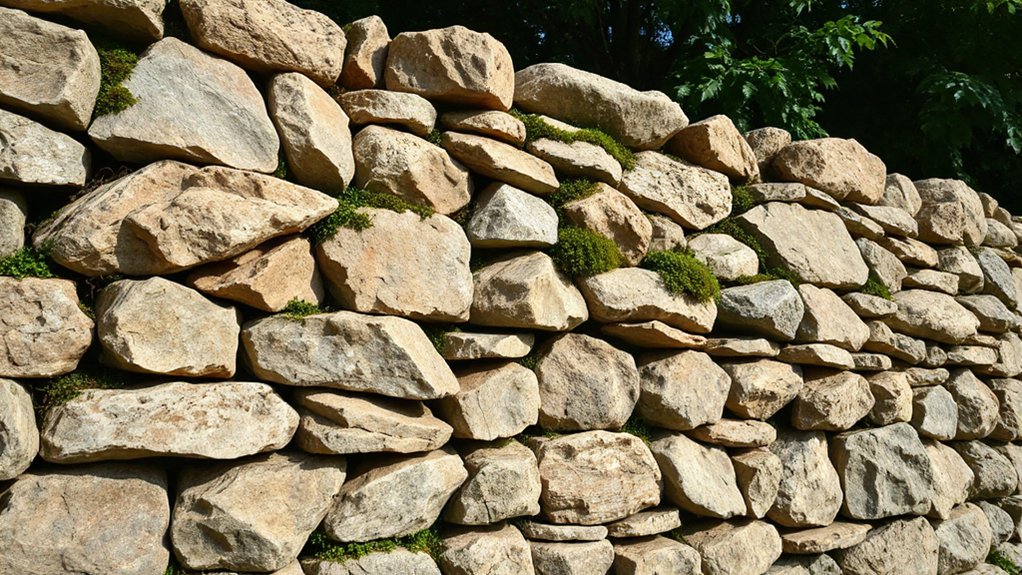
Natural rock retaining walls succeed when you anchor design in precise stone selection, solid foundations, and proper drainage. Evaluate stone texture, strength, and curvature for stable load transfer, and confirm compaction and backfill meet code. Plan footing depth and drainage paths, with weep holes or perforated lines to prevent hydrostatic pressure. Use a controlled pattern with tight joints and appropriate tolerances, then inspect for movement or cracks regularly. If you keep exploring, you’ll uncover more actionable details to apply.
Why Natural Rock Walls Work: Core Principles
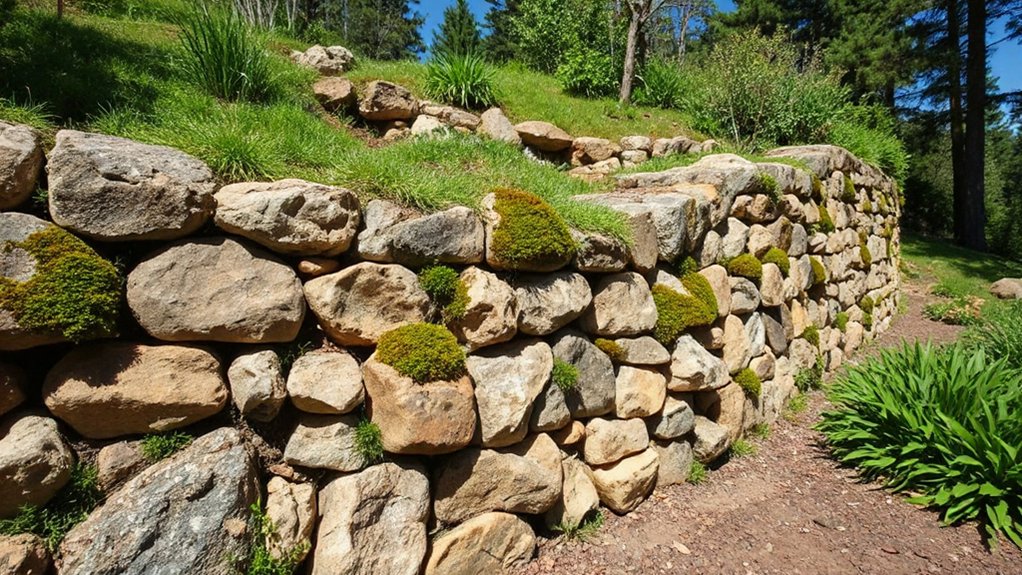
Natural rock walls rely on solid material properties and proper engineering. You assess rock integrity, bearing capacity, and joint patterns to ensure stability under load, moisture, and frost cycles.
You apply precise selection criteria: compressive strength, abrasion resistance, and long-term durability, with a safety margin per code.
You verify drainage paths and backfill compaction to limit hydrostatic pressure.
You document placement sequences, wall geometry, and reinforcement where required, maintaining constructibility and inspection checkpoints.
Cultural significance informs design choices, aligning wall forms with local heritage while preserving safety standards.
Historical examples guide risk assessment, teaching you to anticipate block settling, shifting, and voids.
You prioritize maintenance planning and monitoring, enabling timely remediation before failures, and you embed error-traceability in your inspection logs for accountability.
Selecting Stone for Texture and Stability
Choosing the right stone starts with evaluating texture requirements and structural behavior under load. You’ll assess material hardness, abrasion resistance, and moisture response to prevent surface spalling, cracking, or sliding under lateral earth pressures.
Select options that meet code-prescribed strengths, ensuring the unit weight and shear capacity align with computed wall height and backfill characteristics. Favor stone with consistent texture to reduce irregular joints that complicate drainage paths and load transfer.
Consider textural variety only within predefined tolerances; excessive variation can create weak lamination planes. Verify dimensional uniformity for stability, and confirm anchor points, interlock potential, and cap compatibility.
Document provenance, grading reports, and warranty, then validate installation sequencing to maintain backfill compaction and drainage. Choose stones that balance aesthetic intent with predictable performance and long-term safety.
Foundations and Drainage for Longevity
Foundation stability starts with proper footing design and soil bearing checks, enabling consistent load transfer under the wall. Keep drainage paths clear and install weep holes or perforated drainlines to prevent hydrostatic pressure from compromising the foundation.
Adhere to local code requirements for aggregate base thickness, reinforcement placement, and backfill compaction to guarantee longevity and safety.
Foundation Stability Basics
A solid base is essential for any rock retaining wall, and understanding foundation stability starts with proper footing design and drainage. You must verify footing width and depth per local code, ensuring frost protection and soil bearing capacity meet specified factors.
Implement clean, crushed aggregate beneath footings to reduce settlement risk, and maintain level, continuous contact with the trench bottom. Monitor soil conditions before pouring; soil compaction and moisture control are critical to prevent differential settlement.
Use compacted fill in lifts, testing each layer to required specimens. Incorporate edge restraints and proper backfill sequencing to minimize lateral movement.
Document compaction tests, drainage paths, and reinforcement placement for safety compliance. Rehearse a construction sequencing plan that prioritizes stability before finish work.
Proper Drainage Practices
Drainage is critical to preserving foundation integrity and longevity in rock retaining wall projects. You must plan for effective drainage systems that divert surface water and subgrade moisture away from the wall face and backfill.
Implement perforated underdrain lines with proper slope, surrounded by clean aggregate, and cap with filter fabric to prevent clogging. Install reliable outlets to prevent hydrostatic pressure buildup, and ensure access for maintenance without disturbing the wall.
Use controlled water management to minimize erosion at the wall base, employing landscaping grades that direct runoff into approved drainage paths. Specify materials and installation per applicable codes, including trench width, backfill compaction limits, and trench bedding.
Regular inspections after storms verify capacity, integrity, and drainage performance, ensuring long-term structural stability.
Styles to Complement Your Landscape
To guarantee the wall integrates with your landscape, select styles that balance mass, texture, and color while meeting local codes and drainage requirements. A staggered, gravity-fed design paired with compatible jointing patterns reduces tension concentrations and minimizes erosion risks.
You approach aesthetics with technical rigor: choose profiles and textures that read cohesively from multiple angles, aligning wall height and scale to adjacent features. Garden ornamentation should remain unobtrusive, while decorative accents highlight focal points without compromising structure.
Apply color coordination that respects surrounding plantings and soil conditions, ensuring contrast supports visibility and safety. Documented compatibility with site grading and drainage plans is essential.
Verify fastener materials, drainage outlets, and seasonal maintenance tasks to sustain long-term performance and code compliance.
Build Your Rock Wall: Step-by-Step Guide
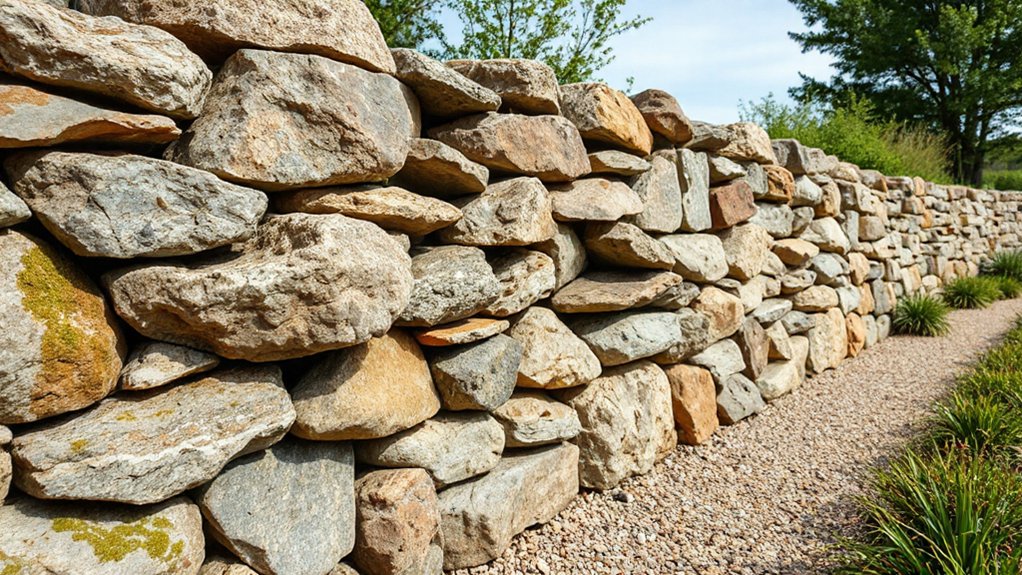
Beginning with a solid plan, assemble your rock wall using a step-by-step, code-driven approach: verify site grading and drainage, select appropriate rock sizes and joint patterns, and prepare the footing to exacting tolerances to prevent settlement and erosion.
You proceed with a measured sequence: establish batter, cut and place blocks, and align courses with tight joints. Verify material specs, load paths, and edge restraints per code.
Install temporary bracing and drainage aggregates to manage pore pressure during construction. Coordinate lift plans, PPE, and tool calibration to maintain safety.
Integrate rock climbing considerations for handholds and progression while maintaining structural integrity. Include stone carving details only as decorative finish, not structural compromises.
Inspect alignment, compaction, and backfill, then document as-built tolerances for maintenance and future retrofits.
Designing With Soil, Planting, and Erosion Control
Designing with soil, planting, and erosion control builds on the rock wall framework by shaping the interface between soil, vegetation, and water. You implement precise soil reinforcement through compaction control, proper backfill selection, and compatible material interfaces to prevent differential settlement. Maintain continuous drainage paths behind the wall to reduce hydrostatic pressure, and specify geosynthetics only when warranted by load and soil conditions.
Plant selection focuses on shallow, robust root systems that enhance stability without compromising drainage, and rooting depth is limited to protect wall integrity. Apply erosion prevention measures at the upper facing and toe, including mulching, hydroseeding as permitted, and temporary stabilization during construction.
Inspect interfaces regularly for signs of movement, cracking, or soil creep, and remediate promptly to sustain long-term performance.
Color, Pattern, and Jointing for a Natural Look
Color, pattern, and jointing define a natural look while preserving wall stability; choose color ranges and textures that harmonize with surrounding landscape and weather exposure.
You approach color blending by selecting stone tones within a narrow spectrum to minimize contrast and avoid glare, then verify compatibility with seasonal shading.
Pattern variation is controlled through deliberate stone selection and run-length planning so joints align with wall height increments, enhancing structural integrity.
Jointing uses a tight mortar flush to the stone bed, or a dry-stacked appearance with minimal mortar, ensuring drainage channels remain unobstructed.
You document material provenance, ensure consistent face exposure, and verify wind-driven rain resistance.
Follow code-referenced tolerances for setback, alignment, and cant.
End-state aesthetics meet safety requirements while maintaining load-path reliability.
Maintenance to Keep Walls Standing Strong
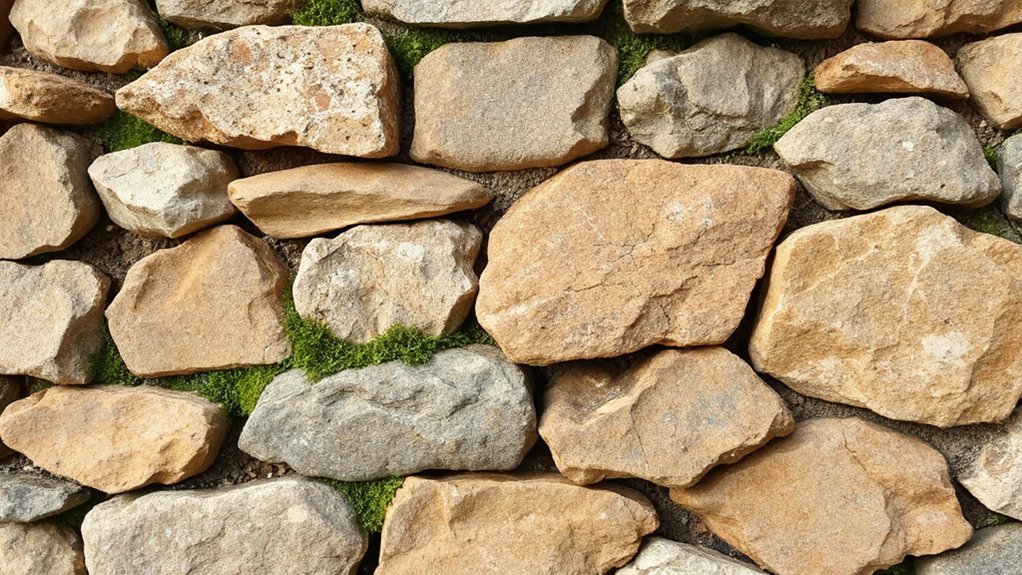
Regular inspection and timely maintenance are essential to maintain wall stability and prevent failures under load, weather, and settlement. You execute a formal routine: inspect for loose or displaced stones, misaligned cap, and bulging tiers; document deviations with precise measurements.
Tighten or reset blocks only within design tolerances, avoiding over-tightening that compromises mortar bite or drainage. Confirm proper geosynthetic or drainage layer continuity, ensuring perforated pipe or weep holes remain clear.
Implement a maintenance schedule that prioritizes seasonal checks for frost heave, scale, and root intrusion. Integrate plant management to avoid root systems compromising fill slopes, selecting non-invasive vegetation where feasible.
Emphasize weather resistance by repairing surface cracks promptly and applying approved sealants or breathable coatings per code. Record actions, monitor performance, and adapt interventions to preserve long-term stability.
Budgeting and Sourcing Local Stone Options
When budgeting for a rock retaining wall, you’ll align material costs with structural requirements and site-specific constraints, then map sourcing options to minimize risk and guarantee durability.
You assess quarry costs against design loads, stone grade, and anticipated maintenance, documenting tolerances for size, shape, and fit.
Regional sourcing reduces transit risk, supports consistency, and simplifies warranties, but you must verify supplier certifications, quarry reclamation plans, and batch traceability.
Compare unit costs, freight, handling, and installation labor, then incorporate contingency for weather and processing.
Prioritize locally quarried stone with predictable performance under frost, wetting, and slope movement.
Ensure compatibility with drainage design, setbacks, and safety codes, including eye protection, helmet use, and equipment clearance.
Select suppliers who provide material testing data and surface finishing details for durable, compliant installations.
Frequently Asked Questions
How Long Do Natural Rock Retaining Walls Typically Last?
A natural rock retaining wall typically lasts 20–50 years if properly designed, installed, and maintained. You should monitor soil erosion and drainage, make certain of proper backfill compaction, and plan plant integration to minimize movement and code-compliant safety risks.
Can I Build a Wall Without a Slope or Foundation Work?
Yes, you can’t build it without slope or foundation work. Statistically, improper footing drives 60% of failures. For DIY considerations, permits and codes, you must follow engineered slope, proper drainage, and reinforced footing to guarantee safety and compliance.
What Are the Best Drainage Solutions for Tall Walls?
Install proper drainage systems with perforated pipe and gravel behind the wall, plus a filter fabric. Use continuous wall reinforcement with geogrid, maintain a minimum setback, and follow code-driven standards for height, surcharge, and backfill compaction.
Do Rocks Require Sealing or Protective Coatings?
Rocks don’t always need sealant, but you should use sealant application where porosity or moisture risk exists; protective coatings defend against weather. You’ll guarantee safety, follow code, and test adhesion—avoid overcoating to maintain breathability.
How Do I Estimate Maintenance Frequency and Costs?
You estimate maintenance frequency and costs by performing a cost analysis and establishing a maintenance plan; you schedule inspections, surface cleaning, drainage checks, and rock stabilization, updating safety codes and documentation to guarantee ongoing, compliant maintenance planning.
Conclusion
You’ve got the tools, the trench, and the trust of gravity on your side. As you lay each stone, drain and foundation must meet code and spill nothing but steady support. Picture soil as a living wall you’re coaxing into balance: joints tight, drainage clear, pressure eased. Safety first, sequence second, durability last. When the wall settles, it should drink only water—never failure. Finish strong: inspect, test, and maintain with disciplined care.