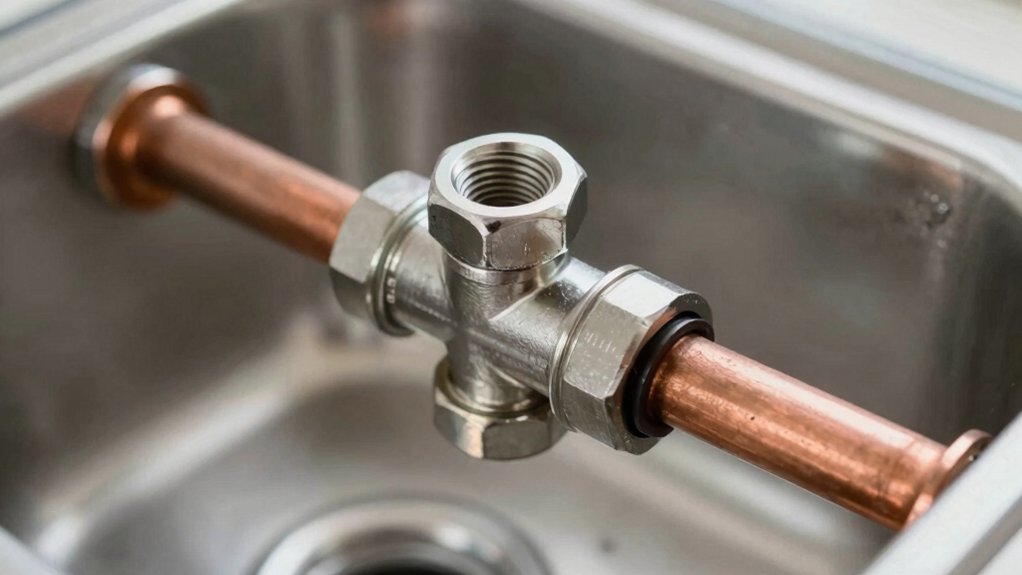
Shut off the under-sink valve, open a nearby faucet, and dry the area. Inspect joints for moisture and corrosion, then remove the damaged section. Measure the pipe outside diameter to pick the right slip coupling. Clean the ends, then slide the coupling over each pipe, lubricate the gasket if included, and hand-tighten before finishing with a wrench—don’t overtighten. Check for leaks by testing gradually, reseal or replace gaskets as needed. If issues persist, more steps await.
Identify the Leak Source and Slip Coupling Size

To identify the leak source and determine the slip coupling size, start by inspecting all joints under the sink—where the drainpipe meets the sink tailpiece, the P-trap, and the slip joints.
You’ll assess each connection for moisture, corrosion, or mineral buildup that signals a leak location. Note the pipe material at every joint, since material type guides sealant and replacement choices.
Carefully run water and observe steady drips, not just dampness, to pinpoint the exact origin. Record which joint weeps and whether the slip coupling seals are intact or degraded.
Use this information to select compatible slip fittings and ensure a proper, tight seal. Accurate identification prevents incorrect replacements and frames the quick fix strategy.
Gather Tools and Materials for the Quick Fix
Gather the right tools and materials before you start, so you can fix the leak quickly without extra trips. You’ll want items that handle Pipe corrosion, maintain Water pressure, and secure a slip coupling. Gather these essentials first:
- Adjustable wrench or pliers
- Slip coupling kit with rubber gasket and stainless steel clamps
- Teflon tape and a small bucket for spills
Optional but helpful: flashlight, rags, and a towel to keep the area clean.
Confirm the pipe is dry and inspect for corrosion along the joint before you proceed. Choose tools with a snug fit to avoid rounding nuts. Ensure you have room to work under the sink.
With the right collection, you’ll minimize water pressure disruption and speed up the quick fix.
Shut off Water and Prep the Area for Repair
First, shut off the supply valve under the sink and open a nearby faucet to relieve pressure. Then inspect the area for moisture, standing water, and debris. Clear the cabinet to create space for the repair and identify the exact pipe segment needing a slip coupling.
Check for pipe corrosion along the joints and on the fittings; plan to replace or clean as needed. If you see mineral buildup or rust, note it so you can address corrosion after the repair.
Dry the surrounding surfaces thoroughly and wipe any residue from the trap and tailpiece. Confirm water pressure is low before removing components, and keep towels handy to catch drips.
Prepare replacement parts and tools within easy reach for a smooth, efficient fix.
Remove Old Piping and Clean the Connection
Next, remove the old piping and prepare the connection. You should inspect the pipe ends and clean the surface to guarantee a secure seal.
A clean, square surface helps you detect damage and prevents leaks after installation.
Clean Connection Surface
Before you disconnect the old piping, remove any corrosion or debris from the connection surfaces and the fittings themselves. You need a clean, dry base to guarantee a reliable seal and stable alignment. Wipe the pipe ends with a clean rag, inspect for pitting, and remove any remaining particle buildup that could cause leaks. This step protects against pipe corrosion and helps maintain connection stability.
- Inspect the slip coupling surfaces for smoothness and remove burrs.
- Wipe both ends until they’re dry and free of oil or grime.
- Check that the fittings seat evenly when you place the coupling.
A clean connection surface reduces misalignment and improves seal integrity, leading to a tighter, longer-lasting repair.
Inspect Old Pipe Ends
Carefully remove the old piping and inspect the pipe ends for damage. You’ll look for cracks, scoring, or bowls at the slip-joint faces, and you’ll check for corrosion around threaded areas.
If you spot pipe corrosion or pitting, set the section aside and replace it rather than forcing a fit. Clean the connection surfaces with a dry cloth, removing mineral buildup and debris that could affect seal integrity.
Measure the inside diameter and the outside diameter of each end to confirm fitting compatibility with the slip coupling you plan to use. Avoid forcing mismatched pipes together; misalignment causes leaks.
If ends are gouged or deformed, replace the affected sections before continuing to ensure a secure, lasting seal.
Measure, Then Choose the Correct Slip Coupling
Proper fit starts with precise measurement, then you pick the right slip coupling. You’ll base your choice on pipe materials and slip coupling types to guarantee a secure seal and long-lasting repair.
- Measure the pipe ends precisely, noting outside diameter (OD) for copper, PVC, or steel.
- Compare OD to slip coupling inside diameter, selecting a model compatible with your material and wall thickness.
- Confirm end-to-end alignment, length, and sleeve depth to avoid leaks and future disassembly.
Choose a coupling with the correct connection style (compression or solvent weld) for your system, and verify accompanying gaskets or O-rings are rated for your water supply.
Precision now saves leaks later, so double-check before you cut or assemble.
Install the Slip Coupling Step by Step
Now you’ll install the slip coupling you just measured and chosen. Align the coupling with the pipe ends, keeping any direction consistent with the existing system. Slide the nut backs off and lubricate the rubber gasket if included.
Gently insert each pipe end into the slip coupling until snug, then hand-tighten the nuts. Use a wrench to finish, but avoid overtightening, which can crack fittings. Check that the joints seat evenly and the gasket compresses fully.
Watch for pipe corrosion on older fittings; if you notice flaking metal or severe wear, replace those sections first. After tightening, test by restoring water supply slowly. Observe for leaks and verify the water pressure remains steady without drips or pooling around the connection.
Check for Leaks and Secure the Setup
Now, check for drips around every joint and tighten connections properly to stop leaks.
Guarantee the slip coupling is secured so it won’t loosen with use.
If you notice any moisture, recheck the fittings and re-tighten as needed.
Inspect for Drips
To inspect for drips, start by wiping the area dry and then run the faucet a few seconds to reveal any slow leaks. You’ll verify that the slip coupling sits level, joints show no moisture, and the drain line remains secure. Use drip detection to confirm there’s no hidden seepage, and practice leak prevention by addressing small signs now.
- Check all connection points for moisture, tightening gently as needed.
- Look under the sink for damp spots or staining after a short run of water.
- Mark and monitor any observed drips over a few minutes to ensure consistency.
If you spot anything, pause, dry, and recheck. Maintain tight seals, and proceed with confidence.
Tighten Connections Properly
Start by checking every connection point for moisture, then tighten each fitting gently but firmly until it sits snugly without forcing it. You’ll want to turn the water supply back on slowly and observe for drips within a minute. If you see moisture, tighten a touch more, then recheck. Avoid overtightening, which can strip threads or crack seals.
When adjusting, ensure slip coupling compatibility remains intact; misaligned or overtightened joints promote leaks. Inspect the pipe surface for corrosion or wear at each joint, replacing any compromised sections before you proceed.
Use a wrench or pliers with a firm, even grip and work clockwise from the main to the distal fittings. After stabilization, wipe dry and re-test for a full minute of operation—quiet, leak-free performance confirms success.
Secure Slip Coupling Setups
Secure the slip coupling by inspecting every connection for moisture and tightness. Then test the setup under small, gradual pressure. You’ll verify that the slip coupling types you chose fit the pipe materials you’re working with and that all joints seat fully before pressure testing.
- Check for tightness at each joint and replace any worn gaskets to prevent leaks.
- Apply a gentle pressure test, watching for slow weeps that could indicate marginal seating or mismatched pipe materials.
- Label the assembly and document any notes on slip coupling types or batch variations for future maintenance.
Troubleshoot Common Slip-Coupling Issues
If a slip coupling leaks, identify whether the issue comes from a loose nut, damaged gasket, or a warped pipe edge, and address it quickly to prevent water damage.
You’ll inspect connections first, then seals, then the pipe surface.
For a loose nut, tighten evenly with a wrench until snug—don’t overtighten, which can crack parts.
If you detect a damaged gasket, replace it with an identical size and material, and reseal with plumber’s tape where appropriate.
A warped pipe edge requires trimming or realigning the pipe length to restore a true fit.
Check for cracks in the slip coupling body only if leakage persists; replace the entire unit if integrity is compromised.
This guidance targets common slip coupling problems and troubleshooting leaks with precision.
Prevent Future Leaks With Maintenance Tips
To prevent future leaks, establish a simple, proactive maintenance routine that focuses on connections, seals, and surfaces. You’ll catch problems early by inspecting joints, testing the slip coupling after use, and replacing worn gaskets before they fail. Regular attention reduces pipe corrosion and prevents drain clogging, keeping water flow steady and safe.
- Inspect connections monthly and after any service, tightening fittings as needed without overtightening.
- Replace aging seals and washers promptly, using the correct material for your piping.
- Clean surfaces to remove mineral buildup and debris that can hide leaks or accelerate corrosion.
Keep a small routine: wipe dry, check for moisture, and listen for unseen drips. This discipline preserves performance and minimizes major repairs.
Frequently Asked Questions
Can I Reuse a Slip Coupling From Another Project?
Yes, you can, but consider compatibility and cleanliness. Reusing fittings may compromise slip coupling longevity. Inspect threads, gaskets, and alignment; if in doubt, replace. For reliability, choose new slip coupling hardware and verify proper seal before pressurizing.
How Do I Identify the Pipe Material for Sizing?
Identify your pipe material first: measure diameter and look for markings, age, or fittings. Story: imagine a librarian sorting by size—accuracy guarantees proper fittings and reliable repairs.
What if the Pipe Moves When Tightening the Coupling?
If the pipe moves when tightening, stop and secure the pipe clamp first, then recheck alignment. Practise movement concerns calmly, apply steady pressure, and use the tightening tips: avoid over-tightening, test for leaks, and re-seat the coupling.
Is PTFE Tape or Sealant Recommended Here?
“Measure twice, cut once,” you know: PTFE tape isn’t ideal for slip couplings; use a sealing compound instead to verify a watertight seal. Apply sealing compound sparingly, then snug the nut to prevent leaks effectively.
How Long Should the Repair Hold Before Replacement?
A temporary fix should last days to weeks, depending on pressure and usage. For long term durability, plan a proper repair or replacement soon, monitor for drips, and avoid heavy loads that stress the slip coupling.
Conclusion
You now know how to fix a leaky pipe under a sink with a slip coupling. Follow steps precisely, double‑check measurements, and test for leaks before restoring full water use. If anything seems off, don’t force fittings—reassess and re‑seal. With careful planning, you’ll prevent future drips and keep your sink area dry. This repair is your quiet victory, a lighthouse in a storm of stubborn plumbing, guiding you back to confidence and control.